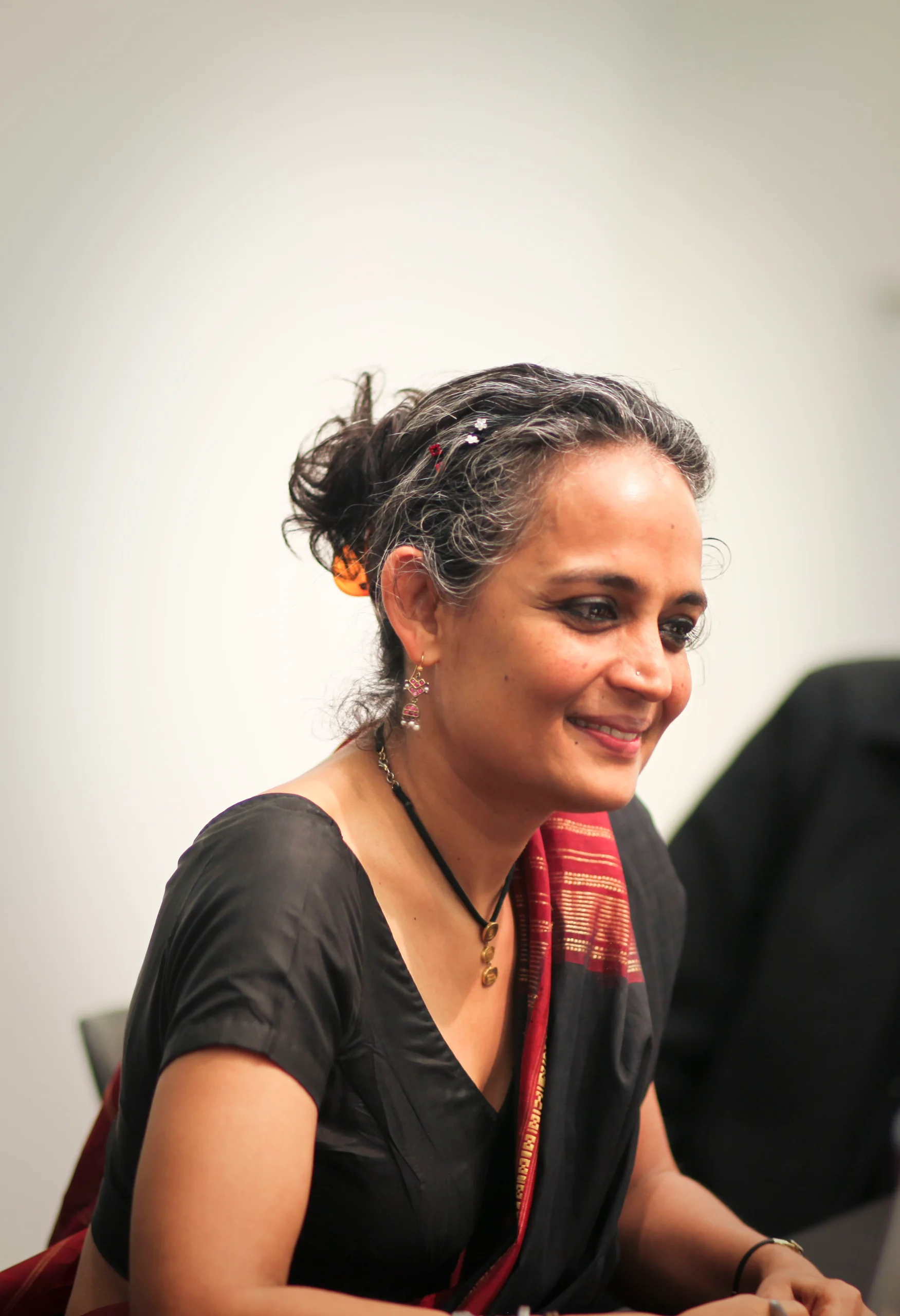
Arundhati Roy
 India
IndiaAlso known as: Suzanna Arundhati Roy, Suzanna Roy
Birthday
November 24, 1961
Birth Sign
Sagittarius
Birthplace
Shillong, Meghalaya, India
Age
64 years old
About
Suzanna Arundhati Roy is an Indian author and political activist born in Shillong. She gained global recognition for her debut novel The God of Small Things, which won the Booker Prize in 1997 and became the best-selling book by a non-expatriate Indian author. Beyond fiction, she has established herself as a fierce voice on human rights, environmental justice, and anti-imperialist politics. In 2024, she received the PEN Pinter Prize, which she chose to share with imprisoned British-Egyptian writer Alaa Abd El-Fattah, naming him her "Writer of Courage." Her work continues to challenge state power and provoke debate across the world. As of 2026, she remains one of the most uncompromising public intellectuals in contemporary India, known for prioritizing principle over platform access. Her influence extends beyond literature into global debates on democracy, where her writings are treated as manifestos by academic circles and activist networks.
Early Life & Background
Arundhati Roy was born Suzanna Arundhati Roy on November 24, 1961, in Shillong, the capital of what is now Meghalaya. Her mother, Mary Roy, was a Syrian Christian from Kerala who ran a school in Aymanam, while her father was a Bengali Hindu. The couple divorced when Arundhati was young, leaving her to be raised primarily by her mother in Kerala. This upbringing in a matrilineal household deeply influenced her worldview and later feminist perspectives. She pursued architecture at the School of Planning and Architecture in Delhi during the early 1980s. It was there that she met filmmaker Pradip Krishen, whom she would eventually marry. Before finding fame as a novelist, Roy worked extensively in the film industry. She appeared in small roles and worked behind the scenes on productions directed by Krishen, including the acclaimed documentary Massey Sahib in 1985. Her first major contribution to cinema came in 1989 when she co-wrote the screenplay for In Which Annie Gives It Those Ones. This period in film production provided her with a unique lens on storytelling and social dynamics before she turned fully to literature. During these years, she also began writing film criticism, laying the groundwork for her future career as a nonfiction writer.
Career Growth
Roy's literary breakthrough arrived in 1997 with the publication of The God of Small Things. The novel immediately captivated readers with its lyrical prose and poignant exploration of family secrets, caste discrimination, and forbidden love set against the backdrop of Kerala. Its success was unprecedented; it won the prestigious Booker Prize for Fiction, making Roy the first Indian citizen to receive the award. The book sold millions of copies and was translated into over forty languages, establishing her as a major international voice. Following this massive success, Roy shifted her focus toward political activism and nonfiction writing. She published several essay collections, including The Cost of Living (1999), which critiqued India's nuclear program, and Power Politics (2001). She became a prominent critic of the Narmada Dam project, documenting the displacement of indigenous communities. After a twenty-year gap between novels, she published The Ministry of Utmost Happiness in 2017, which was shortlisted for the Man Booker Prize. Her recent works include the memoir Mother Mary Comes to Me (2025), which delves into her complex relationship with her mother, and the essay collection Azadi: Freedom, Fascism, Fiction (2020). In June 2026, she made headlines globally by walking out of the Berlin International Film Festival after organizers demanded she refrain from discussing politics during her appearance. Later that year, she coined the phrase "Cockroach Democracy" to describe the resilience of youth-led protest movements in India against authoritarian governance. Her collected works also include Walking with the Comrades (2011) and My Seditious Heart (2019).
Career Timeline
Public Image & Style
Roy is widely regarded as one of the most uncompromising public intellectuals in contemporary India. Her public persona is defined by a fearlessness in challenging state power and a refusal to separate her art from her political convictions. Media portrayals often emphasize her role as a dissident who faces legal consequences for her outspoken views on Kashmir, nuclear weapons, and corporate capitalism. Her writing style in nonfiction is polemical and urgent, contrasting with the lush, lyrical prose of her fiction. She commands respect not just for her literary achievements but for her willingness to stand alone against powerful institutions. Her public image is that of a writer-activist who sees literature and politics as inseparable, a stance that has led to prosecution threats over her comments on Kashmir. Despite lacking national honours from the Indian government due to her adversarial relationship with successive administrations, she remains a revered figure in international human rights circles.
Fame & Fandom
Arundhati Roy commands a following defined not by chanting crowds or branded merchandise, but by the quiet intensity of readers who treat her words as manifestos. Her supporters are dispersed across academic circles and activist networks, united by a shared reverence for her uncompromising stance on human rights and environmental justice rather than any organized fan club structure. There is no collective noun for her admirers; they do not gather for rituals or launch chart-pushing campaigns. Instead, their loyalty manifests in intellectual discourse and political advocacy, often mirroring Roy's own fierce independence. The cultural mythology surrounding her rests on verified moments of defiance, such as her walkout from the Berlin International Film Festival when organizers demanded she silence her politics, and her recent articulation of youth resistance movements in India. These events cemented her status as a public intellectual whose influence ripples through global debates on democracy. While she lacks the performative fandom of pop stars, her reach remains profound, tracked by systems that monitor attention across media coverage, search activity, and consumption signals worldwide. This global visibility places her firmly within the upper echelons of contemporary fame. Arundhati Roy is currently the 55th most famous person from India, a standing confirmed by the iFANN Global Fame Rankings. During the 2026 protests in India, her writings and statements were widely shared among student protesters, demonstrating her role as an intellectual touchstone for youth movements. She maintains a Facebook page (@ArundhatiRoyAuthor) and an Instagram account (@arundhatiroyauthor), though specific follower counts are not documented.
Interesting Facts and Legends
Arundhati Roy holds the distinction of being the youngest person ever to win the Booker Prize for Fiction at the age of 36. Her novel The God of Small Things remains one of the few books by an Indian author to sell more than a million copies in the United States without being part of a mass-market paperback series. In June 2026, she made headlines globally by walking out of the Berlin International Film Festival after organizers demanded she refrain from discussing politics during her appearance. Later that year, she coined the phrase "Cockroach Democracy" to describe the resilience of youth-led protest movements in India against authoritarian governance. She also famously shared her 2024 PEN Pinter Prize with Alaa Abd El-Fattah, a decision that highlighted her commitment to freedom of expression despite facing legal threats herself. In July 2026, she engaged extensively with India's youth-led protest movement, stating that "cockroaches destroyed PM's public image in just 2 weeks." She spoke at the London Indian Film Festival in July 2026, discussing topics including the Beatles, AI, and indie filmmaking. Her memoir Mother Mary Comes to Me has been the subject of extensive reviews throughout 2026. No other major international literary awards are documented in the available sources, though she has been shortlisted for others.
Notable Quotes
“Cockroaches destroyed PM's public image in just 2 weeks.”
“The message from Jantar Mantar is bigger than electoral defeat.”
“I am a writer who happens to be Indian, not an Indian writer.”
Family & Personal Life
Arundhati Roy's mother, Mary Roy, was a pioneering feminist educator and lawyer who fought a landmark Supreme Court case in 1986 to secure equal inheritance rights for Syrian Christian women in Kerala. Mary Roy passed away in 2022, a loss that Roy explored deeply in her 2025 memoir Mother Mary Comes to Me. Roy had no siblings mentioned in public records. The couple had no children together. Roy has remained notably private about her personal life since her divorce and does not have any known romantic partners as of 2026.
Notable Connections
Relationships & Dating History
Arundhati Roy was married to Pradip Krishen, an Indian filmmaker and botanist, in the mid-1980s. They met while studying architecture in Delhi and collaborated professionally before their marriage ended in divorce. The exact year of their separation is not publicly documented, but the union produced no children. Krishen later became known as a botanist and author of books on Indian trees and gardening. Following her divorce, Roy maintained a fiercely private personal life. No other long-term romantic relationships have been confirmed by credible sources. As of 2026, she is believed to be single and has not publicly confirmed any partner. Her public focus remains steadfastly on her writing and political activism. She has stated in interviews that their relationship was formative in her early career, as she worked in the film industry alongside him before her literary breakthrough.
- DivorcedPradip Krishen1985 - presentMarried in the mid-1980s; divorced later; no children together.
Salary, Net Worth In 2026
$5 Million
iFANN Editorial Team estimate
As of 2026, iFANN estimates Arundhati Roy's net worth at approximately $5 Million. Unlike commercial entertainers, Roy's wealth stems almost entirely from literary earnings rather than endorsements or business ventures. Her debut novel, The God of Small Things, has sold millions of copies worldwide since 1997 and continues to generate substantial royalties more than two decades after its release. Additional income comes from her subsequent novels, essay collections, and speaking engagements. Roy has consistently rejected corporate sponsorship and advertising deals, aligning her financial choices with her political stance against consumer capitalism. Her estate remains modest compared to celebrity standards, reflecting her deliberate choice to live simply and prioritize activism over accumulation. Specific net worth figures for Arundhati Roy are not available from the search results, and any figures circulating online should be treated with caution. Her second novel The Ministry of Utmost Happiness (2017) and her memoir Mother Mary Comes to Me (2025) have added to her earnings. She does not have significant endorsement deals or business ventures, consistent with her political stance against corporate capitalism.
Awards Won (2)
Arundhati Roy's accolades are centered on her literary achievements and her defense of free speech. She won the Booker Prize for Fiction in 1997 for The God of Small Things, becoming the first Indian citizen to receive the honor. In 2024, she was awarded the PEN Pinter Prize, an honor she shared with imprisoned writer Alaa Abd El-Fattah. Her work has been recognized internationally for its impact on human rights discourse and its unflinching critique of state power.
1997 · Fiction
The God of Small Things
2024 · Literary Freedom
Alaa Abd El-Fattah (Shared)
Known For
The God of Small Things
1997 · Author
The Ministry of Utmost Happiness
2017 · Author
Mother Mary Comes to Me
2025 · Author
Keywords
Sources
Quick Facts
- Profession
- Novelist, Writer, Screenwriter
- Born
- November 24, 1961
- Birthplace
- Shillong, Meghalaya, India
- Gender
- Female
- Spouse
- Pradip Krishen (Divorced)
- Birth Sign
- Sagittarius
Personal Details
- Full Name
- Suzanna Arundhati Roy
- Spouse
- Pradip Krishen
- Children
- Education
- School of Planning and Architecture, Delhi
Filmography
1
Total
1
Film
0
TV
Frequently Asked Questions
Is Arundhati Roy married?
What is Arundhati Roy's net worth?
Does Arundhati Roy have children?
Why is Arundhati Roy controversial?
What is 'Cockroach Democracy'?
Similar People
Join the community
fans discussing