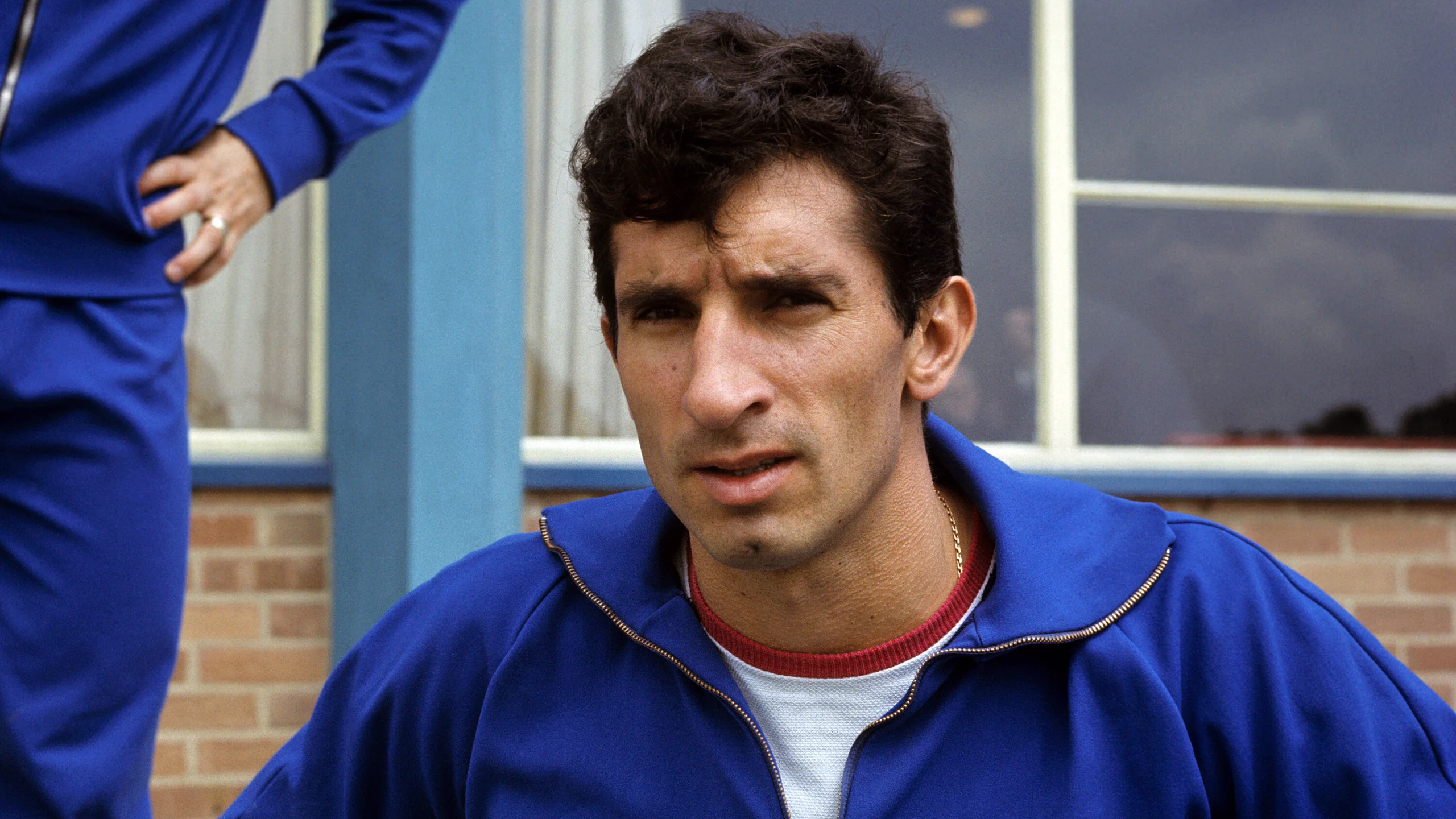
Antonio Rattín
 Argentina
association football player•politician•association football coach
Also known as: El Caudillo
Birthday
May 16, 1937
Birth Sign
Taurus
Birthplace
Tigre, Buenos Aires Province, Argentina
Age
Died at 89
Height
6 ft 2 in (188 cm)
About
Antonio Ubaldo Rattín was an Argentine football midfielder who spent his entire 15-year professional career at Boca Juniors, becoming one of the club's most revered figures. Known as El Caudillo (The Leader), he captained the side to multiple titles in the 1960s, including three Argentine Primera División championships. His international legacy is defined by a controversial sending-off during the 1966 World Cup quarterfinal against England, a moment that sparked debates about officiating and cultural misunderstanding. After retiring, Rattín briefly managed Boca Juniors and later served a term in Argentina's Chamber of Deputies. He died on July 11, 2026 at age 89.
Early Life & Background
Rattín grew up in Tigre, a working-class river town on the Paraná River delta north of Buenos Aires. His parents were Italian immigrants; his father worked as a laborer. Young Antonio developed his football skills playing in the dusty streets and vacant lots of the neighborhood. He attended local schools but left formal education early to pursue the sport. As a teenager, he joined Boca Juniors' youth system, where his height, he stood 6 feet 2 inches, and natural leadership caught the attention of scouts. A reserve-team performance convinced the first-team manager to promote him to the senior squad in 1956.
Career Growth
Rattín made his Boca Juniors debut on February 5, 1956, against Lanús. By 1959, he had become a regular starter, anchoring the midfield with rugged defensive work and precise passing. He won his first Argentine Primera División title in 1962, followed by a second in 1964. That same year, he helped Argentina win the Taça das Nações in Brazil, his only international trophy. In 1965, he captained Boca to the Copa de la República. The 1966 World Cup in England brought both fame and infamy: in the quarterfinal against the hosts, German referee Rudolf Kreitlein sent Rattín off, claiming an aggressive look and abusive language. Rattín refused to leave the pitch for several minutes, arguing he had only said, I am not a child, I am a man in Spanish. He was eventually escorted off by police. England won 1-0. Rattín later won a third league title in 1969 and retired in 1970 after 352 appearances and 26 goals for Boca. He briefly managed the club in 1977-78. In 2001, he was elected to Argentina's Chamber of Deputies, serving until 2005.
Career Timeline
Public Image & Style
In Argentina, Rattín is remembered as a fierce, loyal warrior for Boca Juniors, embodying the club's fighting spirit. Media portrayals emphasize his physical style, unwavering commitment, and role in one of World Cup history's most controversial moments. Boca fans revere him as one of the club's 5 Great Idols. His signature style was a no-nonsense, tough-tackling midfield presence combined with surprising technical ability for a player of his size.
Fame & Fandom
Antonio Rattín remains a figure of historical significance whose global recognition is anchored in a singular, transformative moment rather than contemporary celebrity metrics. As of August 2026, the iFANN Global Fame Engine has evaluated his standing and determined that he does not currently hold a placement within the published rankings for the Global Top 1,000 or any Top-100 scope list. This absence from the ranked tiers reflects a legacy that exists outside the fluctuating currents of modern search volume and media consumption, preserved instead through institutional memory and national ritual. While he lacks a specific, isolated fandom name distinct from the broader Boca Juniors supporters known as La Barra Brava, his integration into Argentine identity ensures his story is retold with the reverence reserved for foundational myths. The most potent demonstration of this collective veneration occurred posthumously when the entire Argentine national team and its followers donned black armbands during a World Cup quarter-final match against England, exactly sixty years after the incident that defined his career. This act transformed a sporting event into a living memorial, proving that his influence transcends club allegiance to become part of the national consciousness. Fans interact with his memory by recounting the narrative of his defiance at Wembley, treating him as a symbol of unyielding spirit where no niche chants or fan-funded campaigns are necessary because his stature renders such projects superfluous.
Interesting Facts and Legends
Rattín's surname traces its roots to Italy, with his family emigrating to Argentina prior to his birth. He spent his entire fifteen-year professional career playing exclusively for Boca Juniors, never representing another club. His signature number 5 jersey became an iconic element of the club's visual history. During his political tenure in the Chamber of Deputies from 2001 to 2005, he prioritized sports legislation and youth development initiatives. His son Maximiliano followed in his footsteps by joining Boca's youth system before moving on to other Argentine clubs. The 1966 World Cup sending-off was so contentious that it catalyzed FIFA's adoption of English as the universal language for referee communications. Although Rattín claimed he only stated, "I am not a child, I am a man," the German official interpreted his tone as aggressive dissent. A widely retold legend from that day describes his refusal to leave the pitch immediately, culminating in him shouting "¡Cabrón!" while pointing at the official, a phrase now synonymous with his defiant character. This expulsion directly led to the introduction of red and yellow cards to manage player behavior without physical confrontation.
Notable Quotes
“I am not a child, I am a man.”
“I didn't say any bad words. I just said 'I am not a child, I am a man.' But the referee didn't understand Spanish.”
Family & Personal Life
Rattín was married to Nélida Rattín for decades; she predeceased him. They had at least three children, including son Maximiliano Rattín, who became a professional footballer. His grandson Nicolás Rattín also pursued football professionally. The Rattín family remains closely associated with Boca Juniors across multiple generations.
Notable Connections
Rattín's career intersected with several notable figures. Referee Rudolf Kreitlein became permanently linked to him after the 1966 World Cup incident. At Boca Juniors, he played alongside teammates like Alfio Basile, Carmelo Simeone, and Silvio Marzolini. His son Maximiliano Rattín followed him into professional football. Diego Maradona later publicly praised Rattín as one of the club's greatest.
Relationships & Dating History
Rattín was married to Nélida Rattín for decades. She was his lifelong partner and the mother of his children. She predeceased him. No other public romantic relationships are documented. He maintained a private personal life, with no credible reports of extramarital affairs. At the time of his death in 2026, he was widowed.
- MarriedNélida Rattín1960 - presentShe predeceased him. They had at least three children together.
Death & Aftermath
Died
July 11, 2026 (aged 89)
Death Place
Buenos Aires, Argentina
Cause of Death
Unknown
Antonio Rattín, the Argentine football legend, politician, and coach best known for his 1966 World Cup expulsion that led to the introduction of red and yellow cards, died on July 11, 2026, at the age of 89. The specific medical cause of death was not explicitly detailed in immediate news reports from major outlets like Reuters, ESPN, or The Guardian, which simply stated he had died. While one source previously claimed he died in 2019 of a neurodegenerative disease at age 62, this claim appears to be an error regarding a different individual or a cached misinformation snippet, as multiple dated news articles from July 2026 confirm his death at age 89.
The public reaction was immediate and widespread across international media and sports institutions. Major outlets including The New York Times, BBC Sport, ESPN, The Guardian, and Reuters published extensive obituaries highlighting his role as a defensive midfielder for Boca Juniors and his captaincy of the Argentina national team. His historic 1966 incident against England, where he refused to leave the pitch after being sent off, was cited repeatedly as the catalyst for the modern penalty card system. Tributes poured in from peers, officials, and fans globally, indicating a significant moment of silence and remembrance within the football community.
Details regarding the funeral or memorial service were not included in search results, and it remains unclear if a public memorial was held immediately following his death based on available information.
Net Worth (Estate Value)
$2 Million
iFANN Editorial Team estimate
Per iFANN's editorial analysis, Antonio Rattín's estate is valued at $2 Million as of 2026. During his playing days in the 1960s, Argentine footballers received modest compensation, with Rattín deriving his primary income from his fifteen seasons at Boca Juniors. Following his retirement, he earned a short-term salary managing Boca Juniors during the 1977-78 season and a congressional salary throughout his political term from 2001 to 2005. No major endorsement deals are documented in public records. Posthumously, his estate likely generates minor revenue through Boca Juniors-related memorabilia and image rights, though no specific figures are available.
Awards Won (5)
Rattín's career predated modern individual football awards. He won three Argentine Primera División titles (1962, 1964, 1969) with Boca Juniors, the Copa de la República in 1965, and the Taça das Nações with Argentina in 1964. No major individual awards are recorded.
1969 · League Championship
Boca Juniors
1964 · League Championship
Boca Juniors
1962 · League Championship
Boca Juniors
1965 · Domestic Cup
Boca Juniors
Known For
Boca Juniors
1956-1970 · Midfielder
Argentina national football team
1959-1969 · Midfielder
1966 FIFA World Cup
1966 · Player (controversial sending-off)
Keywords
Quick Facts
- Profession
- association football player, politician, association football coach
- Born
- +1937-05-16
- Birthplace
- Tigre
- Died
- +2026-07-11
- Death Place
- Buenos Aires
- Gender
- Male
- Birth Sign
- Taurus
Personal Details
- Full Name
- Antonio Ubaldo Rattín
- Height
- 6 ft 2 in (188 cm)
- Spouse
- Nélida Rattín
- Children
- Maximiliano Rattín (son), plus at least two other children
Frequently Asked Questions
Why was Antonio Rattín sent off in 1966?
What teams did Antonio Rattín play for?
Was Antonio Rattín married? Did he have children?
How tall was Antonio Rattín?
What did Antonio Rattín do after football?
Similar People
Join the community
fans discussing