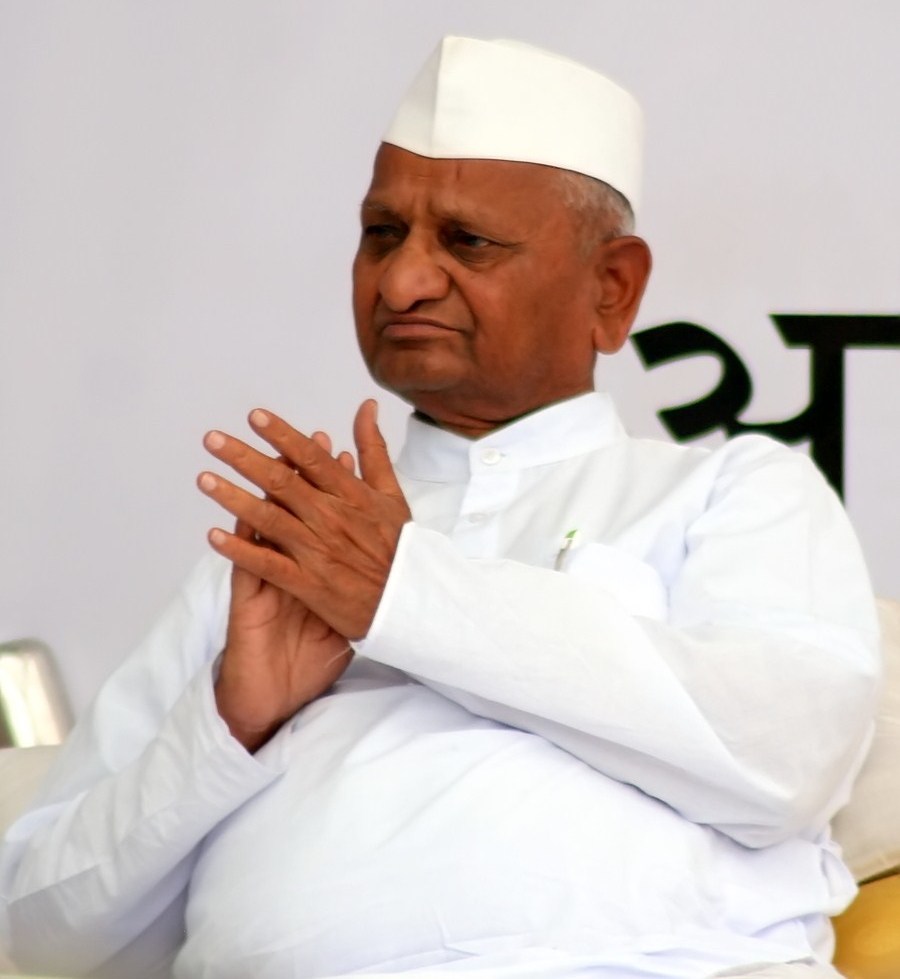
Anna Hazare
 India
sociologist•human rights defender•environmentalist
Also known as: Kisan Baburao Hazare, Anna
Birthday
June 15, 1937
Birth Sign
Gemini
Birthplace
Bhingar, Maharashtra, India
Age
89 years old
Height
5 ft 6 in (168 cm)
About
Kisan Baburao "Anna" Hazare is an Indian social activist, sociologist, and former soldier who has become a defining figure in the nation's fight against corruption. Born in the village of Bhingar in 1937, he rose from humble beginnings to lead some of the most significant grassroots movements in modern Indian history. His career began not in politics but in the army, where he served in the 8th Gorkha Rifles until an injury during the 1962 Sino-Indian War ended his service. Returning home, he dedicated his life to rural development, transforming his native village of Ralegan Siddhi from a drought-stricken settlement into a self-sufficient model of sustainable living.
Hazare's national prominence exploded in the early 2000s as he championed the Right to Information Act and later the Jan Lokpal Bill. His method of protest centers on fasting unto death, a Gandhian tactic that has repeatedly forced the government to negotiate with civil society. In April 2011, a twelve-day fast at Jantar Mantar drew hundreds of thousands to Delhi, resulting in the formation of a joint committee to draft anti-corruption legislation. Despite facing criticism for his authoritarian views on certain social issues, he remains a polarizing yet powerful symbol of people power, continuing to engage in silent protests and public dialogues well into his late eighties.
Early Life & Background
Kisan Baburao Hazare was born on June 15, 1937, in Bhingar, a small village in the Ahmednagar district of Maharashtra. He grew up in a farming family where the struggles of rural India were a daily reality. The region faced severe water scarcity and poverty, conditions that would later fuel his passion for watershed management. After completing his schooling, he left his village at the age of eighteen to join the Indian Army in 1955. He served with distinction in the 8th Gorkha Rifles, a regiment known for its bravery, and saw active duty during the Indo-Pakistani War of 1965.
His military career took a tragic turn in 1962 when he was severely injured during the Sino-Indian War. The wounds he sustained were debilitating, forcing him to return to India before his discharge. Upon his recovery, he briefly worked as a driver but found himself unable to settle into a conventional life. The memories of his village's plight haunted him, and he felt a calling to serve his community more directly. In 1975, at the age of thirty-eight, he moved to Ralegan Siddhi, a village plagued by alcoholism, drought, and debt. With no formal training in agriculture or engineering, he began implementing radical changes based on his own observations and a deep spiritual conviction.
The transformation of Ralegan Siddhi was slow and arduous. Hazare convinced the villagers to ban alcohol and gambling, enforce strict land redistribution, and plant trees to combat erosion. He organized them to build check dams and contour trenches to capture rainwater. By the late 1980s, the village had flourished. It became a green haven with zero debt, reliable water supply, and high literacy rates. This success brought him regional fame, but he remained largely unknown outside Maharashtra until the 1990s when he began expanding his activism to national issues like the Narmada Bachao Andolan.
Career Growth
Hazare's transition from a local village leader to a national icon began in earnest after the 1990s. In 1992, the Government of India recognized his work in rural development by awarding him the Padma Bhushan, the country's third-highest civilian honor. He initially refused the award, viewing it as a distraction from his mission, but eventually accepted it after persistent pressure from supporters. Throughout the 1990s, he founded the Lok Shakti Abhiyan, a non-political organization dedicated to fighting corruption and promoting transparency in governance.
The year 2006 marked a turning point in his national influence. Hazare undertook a hunger strike demanding the implementation of the Right to Information Act. His fast lasted thirteen days and concluded only when the government agreed to strengthen the law. This victory established him as a formidable force capable of holding the state accountable. His momentum culminated in April 2011 with a historic hunger strike at Jantar Mantar in New Delhi. Demanding the enactment of the Jan Lokpal Bill, which proposed an independent ombudsman to investigate corruption, his fast lasted twelve days.
The movement gained unprecedented traction, drawing massive crowds and support from across the political spectrum. The government was forced to form a joint committee comprising civil society representatives and officials to draft the bill. Although the final legislation differed from his demands, the event is widely credited with awakening the Indian middle class to the issue of systemic corruption. Following this peak, Hazare continued to lead various campaigns, including protests against the Central Vista project and calls for stricter accountability. Even in 2026, at eighty-nine years old, he remains active, undertaking silent protests and engaging in dialogues regarding student movements and political transparency.
Career Timeline
Public Image & Style
Hazare projects the image of a modern-day Gandhian, a stern and uncompromising figure who uses fasting as a moral weapon. Media portrayals often highlight his frugal lifestyle and refusal to accept personal donations, reinforcing his reputation as a man of integrity. He is frequently described as a polarizing leader; while admired for his honesty and dedication, he faces criticism for his authoritarian views on justice, such as advocating the death penalty for corrupt officials. His presence commands attention, and his silent protests (*maun andolan*) are seen as powerful symbols of resistance. Critics sometimes accuse him of being inflexible, yet his supporters view his rigidity as a necessary stance against a corrupt system. He is respected across political lines for his ability to galvanize the public without seeking power for himself.
Fame & Fandom (iFAMOUS Rankings)
Anna Hazare commands a following that defies the mechanics of celebrity worship. His supporters are not a fandom in the pop-culture sense; they are a decentralized coalition of activists, students, and citizens united by political urgency rather than adoration for a personality. There is no official name for this group, nor are there fan clubs, birthday billboards, or autograph sessions. The rituals here are starkly different: silent protests, hunger strikes, and mass mobilizations around specific legislative demands. When Hazare fasts, millions do not cheer his fame but gather to witness a moral stand, treating his fasting as a sacred act of Gandhian resistance that interrupts the machinery of the state. This audience operates through civil society networks and spontaneous civic uprisings, viewing Hazare less as an icon to be consumed and more as a living symbol of accountability. The movement he sparked in 2011 proved that a single individual could galvanize the Indian middle class without a marketing budget or a management team. September 2026 iFAMOUS Rankings flagship list does not feature him, reflecting his unique status as a political figure rather than a traditional celebrity.
Interesting Facts and Legends
Anna Hazare is often called "Anna," which means elder brother in Marathi, a term of endearment used by his followers. Before his activism took hold, he was a skilled driver in the Indian Army, a trade he practiced before his injury. Despite his immense fame, he has never sought elected office, preferring to remain an independent voice outside the political machinery. He famously refused to accept the Padma Bhushan award initially, only agreeing to take it after his supporters pleaded with him to do so. His lifestyle remains ascetic; he lives in a simple hut in Ralegan Siddhi and walks barefoot or wears sandals even in his late eighties. International observers have frequently cited his methods as a model for grassroots activism globally, noting how he mobilized millions without a marketing budget or a management team.
Notable Quotes
“Corruption is not just stealing money; it is stealing the future of our children.”
“If you want to fight corruption, you must be ready to sacrifice your comfort.”
“I am not against the government; I am against corruption.”
“We will not stop until the Jan Lokpal Bill is passed.”
Family & Personal Life
Anna Hazare comes from a farming family in Bhingar, though specific details about his parents are rarely discussed in public records. He has never married and has no children, dedicating his entire life to public service rather than domesticity. Sources consistently describe him as a celibate individual who chose a path of asceticism over personal relationships. His "family" is widely considered to be the people of India, particularly the rural poor and the youth who follow his movements. He resides in Ralegan Siddhi, where he lives simply in a small hut, surrounded by the community he helped transform. Unlike many public figures, he maintains a strictly private personal life, rarely discussing romantic relationships or dating history in detail.
Notable Connections
Arvind Kejriwal, Prashant Bhushan, Shraddha Joshi, Jairam Ramesh, Manish Sisodia
Relationships & Dating History
Anna Hazare has maintained a strictly private personal life throughout his decades in the public eye. Unlike many prominent figures, he has never publicly discussed romantic relationships, dating history, or marital status in detail. There are no credible reports of him being married, engaged, or in any long-term romantic partnerships. Sources consistently describe him as a celibate individual who dedicated his entire life to public service and social causes. He lives simply in Ralegan Siddhi, often in a small hut, and does not have children. His "family" is widely considered to be the people of India, particularly the rural poor and the youth. As of 2026, he is reported to be single and widowed of his own past ambitions, having chosen a life of asceticism and service over personal domesticity. No partners, spouses, or offspring are documented in any reliable source.
Salary, Net Worth In 2026
$1,200
iFANN Editorial Team estimate
As of 2026, Anna Hazare's financial standing reflects the extreme frugality that defines his public persona. Research by the iFANN Editorial Team puts his fortune at around $1,200, a figure derived from minimal personal savings and basic assets. Unlike many activists who accumulate wealth through speaking engagements or book deals, Hazare survives on a modest government pension from his time in the army and occasional small donations that are immediately channeled into his social causes rather than personal use. He owns no luxury property, holds no business ventures, and accepts no endorsement deals. Any reports suggesting he possesses millions are considered fabrications or confusion with other figures. His wealth consists primarily of basic savings and a small plot of land in Ralegan Siddhi, consistent with his lifelong commitment to rejecting material excess.
Awards Won (2)
Hazare has received numerous accolades for his contributions to social justice and rural development. The most prestigious recognition came in 1992 when he was awarded the Padma Bhushan, India's third-highest civilian honor. In 2011, Foreign Policy magazine named him one of the Top 100 Global Thinkers, acknowledging his impact on international civil society. A national daily also ranked him the most influential person in Mumbai that same year. While he has been nominated for several awards, he often declines them, viewing them as distractions from his work. His legacy is defined more by the movements he led than by the trophies he collected.
1992 · Civilian Honor
Social Work in Rural Development
2011 · International Recognition
Anti-Corruption Movement
Known For
Jan Lokpal Movement
2011 · Leader
Ralegan Siddhi Development
1975 · Social Reformer
Right to Information Act Campaign
2006 · Activist
Keywords
Sources
Quick Facts
- Profession
- sociologist, human rights defender, environmentalist
- Born
- June 15, 1937
- Birthplace
- Bhingar, Maharashtra
- Gender
- Male
- Birth Sign
- Gemini
- Height
- 5 ft 6 in (168 cm)
Personal Details
- Full Name
- Kisan Baburao Hazare
- Height
- 5 ft 6 in (168 cm)
- Children
- Education
- High School
Frequently Asked Questions
Is Anna Hazare still alive?
What is Anna Hazare's net worth?
Is Anna Hazare married?
Why did Anna Hazare go on a hunger strike?
What village did Anna Hazare transform?
Social Media
Similar People

Join the community
fans discussing