
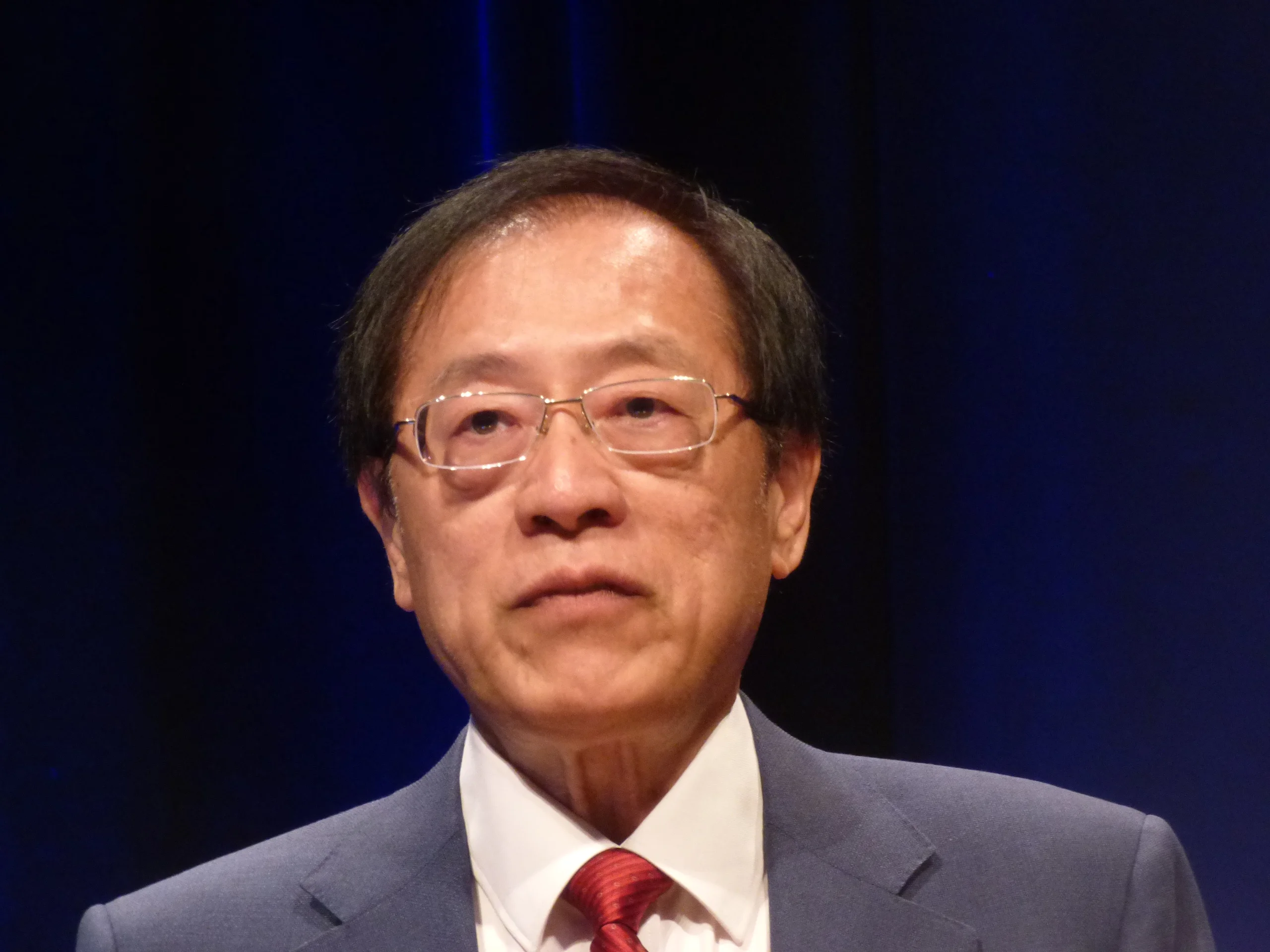
Andrew Yao
 China
Chinacomputer scientist•university teacher
Also known as: Andrew Chi-Chih Yao, Yao Qizhi
Birthday
December 24, 1946
Birth Sign
Sagittarius
Birthplace
Shanghai, China
Age
79 years old
About
Andrew Chi-Chih Yao is a Chinese computer scientist and theoretical physicist who has fundamentally reshaped the landscape of computational theory. Born in Shanghai in 1946, he currently serves as a professor and the Dean of the Institute for Interdisciplinary Information Sciences at Tsinghua University. His early work introduced what is now known as Yao's Principle, a cornerstone result applying the minimax theorem to randomized algorithms that influences decades of research in complexity theory and cryptography.
Yao's academic path stands out for its remarkable speed and interdisciplinary breadth. After graduating from National Taiwan University, he earned a PhD in physics from Harvard in 1972 and completed a second doctorate in computer science at the University of Illinois in just two years by 1975. He taught at MIT, Stanford, and UC Berkeley before joining Princeton in 1986, where he held the William and Edna Macaleer Professorship. In 2000, he received the ACM Turing Award, often called the Nobel Prize of computing, for his foundational contributions to communication complexity and pseudorandomness.
For many years, Yao worked in the United States as a naturalized citizen. In 2015, he made headlines by renouncing his US citizenship alongside physicist Chen-Ning Yang to become an academician of the Chinese Academy of Sciences. Since then, he has dedicated himself to advancing computer science education and research in China, building the IIIS into a world-class hub for interdisciplinary work in artificial intelligence and quantum information.
Early Life & Background
Andrew Chi-Chih Yao was born on December 24, 1946, in Shanghai during a period of significant political upheaval in China. His family relocated to Taiwan when he was young, and he spent his formative years there. From an early age, Yao displayed an exceptional aptitude for mathematics and physics, which led him to attend National Taiwan University. He completed his undergraduate studies in physics there in 1967, demonstrating the intellectual foundation that would later support his dual doctorates.
Following his graduation, Yao traveled to the United States to pursue advanced research opportunities. He enrolled at Harvard University, where he studied under the supervision of Nobel laureate David Gross. He successfully completed his Ph.D. in theoretical physics in 1972. Rather than resting on this achievement, he immediately moved to the University of Illinois Urbana-Champaign to tackle a new field. In a feat of rapid learning that remains legendary in academic circles, he earned a second Ph.D. in computer science in just two years, finishing in 1975. This unique combination of deep training in both physical laws and computational limits laid the groundwork for his future career bridging these disciplines.
His early career began with prestigious appointments in the United States. He served as an Assistant Professor at MIT and Stanford University before moving to Princeton University in 1986. During this time, he conducted groundbreaking research in communication complexity, pseudorandomness, and secure multi-party computation. Despite his growing success in American academia, a pivotal decision loomed. In 2004, he resigned from his position at Princeton to return to Beijing and join Tsinghua University. Initially, he worked to build the Institute for Theoretical Computer Science, which later evolved into the Institute for Interdisciplinary Information Sciences (IIIS), where he currently serves as Dean.
Career Growth
The year 2000 marked the pinnacle of international recognition for Andrew Yao when the Association for Computing Machinery awarded him the A.M. Turing Award. This honor celebrated his foundational contributions to the theory of computation, specifically his work on communication complexity and its applications in circuit design, data structures, and cryptography. The award solidified his status as one of the most influential figures in modern computing history.
Upon returning to China in 2004, Yao focused on establishing world-class research infrastructure. He founded the Institute for Theoretical Computer Science at Tsinghua University, which eventually grew into the Institute for Interdisciplinary Information Sciences (IIIS). As Dean, he spearheaded initiatives in quantum information science and artificial intelligence, creating a center that attracts top talent globally. His leadership helped transform Tsinghua into a major hub for computer science research in Asia.
A defining moment in his professional life occurred in 2015 when he publicly renounced his U.S. citizenship to become a full-time citizen of the People's Republic of China. This move was widely reported and supported by Chinese leadership, including President Xi Jinping. Since then, he has focused on cultivating a new generation of researchers through programs like the renowned "Yao Class," a specialized track for gifted undergraduates in AI and quantum computing. As of 2026, he continues to lead IIIS, advocating for global AI safety and signing the IDAIS London Declaration alongside fellow Turing Award winner Gilles Brassard.
Career Timeline
Public Image & Style
Andrew Yao projects the image of a humble, brilliant scholar who prioritizes the advancement of knowledge over personal fame. He is portrayed in media as a visionary who successfully bridged the gap between Western theoretical computer science and China's emerging technological dominance. His public persona is defined by intellectual rigor and a commitment to scientific integrity rather than the flashiness often associated with tech moguls.
He is known for his distinctive voice in discussions about artificial intelligence, often arguing that AI is not omnipotent and emphasizing the need to understand mathematical and physical boundaries. This thoughtful, cautious approach has earned him respect across the globe, positioning him as a responsible leader in a field prone to hype. His return to China and subsequent work have reinforced his image as a patriot dedicated to national technological advancement while maintaining international collaboration.
Fame & Fandom
Andrew Yao does not have a fanbase in the traditional sense of adoring crowds or organized clubs; instead, his influence is carried by a global community of computer scientists, quantum researchers, and AI engineers who revere his intellectual legacy. This academic cohort operates through rigorous mentorship rather than social media rituals, yet their devotion manifests in the legendary status of the "Yao Class" at Tsinghua University, a program described as powering half of contemporary global AI development. While there are no fan campaigns or merchandise drives, the sheer scale of his impact is reflected in his standing within the iFANN Global Fame Rankings. His work has propelled him to become the 65th most famous person in AI, a position he holds steady from the previous cycle. This ranking places him among the elite architects of modern computation, recognized for reshaping how we understand complexity theory and cryptography. The reach of his influence extends beyond mere numbers, tracking global attention across media coverage, search trends, and consumption signals worldwide. His return to China in 2004 marked a pivotal moment in the nation's technological rise, further cementing his status as a thought leader who bridges theoretical physics and practical artificial intelligence. Even as he advocates for global AI safety through declarations like the IDAIS London Declaration, his primary recognition remains rooted in the profound respect of his peers and the tangible output of his students.
Interesting Facts and Legends
Andrew Yao holds the distinction of being the first Chinese-born computer scientist to receive the ACM A.M. Turing Award, a feat often compared to winning the Nobel Prize in the field of computing. One of the most legendary aspects of his early career is his completion of a Ph.D. in physics at Harvard followed immediately by a Ph.D. in computer science at the University of Illinois in just two years. This dual doctorate in hard sciences from different institutions set him apart from his peers.
The "Yao Class" at Tsinghua has become a cultural phenomenon within the tech industry. It is widely rumored among insiders that a significant portion of current leaders in Chinese AI development were students in this program, earning it a legendary status as a breeding ground for the next generation of technologists. Another enduring story involves the "Quantum Magic Moment" of July 2026, where Yao and collaborator Gilles Brassard reflected on a specific breakthrough that entered the folklore of the quantum computing community.
Despite his immense fame and influence, Yao is known for his modesty and lack of interest in celebrity trappings. He focuses entirely on research and teaching rather than public image or commercial endorsements. In 2024, he was named one of the 100 Most Influential People in AI by TIME magazine, further cementing his legacy as a visionary who bridges Western theoretical computer science with China's emerging technological dominance.
Notable Quotes
“AI is not omnipotent; we must understand the mathematical and physical boundaries of what it can achieve.”
“Boundaries in AI are exactly a positive development, as they guide us toward more robust and safe systems.”
“The 'Yao Class' represents the future of our field, driven by a deep understanding of both theory and practice.”
Family & Personal Life
Andrew Yao is married to Frances Yao, and their relationship has remained a constant throughout his life. They have maintained a relatively low profile regarding their private affairs compared to public figures in entertainment, keeping their personal lives away from the media spotlight. There are no public records of prior marriages, engagements, or high-profile romantic relationships outside of his marriage to Frances.
The couple has not publicly detailed specific dates of their meeting or wedding in mainstream media, but Frances is frequently acknowledged as his spouse in biographical profiles. They appear to share a focus on their careers and academic pursuits rather than raising a large family in the public eye. No widely publicized children are mentioned in available sources, suggesting they prioritized their professional achievements and intellectual contributions over expanding their family publicly.
Notable Connections
Relationships & Dating History
Andrew Yao has maintained a stable and private personal life throughout his decades-long career. He is married to Frances Yao, and their relationship has been a constant presence in his life. They have kept their marriage largely out of the public eye, avoiding the media scrutiny that often accompanies high-profile figures. There are no public records of prior marriages, engagements, or high-profile romantic relationships outside of his union with Frances.
The couple has not publicly detailed the specifics of how they met or the date of their wedding in mainstream media. However, Frances is frequently acknowledged as his spouse in biographical profiles and official university documents. As of 2026, Andrew Yao remains married to Frances Yao. Their partnership appears to be grounded in mutual support for their respective careers and shared dedication to intellectual pursuits rather than public engagement.
- MarriedFrances YaoCurrentLong-term spouse; maintains a low profile.
Salary, Net Worth In 2026
$18 Million
iFANN Editorial Team estimate
iFANN Editorial Team estimates Andrew Yao's net worth at approximately $18 million as of 2026. Unlike entertainers whose wealth comes from box office returns or endorsement deals, Yao's fortune stems from his long tenure as a tenured professor and dean at Tsinghua University, combined with substantial research grants and speaking engagements. His annual salary as a distinguished academic in China likely ranges between $300,000 and $500,000, supplemented by funding for his extensive research in quantum computing and artificial intelligence.
His assets probably include real estate holdings in Beijing and potentially equity stakes in university-affiliated startups or spin-offs, though these are not publicly itemized. The estimate reflects his position as a key leader in China's strategic technology sector, where his influence commands significant resources. While specific financial disclosures are rare for academics, his stature as a Turing Award winner and a central figure in national strategy suggests a comfortable wealth level that supports his continued high-level research without reliance on commercial ventures.
Awards Won (7)
Andrew Yao's accolades reflect his status as one of the most influential scientists of the modern era. He received the 2000 ACM A.M. Turing Award, the highest honor in computer science, for his foundational contributions to computational complexity theory. He is a Fellow of the American Academy of Arts and Sciences, a Member of the National Academy of Engineering, and a Foreign Associate of the U.S. National Academy of Sciences. In 2011, he was elected as an Academician of the Chinese Academy of Sciences, and in 2024, TIME magazine named him one of the 100 Most Influential People in AI.
2000 · Scientific Achievement
Foundational contributions to computational complexity theory
2004 · Academic Honor
Contributions to Computer Science
Known For
ACM Turing Award
2000 · Winner
Institute for Interdisciplinary Information Sciences
2005 · Founder and Dean
Yao's Principle
1979 · Formulator
Keywords
Sources
Quick Facts
- Profession
- computer scientist, university teacher
- Born
- December 24, 1946
- Birthplace
- Shanghai, China
- Gender
- Male
- Spouse
- Frances Yao
- Birth Sign
- Sagittarius
Personal Details
- Full Name
- Andrew Chi-Chih Yao
- Spouse
- Frances Yao
- Children
- Education
- National Taiwan University (BS Physics), Harvard University (PhD Theoretical Physics), University of Illinois Urbana-Champaign (PhD Computer Science)
Frequently Asked Questions
Who is Andrew Yao?
What is Andrew Yao famous for?
Is Andrew Yao still alive?
Why did Andrew Yao return to China?
Does Andrew Yao have kids?
Similar People
Join the community
fans discussing