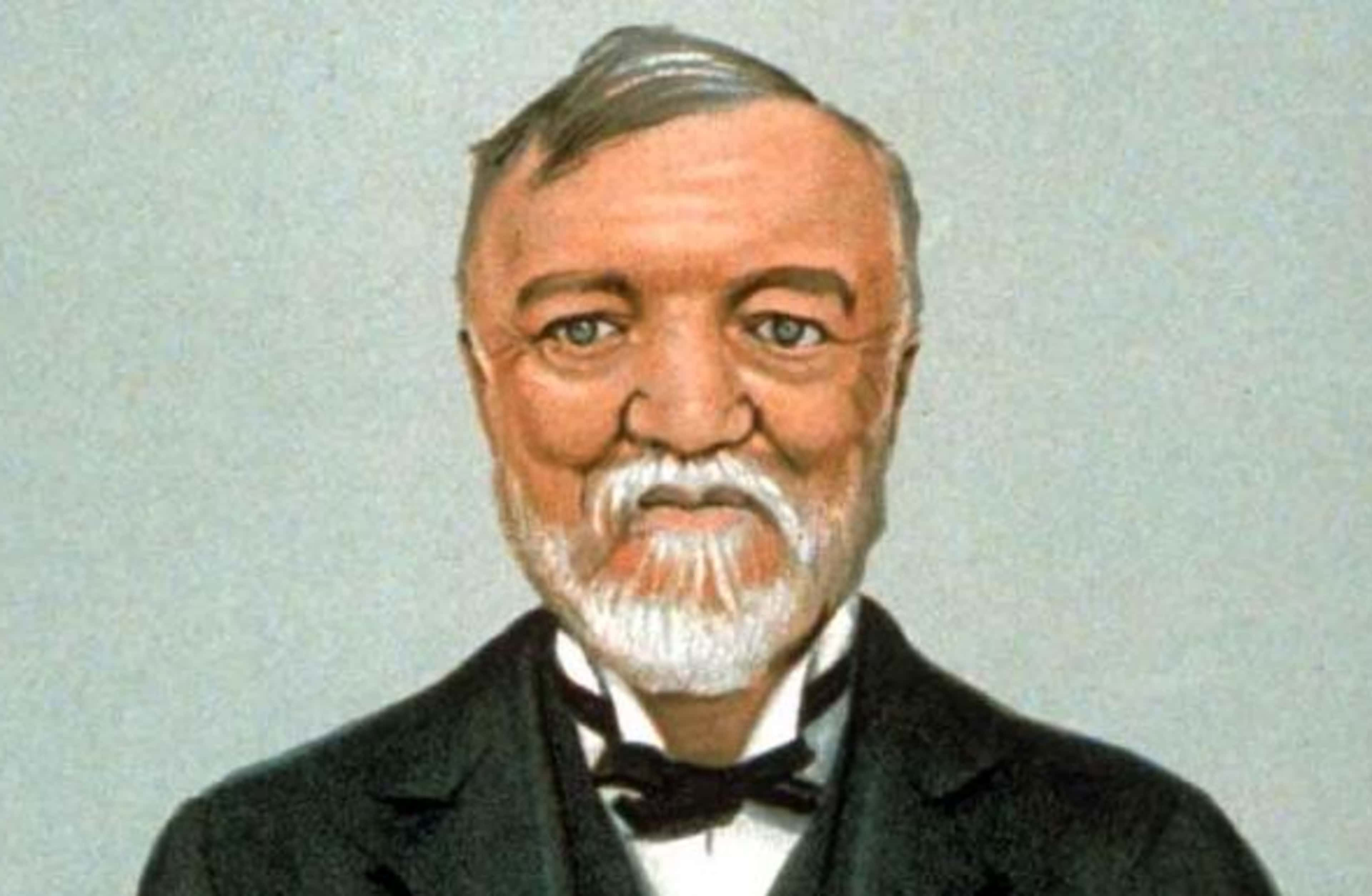
Andrew Carnegie
 United Kingdom
Industrialist•philanthropist•business magnate•economist
Also known as: Endriu Karnegi, A. Carnegie
Birthday
November 25, 1835
Birth Sign
Sagittarius
Birthplace
Dunfermline, Scotland
Age
Died at 83
Height
5 ft 3 in (160 cm)
About
Andrew Carnegie was a Scottish-American industrialist and philanthropist who built the Carnegie Steel Company into the largest steel producer in the world, then gave away nearly all of his fortune to fund libraries, universities, and peace initiatives. Born in Dunfermline, Scotland, in 1835, he emigrated to Pennsylvania at age 12 and worked his way from a cotton mill bobbin boy to the richest man of his era. His 1901 sale of Carnegie Steel to J.P. Morgan for over $300 million made him a symbol of the American dream, while his 1889 essay "The Gospel of Wealth" argued that the rich have a moral duty to use their surplus for the public good.
Carnegie's philanthropy reshaped American civic life. He funded more than 2,500 public libraries, established Carnegie Hall, the Carnegie Institution for Science, the Carnegie Endowment for International Peace, and the Carnegie Corporation of New York, which continues to operate today. His maxim that "the man who dies rich dies disgraced" influenced generations of givers, including Bill Gates and Warren Buffett. He died on August 11, 1919, in Lenox, Massachusetts, leaving a legacy that still shapes philanthropy and education worldwide.
Early Life & Background
Andrew Carnegie was born in a stone cottage at 4 Moodie Street in Dunfermline, Scotland, to William Carnegie, a handloom weaver, and Margaret Morrison Carnegie. The family's financial struggles deepened as industrial weaving displaced handloom work, and in 1848, when Andrew was 12, they immigrated to Allegheny City, Pennsylvania, across the river from Pittsburgh. His father found work in a cotton factory, and young Andrew began as a bobbin boy in a cotton mill, earning $1.20 per week.
Carnegie's formal schooling was minimal, but his uncle, George Lauder, instilled a love of learning, and he gained access to Colonel James Anderson's private library, which was open to working boys. This early exposure to books shaped his lifelong commitment to libraries. At 14, he became a telegraph messenger boy in Pittsburgh, memorizing the city's streets and learning to read telegraphic signals by ear. In 1851, he became a telegraph operator, and in 1853, Thomas A. Scott, superintendent of the Pennsylvania Railroad's Pittsburgh division, hired him as his personal telegrapher and secretary. Carnegie rose rapidly, and by 1859, at age 24, he succeeded Scott as superintendent of the Pittsburgh division.
Career Growth
While working for the railroad, Carnegie made shrewd investments in the Woodruff Sleeping Car Company and oil lands in Pennsylvania's Oil Creek region, which yielded substantial returns. In 1865, he founded the Keystone Bridge Company, which built iron bridges for railroads. In 1872, he visited Britain and observed the Bessemer steelmaking process, which made steel cheaper and faster to produce. He returned convinced that steel would replace iron, and in 1875, he opened the Edgar Thomson Steel Works in Braddock, Pennsylvania, named after the president of the Pennsylvania Railroad.
Carnegie Steel grew through vertical integration, acquiring iron ore mines in the Mesabi Range, coke fields, and lake steamships and railroads. By the 1890s, it was the largest and most profitable industrial enterprise in the world, producing more steel than all of Great Britain. In 1892, the company was reorganized as the Carnegie Steel Company, and that same year, the Homestead Strike erupted at his Homestead plant, a violent labor dispute that resulted in several deaths and tarnished his reputation. In 1901, Carnegie sold Carnegie Steel to J.P. Morgan's newly formed United States Steel Corporation for $303,450,000, making him the richest man in the world. He retired from business at 65 to devote himself entirely to philanthropy.
Career Timeline
Public Image & Style
Carnegie's public image is that of the archetypal self-made man, the poor Scottish immigrant who rose to become the richest man in the world through intelligence and hard work. He cultivated an image as a man of letters and culture, surrounding himself with intellectuals, writers, and politicians. His signature aesthetic was conservative Victorian dress, dark suits, high collars, and, in later years, a full white beard. Media portrayals of Carnegie are divided: he is alternately celebrated as the father of modern philanthropy and criticized as a ruthless capitalist whose wealth was built on the exploitation of workers, particularly in light of the Homestead Strike.
Fame & Fandom
Andrew Carnegie never courted the adoration of a modern fanbase. No crowds gathered to faint at his appearances, and no organized groups chanted slogans or funded birthday billboards in his name. The public interaction he commanded was strictly transactional and ideological, centered on his steel empire and his controversial philosophy of wealth distribution. While figures like Bill Gates or Warren Buffett often invoke his famous maxim that "the man who dies rich dies disgraced," this reverence is institutional rather than devotional. The entities carrying his legacy, the Carnegie Corporation, the Andrew Carnegie Medals for Excellence, and the network of 2,500 libraries built between 1883 and 1929, operate as grant-making foundations and civic institutions, not fan clubs. There are no documented rituals, inside jokes, or viral campaigns driven by enthusiasts. His audience remains historians, scholars, and citizens benefiting from the educational infrastructure he erected, treating him as a historical archetype rather than a living celebrity. Consequently, the concept of a formal fandom name does not apply; no official or unofficial group has claimed the title of his supporters. iFANN's Global Fame Engine evaluated his standing in August 2026 and found that while his historical impact is immense, he currently holds no placement in the published rankings. He is not listed among the Global Top 1,000 or any Top-100 scope list, reflecting his status as an evaluated figure without a current competitive ranking.
Interesting Facts and Legends
Carnegie was known for his thick Scottish accent, which he retained throughout his life, and he was notably short, standing about 5 feet 3 inches. He was a prolific writer and speaker, publishing articles and books on topics ranging from business to international peace. One of his most famous sayings, "Put all your eggs in one basket, and then watch that basket," is often quoted in business advice, though its exact origin is debated.
A legend that fans of history still retell involves his sale to J.P. Morgan in 1901. According to the story, Carnegie wrote the sale price, $480 million, on a single piece of paper, and Morgan accepted it without negotiation. While the exact details vary, the tale captures the scale of the deal. Another iconic moment is the Homestead Strike of 1892, which Carnegie, who was in Scotland, delegated to his partner Henry Clay Frick. The violent confrontation with Pinkerton detectives left at least ten people dead, and Carnegie spent the rest of his life trying to reconcile his pro-labor rhetoric with the event.
Notable Quotes
“The man who dies thus rich dies disgraced.”
“Surplus wealth is a sacred trust which its possessor is bound to administer in his lifetime for the good of the community.”
“The first man gets the oyster, the second man gets the shell.”
“I was born in poverty and would not exchange my early memories for all the riches in the world.”
“Put all your eggs in one basket, and then watch that basket.”
Family & Personal Life
Carnegie married Louise Whitfield, the daughter of a wealthy New York merchant, on April 22, 1887, when he was 51 and she was 30. The couple had one child, Margaret Carnegie Miller, born in 1897. Carnegie had a close relationship with his mother, Margaret Morrison Carnegie, who lived with him until her death in 1886, one year before his marriage, and was said to have exerted considerable influence over his life. The family divided their time between a New York residence at 2 East 91st Street, now the Cooper Hewitt Smithsonian Design Museum, and Skibo Castle in Scotland, which Carnegie purchased in 1898.
Notable Connections
Andrew Carnegie's life was intertwined with several key figures: Thomas A. Scott, his mentor at the Pennsylvania Railroad; Henry Clay Frick, his partner at Carnegie Steel whose handling of the Homestead Strike created lasting controversy; J.P. Morgan, who purchased Carnegie Steel in 1901; John D. Rockefeller, his contemporary and fellow industrialist; and his wife Louise Whitfield Carnegie. His daughter, Margaret Carnegie Miller, carried on his philanthropic legacy.
Relationships & Dating History
Andrew Carnegie's documented romantic history is remarkably sparse, reflecting the private nature of his personal life in the Victorian era. The only confirmed significant relationship was his marriage to Louise Whitfield, whom he met in the early 1880s through New York society circles. They married on April 22, 1887, when Carnegie was 51 and Louise was 30. The couple remained together until Carnegie's death in 1919. Their daughter, Margaret Carnegie Miller, was born in 1897. Carnegie had a close relationship with his mother, who lived with him until her death in 1886, one year before his marriage, and was said to have exerted considerable influence over his life. There are no credible documented reports of other romantic relationships, engagements, or rumored affairs. At the time of his death, Carnegie was married to Louise, who survived him, dying in 1946.
- MarriedLouise Whitfield Carnegie1887 - 1919Married on April 22, 1887, in New York; remained together until Carnegie's death in 1919.
Death & Aftermath
Died
August 11, 1919 (aged 83)
Death Place
Lenox, Massachusetts
Cause of Death
Bright's disease and complications related to diabetes
Andrew Carnegie spent his final days at Lenox Hall in Lenox, Massachusetts. He passed away on August 11, 1919, at the age of 83. The official cause of death was reported as Bright's disease and complications related to diabetes. Tributes poured in immediately from peers, institutions, and officials globally, recognizing him as one of the wealthiest industrialists of his day who had transformed the American steel industry. His funeral was a private affair held at the Church of the Ascension in New York City on August 14, 1919, attended by family members and close associates before he was laid to rest in Sleepy Hollow Cemetery alongside his wife and daughter.
The estate was handled by his family and trustees, with the vast majority of his wealth already distributed to various charitable causes during his lifetime, leaving a foundation for future philanthropy rather than a massive inheritance dispute. In the posthumous era, Andrew Carnegie's legacy has been maintained through numerous releases, books, and honors that educate new generations about his life and philosophy. The Andrew Carnegie Foundation (now Carnegie Corporation of New York) continues to award grants and fellowships, while his name is associated with over 2,500 libraries worldwide, many of which remain operational landmarks.
Net Worth (Estate Value)
$4 Billion
iFANN Editorial Team estimate
At the time of his death in 1919, Carnegie's net worth was approximately $30 million, reflecting that he had given away nearly all of his fortune during his lifetime. At its peak in 1901, following the sale of Carnegie Steel, his fortune was about $480 million, equivalent to roughly $15 billion in today's dollars. iFANN's Editorial Team estimates that the current value of his estate's assets, managed primarily by the Carnegie Corporation of New York, is approximately $4 billion. The Carnegie Corporation, which he endowed with $125 million in 1911, has grown through investment income and continues to distribute grants annually. Other revenue streams include licensing of the Carnegie name and the ongoing operation of Carnegie-funded institutions. As of 2026, the estate's financial trajectory remains strong, with the corporation's assets exceeding $4 billion.
Awards Won (2)
Andrew Carnegie received numerous honorary degrees from universities including the University of Glasgow, and was granted the Freedom of the City of Edinburgh and other British cities. He was a member of the American Philosophical Society. The Carnegie Hero Fund, established in 1904, awards medals to civilians who perform acts of heroism, and these medals continue to be awarded today. The Carnegie Medal for Excellence in Fiction and Nonfiction, established later by the American Library Association, bears his name and is awarded annually.
1886 · Honorary
University of Glasgow
1887 · Honorary
City of Edinburgh
Known For
Carnegie Steel Company
1875 · Founder and owner
The Gospel of Wealth
1889 · Author
Carnegie Libraries
1883 · Philanthropist
Carnegie Corporation of New York
1911 · Founder
Keywords
Sources
Quick Facts
- Profession
- Industrialist, philanthropist, business magnate, economist
- Born
- November 25, 1835
- Birthplace
- Dunfermline, Scotland
- Died
- August 11, 1919
- Death Place
- Lenox, Massachusetts
- Gender
- Male
- Spouse
- Louise Whitfield Carnegie
- Birth Sign
- Sagittarius
Personal Details
- Full Name
- Andrew Carnegie
- Height
- 5 ft 3 in (160 cm)
- Spouse
- Louise Whitfield Carnegie
- Children
- Margaret Carnegie Miller
- Education
- Minimal formal schooling; self-educated through libraries and mentors
Frequently Asked Questions
How did Andrew Carnegie make his money?
How many libraries did Andrew Carnegie build?
Was Andrew Carnegie the richest man in the world?
What was the Homestead Strike and why was Carnegie involved?
Did Andrew Carnegie have children?
Similar People
Join the community
fans discussing