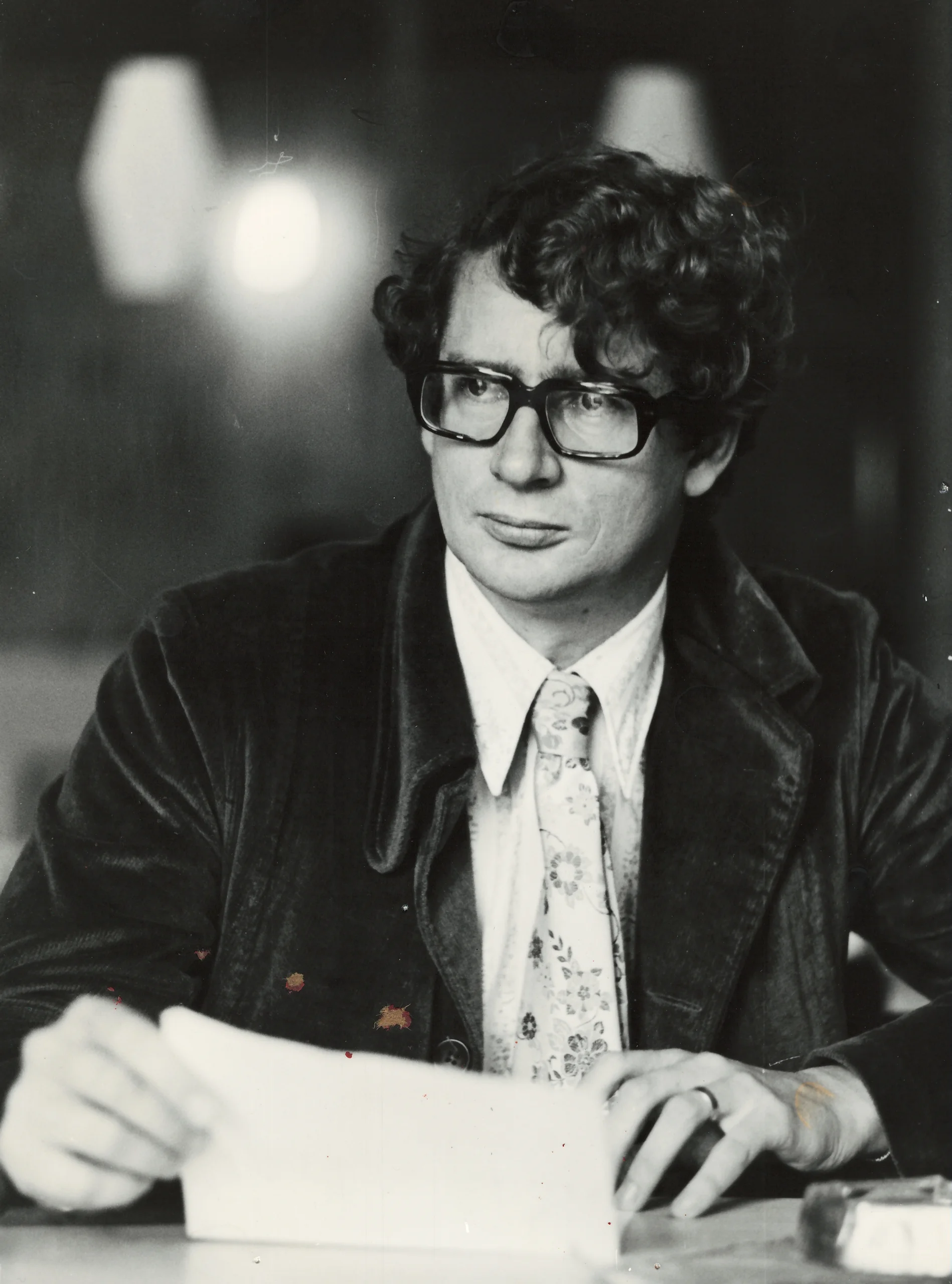
André Brink
 South Africa
Novelist•Essayist•Poet•Translator
Also known as: Andre Brink, Andre Philippus Brink
Birthday
May 29, 1935
Birth Sign
Gemini
Birthplace
Vrede, South Africa
Age
Died at 79
About
André Philippus Brink was a South African novelist, essayist, and poet who wrote in both Afrikaans and English. He was a leading figure in the 1960s literary movement Die Sestigers, which sought to modernize Afrikaans literature and challenge the apartheid regime. His works, including Looking on Darkness and A Dry White Season, are celebrated for their political engagement and humanist vision.
Brink taught English at the University of Cape Town for decades, influencing generations of students. His writing earned international acclaim, with translations into dozens of languages and awards such as the Martin Luther King Memorial Prize and the Prix Médicis étranger. He passed away on February 6, 2015, leaving a rich literary legacy.
Early Life & Background
André Brink was born on May 29, 1935, in Vrede, a small town in the Free State province of South Africa. His father, a magistrate, and his mother, a schoolteacher, moved the family frequently across the Free State and Transvaal. He matriculated in 1952 with seven distinctions, showing early academic promise.
He studied at Potchefstroom University, earning a BA in 1955 and an MA in 1958, focusing on Afrikaans and English. From 1959 to 1961, he pursued postgraduate studies in comparative literature at the Sorbonne in Paris. This exposure to European intellectual currents, combined with the shock of the Sharpeville massacre in 1960, profoundly shaped his opposition to apartheid.
Brink began writing at age nine, with a poem titled "A Little Terrible Thing." His early novels, such as Lobola vir die lewe (1962), were largely apolitical, but his time in Paris and his growing political awareness marked a turning point.
Career Growth
Brink's breakthrough came with the publication of Kennis van die Aand (1973), translated as Looking on Darkness. It was the first Afrikaans novel banned by the apartheid government, cementing his reputation as a dissident voice. He followed with 'N oomblik in die wind (1975; An Instant in the Wind) and Gerugte van reën (1978; Rumours of Rain), both exploring interracial relationships against apartheid's backdrop.
His most famous work, 'N droë wit seisoen (1979; A Dry White Season), examined the death of a black activist in police custody. It was adapted into a 1989 film starring Donald Sutherland. Brink continued to publish prolifically, including A Chain of Voices (1982), An Act of Terror (1991), and The Other Side of Silence (2002). After apartheid ended in 1994, he turned his attention to the complexities of democratic South Africa. He also wrote plays, travel books, and translated works into Afrikaans.
Brink was nominated for the Nobel Prize in Literature three times and received numerous international awards. His memoir, A Fork in the Road, was published in 2009.
Career Timeline
Public Image & Style
Brink was seen as a courageous writer who used his platform to confront apartheid. He was respected as a literary critic and mentor to younger writers. His public persona was that of an intellectual who bridged the Afrikaans and English literary worlds, unafraid to challenge the status quo. Fans admired his commitment to justice and his ability to capture the human cost of political oppression.
Fame & Fandom (iFAMOUS Rankings)
André Brink holds no current placement in the iFANN Global Top 1,000 or any Top-100 scope list, a status confirmed by the August 2026 evaluation from the iFANN Global Fame Engine. While his name resonates deeply within specific literary circles and academic institutions across South Africa and beyond, he does not currently register as a ranked entity in the published global fame rankings that track contemporary celebrity influence and mass-market consumption signals worldwide.
The audience surrounding André Brink is defined by its lack of a formal, organized fandom name. Unlike modern pop icons who inspire chart-topping campaigns or subway ad drives, Brink's devotees are primarily students, scholars, and readers of serious literature rather than a mobilized collective with a specific moniker. There are no documented fan rituals, birthday billboards, or social media trends dedicated to his memory in the way one might see for a musician or film star. His relationship with his readership was built on the quiet authority of his mentorship at the University of Cape Town and the intellectual weight of his political engagement. Fans admired his commitment to justice and his ability to capture the human cost of apartheid through prose that bridged the Afrikaans and English worlds, but this admiration remained a matter of deep appreciation rather than active, public mobilization.
Interesting Facts and Legends
Brink maintained fluency in French, a skill refined during his formative years in Paris, which later facilitated his international acclaim. He was a member of the Broederbond, a secret Afrikaner society, though he eventually turned against the organization and criticized it publicly. His personal correspondence with his fifth wife, Karina Szczurek, was published under the title You Make Me Possible, while her own memoir about their life together is known as The Fifth Mrs Brink. A lifelong lover of classical music, Brink often listened to complex compositions while crafting his novels.
Cultural lore surrounding Brink frequently centers on a pivotal moment in 1974 when he became the first Afrikaans writer to have a book banned by the South African government. This ban targeted his novel *Kennis van die aand*, released in English as *Looking on Darkness*, an event that cemented his legacy as a courageous critic of the regime. Another widely retold story involves his death on February 6, 2015, while traveling on board a plane at the age of seventy-nine. This passing was reported by major outlets like *The Guardian* and *The New York Times*, solidifying his reputation as a South African Literary Lion whose life ended amidst the very journeys he once championed.
Notable Quotes
“There's a particular audacity involved in imagining yourself as a black woman.”
“I write because I want to make sense of the world, and I want to make the world make sense.”
“The writer is not a free agent. He is responsible to his society.”
Family & Personal Life
André Brink was born to a magistrate father and a schoolteacher mother. He had one sibling, a brother. He was married five times. His first wife was Estelle Naudé (1951–1965), with whom he had a son. He then married Salomina Louw (1965–1966), and they had a daughter. His third marriage was to Sophia Albertina Miller (1970–1987), with whom he had two children. His fourth wife was Marésa de Beer (1990–2003). His final marriage was to Karina Magdalena Szczurek, from 2006 until his death. He had four children in total.
Notable Connections
André Brink was closely associated with fellow writers Ingrid Jonker, Etienne Leroux, and Breyten Breytenbach through the Die Sestigers movement. He also worked with J.M. Coetzee, co-editing a literary journal. His novel A Dry White Season was adapted into a film starring Donald Sutherland.
Relationships & Dating History
André Brink was married five times. His first marriage to Estelle Naudé lasted from 1951 to 1965, and they had a son. He then married Salomina Louw in 1965, but the marriage lasted only a year, producing a daughter. In 1970, he married Sophia Albertina Miller, with whom he had two children; they divorced in 1987. His fourth marriage was to Marésa de Beer from 1990 to 2003. His final marriage was to Karina Magdalena Szczurek in 2006, and they remained together until his death in 2015.
- MarriedEstelle Naudé1951 - 1965First marriage, had one child together.
- MarriedSalomina Louw1965 - 1966Short-lived marriage, had one child.
- MarriedSophia Albertina Miller1970 - 1987Longest marriage, had two children.
- MarriedMarésa de Beer1990 - 2003Fourth marriage, ended in divorce.
- MarriedKarina Magdalena Szczurek2006 - 2015CurrentMarried until his death.
Death & Aftermath
Died
February 6, 2015 (aged 79)
Death Place
Unknown
Cause of Death
Unknown
Net Worth (Estate Value)
$3 Million
iFANN Editorial Team estimate
iFANN currently estimates the estate of André Brink at $3 Million as of 2026, based on editorial analysis of his ongoing literary impact. This valuation derives from steady royalties generated by books that remain in print across dozens of languages, including enduring titles such as *A Dry White Season* and *Looking on Darkness*. Additional income streams include revenue from film adaptations, translation rights, and the academic licensing of his texts. Following his passing, his widow, Karina Szczurek, assumed management of his literary legacy, ensuring these assets continue to generate value for his heirs.
Awards Won (2)
André Brink won several prestigious awards for his writing, including the Martin Luther King Memorial Prize and the Prix Médicis étranger. He was also nominated for the Nobel Prize in Literature three times.
1980 · Literature
A Dry White Season
1982 · Literature
A Chain of Voices
Known For
A Dry White Season
1979 · Author
Looking on Darkness
1973 · Author
Rumours of Rain
1978 · Author
Keywords
Sources
Quick Facts
- Profession
- Novelist, Essayist, Poet, Translator
- Born
- May 29, 1935
- Birthplace
- Vrede, South Africa
- Died
- February 6, 2015
- Death Place
- On flight from Amsterdam to South Africa
- Gender
- Male
- Spouse
- Karina Szczurek
- Birth Sign
- Gemini
Personal Details
- Full Name
- André Philippus Brink
- Spouse
- Karina Magdalena Szczurek
- Children
- 4
- Education
- Potchefstroom University (BA, MA), Sorbonne University (postgraduate)
Filmography
1
Total
1
Film
0
TV
Frequently Asked Questions
Who was André Brink?
What is André Brink's most famous book?
When did André Brink die?
What was André Brink's role in Die Sestigers?
What awards did André Brink win?
Similar People

Join the community
fans discussing