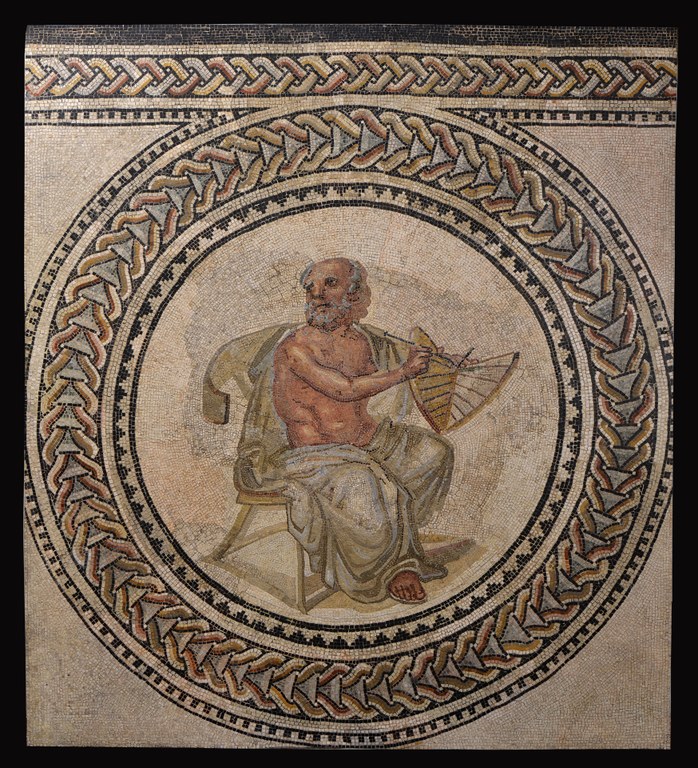
Anaximander
philosopher•astronomer•mathematician
Birthday
-0620
Birth Sign
Birthplace
Miletus
Age
Died at -73
About
Anaximander lived in Miletus, a bustling Greek city on the coast of modern-day Turkey, during the late seventh and mid-sixth centuries BC. Born around 610 BC and dying at age 73 around 546 BC, he stands as a pivotal figure in early Western thought. He studied under Thales before taking over as the second head of the Milesian school, where he taught future giants like Anaximenes and possibly Pythagoras. Unlike many predecessors who relied solely on oral tradition, Anaximander wrote On Nature, making him the first philosopher known to commit his ideas to text. Although only one fragment of this work survives today, ancient testimonies paint a picture of a man deeply engaged with the mechanics of the universe. His intellectual reach extended far beyond abstract philosophy into practical science and geography. Anaximander argued that an infinite substance called the apeiron served as the source of all things, introducing a level of conceptual abstraction previously unseen in Greek thought. He believed nature operated under strict laws rather than the whims of gods, suggesting that any disturbance to natural balance would not last long. In astronomy, he modeled celestial bodies relative to Earth, while his knowledge of geometry allowed him to bring the gnomon to Greece for measuring time and seasons. His cartographic efforts produced a detailed map of the inhabited world that significantly advanced geographical understanding. Beyond the study hall, Anaximander participated actively in the politics of Miletus. Historical records show he led colonists from his hometown to establish a new settlement, demonstrating his influence in both civic leadership and exploration. His life ended in 546 BC, leaving behind a legacy defined by rigorous observation and the courage to explain the cosmos through reason rather than myth.
Death & Aftermath
Died
-0547 (aged -73)
Death Place
Miletus, Ionia, Asia Minor
Cause of Death
Unknown; no historical record exists
Centuries later, Carlo Rovelli would crown Anaximander a hero in scientific thinking within his 2023 book, while modern Miletus now hosts a statue to honor the man who first committed philosophy to text. This enduring legacy stands in quiet contrast to the silence that surrounded his passing around 546 BCE in the bustling coastal city of Miletus. Historical records offer no details regarding his final days, last public appearance, or the specific circumstances that ended his life at approximately sixty-four years old. Ancient biographical traditions preserve nothing of an illness, accident, or natural cause, and the forensic procedures required for such determinations simply did not exist in sixth-century Greece.
The immediate aftermath of his death was defined not by public mourning or vigils, but by the quiet continuity of the Milesian school. His student Anaximenes succeeded him as the head of the institution, ensuring that the intellectual lineage continued without interruption or formal ceremony. The only physical tribute from his own era is absent, replaced entirely by the survival of his thought and the later scholarly reverence that treats him as a pivotal figure in early Western philosophy.
Awards & Accolades
Keywords
Quick Facts
- Profession
- philosopher, astronomer, mathematician
- Born
- -0620
- Birthplace
- Miletus
- Died
- -0547
- Death Place
- Miletus
- Gender
- Male
Join the community
fans discussing