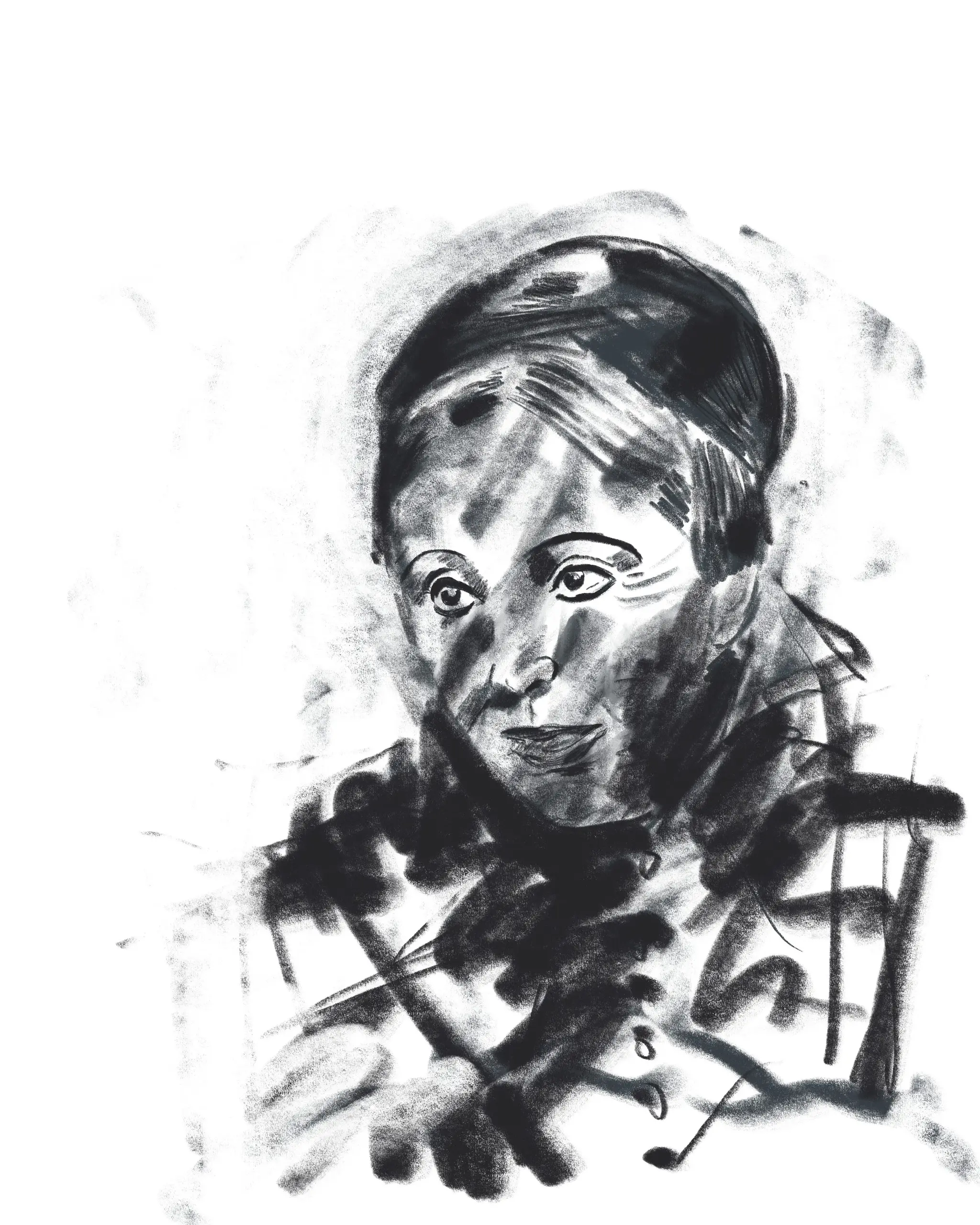
Anaïs Nin
 France
Also known as: Angela Anaïs Juana Antolina Rosa Edelmira Nin y Culmell, Anais Nin
Birthday
February 21, 1903
Birth Sign
Sagittarius
Birthplace
Neuilly-sur-Seine, France
Age
Died at 73
About
Anaïs Nin was a French-born American diarist, essayist, novelist, and writer of short stories and erotica. Born to Cuban parents in France, she lived in Spain and Cuba as a child, then spent sixteen years in Paris before moving to the United States. Her journals, kept from age eleven until her death, chronicle her personal life and relationships, including marriages to Hugh Parker Guiler and Rupert Pole, and affairs with Otto Rank and Henry Miller. In addition to her diaries, she wrote novels, essays, and erotic literature, much of which was published after her death. She spent her later years in Los Angeles, where she died in 1977. A finalist for the Neustadt International Prize for Literature in 1976, Nin is remembered for works like Delta of Venus and House of Incest.
Early Life & Background
Angela Anaïs Juana Antolina Rosa Edelmira Nin y Culmell entered the world on February 21, 1903, in Neuilly-sur-Seine, France. Her father, Joaquín Nin, was a Spanish-Cuban composer who struggled with alcoholism and infidelity, while her mother, Rosa Culmell, was a classically trained singer. This turbulent household moved frequently during her early years, first settling in Barcelona from 1908 to 1915 and then relocating to Havana, Cuba. It was in Havana that Nin attended school and developed an intense love for literature.
In 1917, the family returned to Europe, establishing roots in Paris. At just eleven years old, Nin began keeping a journal, a habit she would maintain daily for the rest of her life. She received little formal higher education, instead finding her intellectual formation within the vibrant literary circles of Paris. There she encountered figures like D.H. Lawrence and Otto Rank. By age sixteen, she was already immersed in an expatriate artistic community that would shape her worldview. She married her first husband, Hugh Parker Guiler, in 1931, though this union would eventually lead to a decade of complicated living arrangements while she pursued other passions.
Career Growth
Nin's career evolved from private writing to public acclaim, though much of her most famous work was published posthumously. In the 1930s, she began publishing under her own name, releasing House of Incest in 1936, a collection of surrealistic short stories that established her reputation as a daring writer. During this time, she also worked as a secretary and translator. After moving to the U.S. in 1940, she founded the Little Review Press in 1941 to publish works by other writers, including Henry Miller.
The 1950s marked her most intense period of diary-keeping and the eventual publication of her first major volumes of diaries. The first volume of The Diary of Anaïs Nin appeared in 1966, covering the 1930s, and brought her widespread fame. She became a central figure in the Beat Generation and the literary underground. In 1976, she was a finalist for the Neustadt International Prize for Literature. Her erotic short story collections, Delta of Venus and Little Birds, were published posthumously in 1977 and became international bestsellers, sparking a massive resurgence in interest in her work. Her influence extends far beyond her lifetime, inspiring modern writers like Lena Dunham and serving as a foundational text for women's studies and psychoanalytic literature.
Career Timeline
Public Image & Style
Nin is portrayed as a symbol of female empowerment, sexual liberation, and artistic integrity. Her image is often associated with the bohemian lifestyle, the feminist movement, and the exploration of the female psyche. Her writing is known for its lyrical prose, psychological depth, and unflinching honesty. She cultivated a persona of mystery and intimacy, often sharing her deepest thoughts through her diaries. Her style reflected her free-spirited nature, with flowing dresses and scarves becoming part of her iconic look.
Fame & Fandom (iFAMOUS Rankings)
Anaïs Nin never cultivated a modern fanbase, lacking the organized rallies or branded hashtags that define contemporary celebrity culture. Her admirers remained scattered readers and scholars rather than a mobilized legion. The Anais Nin Foundation preserves her archives, while preservationists occasionally campaign for historical markers in New York, but these are acts of literary stewardship rather than fandom rituals. There is no official name for her followers, and no documented campaigns emerged to boost her work during her lifetime or immediately after. Her influence settled quietly into academia and feminist discourse instead of exploding into pop culture spectacle.
In August 2026, the iFANN Global Fame Engine evaluated her standing across the world's cultural landscape. Anaïs Nin is currently not ranked in the Global Top 1,000 or any Top-100 scope list. She does not hold a placement in the published rankings. This absence reflects a legacy built on enduring reverence rather than current chart dominance or viral consumption signals. Her fame persists through the pages of her diaries and novels, sustained by a steady stream of new readers discovering her transgressive life story. The lack of a formal ranking underscores how her impact operates outside the metrics of mass media attention. While she remains a pivotal figure in literature, the data confirms she sits outside the active top-tier of global fame as measured by the engine. No numeric score defines her position. The evaluation stands neutral: she is unranked. This status highlights the difference between historical importance and current trending visibility. Her voice survives, but it does not dominate the current conversation in the way that generates a specific rank.
Interesting Facts and Legends
Born Angela Anaïs Juana Antolina Rosa Edelmira Nin y Culmell, she began keeping a journal at age eleven. She spent sixteen years in Paris before moving to the United States, where she lived until her death. A central pillar of her legend was her decade-long double life involving simultaneous marriages to Hugh Parker Guiler in Los Angeles and Rupert Pole in New York. Fans still retell the story of this bicoastal bigamy as a defiant rejection of societal norms. The publication of her eight-volume Diaries revealed intimate thoughts on sex and art, establishing her as a patron saint for women exploring their identities. Her turbulent relationship with Henry Miller generated folklore filled with passionate letters, including one where he wrote, "You're Food and Drink to Me." Recent discussions highlight her eerie predictions about America and the future of society. In November 2025, her papers were moved to safety prior to the Palisades fire, an event cementing her status as a vital historical figure whose work must be protected.
Notable Quotes
“We don't see things as they are, we see them as we are.”
“Love never dies a natural death. It dies because we don't know how to replenish its source. It dies of blindness and errors and betrayals. It dies of illness and wounds; it dies of weariness, of dullness, of fatigue.”
“You're Food and Drink to Me.”
“We write to taste life twice, in the moment and in retrospect.”
Family & Personal Life
Nin was raised in a culturally rich but turbulent household. Her father, Joaquín Nin, was a Spanish-Cuban composer who struggled with alcoholism and infidelity, while her mother, Rosa Culmell, was a French-Spanish singer. The family moved frequently: they lived in Barcelona from 1908 to 1915, then returned to Havana, Cuba, where Nin attended school and developed a deep love for literature. In 1917, the family moved back to Europe, settling in Paris. Here, Nin began keeping a journal at the age of eleven, a habit she maintained daily for the rest of her life.
She married Rupert Pole in 1955, and they had three daughters together: Daisy, Fawn, and Cosima. Nin and Pole remained married until her death. Her daughters played a crucial role in managing her estate and preserving her archives after she passed away. The family values of creativity and independence were deeply ingrained in her upbringing, influencing her own path as a writer and thinker.
Notable Connections
Relationships & Dating History
Anaïs Nin's personal life was as legendary as her writing, characterized by a series of intense, often simultaneous relationships. She married her first husband, Hugh Parker Guiler, in 1931. They met in Paris through mutual artistic friends. Their relationship was tumultuous; Nin felt stifled by his possessiveness but relied on his financial support. They had no children together. The marriage was legally dissolved only after she married Pole, though Guiler remained a significant figure in her life until his death.
During this time, she had romantic affairs with Otto Rank, an Austrian psychoanalyst and friend of Sigmund Freud, from approximately 1931 to 1936. Nin met him in Paris; he became her mentor and lover. Their relationship ended when Rank returned to Vienna, leaving Nin devastated. He profoundly influenced her psychological understanding of herself and her writing. She also had a passionate affair with Henry Miller from 1931 to 1938. Their relationship was deeply influential on both their careers, and they exchanged thousands of letters. The affair ended due to Miller's instability and Nin's desire for a more stable domestic life. They remained close friends afterward.
In 1955, despite being married to Guiler, Nin married Rupert Pole in a civil ceremony. This created a decade of "bicoastal bigamy," with Nin maintaining two households: one in New York with Pole and one in Los Angeles with Guiler. They had three daughters: Daisy, Fawn, and Cosima. Nin and Pole remained married until her death in 1977. As of 2026, she is widowed.
- MarriedHugh Parker Guiler1931 - 1955Met in Paris; wealthy art collector and patron; separated but never legally divorced until after second marriage
- DatedOtto Rank1931 - 1936Austrian psychoanalyst and mentor; relationship ended when he returned to Vienna
- DatedHenry Miller1931 - 1938American writer; passionate and intellectual affair; exchanged thousands of letters
- MarriedRupert Pole1955 - 1977Civil ceremony in 1955; three daughters together; remained married until her death
Death & Aftermath
Died
January 14, 1977 (aged 73)
Death Place
Los Angeles, California
Cause of Death
Cervical cancer
Anaïs Nin sat in her Los Angeles home, surrounded by the handwritten volumes of diaries she had maintained for six decades, continuing to write even as her health declined. On January 14, 1977, at the age of 73, she passed away from cervical cancer. The diagnosis remained consistent across authoritative records including Britannica and the Anais Nin Foundation, confirming the natural course of the illness that concluded her life in California. Her final public appearance prior to death is not specified in available data, though she continued her prolific writing until the end with her diaries spanning six decades and totaling approximately 150 handwritten volumes.
Tributes poured in immediately from peers and institutions who recognized her unique role as a chronicler of inner life and desire, with her work standing as a vital contribution to literature and feminist discourse. Her funeral or memorial service was handled privately by her family, specifically her daughters, who managed the complex estate of a woman known for her private turmoil.
Posthumously, her legacy expanded through the publication of remaining novels, erotica, and journals, while the Anais Nin Foundation took up the stewardship of her papers to ensure their preservation. Recent years have seen active preservation efforts, such as the movement of her papers to safety by Steven Reigns prior to the Palisades fire in November 2025. Various films and documentaries inspired by her life and work continue to emerge, and her archive remains under the protection of the foundation and her heirs to facilitate the dissemination of her vast body of written work.
Net Worth (Estate Value)
$15 Million
iFANN Editorial Team estimate
As a deceased author, Anaïs Nin's financial standing refers to the value of her estate. Research by the iFANN Editorial Team puts her fortune at around $15 million. This valuation reflects the ongoing revenue generated by her extensive body of work, including book royalties, licensing deals for her diaries and novels, and merchandise. Her estate continues to earn significant income through sales of Delta of Venus and Little Birds, which remain bestsellers globally.
The Anais Nin Foundation manages her archives and generates income through grants, lectures, and exhibitions. Rights to her writings for film, television, and stage adaptations contribute to the estate's earnings. The sale of her papers and the protection of her archives suggest a high valuation of her intellectual property. In November 2025, her papers were moved to safety by Steven Reigns prior to the Palisades fire, highlighting the ongoing efforts to protect her archives. The estate's financial trajectory remains strong, driven by the enduring demand for her work and the cultural significance of her diaries.
Awards & Accolades
View 4 records, honours and achievementsKnown For
The Diary of Anaïs Nin
1966 · Author
House of Incest
1936 · Author
Delta of Venus
1977 · Author
Little Birds
1977 · Author
Keywords
Sources
Quick Facts
- Profession
- writer, autobiographer, diarist
- Born
- February 21, 1903
- Birthplace
- Neuilly-sur-Seine, France
- Died
- January 14, 1977
- Death Place
- Los Angeles, California
- Gender
- Female
- Spouse
- Rupert Pole
- Birth Sign
- Sagittarius
Personal Details
- Full Name
- Angela Anaïs Juana Antolina Rosa Edelmira Nin y Culmell
- Spouse
- Rupert Pole
- Children
- Daisy Pole, Fawn Pole, Cosima Pole
- Education
- None formally recorded; self-educated through literary circles
Frequently Asked Questions
What was Anaïs Nin's full birth name?
How many husbands did Anaïs Nin have?
What is Anaïs Nin most famous for?
How did Anaïs Nin die?
Did Anaïs Nin have any children?
Social Media
Similar People
Join the community
fans discussing