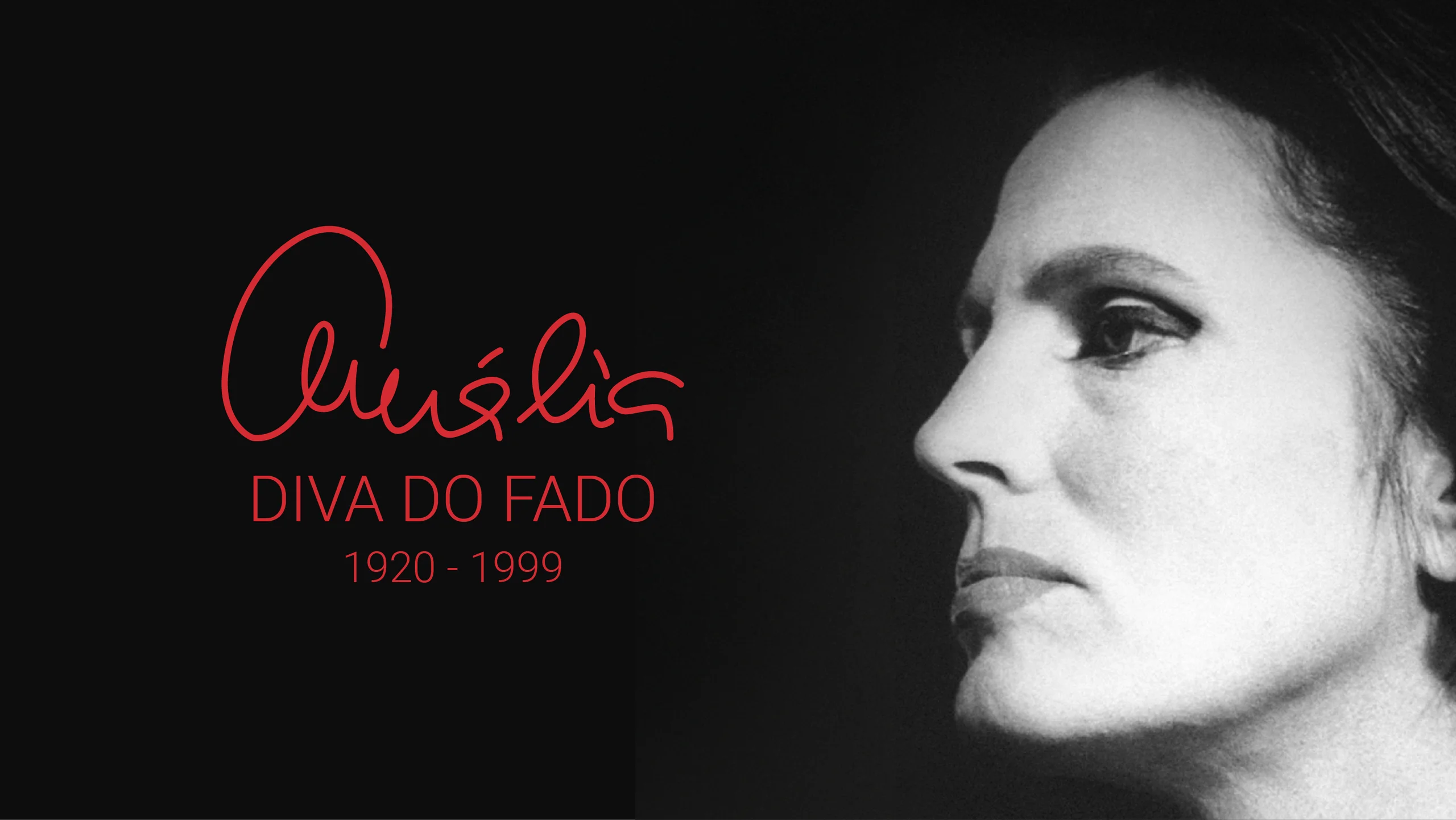
Amália Rodrigues
 Portugal
singer•actress•fado interpreter
Also known as: Rainha do Fado, Amália
Birthday
July 23, 1920
Birth Sign
Leo
Birthplace
Freguesia da Pena, Lisbon, Portugal
Age
Died at 79
About
Amália Rodrigues was a Portuguese singer and actress, and for most of the twentieth century she was the voice of fado. Born in Lisbon in 1920 and dead there in 1999, she is still the best-selling Portuguese recording artist in history, with a catalogue of roughly thirty studio albums and dozens of singles. Fans and the Portuguese press called her Rainha do Fado, the Queen of Fado, and no rival has displaced the title. Her instrument was a deep, quivering voice that could move from a whisper to a wail inside a single phrase, and she used it on Barco Negro, Uma Casa Portuguesa and Ai Mouraria until those songs belonged to her. She toured more than seventy countries and never softened her style for foreign ears, which is often given as the reason the music travelled so well. Her recordings remain in print and in rotation, her official channel still collects views, and the Museu do Fado in Lisbon keeps her as its reference point. She had no children, and her marriage to Francisco da Cruz did not last.
Early Life & Background
She was born on 23 July 1920 in the Pena parish of Lisbon, though the family was not really of the city. Her parents, Lucinda da Piedade Rebordão and Albertino de Jesus Rodrigues, came from Fundão in the Beira Baixa region and had moved to the capital for work; Amália was one of ten children. Sources record that her mother abandoned the household when she was an infant, and that she was raised largely by her grandparents in Lisbon's poor riverside neighbourhoods. The family settled in the Alfama and Mouraria quarter, the cradle of fado, where the music came out of taverns and courtyards whether anyone wanted it or not. Formal schooling was brief. Her education was the street, the docks and the fado houses, and she began singing as a teenager at popular festivals and in the taverns of those two districts.
She worked as a seamstress and, for a time, as a street vendor, the standard apprenticeship of a Lisbon fadista. The turn came through the Marchas Populares, the popular street marches, and the amateur contests of the late 1930s. In 1939 she was introduced to the fado houses of the Bairro Alto, and by the early 1940s she had become a fixture at the Retiro da Severa and other houses of the same kind. Radio appearances followed, and then the Portuguese revue theatre, which carried her beyond the fado circuit to a much wider public. The first recordings came in the mid-1940s, and the films that followed made her a national figure rather than a specialist one.
Career Growth
The breakthrough was a pair of films. Capas Negras in 1947 made her a national star, and Fado, História d'uma Cantadeira confirmed that she could carry a picture as readily as a stage. Recordings for Continental followed, and by the early 1950s she had begun the international touring that would define the second half of her career, starting with Brazil and France and reaching the United States. She played major venues abroad and recorded for international labels, and the repertoire settled into the songs now inseparable from her name: Barco Negro, Uma Casa Portuguesa, Ai Mouraria, Fado Português, Amêndoa Amarga and Coimbra.
The 1960s and 1970s were the peak. She was received by heads of state and performed across Europe and the Americas, and she is credited with taking fado to more than seventy countries. She did not adapt her delivery for audiences who could not understand the words, and that refusal is often cited as the reason the music carried. From the 1980s her health limited public performance, but she continued to record and appear occasionally, and her catalogue was remastered and reissued repeatedly. She remains the best-selling Portuguese artist in the history of recorded music, with roughly thirty studio albums and dozens of singles to her name.
Career Timeline
Public Image & Style
Her public presence was built on restraint rather than spectacle. She wore black, mostly, and stood still, and let the voice do the work; the theatrical tradition she came out of, the revue, never contaminated the concert stage. Portuguese audiences treated her as a national emblem rather than a celebrity, and the press followed suit, styling her Rainha do Fado in ordinary copy. She gave few interviews of the confessional kind and kept her private life private, which in a small country with a hungry press was itself a statement. The image that survives is of gravity: a woman in black, a shawl, a guitar behind her, and a delivery that suggested the song had cost her something. Foreign critics described her as the voice of extreme expression, and the phrase fits the persona as well as the technique.
Fame & Fandom (iFAMOUS Rankings)
iFANN has not yet collected fame data for Amália Rodrigues, so no placement in the Global Fame Rankings is claimed here; the engine simply has not evaluated her. She is not on the September 2026 iFAMOUS Rankings flagship list. What can be said without a ranking is that her fame is of an older and more institutional kind than the rankings usually measure: she is a fixed reference in Portuguese national life, the answer to the question of who the greatest fado singer was, and a name taught in schools and printed on the wall of the Museu do Fado.
The audience has no formal name. There is no fandom label, no organised streaming culture, no birthday billboard campaigns; her admirers are the Portuguese public at large and fado devotees abroad, and the relationship has been mediated by institutions rather than fan structures. The Museu do Fado in Lisbon holds her as its central figure, annual tributes keep her repertoire in performance, and in October 2025 the Luso-American Development Foundation filled Carnegie Hall for Amália in America, Beyond Fado, with the Portuguese Symphony Orchestra making its United States debut. Her official YouTube channel, maintained posthumously, has accumulated roughly 18.3 million views, and younger fadistas including Mariza speak of her as the standard. The devotion is real; it is simply expressed in concert halls and museum rooms rather than in hashtags.
Interesting Facts and Legends
The title Rainha do Fado was not a marketing invention; it was in general use during her lifetime and has outlived her. A story fans still retell is that she was born in Lisbon by mere chance, her parents having come down from Fundão for work, which makes the queen of a Lisbon genre a transplant by accident. She was one of ten children and was raised largely by her grandparents after her mother left, a detail that circulates in Portuguese popular memory as the origin of the longing in her voice.
Her voice itself is the legend. It has been described as the voice of extreme expression, capable of bending from whisper to wail, and the performances of Barco Negro are the ones admirers cite first. She had no formal training worth the name, which she never treated as a disadvantage. Her official YouTube channel, run posthumously, has passed 18 million views, a figure that would embarrass a number of living artists. She is also the subject of a persistent piece of confusion: a CroisiEurope river cruise ship carries the similar name Amélia Rodrigues, and search results for the singer routinely turn it up.
Family & Personal Life
Rodrigues was the daughter of Lucinda da Piedade Rebordão and Albertino de Jesus Rodrigues, both of Fundão in the Beira Baixa, and one of ten children. Her mother left the household when Amália was an infant, and her grandparents took over much of her raising in Lisbon's riverside neighbourhoods. She married the engineer Francisco da Cruz in 1940; the marriage was unhappy, the couple separated, and sources disagree on whether it was ever formally dissolved. She had no children, a point that Portuguese readers still ask about directly. In later life she kept the house at Brejão in the southwest Alentejo, where she spent long periods between the countryside and the sea; it reopened to visitors in late 2025.
Notable Connections
Mariza, who has publicly paid tribute to her; the Portuguese Symphony Orchestra and the Luso-American Development Foundation, which mounted the 2025 Carnegie Hall tribute; the Museu do Fado in Lisbon, which maintains her profile; and the fado tradition of Alfama and Mouraria, where she learned the music.
Relationships & Dating History
Amália Rodrigues married Francisco da Cruz, an engineer, in 1940. The marriage was not a happy one; the couple separated, and sources differ on whether it was ever formally dissolved, with some indicating that the union effectively ended in the 1940s while others note that she remained legally married for much of her life. She had no children. Beyond that marriage, the documented record is thin: tabloid-style pairings circulate in Portuguese popular culture, but they are not confirmed by multiple credible outlets and are not asserted here. At the time of her death in 1999 she had no surviving spouse or children, and the legal status of the marriage remains a matter of source disagreement rather than public record.
- MarriedFrancisco da Cruz1940 - presentAn engineer; the marriage was unhappy, the couple separated, and sources disagree on whether it was formally dissolved.
Death & Aftermath
Died
October 6, 1999 (aged 79)
Death Place
Lisbon, Portugal
Cause of Death
Not publicly disclosed
Amália Rodrigues died in Lisbon on 6 October 1999, at the age of 79, following a long period of declining health. The medical cause was never made public, and the record is content to leave it there: a slow withdrawal from the stage, a quiet end in the city where she was born. The Portuguese government declared national mourning, and her funeral drew crowds large enough to be treated as an event of state rather than a private burial. She is buried in Lisbon, most often cited at the Cemitério dos Prazeres.
The years since have produced a steady, institutional kind of remembrance. The Museu do Fado in Lisbon maintains a dedicated profile that treats her as the genre's defining interpreter. Her official YouTube channel has accumulated roughly 18.3 million views, and her catalogue remains in active circulation on streaming services. In October 2025 the Luso-American Development Foundation presented Amália in America, Beyond Fado at Carnegie Hall, marking the foundation's 40th anniversary and giving the Portuguese Symphony Orchestra its United States debut; a second concert, with three fado singers and orchestra, followed. Mariza paid public tribute to what she called Portuguese fado and its Queen. The house in Brejão, in the southwest Alentejo, where Rodrigues spent long stretches between the countryside and the sea, reopened to visitors in late 2025. A compilation, Amália Rodrigues: The Very Best Of, had been highlighted in 2023. The estate's management has not been publicly detailed beyond the fact that royalties, licensing and the Brejão property continue to generate income.
Net Worth (Estate Value)
$12 Million
iFANN Editorial Team estimate
No credible published valuation of the Amália Rodrigues estate exists, so any figure is an editorial construction rather than a reported fact. The iFANN Editorial Team's analysis of her royalties, licensing and property points to an estate of roughly $12 Million. The revenue is of the slow, durable kind: record royalties from a catalogue of about thirty studio albums and dozens of singles that has never gone out of print, publishing income from standards such as Barco Negro and Uma Casa Portuguesa, licensing for film and television, and the Brejão house in the Alentejo, which reopened to visitors in late 2025 and now generates income as a heritage site. Her official YouTube channel, with roughly 18.3 million views, adds a modest streaming trickle.
The estate has been managed since her death in 1999 by heirs and foundation interests, though the managing entity has not been publicly detailed. Its trajectory has been upward in the streaming era, as remastered reissues and playlist placement brought her catalogue to listeners who never saw her perform. The 2025 Carnegie Hall tribute and the reopening of the Brejão house both raised the commercial profile of the name. The $12 Million estimate is iFANN's own, calculated for 2026, and should be read as an order of magnitude rather than an audited figure.
Awards & Accolades
View 6 records, honours and achievementsKnown For
Barco Negro
1950s · Signature song
Uma Casa Portuguesa
1950s · Signature song
Ai Mouraria
1940s · Signature song
Fado, História d'uma Cantadeira
1947 · Actress
Capas Negras
1947 · Actress
Keywords
Sources
Quick Facts
- Profession
- singer, actress
- Born
- July 23, 1920
- Birthplace
- Freguesia da Pena, Lisbon, Portugal
- Died
- October 6, 1999
- Death Place
- Lisbon, Portugal
- Gender
- Female
- Birth Sign
- Leo
- Spouse
- Francisco da Cruz (m. 1940)
- Children
- None
Personal Details
- Full Name
- Amália da Piedade Rodrigues
- Spouse
- Francisco da Cruz
- Children
- None
- Education
- Little formal schooling; educated largely in the streets and fado houses of Alfama and Mouraria
Frequently Asked Questions
Did Amália Rodrigues have children?
Who was Amália Rodrigues's husband?
Where is Amália Rodrigues buried?
What is Amália Rodrigues best known for?
What is the Amália Rodrigues estate worth in 2026?
Similar People
Join the community
fans discussing