
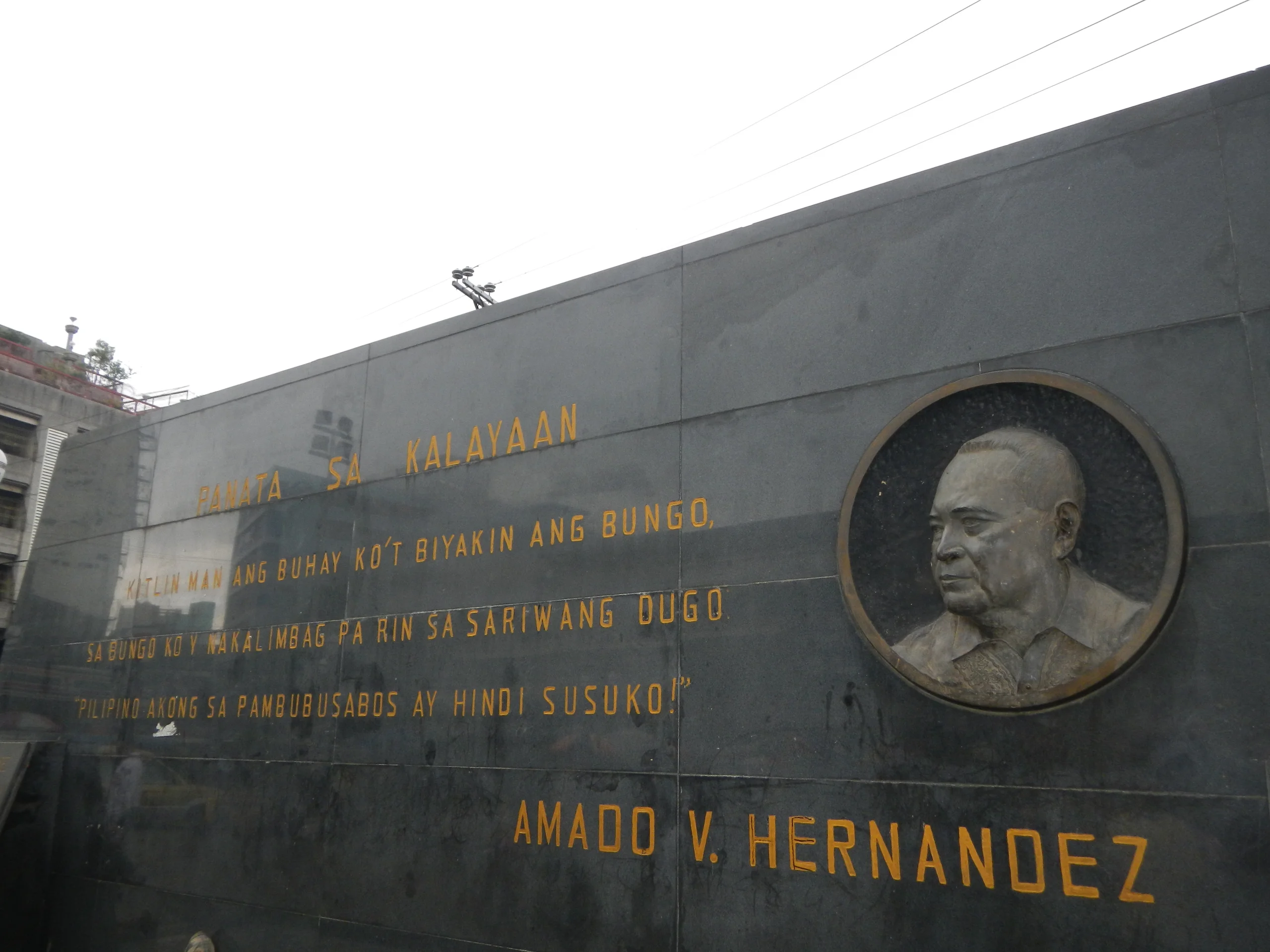
Amado V. Hernandez
 Philippines
journalist•trade unionist•writer
Also known as: Amado Vera Hernandez, Ka Amado, Manunulat ng Masa
Birthday
September 13, 1903
Birth Sign
Virgo
Birthplace
Hagonoy, Bulacan, Philippines
Age
Died at 66
About
Amado V. Hernandez stands as a towering figure in Philippine history, renowned as a journalist, trade unionist, poet, playwright, and novelist who dedicated his life to exposing social injustices and advocating for the working class. Born on September 13, 1903, in Hagonoy, Bulacan, he grew up in the impoverished Tondo district of Manila, where he witnessed firsthand the stark disparities between the wealthy elite and the laboring poor. This environment shaped his worldview, leading him to pursue education at Manila High School and the American Correspondence School before launching a career that would intertwine literature with radical activism. His work as a writer became a weapon against oppression, earning him the title of "Ka Amado" among his supporters. He is best remembered for his novel Mga Ibong Mandaragit, written secretly while he was imprisoned. His legacy continues to influence Filipino literature and political thought, serving as a beacon for those fighting for social justice and workers' rights.
Early Life & Background
Hernandez's childhood was marked by poverty and the harsh realities of early 20th-century Philippines under American colonial rule. He moved to Tondo, Manila, during his formative years, an area known for its dense population of workers and slums. His early interest in writing emerged alongside his growing political consciousness. Before gaining national fame, he worked as a reporter and columnist, using these platforms to highlight the struggles of laborers, farmers, and the urban poor. His early journalistic work laid the groundwork for his later, more confrontational stance against social inequality. He attended Manila High School and the American Correspondence School, where he honed his skills in both English and Tagalog. These educational experiences allowed him to navigate different cultural spheres, bridging the gap between the local workforce and the broader intellectual community. His early writings often focused on the plight of the marginalized, setting the stage for his future role as a vocal critic of the establishment.
By the age of 21, in 1924, he achieved a significant milestone by being named the first Filipino "Poet Laureate" of Tagalog, a title that recognized his mastery of the language and his ability to articulate the sentiments of the common people. This achievement occurred prior to his extensive involvement in organized labor movements and his later imprisonment, marking the beginning of his public recognition as a literary voice for the masses.
Career Growth
Hernandez's career was defined by his dual role as a creative artist and a militant labor leader. He was a founding member and leader of several labor unions, including the Progressive Workers Union of the Philippines. His literary output was prolific, producing poetry, short stories, plays, and novels that were explicitly political. A pivotal moment in his career was the publication of Mga Ibong Mandaragit (Birds of Prey), which is considered one of the greatest works of Philippine literature. Written secretly while he was imprisoned in Fort Santiago, the novel serves as a scathing critique of corruption, feudalism, and foreign exploitation.
During the 1930s and 1940s, he was actively involved in the labor movement, founding the Progressive Workers Union of the Philippines. In the 1950s, he continued journalism and union organizing despite increasing government pressure. In 1965, he was arrested by the Marcos administration without formal charges, marking the beginning of a 13-year legal battle and imprisonment. From 1966 to 1970, he was detained in Fort Santiago and later Camp Crame, where he wrote Mga Ibong Mandaragit and other works in secret. He was released from prison in 1970 due to severe health deterioration but died shortly after. In 1973, he was posthumously awarded the title of National Artist of the Philippines for Literature.
Career Timeline
Public Image & Style
Hernandez is remembered as the "People's Writer" (Manunulat ng Masa), a title that reflects his unwavering commitment to the working class. His public persona was that of a fearless activist who used his pen as a weapon against injustice. Media portrayals often highlight his resilience and the sacrifices he made for his beliefs. His style of writing was direct and powerful, resonating deeply with the masses he sought to represent. Even today, he is seen as a symbol of resistance and integrity in Philippine society.
Fame & Fandom (iFAMOUS Rankings)
Amado V. Hernandez stands as a monumental figure in Philippine history, yet the iFANN Global Fame Engine has evaluated his current standing and found he does not hold a placement in the published rankings, including the Global Top 1,000 or any Top-100 scope list. This absence of a numeric rank reflects his unique position as a historical icon rather than a contemporary pop culture celebrity whose fame fluctuates with viral trends or commercial cycles. While modern entertainment stars often dominate global charts through massive media consumption and search signals, Hernandez's legacy operates on a different axis entirely. His influence is sustained through academic study, political activism, and literary reverence rather than the consumerist metrics that drive typical fame rankings. The audience surrounding him is distinct from traditional fanbases; there is no formal fandom name documented for his supporters, who identify instead as scholars, labor activists, and students dedicated to his ideals. These individuals do not engage in birthday campaigns or chart pushes but honor his memory through the continued study of his works like Mga Ibong Mandaragit and the invocation of his principles in legal and political discourse. His nickname "Ka Amado" serves as a badge of solidarity among those who view him as a martyr for social justice. Though he passed away in 1970, the enduring power of his writing ensures his relevance, with recent translations bringing his stories to new global audiences. The lack of a specific ranking underscores that his fame is not measured by transient popularity but by the depth of his impact on the nation's conscience and literature.
Interesting Facts and Legends
Amado V. Hernandez was the first Filipino to be awarded the title of Poet Laureate of Tagalog. His arrest in 1965 was part of a broader crackdown on left-leaning intellectuals and labor leaders by the Marcos administration. The English translation of Mga Ibong Mandaragit by Penguin Books in 2022 brought his work to a global audience for the first time in decades. Despite his fame, he remained humble and often identified himself simply as a worker and a writer for the people. The term "Ka Amado" is still used by allies to signify solidarity with his ideals.
Notable Quotes
“Ang tunay na pag-ibig sa bayan ay nasa pagkilos, hindi lamang sa salita.”
“Ang panitikan ay dapat maging sandata ng masa.”
Family & Personal Life
Amado V. Hernandez was married to Atang de la Rama, a legendary Filipino actress and singer known as the "Queen of Kundiman." Their marriage was a union of two cultural icons, though specific details regarding their courtship or the duration of their relationship prior to marriage are less documented in public records compared to his public life. Atang de la Rama was a significant figure in her own right, and their partnership represented a convergence of artistic and activist spheres in the Philippines. There is no public record of children from this union, nor any subsequent marriages or romantic relationships reported in credible sources.
Notable Connections
Relationships & Dating History
Amado V. Hernandez was married to Atang de la Rama, a legendary Filipino actress and singer known as the "Queen of Kundiman." Their marriage was a union of two cultural icons, though specific details regarding their courtship or the duration of their relationship prior to marriage are less documented in public records compared to his public life. Atang de la Rama was a significant figure in her own right, and their partnership represented a convergence of artistic and activist spheres in the Philippines. There is no public record of children from this union, nor any subsequent marriages or romantic relationships reported in credible sources. As a historical figure who passed away in 1970, his relationship status is definitively widowed.
- MarriedAtang de la Rama? - 1970Married until his death; union of two cultural icons.
Death & Aftermath
Died
March 24, 1970 (aged 66)
Death Place
Manila, Philippines
Cause of Death
Heart attack (myocardial infarction)
The literary and labor communities in the Philippines immediately mourned Amado V. Hernandez as a pillar of Tagalog literature, pouring tributes that cemented his status as the "People's Writer" long before official state honors arrived. Vigils organized by students, workers, and intellectuals gathered to honor the man whose writings had exposed social injustices for decades, while memorial murals soon appeared in Tondo and Hagonoy to mark his enduring legacy. Thousands attended his funeral at the Manila North Cemetery, where unionists and political allies walked alongside him as he was laid to rest with full honors befitting a national icon.
His final days unfolded after a release from Camp Crame military prison, where he had been held without formal charges since November 1965 under the administration of Ferdinand Marcos. Transferred to the Philippine General Hospital in Manila due to deteriorating health following years of severe malnutrition and lack of adequate care, he passed away on March 24, 1970, at the age of 66. While hospital records established the official cause as a heart attack upon his admission, historians and fellow activists widely dispute this finding, arguing that the physical and psychological toll of his prolonged detention was the true catalyst for his fatal condition. Posthumous recognition followed swiftly, with the government naming him a National Artist of the Philippines for Literature in 1973. The novel Mga Ibong Mandaragit remains a staple in Philippine literature, adapted into films and theatrical productions to ensure his voice of resistance endures.
Net Worth (Estate Value)
$0
iFANN Editorial Team estimate
As a historical figure who died in 1970, Amado V. Hernandez does not have a current net worth in the traditional sense of a living celebrity. His financial legacy is tied to the value of his intellectual property. His estate continues to earn royalties from the sale of his books, particularly Mga Ibong Mandaragit, which has seen renewed interest following its 2022 English translation. Specific dollar figures for his estate's current value are not publicly disclosed, but the enduring popularity of his work suggests a steady stream of income for his heirs and the cultural institutions managing his archives. The iFANN Editorial Team estimates that the ongoing sales and adaptations of his works contribute significantly to the preservation of his legacy, though exact monetary figures remain within the realm of private estate management.
Awards Won (9)
Amado V. Hernandez received the highest honors available in the Philippines. He was posthumously awarded the title of National Artist of the Philippines for Literature in 1973, recognizing his immense contribution to Philippine letters and his role as a voice for the marginalized. In 1924, he was the first Filipino to be named Poet Laureate of Tagalog. His works, particularly Mga Ibong Mandaragit, have been translated into English and adapted into films and stage productions, ensuring his legacy endures.
1973 · Literature
Lifetime Achievement
1924 · Literature
Tagalog Poetry
Known For
Mga Ibong Mandaragit
1970 · Author
The People's Writer
1973 · National Artist
Keywords
Sources
Quick Facts
- Profession
- journalist, trade unionist, writer
- Born
- September 13, 1903
- Birthplace
- Hagonoy, Bulacan
- Died
- March 24, 1970
- Gender
- Male
- Spouse
- Atang de la Rama
- Birth Sign
- Virgo
Personal Details
- Full Name
- Amado Vera Hernandez
- Spouse
- Atang de la Rama
- Children
- Education
- Manila High School; American Correspondence School
Frequently Asked Questions
Who was Amado V. Hernandez?
When did Amado V. Hernandez die?
What is Amado V. Hernandez famous for?
Was Amado V. Hernandez married?
Why was Amado V. Hernandez imprisoned?
Similar People
Join the community
fans discussing