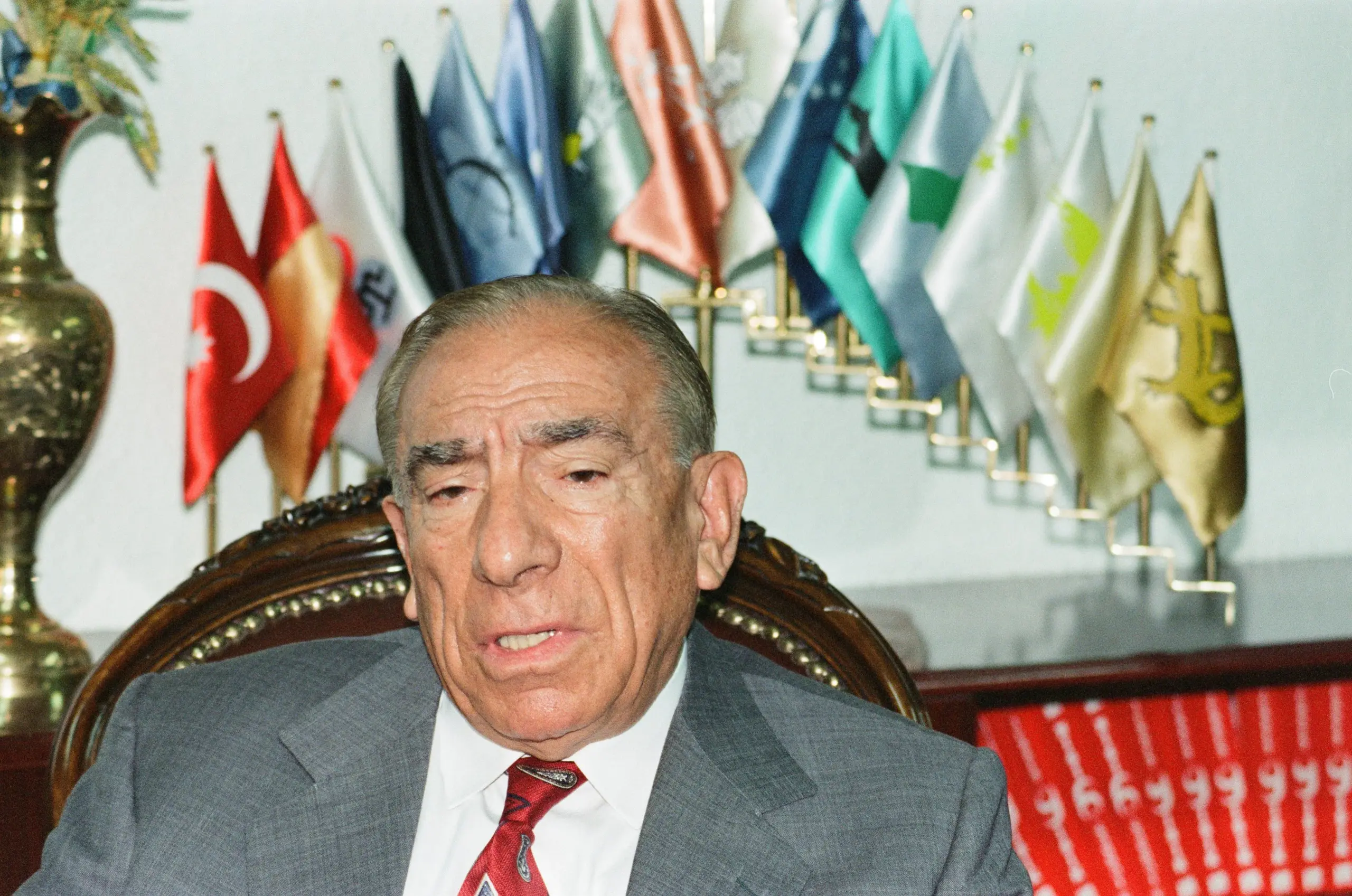
Alparslan Türkeş
 Turkey
Also known as: Ali Arslan, Başbuğ
Birthday
November 25, 1917
Birth Sign
Sagittarius
Birthplace
Nicosia, British Cyprus
Age
Died at 79
About
Alparslan Türkeş was a Turkish politician and military officer, best known as the founder and lifelong leader of the Nationalist Movement Party (MHP) and its youth wing, the Grey Wolves. Born Ali Arslan in Nicosia in 1917, he became one of the most influential figures on the Turkish far-right, a man whose ideas and organizations shaped nationalist politics for decades. His followers called him Başbuğ, meaning "The Leader," a title that reflected the near-mythic status he held among them.
Türkeş's political legacy is marked by his unyielding commitment to Turkish nationalism and his role in building a powerful political movement. He led the MHP from 1969 until his death in 1997, and his influence extended well beyond his own lifetime. Even today, his death anniversary is commemorated with tributes from politicians across the spectrum, a sign of the lasting imprint he left on Turkish public life.
Early Life & Background
Alparslan Türkeş was born Ali Arslan on November 25, 1917, in Nicosia, then part of British-ruled Cyprus. His family moved to Turkey in 1932, when he was fifteen, settling in Istanbul. The young Türkeş attended military school and embarked on a career as an army officer, which would shape his worldview and his later political strategies. He served in the Turkish Armed Forces, and by the 1940s he was already involved in nationalist circles, holding strong anti-communist and pan-Turkist views.
His early military career included a stint at the War Academy, where he honed his skills as a strategist. In 1944, he was among those arrested during the "racism-Turanism" trials, a crackdown on pan-Turkist intellectuals, though he was later acquitted. This experience only deepened his commitment to the nationalist cause. Türkeş continued his military service, and in 1960 he played a key role in the military coup that toppled the Democratic Party government. As a member of the National Unity Committee, he became one of the most powerful figures in the country, though his hardline nationalist stance led to his ouster from the committee and a brief diplomatic exile.
Career Growth
Türkeş's political career took off after his return from exile in 1963. He joined the Republican Peasants' Nation Party, which he transformed into the Nationalist Movement Party (MHP) in 1969. As party leader, he built a disciplined, youth-oriented organization that became a force in Turkish politics. The Grey Wolves, founded as the party's youth wing, grew into a paramilitary organization that trained thousands of young nationalists in camps Türkeş personally oversaw from 1968 to 1978. These camps instilled a militant ideology that blended Turkish nationalism with anti-communism, and they played a significant role in the political violence that plagued Turkey in the 1970s.
After the 1980 military coup, Türkeş was imprisoned and the MHP was banned. He returned to politics in 1987, rebuilding the party and leading it until his death in 1997. Under his leadership, the MHP became a significant player in Turkish politics, and his ideas on Turkish identity and the nation-state continue to influence the party today.
Career Timeline
Public Image & Style
To his supporters, Alparslan Türkeş was the embodiment of Turkish nationalism: a stern, principled leader who never wavered in his convictions. He cultivated an image of discipline and authority, often appearing in public in a dark suit with a neatly trimmed mustache, his posture ramrod straight from his military training. His speeches were fiery and uncompromising, delivered in a booming voice that rallied crowds. The Grey Wolves, his youthful followers, saw him as a father figure and a revolutionary, and they adopted the grey wolf as their symbol, a nod to Turkic mythology.
Critics, however, viewed him as a dangerous extremist, and his association with the Grey Wolves' violence during the 1970s tarnished his reputation in the eyes of many. In the media, he was often portrayed as a polarizing figure, simultaneously revered and reviled. Despite this, his influence on Turkish conservative politics remains undeniable, and his memory is still honored by nationalists today.
Fame & Fandom
Alparslan Türkeş never courted the adoration reserved for pop stars, yet his political movement generated a devotion that transcended typical support. His followers, known as Ülkücüler or Idealists within the Nationalist Movement Party, do not operate as a loose fanbase but as a disciplined political apparatus. There is no formal fandom name, no viral hashtag campaigns, and no birthday billboards funded by admirers. Instead, their reverence manifests through structured annual commemorations of his birth and death, events where high-ranking state officials join party members in honoring the man they call Başbuğ, or Supreme Leader. This legacy is one of enduring political influence rather than fleeting celebrity status. The mythology surrounding him centers on his transition from a military colonel to the architect of Turkish nationalism, with stories of his unyielding discipline and fiery rhetoric passed down through generations of Grey Wolves. While modern internet culture lacks a dedicated subreddit or fan club for Türkeş, his presence remains potent in Turkey's political landscape. He is currently ranked as the 84th most famous person in Turkey, holding steady from the previous cycle, according to the iFANN Global Fame Rankings, a placement that reflects his sustained historical weight decades after his passing.
Interesting Facts and Legends
Türkeş was an avid student of history and military strategy, reportedly authoring several books on Turkish nationalism and pan-Turkism under pseudonyms. His personal library reportedly held thousands of volumes, many focusing on Central Asian history. Born Ali Arslan, he adopted the name Alparslan, meaning heroic lion, to honor the Seljuk sultan who won the Battle of Manzikert in 1071. Among his followers, he was renowned for his strict daily routine of early rising and physical exercise, habits he maintained into old age. A central pillar of his legend is the founding of the Nationalist Movement Party and its paramilitary wing, the Grey Wolves, following his dismissal from the military after the 1960 coup. Supporters revere the title Başbuğ, viewing him as the absolute father figure of their movement. Annual gatherings on April 4th commemorate his death, drawing politicians and citizens alike to honor his memory. Another enduring story involves his refusal to compromise on nationalist principles, even when it cost him his military career, cementing his image as an unwavering warrior for the nation.
Notable Quotes
“The Turkish nation is a great nation. It has a great history and a great future.”
“We are the soldiers of an ideal. We will not rest until the Turkish flag flies over all Turkic lands.”
“Our goal is to make Turkey a great power among the nations of the world.”
Family & Personal Life
Türkeş was a private man when it came to his family, and little is publicly known about his parents or siblings. He moved to Turkey without his family at the age of fifteen, and his early life in Istanbul was marked by financial hardship. He was married and had children, but details about his wife and offspring have never been widely publicized, as he kept his personal life separate from his political persona. His family remained in the background throughout his career, rarely appearing in public or in the media.
Notable Connections
Alparslan Türkeş is closely associated with Devlet Bahçeli, who succeeded him as chairman of the MHP in 1997. Bahçeli has often been seen as the guardian of Türkeş's legacy, and he has ensured that the party remains faithful to its founder's ideology. In addition, President Recep Tayyip Erdoğan has publicly honored Türkeş on several occasions, paying tribute to him on the anniversaries of his death. These connections highlight Türkeş's enduring influence on Turkish political life, even decades after his passing.
Relationships & Dating History
Alparslan Türkeş was a married man, but he kept his family life intensely private. He was married to his wife, Sevgi Türkeş, for many years, and they had children together. However, details about their relationship, including how they met and the exact dates of their marriage, are not well-documented in public sources. The couple remained together until Türkeş's death in 1997. After his passing, his widow and children have stayed out of the public eye, and there is no information about any other romantic relationships in his life. Türkeş was devoted to his political work, and his family supported him from the background.
- MarriedSevgi Türkeş? - 1997Türkeş was married to Sevgi Türkeş until his death. The couple had children together.
Death & Aftermath
Died
April 4, 1997 (aged 79)
Death Place
Ankara, Turkey
Cause of Death
Reported as natural causes, specifically a heart attack or cardiac arrest
Thousands of mourners filled the streets of Ankara in April 1997 as they carried the coffin of Alparslan Türkeş to Cebeci Asri Cemetery. The procession included high-ranking military officials and government representatives, marking the final public chapter for the man known as Başbuğ. This grand funeral served as a reflection of his enduring influence over the Nationalist Movement Party and its youth wing, the Grey Wolves. Türkeş passed away on April 4, 1997, at the age of 79, after being transferred from GATA Haydarpaşa Training Hospital in Istanbul to a facility in Ankara for final care. Medical authorities attributed his death to natural causes, specifically a heart attack or cardiac arrest resulting from long-standing health issues associated with his advanced age. His final days were spent under medical supervision, though no record exists of his last public appearance prior to hospitalization.
The reaction to his death rippled immediately across Turkey, with tributes pouring in from political peers and military institutions who hailed him as a patriot. Annual commemorations became institutionalized in the years that followed; President Recep Tayyip Erdoğan attended memorial services at his tomb in 2024, while supporters continued to lay carnations and recite prayers on the anniversary of his passing. Posthumously, numerous books and documentaries documented his career, and foundations bearing his name established scholarships for students aligned with his ideological views. His political legacy transitioned smoothly to successors like Devlet Bahçeli, while his son Tuğrul Türkeş remained a prominent figure in Turkish politics.
Net Worth (Estate Value)
$1 Million
iFANN Editorial Team estimate
As a career military officer and politician, Alparslan Türkeş did not accumulate significant personal wealth. His income came primarily from his military salary and later from his political activities. He lived modestly, and there is no public record of major investments, properties, or business ventures. Following his death in 1997, his estate was reported to be minimal, with no significant assets or royalties. Per iFANN's editorial analysis, the estate's value is estimated at around $1 million as of 2026, reflecting the simplicity of his financial life. Türkeş's true legacy lies in his political influence, not in monetary wealth.
Awards & Accolades
View 1 records, honours and achievementsKnown For
Nationalist Movement Party (MHP)
1969 · Founder and leader
Grey Wolves (Ülkü Ocakları)
1968 · Founder and overseer
Keywords
Sources
Quick Facts
- Profession
- politician, military personnel
- Born
- November 25, 1917
- Birthplace
- Nicosia, British Cyprus
- Died
- April 4, 1997
- Death Place
- Ankara, Turkey
- Gender
- Male
- Birth Sign
- Sagittarius
Personal Details
- Full Name
- Ali Arslan
Frequently Asked Questions
Who was Alparslan Türkeş?
When was Alparslan Türkeş born and when did he die?
What is Alparslan Türkeş's net worth in 2026?
What were the Grey Wolves?
Why is Alparslan Türkeş famous?
Similar People
Join the community
fans discussing