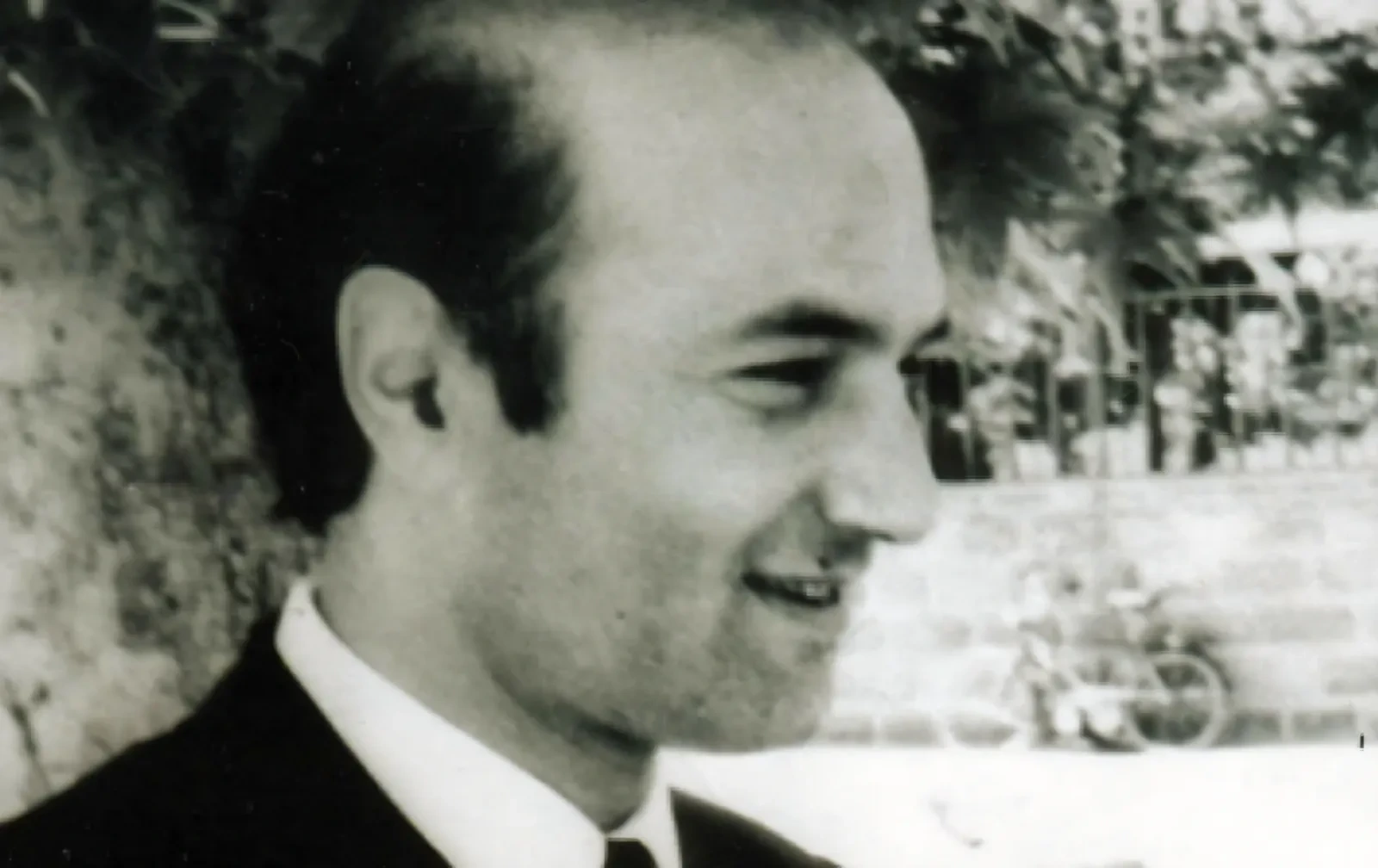
Ali Shariati
 Iran
IranBirthday
+1933-11-23
Birth Sign
Sagittarius
Birthplace
Mazinan
Age
Died at 43
About
Ali Shariati Mazinani was an Iranian sociologist, essayist, and revolutionary thinker whose ideas shaped the intellectual landscape of 20th-century Iran. Born on 23 November 1933 in Mazinan, a small town in Khorasan, he became one of the most influential figures in the country's modern history. Shariati specialized in the sociology of religion, blending Islamic thought with Western philosophy to create a dynamic and politically charged worldview. His work, often referred to as Shariatism, sought to reinterpret Islam as a revolutionary ideology capable of mobilizing the masses against oppression and injustice. Though he died young on 18 June 1977, his ideas continued to inspire and provoke long after his passing.
Fame & Fandom
The packed lecture halls of Tehran's Hosseiniyeh Ershad once echoed with a voice that would eventually reshape a nation. Decades after his death, Ali Shariati remains a towering figure in Iranian intellectual history. Current data places him as the 26th most famous person in Iran and the 46th most famous person from Iran, where he sits slightly lower than the previous cycle. These positions reflect his enduring status within the iFANN Global Fame Rankings. His influence spans beyond mere numbers; it is measured in the ideological fervor he ignited among students and activists who sought to redefine their faith through revolutionary lenses. Unlike modern pop stars with organized fan clubs, Shariati's followers were political dissidents and intellectuals who circulated his lectures on clandestine tapes. There is no formal name for this collective, yet their devotion manifested in the underground distribution of his work and the study of texts like *On the Sociology of Religion*. The legacy of these gatherings persists, with contemporary scholars revisiting his vision of "Red Shi'ism" as a counter-narrative to current regimes. This unique fusion of Marxist theory and Shia mysticism created a movement that mobilized masses against oppression. While the iFANN Global Fame Rankings track global attention, the true scale of Shariati's impact lies in the quiet revolution he sparked before his untimely passing in London.
Interesting Facts and Legends
Ali Shariati died unexpectedly in London in June 1977, sparking a lasting narrative of betrayal. A persistent story suggests the post-revolutionary theocracy suppressed his ideas after utilizing them to seize power, framing him as a martyr whose message was silenced by the very leaders he inspired. His legendary lectures at the Hosseiniyeh Ershad in Tehran drew thousands of attendees, creating a seismic cultural shift that merged religious fervor with revolutionary politics. These sessions are often cited as the moment the intellectual foundation of the 1979 Iranian Revolution was laid. Shariati is also renowned for synthesizing Marxism with Shia Islam, a concept known as "Red Shi'ism" that allowed him to appeal to both secular leftists and religious conservatives simultaneously. This ideological blend became central to the folklore surrounding his life, explaining why he was deemed so dangerous to the Shah and vital to the revolution. Even decades later, his work continues to be analyzed by those critical of the current Iranian government, who view him as a forgotten hero whose original vision was hijacked.
Death & Aftermath
Died
+1977-06-19 (aged 43)
Death Place
Southampton
Cause of Death
Heart attack (myocardial infarction)
Ali Shariati, the Iranian sociologist and revolutionary intellectual, died in Southampton, England. The specific location is widely reported as a hospital or medical facility. The officially stated cause of death was a heart attack (myocardial infarction), reportedly occurring shortly after he arrived at the hospital or during his stay there. However, this account remains heavily disputed and unconfirmed by independent forensic evidence. Shariati traveled to Southampton for medical treatment or consultation. He passed away on June 18, 1977. His body was subsequently returned to Iran. Given the political climate under the Shah's regime (SAVAK), many scholars and supporters have long suspected that Shariati was poisoned or assassinated by SAVAK agents, though no concrete evidence has ever been produced to support this claim.
Some accounts suggest he may have been detained or harassed prior to his trip, but the official narrative maintained it was a natural cardiac event. No hospital statement or family statement explicitly confirming the medical details beyond "heart attack" has been made publicly available in English-language archives. The lack of a formal investigation into the circumstances of his death leaves the exact cause a subject of historical debate rather than established fact. The Islamic Republic of Iran, which came to power two years later in 1979, never formally investigated the circumstances of his death, nor did they release any documents suggesting foul play. Conversely, the previous Pahlavi regime (which was overthrown) conducted no inquiry that would have exonerated or implicated its security services.
Following his death, Shariati became an immediate martyr figure for the opposition movement against the Shah. His lectures, previously circulated on cassette tapes, saw a massive surge in popularity. In the months leading up to the 1979 Revolution, his ideas were cited as foundational to the uprising. By the time of the 1979 Revolution, he was recognized as one of the primary intellectual architects of the movement, often described as the "ideologue" of the revolution. Recent articles continue to discuss his legacy, with debates emerging about whether the post-revolutionary state betrayed his vision of a liberated Islam versus a state-controlled religion,., his books have remained bestsellers in Iran for decades. Murals and landmarks dedicated to him appeared frequently in Tehran and other cities during and after the revolution.
Shariati's funeral took place in Tehran, Iran, shortly after his body was repatriated. The funeral was a massive public event, drawing hundreds of thousands of mourners. It is often described as one of the largest gatherings in Iran prior to the 1979 Revolution. The crowd included students, intellectuals, and religious figures who viewed him as a bridge between modern sociology and Shia Islam. He was buried in the Behesht-e Zahra cemetery in Tehran, a site reserved for martyrs and prominent figures. The funeral service included readings of his works and eulogies emphasizing his role as a revolutionary thinker. Following his death, his extensive collection of lectures and essays was compiled and published in multiple volumes, including The Education of a Revolutionary , Hajj , and Return to the Self .
These texts became essential reading for the revolutionary generation. The "Ali Shariati Foundation" was established to preserve his work and promote his sociological theories. Various universities and cultural centers in Iran and internationally bear his name. His estate, consisting primarily of intellectual property and lecture recordings, was managed by his family and later integrated into state-sponsored cultural institutions following the 1979 Revolution, with his works becoming part of the official revolutionary canon despite his critical stance toward traditional clerical authority.
Awards & Accolades
Keywords
Quick Facts
- Profession
- sociologist, essayist, poet
- Born
- +1933-11-23
- Birthplace
- Mazinan
- Died
- +1977-06-19
- Death Place
- Southampton
- Gender
- Male
- Spouse
- Pouran Shariat-Razavi
- Birth Sign
- Sagittarius
Personal Details
- Spouse
- Pouran Shariat-Razavi
Join the community
fans discussing