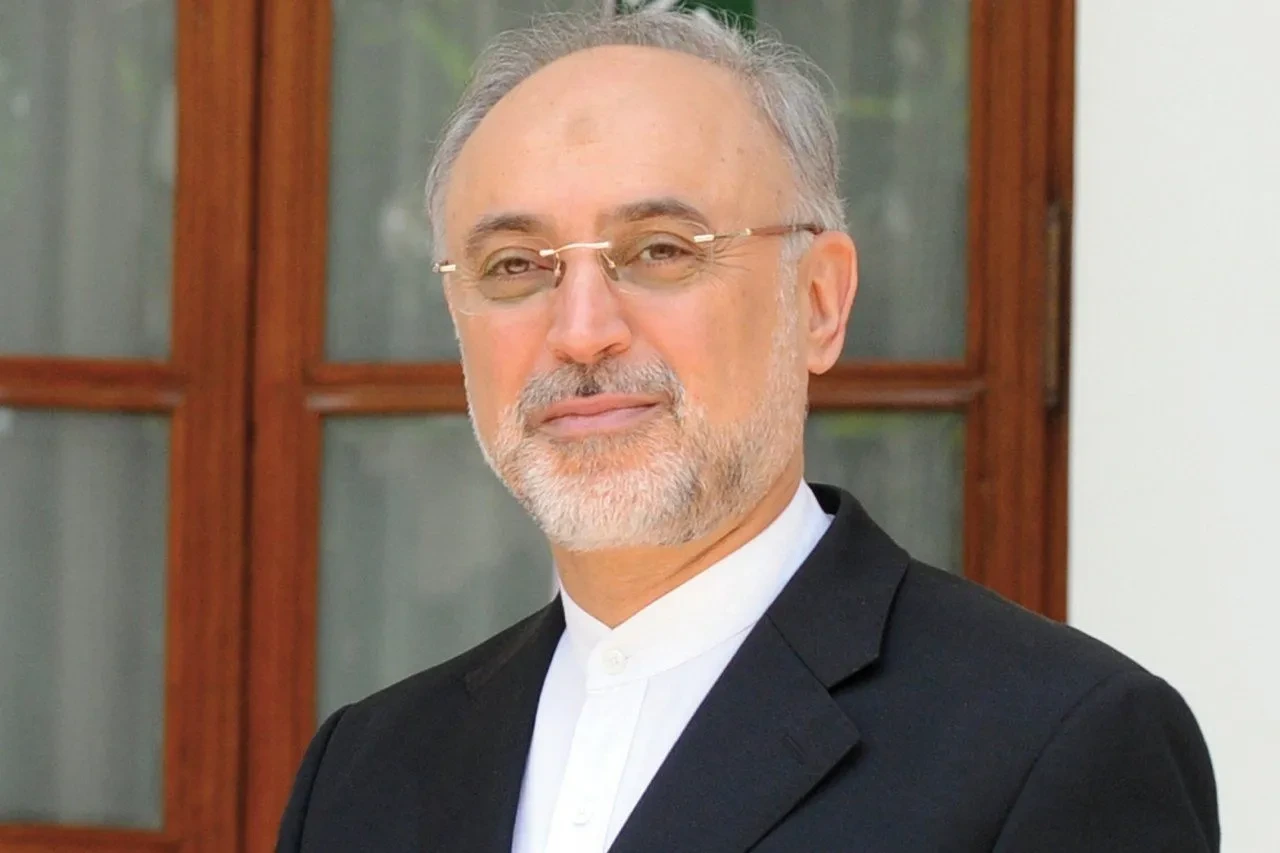
Ali Akbar Salehi
 Iran
Iranpolitician•university teacher•diplomat
Birthday
March 24, 1949
Birth Sign
Aries
Birthplace
Karbala, Iraq
Age
77 years old
About
Ali Akbar Salehi is an Iranian academic, diplomat, and nuclear scientist, best known for leading the Atomic Energy Organization of Iran (AEOI) during two crucial periods and for his role as foreign minister from 2010 to 2013. A MIT-trained nuclear engineer, Salehi has been a central figure in Iran's nuclear program for decades, serving as the country's permanent representative to the IAEA in the late 1990s and early 2000s, and later as the chief technical architect of the 2015 JCPOA negotiations. His pragmatic, technocratic approach has earned him respect both in Tehran and in international diplomatic circles.
Today, Salehi continues to shape Iran's scientific and strategic direction as Vice-President for Research and Deputy President at the Academy of Sciences of Iran, a position he has held since 2021. He remains a vocal defender of Iran's nuclear industry, often appearing in public forums to explain the country's technical achievements. For fans of international diplomacy and nuclear policy, Salehi is a fascinating figure: a scientist who moved seamlessly between the laboratory and the negotiating table.
Early Life & Background
Ali Akbar Salehi was born on March 24, 1949, in Karbala, Iraq, to Persian parents. His father, a successful merchant originally from Qazvin, Iran, had deep roots in Karbala, where the family had lived for over 200 years. Growing up in the shrine city, Salehi spoke Persian at home but learned Arabic playing with neighborhood children. He attended an Iranian school and, like many boys, sold cigarettes on the streets for pocket money.
The family's life was upended in 1958 when, following the overthrow of King Faisal II, they moved to Iran. Salehi struggled at first, failing his exams in his first year of primary school as classmates teased him for his Iraqi accent. He eventually found his footing, excelling in his studies. He went on to earn bachelor's and master's degrees from the American University in Beirut, then headed to the Massachusetts Institute of Technology, where he earned a Ph.D. in nuclear engineering in 1977. His doctoral work focused on resonance cross-section interference effects, fuel management, and data processing in nuclear reactors.
Returning to Iran, Salehi joined the faculty of Sharif University of Technology, rising to associate professor and later serving as the university's president. He also led the International Islamic University in Tehran. After the 1979 revolution, Ayatollah Khomeini appointed him to a five-person committee tasked with deciding the fate of the partially built Bushehr nuclear power plant. While three members argued for destruction, Salehi and one other insisted the plant should be completed. Khomeini ultimately deferred the decision, and Salehi's view would later prevail, shaping the future of Iran's nuclear program.
Career Growth
Salehi's diplomatic career took off in 1998 when he became Iran's permanent representative to the International Atomic Energy Agency, a post he held until 2003. Working alongside IAEA Director-General Mohamed ElBaradei, he navigated early disputes over Iran's nuclear activities. He then served as deputy secretary-general of the Organization of the Islamic Conference from 2007 to 2009.
In July 2009, President Mahmoud Ahmadinejad appointed him head of the Atomic Energy Organization of Iran. He held that role until December 2010, when he became acting foreign minister, officially taking the post in January 2011. As foreign minister, Salehi faced international pressure over Iran's nuclear program, responding to a leaked IAEA report with the sardonic Persian phrase "Marg yek bar, shivan yek bar" ("You die once, you are mourned once"). In August 2013, President Hassan Rouhani reappointed him as AEOI head, a position he would hold for eight years.
Salehi's most significant contribution came during the JCPOA negotiations. He was the Iranian architect of secret technical talks with the United States in Oman, working alongside Foreign Minister Mohammad Javad Zarif. His expertise was essential in the Lausanne discussions with US Secretary of State John Kerry and Energy Secretary Ernest Moniz. The 2015 deal limited Iran's nuclear program in exchange for sanctions relief. Salehi remained at the AEOI until 2021, when he stepped down and moved to the Academy of Sciences of Iran.
Career Timeline
Public Image & Style
In international media, Salehi is often portrayed as a pragmatic and knowledgeable statesman, a technocrat who brings scientific rigor to diplomacy. The New York Times has covered his statements on Iran's compliance with the JCPOA, noting his hints that Iran might reduce cooperation with the IAEA. A 2011 MERIP profile described him as "not usually a sarcastic man," yet noted his occasional dry wit. Tehran Bureau called him "the man to watch in Iran" that year, speculating about his political future.
Salehi's public persona is that of a scientist-politician, comfortable in both the laboratory and the negotiating room. He is known for his calm, measured demeanor and his ability to explain complex nuclear issues in accessible terms. For Iranians, he represents a bridge between the country's scientific ambitions and its international relations, a figure who has consistently defended the nation's right to nuclear technology while engaging with the world.
Fame & Fandom
Ali Akbar Salehi operates in a sphere where fame is measured in policy shifts rather than billboard counts. His audience consists of diplomats, nuclear physicists, and geopolitical analysts who track his every statement regarding the JCPOA or centrifuge timelines, not fans waving signs at airports. There is no organized fanbase with a formal name, no birthday billboards in Tehran, and no viral campaigns to boost his profile. The public engagement he commands is strictly functional, defined by high-stakes negotiations and technical briefings rather than celebrity worship. While figures like pop stars generate folklore about crowds fainting at their appearances, Salehi's legacy is built on verified historical events: the 2015 nuclear deal mechanics forged alongside Ernest Moniz, recent hints about a weapons program, and the activation of centrifuges ahead of schedule in mid-2026. These moments are debated in academic journals and newsrooms, not retold as campfire legends among a general following. iFANN has evaluated his global standing and found that Ali Akbar Salehi does not currently hold a placement in the published rankings. This status reflects his intense visibility within specific professional sectors while acknowledging his absence from the broader pop culture consciousness. He does not hold a spot in any Top-100 scope list, nor does he have a numeric rank score assigned by the engine. The data confirms he remains unranked in the highest tier of global fame, a status consistent with a statesman whose power lies in backroom deals rather than front-page headlines.
Interesting Facts and Legends
Salehi's family home in Karbala stood for over two centuries before demolition during the expansion of the Imam Hossein shrine. When Saddam Hussein expelled the family, they lost both property and books, including those from his grandfather's large estate. Despite holding top government roles, Salehi maintains a dry wit; in 2011, he quipped about a pending IAEA report, saying, "You die once, you are mourned once." President Hassan Rouhani once derisively called him a "foreigner" due to his birth in Iraq and fluent Arabic. A widely cited moment involves his reference to a 20-volume Stanford Research Institute plan from the early 1970s, which predicted Iran should have had 20 nuclear plants by 1993. In the realm of modern diplomatic lore, his role in the 2015 JCPOA negotiations stands out as a defining chapter. Sources note a specific connection formed at MIT alongside U.S. negotiator Ernest Moniz that facilitated critical communication between the sides. Post-deal analysis often cites allegations that he misled American negotiators, a claim frequently discussed in political forums. Recent years have added new chapters to his story, including February 2024 reports hinting at a nuclear weapons program and July 2026 statements confirming the early activation of centrifuges prior to the Natanz facility blast.
Notable Quotes
“You die once, you are mourned once.”
“If we went according to the plan, we should have had by 1993 20 nuclear power plants like the Bushehr power plant. But we still have only one.”
Family & Personal Life
Salehi is married to Zahra Rad. The couple has kept their private life largely out of the public eye; details about children are not documented in available sources. Salehi has two brothers, one of whom is a physician.
His family roots run deep in Karbala, where his father was a merchant and his grandfather owned a large house. The family lived there for over 200 years before being expelled by Saddam Hussein, losing their property and books. After moving to Iran in 1958, Salehi's father continued his mercantile career, but the family's displacement left a lasting impression on the young Salehi.
Notable Connections
Salehi worked closely with Mohammad Javad Zarif during the JCPOA negotiations, and with US officials John Kerry and Ernest Moniz. He was appointed to his first AEOI term by Mahmoud Ahmadinejad and his second by Hassan Rouhani. His successor as foreign minister was Zarif, and his successor as AEOI head was Mohammad Eslami.
Relationships & Dating History
Salehi has been married to Zahra Rad for many years. The couple's relationship has remained private, with no public details about their courtship or wedding. They have kept their family life out of the media spotlight, a common practice among senior Iranian officials. There are no documented reports of any other romantic relationships, prior marriages, or public dating history. As of 2026, Salehi is married to Zahra Rad.
- MarriedZahra RadCurrentSalehi's wife; details of their marriage are not publicly documented.
Salary, Net Worth In 2026
$5 Million
iFANN Editorial Team estimate
Public financial disclosures for senior Iranian officials remain unavailable, leaving his income sources largely opaque to outside observers. As a career academic and government official, his earnings stem from university salaries, government stipends, and occasional speaking engagements. Given the sanctions environment, any assets he holds are likely situated within Iran and are not publicly reported. Per iFANN's editorial analysis, estimates for Salehi's net worth in 2026 stand at $5 Million. This figure accounts for his long tenure at Sharif University, his extensive government service, and potential book royalties from his memoirs. However, without official disclosures, this remains an approximation derived from typical compensation for high-ranking officials and academics in the region. His financial situation is far less transparent than that of Western public figures, and he has not been the subject of celebrity net worth tracking.
Awards & Accolades
View 5 records, honours and achievementsKnown For
Atomic Energy Organization of Iran
2009-2021 · Head
Foreign Minister of Iran
2010-2013 · Foreign Minister
JCPOA Negotiations
2015 · Key Technical Architect
Keywords
Sources
Quick Facts
- Profession
- politician, university teacher, diplomat
- Born
- March 24, 1949
- Birthplace
- Karbala, Iraq
- Gender
- Male
- Birth Sign
- Aries
- Education
- Ph.D. in Nuclear Engineering, MIT (1977)
- Spouse
- Zahra Rad
Personal Details
- Full Name
- Ali Akbar Salehi
- Spouse
- Zahra Rad
- Education
- Ph.D. in Nuclear Engineering, MIT (1977); B.S. and M.S., American University of Beirut
Frequently Asked Questions
How old is Ali Akbar Salehi?
What is Ali Akbar Salehi's net worth in 2026?
Is Ali Akbar Salehi still alive in 2026?
What role did Ali Akbar Salehi play in the Iran nuclear deal?
Why was Ali Akbar Salehi sanctioned by the United States?
Similar People
Join the community
fans discussing