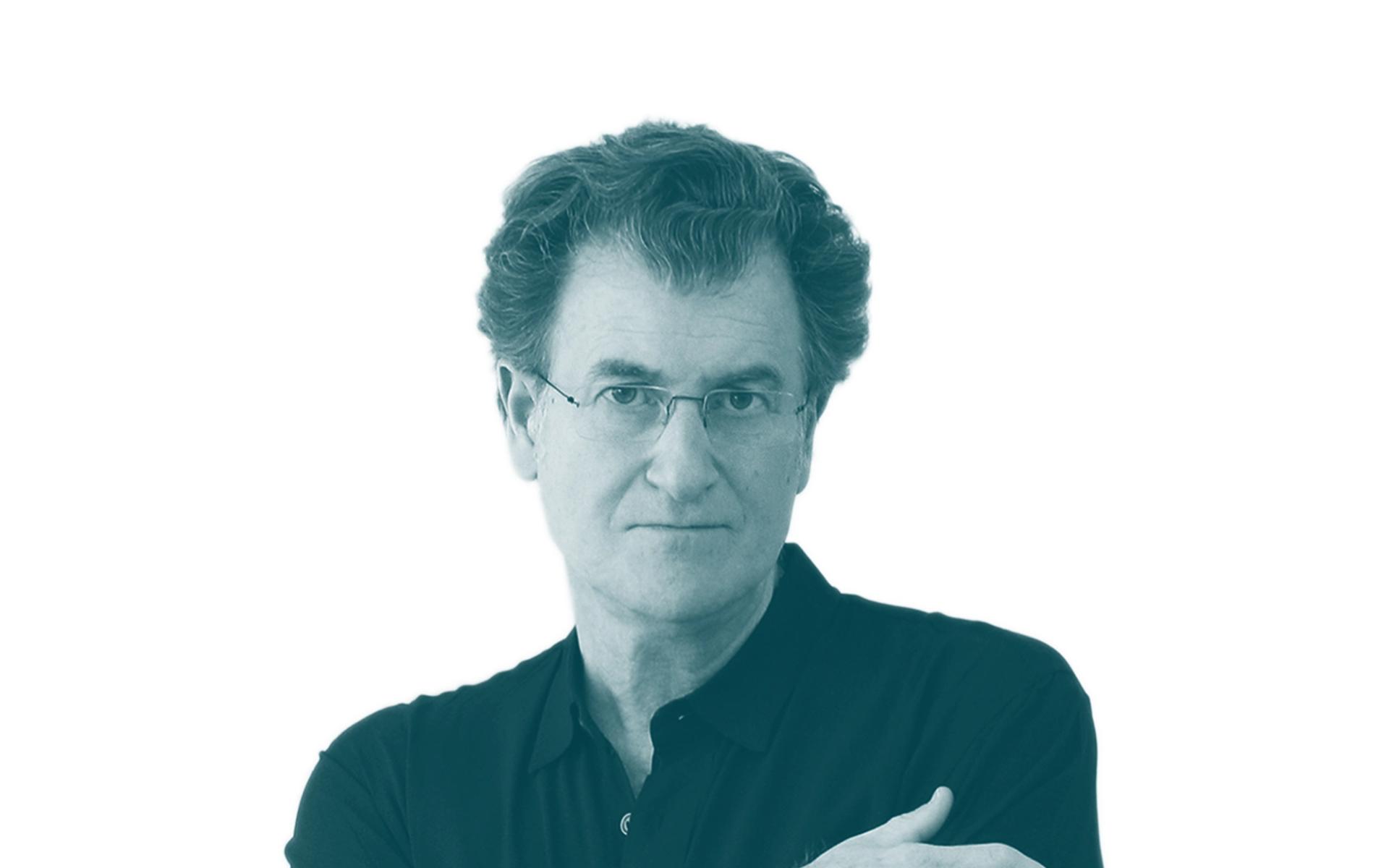
Alfredo Jaar
 Chile
visual artist•architect•photographer•filmmaker
Birthday
February 5, 1956
Birth Sign
Aquarius
Birthplace
Santiago, Chile
Age
70 years old
About
Alfredo Jaar is a Chilean-born visual artist, architect, photographer and filmmaker whose work confronts the most difficult questions of our time: war, genocide, migration and the ethics of looking. Based in New York, he has spent four decades building a body of work that refuses easy comfort, using photography, installation and public interventions to force viewers to reckon with what they see and what they refuse to see.
His most celebrated undertaking, The Rwanda Project, spanned six years and hundreds of images, texts and installations, all circling the 1994 genocide that the world ignored. Jaar's work has been shown at the Venice Biennale, the Museum of Modern Art and countless other institutions. He received the Hasselblad Award in 2020 and the Prix Pictet in 2025. His son, Nicolas Jaar, is an acclaimed electronic musician.
Early Life & Background
Alfredo Jaar was born in Santiago, Chile, in 1956, under the shadow of the Pinochet dictatorship. He studied architecture and film at the University of Chile, where he began to think about how space and image shape political consciousness. His early exhibitions in Santiago in the late 1970s already showed a concern with social reality, but the military regime made open critique dangerous. In 1979 he attended the Instituto Chileno-Norteamericano de Cultura, and soon after he left Chile, living first in Lisbon, Portugal, and later settling in New York.
That experience of exile and displacement became the foundation of his artistic concerns. Jaar has said that leaving Chile taught him to see the world from the outside, a position that informs his persistent focus on those who are excluded or erased. Before he became known for large-scale installations, he worked as an architect and filmmaker, skills that would later shape his precise, spatially aware approach to art.
Career Growth
Jaar's breakthrough came in the 1980s with works that combined photography and text to address political emergencies. His 1987 piece A Logo For America was an early electronic billboard in Times Square that showed a map of the United States with the words 'This is not America,' challenging the conflation of the U.S. with the entire continent. In the 1990s, he began The Rwanda Project, a six-year investigation into the genocide and the world's failure to respond. The project included Genocide of the Mind, a work that used the faces of survivors to question how we process trauma.
He has also created site-specific works like The Skoghall Konsthall in Sweden, a paper museum built to be burned down, and The Cloud, a performance piece on the U.S.-Mexico border. In 2020 he received the Hasselblad Award. In 2025 he won the Prix Pictet for his documentary project. In 2026 he participated in the Venice Biennale, where he also joined artists demanding Israel's exclusion, and he spoke at Prada Frames in Milan about how images construct reality.
Career Timeline
Public Image & Style
Jaar is regarded as a deeply committed artist who tackles global issues with a critical and uncompromising eye. His work is often described as confrontational, aiming to challenge viewers' perceptions of reality and the role of images in constructing it. He is known for his rigorous intellectual approach and his willingness to address topics that many would rather avoid. Media coverage frequently highlights his moral clarity and his insistence that art must engage with the world's most pressing problems.
His public persona is that of a serious, thoughtful figure, more comfortable in the studio or the field than on a red carpet. He has been featured on PBS's Art:21 and has participated in major biennials and museum exhibitions worldwide, yet he maintains a low profile, letting his work speak for itself.
Fame & Fandom (iFAMOUS Rankings)
Alfredo Jaar commands a profound, global resonance within the sphere of contemporary art and political discourse, though his influence operates through intellectual rigor rather than mass-market celebrity metrics. His work permeates major cultural institutions worldwide, engaging audiences who seek critical engagement with the ethics of representation and human rights. Despite this widespread institutional recognition and decades of high-profile interventions, iFANN's Global Fame Engine has evaluated this person, but they do not currently hold a placement in the published rankings such as the Global Top 1,000 or any Top-100 scope list. Consequently, no specific ordinal rank or numerical score is assigned to his current standing in the public consciousness. The audience surrounding Jaar does not have a formal name; unlike pop culture icons, his supporters are primarily critics, curators, academics, and museum-goers who engage with his work on a philosophical level rather than through organized fan rituals or campaigns. There is no documented fandom name for his followers, reflecting a relationship defined by shared values and intellectual alignment rather than the fervor typical of commercial stardom.
Interesting Facts and Legends
Jaar once built a museum out of paper in the Swedish town of Skoghall, only to have it ceremonially burned down at the end of the exhibition, a commentary on the town's lack of cultural infrastructure. He has taught at Harvard University and the European Graduate School. His work The Sound of Silence was inspired by the photograph of a starving child in Sudan taken by Kevin Carter, and it explores the ethics of photojournalism. Jaar is a licensed architect, and his installations often incorporate architectural elements. He has been a vocal critic of the art world's complicity in political violence, and in 2026 he was among nearly 200 artists who signed an open letter demanding Israel's exclusion from the Venice Biennale. A cornerstone of his legend involves his 1987 project Real Pictures, where he displayed only black-and-white envelopes containing text descriptions of the Rwandan genocide instead of photographs, arguing that images construct reality rather than simply representing it. This installation remains a defining moment in art history for its refusal to show graphic suffering. More recently, in October 2025, he won the prestigious Prix Pictet Storm award for his documentary work titled The End, further cementing his status as a leading voice in critical photography.
Notable Quotes
“Images do not represent reality, they construct it.”
“The artist must be a witness, not a bystander.”
“My work is about the spaces between seeing and knowing.”
Family & Personal Life
Alfredo Jaar is the father of Nicolas Jaar, an electronic musician and composer known for his experimental albums and film scores. Nicolas has cited his father's influence on his own artistic approach. Jaar has kept most of his personal life private, and little is publicly known about his spouse or other family members. He has lived in New York for many years, having previously been based in Lisbon, Portugal.
Notable Connections
Alfredo Jaar is the father of musician Nicolas Jaar, whose experimental electronic music and film scores have earned critical acclaim. Jaar has also collaborated with institutions like the Guggenheim and the Museum of Contemporary Photography, and he has been associated with artists such as Doris Salcedo and Ai Weiwei, who share his commitment to politically engaged art.
Relationships & Dating History
Alfredo Jaar has kept his romantic life largely out of the public eye. He is known to be a father, but details about his relationships are scarce. He has not been linked to any high-profile partners in the media, and he does not discuss his personal life in interviews. As of 2026, his relationship status is not publicly documented.
Salary, Net Worth In 2026
$5 Million
iFANN Editorial Team estimate
iFANN currently estimates Alfredo Jaar's net worth at approximately $5 million as of 2026. This figure reflects a career of steady, significant achievement rather than blockbuster sales, grounded in his long tenure as an internationally exhibited artist with works held in major collections and sold at auction. His income derives from gallery sales, commissions for public installations, teaching positions, and grants. Jaar has held academic posts at institutions such as Harvard, and he has received prestigious awards that come with cash prizes, including the Hasselblad Award and the Prix Pictet. While his work is not as commercially hyped as some contemporary artists, his pieces are sought after by museums and collectors, and his installations are often major commissions. He has also produced films and books. The estimate reflects a career of steady, significant achievement rather than blockbuster sales.
Awards Won (2)
Alfredo Jaar has received two of the most prestigious awards in contemporary art. In 2020 he won the Hasselblad Award, often called the Nobel Prize of photography. In 2025 he won the Prix Pictet, a major prize for photography and sustainability, for his documentary work. These honors recognize a career devoted to using images to confront political and humanitarian crises.
2025 · Photography
The Rwanda Project
2020 · Photography
Lifetime achievement
Known For
The Rwanda Project
1994 · Artist
A Logo For America
1987 · Artist
The Skoghall Konsthall
2001 · Artist
The Cloud
2000 · Artist
Keywords
Sources
Quick Facts
- Profession
- visual artist, architect, photographer, filmmaker
- Born
- February 5, 1956
- Birthplace
- Santiago, Chile
- Gender
- Male
- Birth Sign
- Aquarius
- Children
- Nicolas Jaar
Personal Details
- Full Name
- Alfredo Jaar
- Children
- Nicolas Jaar
- Education
- University of Chile (architecture and film)
Frequently Asked Questions
Who is Alfredo Jaar?
What is Alfredo Jaar's net worth in 2026?
Is Alfredo Jaar still active in 2026?
What is Alfredo Jaar best known for?
Where is Alfredo Jaar from?
Similar People
Join the community
fans discussing