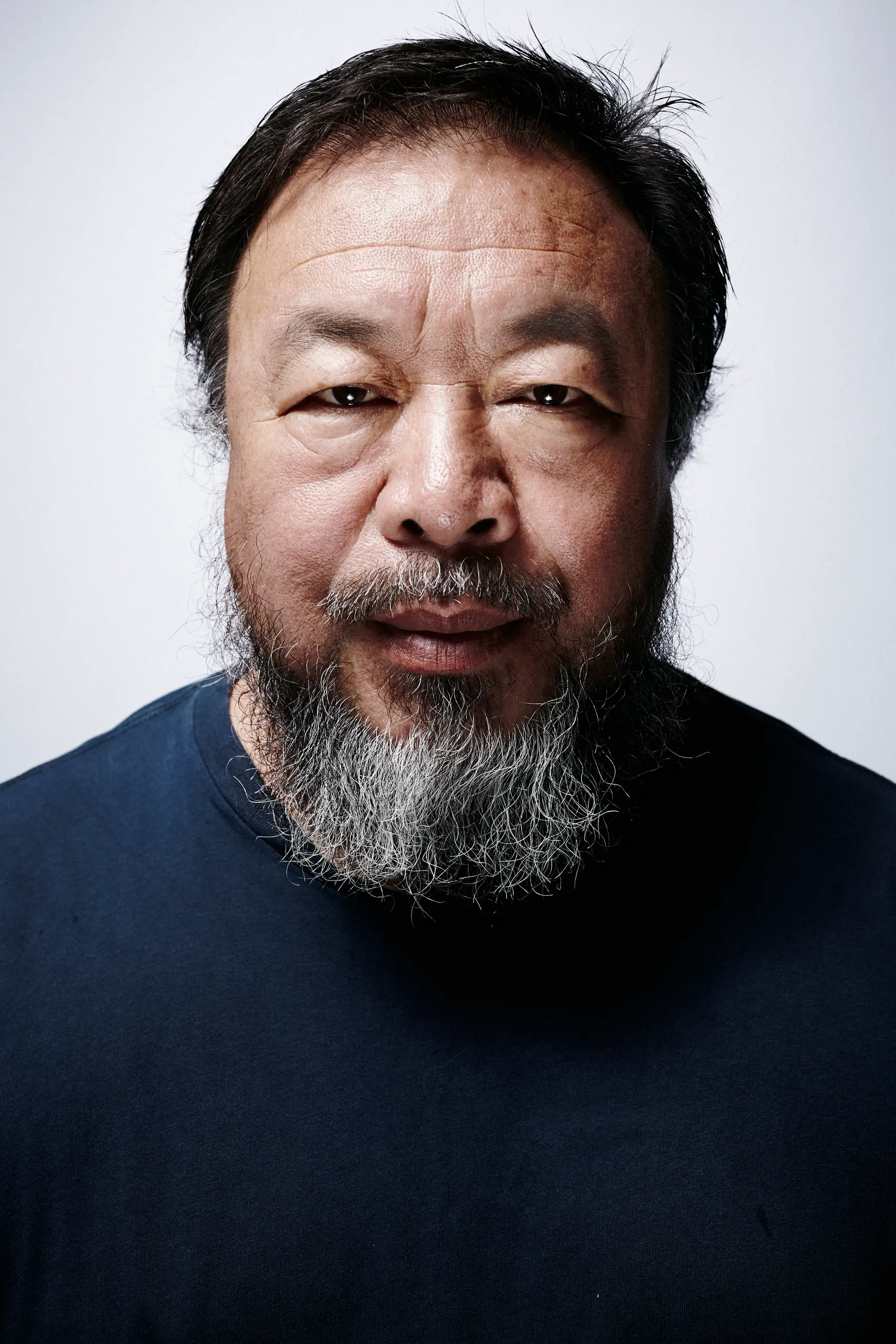
Ai Weiwei
 China
Chinaconceptual artist•filmmaker•social activist•architect
Also known as: Wei-wei Ai, Ai Wei Wei, Weiwei Ai
Birthday
August 28, 1957
Birth Sign
Sagittarius
Birthplace
Beijing, China
Age
69 years old
Height
5 ft 9 in (175 cm)
About
Ai Weiwei is a Chinese conceptual artist, filmmaker, and social activist born in Beijing on August 28, 1957. He is widely recognized for his bold critiques of the Chinese government, his investigations into human rights abuses, and his monumental art installations that blend traditional Chinese aesthetics with contemporary political commentary. His work often confronts issues of censorship, corruption, and the displacement of individuals by state power.
As of 2026, he remains a central figure in the global art world despite living under significant restrictions and having been forced into exile. His artistic output spans sculptures, photography, public installations, and documentary films. He is perhaps best known for Sunflower Seeds, an installation at the Tate Modern featuring millions of hand-painted porcelain seeds, and for documenting his own detention in the Oscar-nominated film Ai Weiwei: Never Sorry.
Born to the poet Ai Qing, who was exiled to the Gobi Desert shortly after Ai Weiwei's birth, his childhood was defined by hardship and political persecution. This early experience fueled his lifelong commitment to speaking truth to power. Following his release from an 81-day detention in 2011, he has resided in various countries including Germany, Portugal, and the United Kingdom, continuing his work as a voice for freedom and democracy.
Early Life & Background
Ai Weiwei's early life was marked by political turmoil and displacement. Born in Beijing in 1957, his father, the renowned poet Ai Qing, was labeled a 'rightist' during the Anti-Rightist Campaign. Shortly after his son's birth, Ai Qing was exiled to the remote northwest of China, specifically the Gobi Desert region. Ai Weiwei spent the first fourteen years of his life in this harsh environment, where he witnessed the effects of forced labor and state humiliation firsthand. This period of isolation profoundly shaped his worldview and later fueled his outspoken criticism of authoritarianism.
In 1971, at the age of 14, Ai returned to Beijing but continued to face discrimination due to his family's political status. Unable to attend university immediately, he worked as a migrant laborer in a rural village in Xinjiang until 1979. During these years, he observed the struggles of the working class and the realities of rural life, experiences that would later inform his art. The end of the Cultural Revolution and the rehabilitation of his father in 1979 opened new doors. Ai enrolled in the Beijing Film Academy, studying animation and filmmaking, graduating in 1983.
Seeking broader artistic horizons, Ai moved to New York City in 1983, initially planning to stay for only one year. He remained there for a decade, immersing himself in the American art scene while struggling financially. To support himself and his studies at Parsons School of Design, he worked various jobs, including as a blackjack hustler in Las Vegas and a dishwasher. This period was pivotal; he absorbed concepts of Pop Art, Minimalism, and Conceptual Art, befriending artists like John Cage and Andy Warhol. He began to develop a unique voice that merged personal history with global political discourse, setting the stage for his return to China and subsequent transformation of the contemporary art landscape.
Career Growth
Ai Weiwei returned to Beijing in 1993, bringing a new perspective that would transform the Chinese contemporary art world. He co-founded Studio Xinghuo (Spark Studio) in 1994, which became a hub for avant-garde artists. Throughout the late 1990s and early 2000s, he created works challenging the boundaries between art and life, using everyday objects to comment on Chinese society. In 2003, he co-curated the controversial exhibition 'The First International Art Exhibition of the People's Republic of China,' which drew significant attention.
A defining moment in his activism occurred after the 2008 Sichuan earthquake. Ai investigated the collapse of schools built with substandard materials, known as 'tofu-dreg schools,' which killed thousands of students. He launched the 'Remembering' project, interviewing survivors and families, and attempted to publish a list of victims' names, leading to significant conflict with authorities. This investigation established him as a fearless critic willing to risk his safety for truth.
His international profile soared with the 2010 unveiling of Sunflower Seeds at the Tate Modern in London. This massive installation consisted of 100 million hand-painted porcelain seeds, each crafted by artisans in Jingdezhen. The work served as a meditation on mass production, individuality, and China's manufacturing dominance. In April 2011, he was arrested at Beijing Capital International Airport and held without charge for 81 days. Although released on bail in December 2011 under heavy restrictions, the event amplified his global stature. Since being permitted to leave China in 2015 for medical treatment, he has resided in Europe and the UK, continuing to produce major installations and documentaries, including the Oscar-nominated Ai Weiwei: Never Sorry.
Career Timeline
Public Image & Style
Ai Weiwei is portrayed as a 'rebel artist' and a 'dissident.' His public image is defined by his unwavering commitment to truth and freedom, even at great personal cost. Media outlets often describe him as fearless, uncompromising, and intellectually rigorous. His aesthetic is minimalist yet politically charged, often utilizing industrial materials and traditional Chinese motifs to create stark contrasts. He is known for his distinctive look, frequently sporting a beard and casual attire, reflecting his non-conformist style. His social media presence serves as a primary channel for his activism, where he consistently posts critical commentary on global events and censorship.
Fame & Fandom
Ai Weiwei commands a unique space in the cultural landscape where devotion is intellectual rather than performative. His audience consists not of adoring crowds seeking autographs, but of a global network of art critics, human rights activists, and museum-goers who engage with his work through rigorous debate and serious reflection. There is no formal name for this community, nor are there organized fan campaigns or rituals typical of pop culture; instead, the connection is forged through shared values regarding freedom of expression and the role of the artist in society. This distinct mode of engagement has propelled him to significant standing within the iFANN Global Fame Rankings. His stature is measured by the weight of his ideas and the impact of his actions rather than viral trends. In September 2026, these metrics placed the 39th most famous person from China, a position he held steady from the previous cycle. Furthermore, his influence within his specific creative fields was recognized as the 85th most famous person in Art & Design, also holding steady from the prior period. These placements reflect a career defined by consequence and conflict, distinguishing him from entertainers whose fame relies on consumption.
Interesting Facts and Legends
Before establishing himself as a globally renowned conceptual artist, Ai Weiwei spent time in New York City during the 1980s working as a blackjack hustler to support his studies at Parsons School of Design. This early chapter adds a layer of rogue mythology to his biography, portraying him as someone who operated outside conventional systems long before his political activism began. One of the most iconic moments in contemporary art history occurred in 2010 when he unveiled "Sunflower Seeds" at the Tate Modern's Turbine Hall. The installation featured 100 million hand-painted porcelain seeds, a massive commentary on mass production and individuality that remains one of the most famous works of the 21st century. Perhaps the most defining event in his legend took place in April 2011, when Chinese authorities arrested him at Beijing Capital International Airport. He was held incommunicado for 81 days without charge or trial before being released on bail in December 2011. This disappearance transformed him into a global symbol of resistance against censorship, and recent reports indicate he plans to reenact this detention in a durational performance in Manchester in 2026. After over a decade of self-exile, he quietly returned to Beijing in January 2026, announcing new works including a drawing inspired by a dying tree, the first in over 50 years.
Notable Quotes
“I don't believe in God. I believe in people.”
“My art is not about making money. It's about making a statement.”
“When you have a problem, you should solve it. If you can't solve it, then you should talk about it.”
“I am not a dissident. I am just a citizen.”
Family & Personal Life
Ai Weiwei was born to Ai Qing, a celebrated poet who was exiled during the Anti-Rightist Campaign. His father's persecution and subsequent rehabilitation played a foundational role in shaping Ai Weiwei's political consciousness. He is married to Lu Qing, a former dancer and choreographer whom he met in the 1980s. Lu Qing has been a constant presence in his life, managing aspects of his studio and supporting his activism through decades of challenges. They have one son, Ai Cheng, born around 1993, who has occasionally appeared in his father's documentaries. The family maintains a close bond despite the pressures of exile and political scrutiny.
Notable Connections
Relationships & Dating History
Ai Weiwei has maintained a long-term marriage to Lu Qing, a former dancer and choreographer. They met in the 1980s, likely during his time in New York or shortly after his return to Beijing, though specific details of their meeting are not widely publicized. Lu Qing has been a constant presence in his life, managing aspects of his studio and supporting his activism through decades of challenges. There is no public record of divorce or separation; they remain married as of 2026.
Regarding children, Ai Weiwei has one known son, Ai Cheng, born around 1993. Ai Cheng has occasionally appeared in his father's documentaries and has pursued his own interests in the arts. There are no widely reported romantic relationships prior to his marriage to Lu Qing, and his personal life has generally been kept private compared to his public persona. As of 2026, Ai Weiwei is married to Lu Qing with no other public romantic partners reported.
- MarriedLu Qing1985 - presentCurrentMet in the 1980s; former dancer; manages his studio and supports his activism.
Salary, Net Worth In 2026
$24 Million
iFANN Editorial Team estimate
The iFANN Editorial Team's analysis of Ai Weiwei's earnings, ventures and assets points to roughly $24 million as of 2026. His wealth is derived primarily from the high-value art market rather than commercial endorsements or box office returns. Major revenue streams include sales of limited edition sculptures, commissions for large-scale installations such as Sunflower Seeds and Circle of Animals/Zodiac Heads, and licensing deals for his image and films. Unlike many celebrities, his income does not rely on touring or merchandise but on the appreciation of his iconic pieces and gallery sales through partners like Lisson Gallery and David Zwirner.
He holds real estate holdings in Europe, particularly in Berlin and Lisbon, which contribute to his asset base. While exact figures fluctuate based on auction results and market conditions. His financial trajectory has remained relatively stable despite geopolitical tensions, supported by the enduring demand for his work among collectors and institutions worldwide.
Awards Won (7)
Ai Weiwei has received numerous accolades, though many were contested or withdrawn due to his political stance. He was named one of the '100 Most Influential People in the World' by Time Magazine in 2012. In 2013, he received the Gustav Heinemann Peace Prize in Germany, followed by the Leo Baeck Medal in 2014. He was honored with the Princess of Asturias Awards for Concord in 2015 alongside other activists. In 2016, he received the International Human Rights Award from the American Association for the Advancement of Science. He was named a Fellow of the American Academy of Arts and Sciences in 2018 and received the Cultural Freedom Award from the German PEN Club in 2020. While nominated for an Oscar for his documentary, he often refused to attend ceremonies or accept awards due to his inability to travel or his principled stance against institutions he deemed complicit in censorship.
2012 · Influence
General
2013 · Peace
General
Known For
Sunflower Seeds
2010 · Artist
Ai Weiwei: Never Sorry
2012 · Subject/Director
Dropping a Han Dynasty Urn
1995 · Artist
Remembering
2009 · Activist/Artist
Keywords
Sources
Quick Facts
- Profession
- designer, social activist, architect
- Born
- August 28, 1957
- Birthplace
- Beijing
- Gender
- Male
- Spouse
- Lu Qing
- Birth Sign
- Sagittarius
Personal Details
- Full Name
- Ai Weiwei
- Height
- 5 ft 9 in (175 cm)
- Spouse
- Lu Qing
- Children
- Ai Cheng
- Education
- Beijing Film Academy (1979–1983), Parsons School of Design (attended)
Filmography
12
Total
5
Film
7
TV
Frequently Asked Questions
What is Ai Weiwei's net worth?
Is Ai Weiwei still alive?
Why was Ai Weiwei arrested?
Does Ai Weiwei have any children?
Where does Ai Weiwei live now?
Social Media
Similar People
Join the community
fans discussing