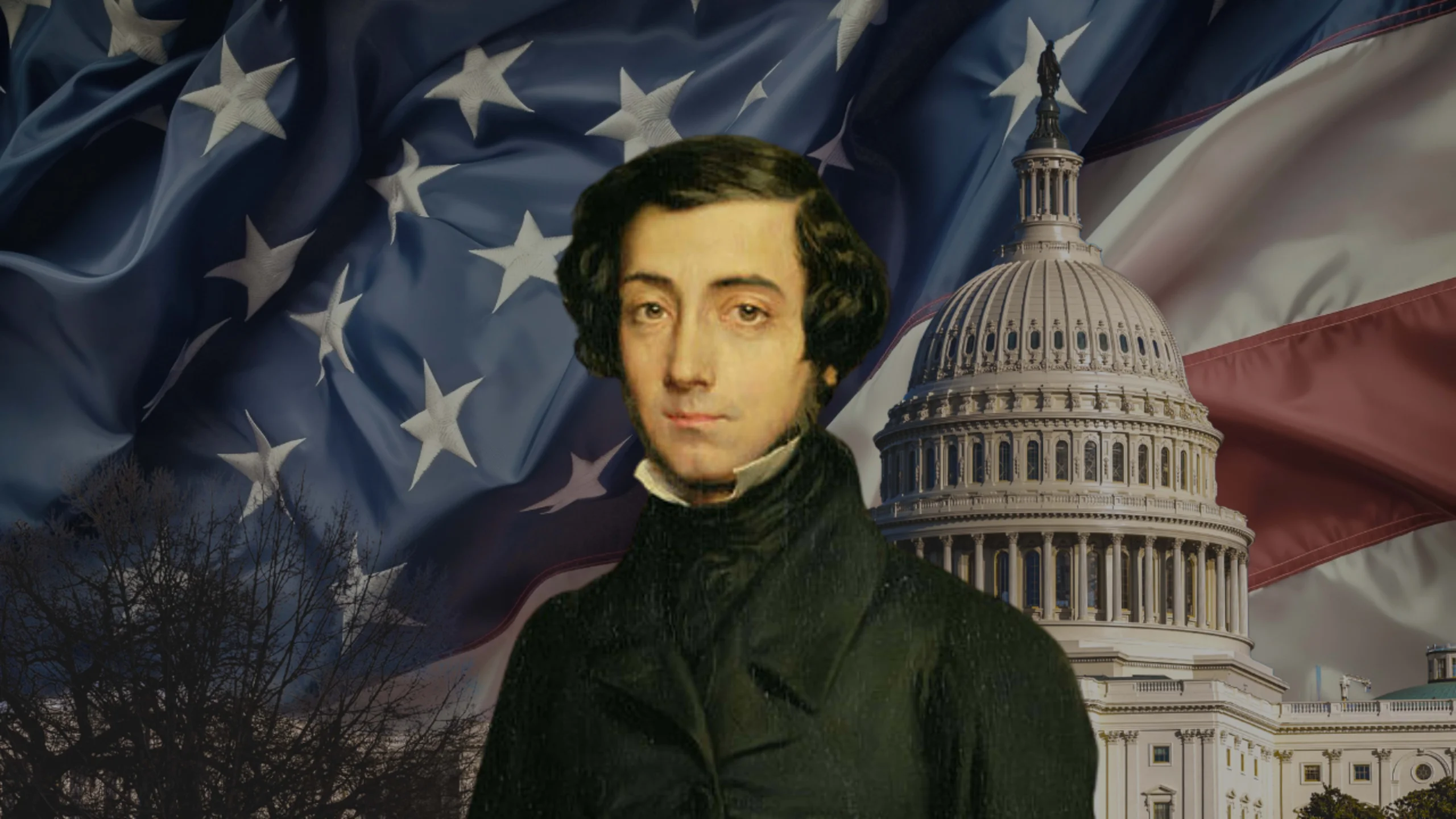
Alexis de Tocqueville
 France
political philosopher•historian•diplomat
Also known as: Alexis-Charles-Henri Clerel de Tocqueville, Alexis Clérel de Tocqueville, Comte de Tocqueville
Birthday
July 29, 1805
Birth Sign
Sagittarius
Birthplace
Paris, France
Age
Died at 53
About
Alexis de Tocqueville was a French political philosopher, historian, and diplomat whose analysis of democratic societies fundamentally shaped modern social science. Born into an aristocratic Norman family during the height of Napoleon's rule, he spent his life dismantling the very hierarchies that privileged him. He is best remembered for two landmark works: Democracy in America, published in two volumes in 1835 and 1840 based on his travels across the United States, and The Old Regime and the Revolution, published posthumously in 1856. The former examined how democratic societies balance individual liberty with the power of the state, while the latter argued that the French Revolution did not break with the past but accelerated a centralizing process begun under Louis XIV.
Tocqueville's political career spanned two French regimes. He served as a deputy during the July Monarchy and later in the Second Republic, where he briefly held the post of Minister of Foreign Affairs in 1849. After Louis-Napoléon Bonaparte's coup on December 2, 1851, Tocqueville retired from public life and devoted himself to writing. Though he never held high office again, his influence only grew. In France and the United States, his work was embraced by liberals, while in Britain both progressives and conservatives claimed him as their own.
Early Life & Background
Alexis Charles Henri Clérel de Tocqueville was born on July 29, 1805, in Paris, France, into an old Norman aristocratic family. His father, Hervé François Juste de Tocqueville, served as a prefect under Napoleon, while his mother, Louise Madeleine Le Peletier des Rosiers, came from a prominent judicial family. Raised in the Château de Tocqueville in Normandy, he received his early education at the Lycée Louis-le-Grand in Paris, where he studied law and developed a deep interest in history and philosophy. Despite his noble lineage, Tocqueville was deeply skeptical of the aristocracy's ability to govern effectively in a changing world.
His early life was marked by a fascination with the tension between liberty and equality, a theme that would dominate his intellectual output. He completed his legal studies and was admitted to the bar in 1827, but his true calling lay in public service and writing rather than courtroom advocacy. During this period, he began working in the Ministry of Justice, gaining practical experience in the administration of the French state. This bureaucratic background provided him with a unique perspective on the machinery of government, which he would later critique in his major works. He also cultivated a close friendship with Gustave de Beaumont, who would become his travel companion and intellectual partner in future endeavors.
Career Growth
Tocqueville's career was a unique blend of administrative duty, legislative service, and profound intellectual production. In 1831, a pivotal moment occurred when he and his friend Gustave de Beaumont were commissioned by the French government to study the American penal system. They traveled to the United States for nine months, visiting prisons, meeting politicians like Andrew Jackson, and traveling thousands of miles across the young republic. This journey provided the empirical foundation for his magnum opus.
In 1835, he published Volume I of Democracy in America. The book became an instant classic in the U.S., though it met with suspicion in France. It analyzed the virtues and dangers of democracy, introducing concepts like the "tyranny of the majority" and "soft despotism." He was elected to the Chamber of Deputies in 1837, representing Valognes, Normandy, and served intermittently until 1851. Volume II of Democracy in America followed in 1840, focusing more on the cultural and social aspects of American life.
Following the February Revolution in France, Tocqueville was elected to the Constituent Assembly in 1848. He briefly served as Minister of Foreign Affairs in June 1849, a role he held for only six weeks before resigning due to disagreements over foreign policy regarding Poland. During the National Assembly period from 1849 to 1851, he opposed Louis-Napoléon Bonaparte's growing authoritarianism. After the coup on December 2, 1851, Tocqueville retired from active politics. His final major work, The Old Regime and the Revolution, was published in 1856, arguing that the French Revolution did not break with the past but accelerated the centralization of power begun under Louis XIV.
Career Timeline
Public Image & Style
Tocqueville commands a following defined by rigorous academic engagement rather than the fervent adulation reserved for modern pop icons. His audience consists primarily of political theorists, historians, and students. There is no formal "fandom name" or organized fan campaigns; instead, his influence manifests through scholarly citation and editorial commentary. His public image is that of the "prophetic observer," a man who saw the future of democracy clearly. He is portrayed in media as a serious, contemplative figure, often depicted in portraits wearing 19th-century attire, standing against a backdrop of libraries or American landscapes. His reputation rests on his nuanced liberalism, which shifted from centre-left to centre-right, making him a touchstone for thinkers across the political spectrum.
Fame & Fandom (iFAMOUS Rankings)
Alexis de Tocqueville commands a following defined by rigorous academic engagement rather than the fervent adulation reserved for modern pop icons. His audience consists primarily of political theorists, historians, and students who study his analysis of democratic societies, yet this group lacks a formal collective identity or a specific name within documented records. There are no organized fan campaigns, birthday billboards, or ritualistic gatherings associated with his legacy; instead, his influence manifests through scholarly citation and editorial commentary in major publications. Leading up to the United States' 250th anniversary in 2026, interest in his work surged as institutions like The Economist and the Wall Street Journal published essays analyzing his predictions on liberty and soft despotism, though these engagements remained strictly intellectual.
Regarding his standing in the global consciousness, Alexis de Tocqueville is currently evaluated by the iFANN Global Fame Engine but does not hold a placement in the published rankings, meaning he sits outside the Global Top 1,000 and any Top-100 scope lists. This absence of a numerical rank reflects his status as a historical figure whose fame is enduring but static, distinct from contemporary celebrities whose visibility fluctuates with current events. While his works remain essential reading, the metrics that drive modern celebrity rankings do not apply to him in the same way they do to living entertainers. The lack of a numeric score or ordinal position confirms that while his ideas permeate political science, he does not currently generate the volume of search signals or media consumption required to secure a spot in the iFANN hierarchy.
Interesting Facts and Legends
His trip to America was officially sanctioned to study the prison system, not to write a book on democracy. The latter was an accidental discovery made during his travels. He spoke English fluently, having learned it during his travels, which allowed him to conduct interviews with ordinary Americans, not just elites. His full name includes "Clérel," a part of his family name that is often omitted in common references. He was born in 1805, the same year Napoleon crowned himself Emperor, placing him squarely in the generation that witnessed the fall of the Empire and the rise of the Republic. The concept of "soft despotism" has become a modern catchphrase, often cited in political discourse as a warning against bureaucratic overreach.
Notable Quotes
“I have always believed that the most dangerous thing in the world is a government that knows everything and does nothing.”
“In America, the people reign in the physical sense as well as the moral sense.”
“The tyranny of the majority is one of the greatest threats to liberty in a democracy.”
Family & Personal Life
Tocqueville married Mary Mottley (known in French as Marie Mottley) on April 12, 1835. She was the daughter of an English clergyman and a French woman, making her a bridge between the two cultures Tocqueville studied so closely. They met through family connections prior to his departure for America. Their marriage was a partnership of mutual intellectual support; Mary accompanied him on his travels and assisted in the transcription and editing of his manuscripts. The couple had three children: Lucie (born 1836), Hervé (born 1838), and Jeanne (born 1840). He lived primarily at the Château de Tocqueville in Normandy, managing his estate alongside his political duties.
Notable Connections
Relationships & Dating History
Alexis de Tocqueville's romantic life was governed by the conventions of 19th-century French aristocracy. He married Mary Mottley (known in French as Marie Mottley) on April 12, 1835. She was the daughter of an English clergyman and a French woman, making her a bridge between the two cultures Tocqueville studied so closely. They met through family connections prior to his departure for America. Their marriage was a partnership of mutual intellectual support; Mary accompanied him on his travels and assisted in the transcription and editing of his manuscripts. The couple had three children: Lucie (born 1836), Hervé (born 1838), and Jeanne (born 1840). As of the date of his death on April 16, 1859, he was widowed (his wife outlived him) and deceased. There are no subsequent relationships to report. His legacy is one of a devoted husband and father who balanced a demanding political career with a rich domestic life.
- MarriedMary Mottley1835 - 1859Married until his death; she outlived him and managed his literary estate.
Death & Aftermath
Died
April 16, 1859 (aged 53)
Death Place
Tocqueville-en-Caux, Seine-Maritime, France
Cause of Death
Hemorrhage from chronic tuberculosis
On April 16, 1859, Alexis de Tocqueville died at the Château de Tocqueville in Normandy at the age of 53. His final days were marked by a retreat from public life following the 1851 coup d'état by Louis-Napoléon Bonaparte, which had ended his political career and led him to resign rather than swear allegiance to the new regime. Medical accounts attribute his death to a massive hemorrhage caused by chronic tuberculosis, a condition that had weakened his health for years. The funeral was a private affair held at the family church in Tocqueville-en-Caux, attended by close friends, family, and local dignitaries, reflecting his status as a local nobleman rather than a figure of mass spectacle.
Following his passing, his literary estate was managed by his heirs until his works eventually entered the public domain. Democracy in America quickly gained international acclaim and became a required text in political science curricula globally. In the decades since, his legacy has been preserved through institutions like the Alexis de Tocqueville Fund and various educational programs dedicated to his theories on liberty and democracy. While no specific estate value is recorded in modern databases due to the passage of time and the public domain status of his writings, his intellectual property continues to generate revenue through licensing fees for translations, adaptations, and commemorative items. Leading up to the 2026 bicentennial of his birth, renewed interest in his work has sparked discussions about placing a statue of him in Washington, D.C., honoring his prescient warnings about American democracy.
Net Worth (Estate Value)
$0
iFANN Editorial Team estimate
As a deceased historical figure, Alexis de Tocqueville does not have a current net worth in the traditional sense of liquid assets. His "wealth" is represented by his estate's value and the ongoing revenue generated by his intellectual property. Precise figures for his estate at death are not available in modern databases, as his family managed the estate privately. However, the Tocqueville family retained ownership of the Château de Tocqueville for generations. Since his death, his works have entered the public domain, meaning they generate no direct royalties for his heirs. Revenue now comes from licensing fees for translations, adaptations, and the sale of commemorative items such as books, statues, and educational materials. The "value" of his estate today is intangible, measured in the billions of dollars of academic research, political theory, and policy analysis influenced by his work. No specific dollar figure exists for his personal fortune as of 2026, as he left no modern business ventures or real estate holdings in the public eye beyond the historic family home. iFANN Editorial Team research indicates that while his direct financial impact is difficult to quantify, his intellectual legacy remains a significant asset in the realm of political thought.
Awards & Accolades
View 3 records, honours and achievementsKnown For
Democracy in America
1835 · Author
The Old Regime and the Revolution
1856 · Author
Keywords
Sources
Quick Facts
- Profession
- philosopher, politician, writer
- Born
- July 29, 1805
- Birthplace
- Paris, France
- Died
- April 16, 1859
- Death Place
- Tocqueville-en-Caux, France
- Gender
- Male
- Spouse
- Mary Mottley Tocqueville
- Birth Sign
- Sagittarius
Personal Details
- Full Name
- Alexis Charles Henri Clérel, comte de Tocqueville
- Spouse
- Marie Mottley
- Children
- Lucie, Hervé, Jeanne
- Education
- Lycée Louis-le-Grand, University of Paris (Law)
Frequently Asked Questions
What is Alexis de Tocqueville's most famous book?
How did Alexis de Tocqueville die?
Why is Alexis de Tocqueville important today?
Did Alexis de Tocqueville ever visit the United States?
Was Alexis de Tocqueville a politician?
Similar People
Join the community
fans discussing