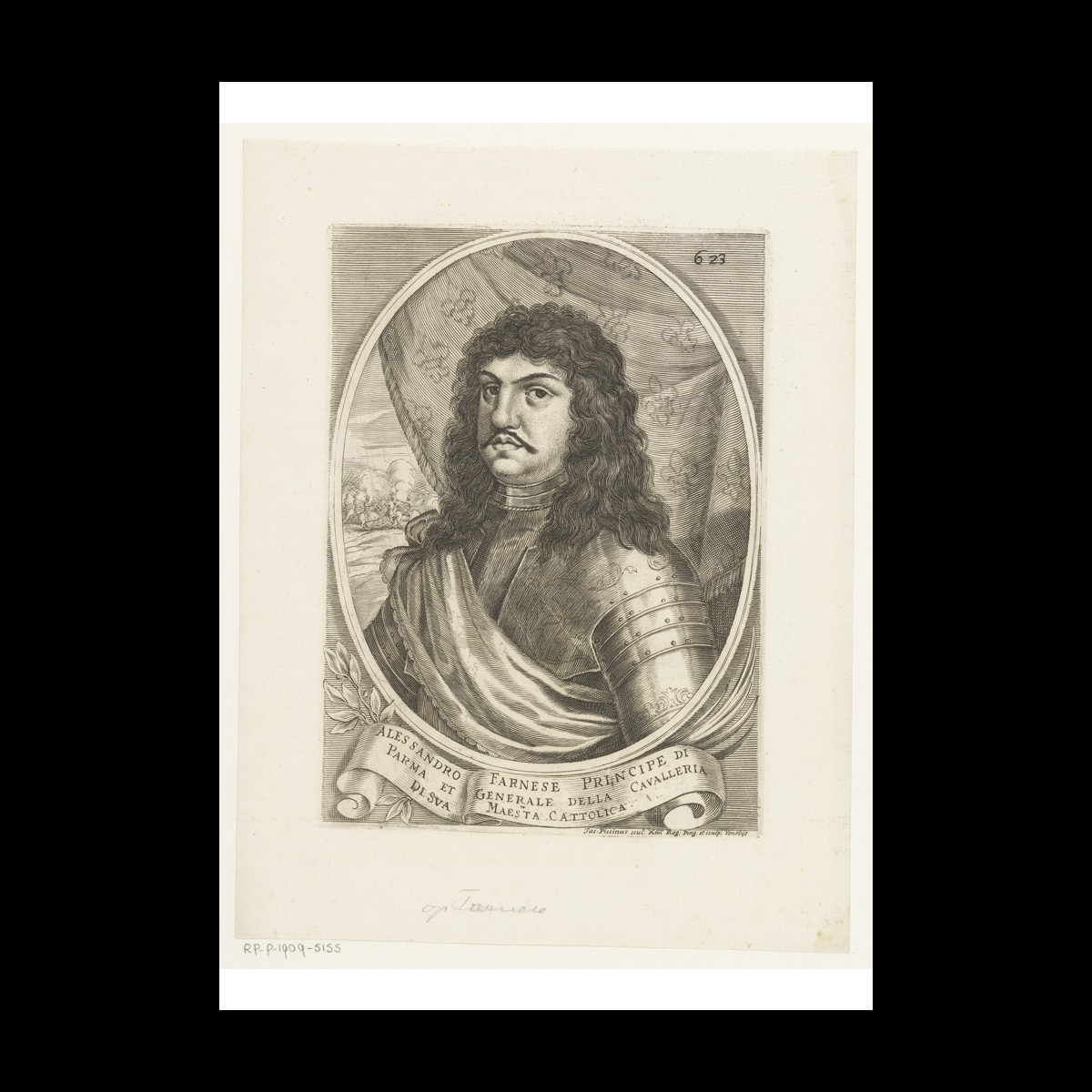
Alexander Farnese, Duke of Parma
 Spain
Spainmilitary commander•diplomat•nobleman
Also known as: Alessandro Farnese, Alessandro Farnese, 3rd Duke of Parma, Alejandro Farnesio
Birthday
August 27, 1545
Birth Sign
Sagittarius
Birthplace
Rome, Papal States
Age
Died at 47
About
Alessandro Farnese, Duke of Parma, was an Italian nobleman and military commander who shaped the course of European history in the late 16th century. Born in Rome on August 27, 1545, he was the nephew of King Philip II of Spain, a connection that would define his career. As a soldier, diplomat, and governor, Farnese served the Spanish Habsburgs across the continent, earning a reputation as one of the most skilled generals of his era. He held the titles of Duke of Parma, Piacenza, and Castro from 1586 until his death, but his most significant role was as Governor of the Spanish Netherlands from 1578 to 1592, where he led campaigns during the Dutch Revolt.
Farnese is universally regarded by historians as the greatest general of the sixteenth century. His mastery of siege warfare, particularly at Antwerp, and his diplomatic skill in managing the complex religious and political landscape of the Netherlands remain subjects of intense study. He is credited with nearly keeping the Netherlands under Spanish governance, a feat that would have altered the map of Europe and potentially prevented the rise of the Dutch Republic as a global maritime power. His legacy persists through the enduring reputation of his campaigns during the Dutch Revolt and his tenure as Governor of the Spanish Netherlands.
Early Life & Background
Alessandro Farnese entered the world on August 27, 1545, in Rome as the only son of Ottavio Farnese, the second Duke of Parma, and Margaret of Austria, the illegitimate daughter of Holy Roman Emperor Charles V. His birth into one of Europe's most powerful dynasties set the stage for a career that would define Spanish Habsburg dominance in Western Europe during the late Renaissance. His childhood was marked by political instability and high-stakes diplomacy within the courts of Italy and Spain.
Following his father's death in 1586, he inherited the Duchy of Parma, but his early years were spent under the guardianship of his mother, Margaret of Austria, who served as Regent of the Netherlands. In 1555, when Margaret left Italy to assume her role in the Low Countries, young Alessandro was sent to Spain to be raised at the court of his uncle, King Philip II. This period of upbringing in Madrid immersed him in the intricacies of Habsburg politics and military strategy from a young age. He received an education befitting a future ruler and general, mastering languages, mathematics, fortification engineering, and classical history. By his mid-teens, he had already begun to demonstrate the tactical acumen that would later earn him the title of "the greatest general of the sixteenth century".
The formative years in the Spanish court prepared him for the complexities of ruling a vast empire. He learned the art of war not just through books but through the observation of campaigns and the strategic planning required to maintain control over distant territories. This early immersion in the machinery of statecraft and military command distinguished him from other nobles of his time, positioning him as a key figure in the Habsburg efforts to counter Protestantism and secure their European holdings.
Career Growth
Farnese's military career began in earnest in 1571 when he participated in the Battle of Lepanto, a decisive naval engagement where the Holy League defeated the Ottoman Empire. Although he did not command the fleet, his presence alongside his cousin, John of Austria, established his reputation within the Catholic military sphere. His most significant contributions occurred during his tenure as Governor of the Spanish Netherlands from 1578 to 1592. Appointed to quell the Dutch Revolt, Farnese transformed the course of the Eighty Years' War through a combination of superior military engineering, strategic diplomacy, and psychological warfare.
Unlike his predecessors, who relied solely on brute force, Farnese understood the economic and social levers of the conflict. He successfully reconquered the southern provinces (modern-day Belgium), re-establishing Spanish control over key cities such as Tournai, Douai, and Arras. A pivotal moment in his career was the Siege of Antwerp (1584–1585). Farnese engineered a massive pontoon bridge across the Scheldt River to cut off supply lines to the city, forcing its surrender after a grueling siege. This victory effectively severed the rebellious northern provinces from the south, creating the de facto border between the Dutch Republic and the Spanish Netherlands that persists in modern geopolitics.
In 1588, Farnese prepared to lead a massive invasion of England to support the Spanish Armada. His forces were poised in the Netherlands to cross the English Channel upon the fleet's arrival. However, the defeat of the Armada by the English navy forced the cancellation of the invasion. British historian Edward Shepherd Creasy later noted, "happy it is for England and the world that this island was saved from becoming an arena for the exhibition of his powers." Later in his career, Farnese intervened in the French Wars of Religion. In 1590, he famously relieved the siege of Paris for the Catholic League, lifting the pressure placed on the city by Henry IV of France. This intervention solidified the Catholic hold on northern France temporarily and demonstrated his ability to project power beyond the Low Countries.
Career Timeline
Public Image & Style
Farnese is portrayed in historical texts as a master strategist, a pious Catholic, and a loyal servant of the Spanish Crown. He is often depicted as a man of few words but decisive action, contrasting with the more flamboyant personalities of other Renaissance commanders. His public image was built on efficiency and piety rather than theatricality. He commanded respect through his ability to win battles and manage complex political situations, earning the title "Lightning Rod of War" from contemporaries. His demeanor was serious and focused, reflecting the gravity of his responsibilities as Governor of the Spanish Netherlands.
Fame & Fandom
Alexander Farnese, Duke of Parma remains a towering figure in military history, though his standing within the modern global consciousness differs from that of contemporary celebrities. As of September 2026, the iFANN Global Fame Engine has evaluated this historical commander and determined that he does not currently hold a placement in the published rankings, including the Global Top 1,000 or any Top-100 scope list. This absence from the numerical charts reflects his status as a subject of academic and historical study rather than a participant in the current cycle of pop culture consumption, where fame is often measured by immediate search volume and media saturation. While he commanded armies that shaped the map of Europe and influenced the fate of nations for decades, the mechanisms that drive modern celebrity metrics do not apply to a man who died over four centuries ago.
His legacy persists through the enduring reputation of his campaigns during the Dutch Revolt and his tenure as Governor of the Spanish Netherlands, yet these achievements exist outside the realm of viral fandom or chart-based popularity. There is no formal fanbase with an official name, nor are there organized campaigns, charity drives, or digital rituals dedicated to his memory in the manner seen with living icons. The support he once commanded was political allegiance and military loyalty, distinct from the voluntary adoration that characterizes modern fandoms. Consequently, while historians continue to debate his tactical brilliance and the potential outcomes of his unlaunched invasion plans, he remains a figure of biography rather than a subject of active public worship.
Interesting Facts and Legends
Historical records consistently regard Alexander Farnese as the greatest general of the sixteenth century, a title earned through decades of successful campaigning against Dutch rebels and French forces. His most legendary achievement involved nearly reclaiming the rebellious provinces for the Spanish Crown during his governorship from 1578 to 1592, earning him the moniker of the man who almost kept the Netherlands under Spanish governance. A pivotal moment in his lore occurred at the Siege of Antwerp in 1585, where he utilized superior engineering and diplomacy to outmaneuver William of Orange, a victory often cited as a turning point in the Eighty Years' War.
Another significant chapter in his story involves the planned invasion of England in 1588; although the Spanish Armada's defeat prevented this campaign from launching, the sheer scale of the force he prepared in the Netherlands adds to his legend as a near-conqueror of Britain. Upon succeeding as the third Duke of Parma and Piacenza in 1586, he demonstrated the dynastic expectations of his era by entrusting these duchies to his teenage son, Ranuccio, while continuing his military career abroad. He died in 1592, leaving behind a legacy of military prowess that overshadowed his time as a ruler of Parma itself.
Notable Quotes
“Happy it is for England and the world that this island was saved from becoming an arena for the exhibition of his powers.”
Family & Personal Life
Alessandro Farnese married Infanta Maria of Portugal (also known as Maria of Guimarães) on November 12, 1565. She was the daughter of Prince Louis of Portugal and Beatrice of Portugal, making her a member of the Portuguese royal house and a niece of King Philip II of Spain. The marriage was a strategic alliance designed to strengthen ties between the Farnese and Habsburg dynasties. They met through diplomatic channels prior to the wedding.
The couple had several children, including Ranuccio I Farnese (1569–1622), who succeeded him as Duke of Parma, and Virginia Farnese (1570–1634). Other children included Odoardo Farnese (1573–1574) and Isabella Clara Farnese (1576–1577), both of whom died in infancy. There are no widely documented romantic relationships outside of his marriage to Infanta Maria. As a figure of the 16th-century nobility, his personal life was strictly regulated by dynastic necessity, and no public scandals or extramarital affairs are recorded in credible historical sources.
Notable Connections
Relationships & Dating History
Alessandro Farnese married Infanta Maria of Portugal (also known as Maria of Guimarães) on November 12, 1565. She was the daughter of Prince Louis of Portugal and Beatrice of Portugal, making her a member of the Portuguese royal house and a niece of King Philip II of Spain. The marriage was a strategic alliance designed to strengthen ties between the Farnese and Habsburg dynasties. They met through diplomatic channels prior to the wedding. The union produced several children, including Ranuccio I Farnese, who succeeded him as Duke of Parma, and Virginia Farnese. Other children, Odoardo and Isabella Clara, died in infancy.
There are no widely documented romantic relationships outside of his marriage to Infanta Maria. As a figure of the 16th-century nobility, his personal life was strictly regulated by dynastic necessity, and no public scandals or extramarital affairs are recorded in credible historical sources. At the time of his death in 1592, he was still married to Maria of Portugal, and the couple remained together until his passing.
- MarriedInfanta Maria of Portugal1565 - 1592Strategic alliance between the House of Farnese and the Portuguese Royal Family; she died after his death.
Death & Aftermath
Died
December 3, 1592 (aged 47)
Death Place
Namur
Cause of Death
Fever and exhaustion
Alessandro Farnese died on December 3, 1592, at the age of forty-seven while stationed in Namur during active operations against Dutch rebels. The cause of death was fever, likely exacerbated by exhaustion and illness contracted during the grueling siege season. He spent his final days overseeing military commands near the city before withdrawing to his quarters, where he passed away shortly after his last public appearance. Contemporary accounts describe him as having been in declining health for some time, yet he continued to direct campaigns until his final days.
His death was a profound blow to the Spanish Crown. King Philip II reportedly wept upon hearing the news, recognizing the loss of his most capable general. The reaction among the Spanish military and political elite was one of profound grief, with chroniclers describing him as the Lightning Rod of War. His removal left a vacuum in leadership that the Spanish monarchy struggled to fill immediately, shifting the balance of power in the Low Countries and allowing the Dutch Republic to gain momentum.
Farnese's body was transported from the Low Countries to Italy for burial in the Church of San Giovanni Evangelista in Parma, the traditional site of the Dukes of Farnese. A solemn ceremony attended by family members, high-ranking clergy, and representatives of the Spanish court honored his status as a sovereign prince. Following his death, his son Ranuccio I Farnese succeeded him as Duke of Parma, Piacenza, and Castro in 1592, maintaining the continuity of the dynasty until the extinction of the direct male line in 1622. The estate was managed internally by the Habsburg monarchy and the Farnese family without external litigation.
Net Worth (Estate Value)
$0
iFANN Editorial Team estimate
As a deceased historical figure from the 16th century, Alexander Farnese does not have a net worth in the modern sense of liquid assets or currency valuation. His wealth was derived from land holdings, feudal rights, and the revenues of the Duchies of Parma, Piacenza, and Castro. The value of his estate is not quantifiable in 2026 dollars due to the lack of comparable economic data and the passage of over four centuries. His estate was managed internally by the Habsburg monarchy and the Farnese family, passing directly to his son Ranuccio I without external litigation. The Farnese collection of art and property remains a significant cultural asset today, maintained by museums and institutions worldwide, but the original estate's financial trajectory cannot be traced in modern terms.
Awards & Accolades
View 6 records, honours and achievementsKnown For
Governor of the Spanish Netherlands
1578 · Military Commander
Siege of Antwerp
1585 · Commander
Battle of Lepanto
1571 · Participant
Keywords
Sources
Quick Facts
- Profession
- military personnel, diplomat, militant
- Born
- August 27, 1545
- Birthplace
- Rome
- Died
- December 3, 1592
- Death Place
- Namur
- Gender
- Male
- Spouse
- Infanta Maria of Guimarães
- Birth Sign
- Sagittarius
Personal Details
- Full Name
- Alessandro Farnese
- Spouse
- Infanta Maria of Portugal
- Children
- Ranuccio I Farnese · Virginia Farnese
- Education
- Royal Court of Spain, Madrid
Frequently Asked Questions
Who was Alexander Farnese, Duke of Parma?
When did Alexander Farnese die?
Did Alexander Farnese invade England?
Who was Alexander Farnese's wife?
What was Alexander Farnese's biggest achievement?
Similar People
Join the community
fans discussing