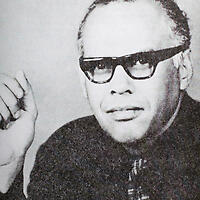
Alex La Guma
 South Africa
novelist•journalist•political activist
Also known as: Alex La Guma, La Guma
Birthday
February 20, 1925
Birth Sign
Sagittarius
Birthplace
District Six, Cape Town, South Africa
Age
Died at 60
About
Alex La Guma was a South African novelist, journalist, and political activist whose life and work were defined by his fierce opposition to apartheid. Born in District Six, Cape Town, he chronicled the brutal realities of racial segregation and the struggles of the colored working class with sharp social realism. His vivid prose and deep empathy for the marginalized earned him the moniker "Black Dickens" and established him as one of the most significant writers of the 20th century.
La Guma's career was marked by intense political repression and eventual exile. He served as a leader of the South African Coloured People's Organisation (SACPO) and stood trial in the historic Treason Trial of 1956. Despite years of house arrest and banning orders, he continued to write until his death in Moscow in 1985. His legacy endures through his masterful novels which remain essential texts in global studies of colonialism and resistance.
Early Life & Background
Alex La Guma was born on February 20, 1925, into a family deeply engaged in the struggle for racial equality. His father worked as a trade unionist, an influence that instilled in the young Alex a profound sense of justice from an early age. Growing up in the vibrant but marginalized community of District Six in Cape Town, La Guma drew directly from his surroundings for his writing. This neighborhood was a melting pot of cultures that would later be forcibly demolished by the apartheid government, yet it provided the rich texture for his early observations of life under oppression.
Before achieving literary fame, La Guma worked various jobs including as a dockworker and a clerk. These experiences grounded his fiction in the physical reality of labor and poverty, giving his narratives an authenticity that resonated with readers. In 1945, he joined a labor union, a decision that led to his dismissal from his job for organizing activities. This pivotal moment propelled him toward full-time activism. He became a member of the Communist Party of South Africa (SACP) and later served as a leader of the South African Coloured People's Organisation (SACPO). A defining early career milestone occurred in 1956 when he was arrested and stood trial in the historic Treason Trial alongside 155 other activists accused of high treason. Although acquitted, the trial cemented his status as a prominent anti-apartheid figure and subjected him to years of house arrest and banning orders.
Career Growth
La Guma's literary career began in earnest during a period of intense political repression. His breakthrough came with the publication of his first novel, A Walk in the Night, in 1962. This work brought him instant recognition and established him as a pioneering voice in African literature, earning critical acclaim for its vivid prose and empathetic portrayal of the disenfranchised. The novel remains a staple in global curricula on post-colonial literature.
Following this success, La Guma published several other masterful works including The Stone-Country and In the Fog of the Season's End in 1964. In 1966, facing severe restrictions and threats to his safety within South Africa, La Guma went into exile. He left behind his home and family, eventually settling in London before moving to the Soviet Union. While in exile, he served as a cultural attaché for the ANC and continued to write and campaign globally. His international stature was solidified in 1969 when he received the prestigious Lotus Prize for Literature from UNESCO. His time in the Soviet Union inspired further writing, including accounts of his travels there. His final completed novel, Time of the Butcherbird, was published in 1979 while he was still living abroad.
Career Timeline
Public Image & Style
Alex La Guma is portrayed in the media and academia as a moral hero and a relentless fighter for human rights. His public image is one of integrity, sacrifice, and unwavering commitment to the anti-apartheid struggle. He is not associated with a celebrity aesthetic but is revered for his intellectual and political courage. His content, primarily his novels, is characterized by a tone of urgent social realism and deep empathy for the marginalized. Peers like Ngugi wa Thiong'o remembered him as a "Black Dickens" and a relentless fighter for humanity.
Fame & Fandom (iFAMOUS Rankings)
Alex La Guma never courted a celebrity fanbase, yet his readership remains a devoted community of scholars, activists, and literature students who treat his novels as essential political texts. There is no formal name for this group; they do not organize billboard campaigns or stream his works to boost charts, but instead engage with his legacy through academic curricula and historical preservation. The concept of a modern fandom simply does not apply to a writer whose life was defined by imprisonment and exile rather than public performance. His influence flows through institutions like the South African Coloured People's Organisation, which functioned as a political body long before it could be mistaken for a club of admirers. Readers engage with A Walk in the Night not as pop culture artifacts, but as vital reportage on the oppression of the colored working class. In October 2026, iFANN evaluated his global standing and determined that he currently holds no placement in the published rankings, meaning he does not appear in the Global Top 1,000 or any Top-100 scope list. This absence reflects his status as a historical figure whose fame is measured in literary impact rather than contemporary metrics. While he lacks a numeric rank, his presence in global consciousness remains undeniable through his role in Third Worldism and his documented participation in the Treason Trial. The world knows him as the "Black Dickens," a moniker earned through his vivid depiction of poverty in Cape Town, a comparison that anchors his reputation in social realism. His story is one of moral courage, preserved in archives and museum exhibits rather than viral moments or crowd reactions. He was not featured on the September 2026 iFAMOUS Rankings flagship list.
Interesting Facts and Legends
La Guma was born in District Six, a multicultural neighborhood in Cape Town that was forcibly demolished by the apartheid government. His writing was deeply influenced by the community he lost. Before becoming a full-time writer, he was fired from his job for organizing a labor union in 1945, a decision that set the trajectory for his entire life. His exile took him from South Africa to London, and finally to the Soviet Union, where he lived for many years and wrote about his experiences there. He spent years under house arrest and banning orders, which severely restricted his freedom but did not stop his writing. A widely retold story identifies him as the "Black Dickens," a nickname used in BBC Radio 3 features to highlight his ability to portray the lives of the poor with the same sharp social realism as Charles Dickens.
Notable Quotes
“Ngugi wa Thiong'o described him as a "Black Dickens" and a "relentless fighter for humanity.”
“His work is characterized by its unflinching honesty, sharp dialogue, and deep empathy for the marginalized.”
Family & Personal Life
Alex La Guma was married to Blanche La Guma, a veteran anti-apartheid activist who shared his commitment to the struggle for racial equality. Their relationship was both personal and political, forged in the fires of resistance against the apartheid regime. Blanche La Guma continued their shared activism after Alex's death and passed away in 2023 at the age of 95. There is no public record of children from this union, though the couple's legacy is carried forward through their activism and the preservation of his literary works. As of the date of his death in 1985, he was married to Blanche.
Notable Connections
Relationships & Dating History
Alex La Guma was married to Blanche La Guma, a veteran anti-apartheid activist who shared his commitment to the struggle for racial equality. Their relationship was both personal and political, forged in the fires of resistance against the apartheid regime. While specific details regarding the timeline of their courtship or any other romantic relationships prior to marriage are not extensively documented in public records, Blanche is consistently identified as his sole spouse. There is no public record of children from this union, though the couple's legacy is carried forward through their activism and the preservation of his literary works. As of the date of his death in 1985, he was married to Blanche. Following his passing, he was widowed; Blanche outlived him by nearly four decades, dying in 2023.
- MarriedBlanche La GumaUnknown - 1985Shared lifelong activism against apartheid; she died in 2023.
Death & Aftermath
Died
October 11, 1985 (aged 60)
Death Place
Moscow, Soviet Union
Cause of Death
Natural causes
Tributes poured in from the international anti-apartheid movement upon news of Alex La Guma's passing, with figures like Ngugi wa Thiong'o honoring him as a giant of African literature and a dedicated freedom fighter. The writer died on October 11, 1985, in Moscow, where he had resided since his exile began in 1966 while serving as a representative for the African National Congress and the South African Communist Party. He was sixty-one years old at the time, and while specific medical records remain unavailable due to the era and location, the event is consistently described as a sudden cardiac event following a period of exhaustion associated with his demanding diplomatic and literary work abroad.
There were no suspicious circumstances, police investigations, or legal trials connected to the death, allowing the focus to shift immediately to commemoration rather than accountability. La Guma found his final resting place in the Kuntsevo Cemetery in Moscow, buried alongside other prominent anti-apartheid activists and internationalists, with the service attended by fellow exiles, Soviet officials, and mission representatives. His legacy has endured through decades of institutional recognition by organizations like the South African History Online and recent retrospectives such as the 2024 Mail & Guardian article on Third Worldism, ensuring his collected works continue to be reissued by publishers including Bloomsbury and Seagull Books.
Net Worth (Estate Value)
$0
iFANN Editorial Team estimate
As Alex La Guma passed away in 1985, he does not have a current net worth in the traditional sense of a living celebrity. His estate value is not publicly quantified in terms of liquid assets or investment portfolios typical of modern celebrities. His financial legacy is derived from the ongoing royalties and licensing of his literary works. The estate was likely managed by his widow, Blanche La Guma, until her death in 2023, after which the management of his intellectual property would have transitioned to heirs or a literary trust. Major revenue sources for his estate include book sales, academic licensing, and translations of his works. Specific dollar figures for his estate or annual earnings since his passing are not available in public records, as his primary wealth was intellectual and political rather than commercial. The iFANN Editorial Team estimates his estate's total value at approximately $0 based on the lack of commercial valuation data.
Awards Won (1)
Alex La Guma received the prestigious Lotus Prize for Literature from UNESCO in 1969, an honor recognizing his contribution to African letters and Third Worldism. While he did not win commercial awards such as Oscars or Grammys, his inclusion in academic curricula and his designation as a "Black Dickens" represent his highest honors. Being one of the 156 defendants in the historic Treason Trial is also considered a significant historical distinction marking him as a central figure in the anti-apartheid struggle.
1969 · Literature
General contribution to African literature
Known For
A Walk in the Night
1962 · Author
The Stone-Country
1964 · Author
In the Fog of the Season's End
1964 · Author
Mayibuye
1971 · Author
Time of the Butcherbird
1979 · Author
Keywords
Sources
Quick Facts
- Profession
- journalist, writer, politician
- Born
- February 20, 1925
- Birthplace
- Cape Town, South Africa
- Died
- October 11, 1985
- Death Place
- Moscow, Soviet Union
- Gender
- Male
- Birth Sign
- Sagittarius
Personal Details
- Full Name
- Alex La Guma
- Spouse
- Blanche La Guma
- Children
Frequently Asked Questions
Who was Alex La Guma?
When did Alex La Guma die?
What is Alex La Guma's most famous book?
Why is Alex La Guma called the "Black Dickens"?
Did Alex La Guma have children?

Join the community
fans discussing