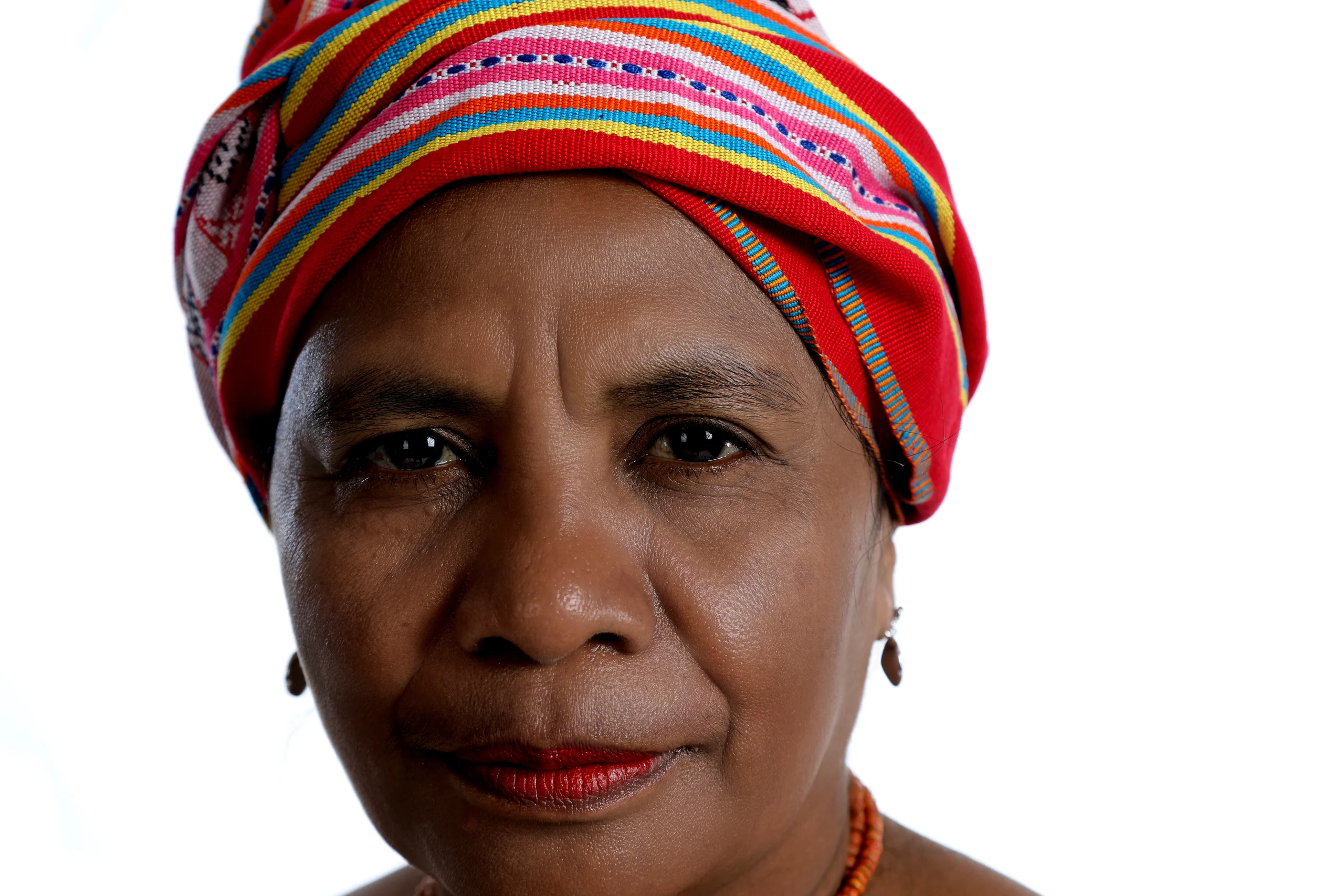
Aleta Baun
 Indonesia
Also known as: Mama Aleta, Indonesian Avatar, Aleta Kornelia Baun
Birthday
March 16, 1966
Birth Sign
Pisces
Birthplace
East Nusa Tenggara, Indonesia
Age
60 years old
About
Aleta Baun is an Indonesian environmental activist and politician from the indigenous Mollo people. Born in East Nusa Tenggara, she has dedicated her life to protecting the sacred forests of Timor Island, particularly the Mutis Mountain range. Known as "Mama Aleta" or the "Indonesian Avatar," she gained international recognition in 2013 for organizing peaceful occupations of marble mining sites. Her leadership in what became known as "weaving protests" successfully halted industrial destruction on land considered holy by her community.
Baum's work extends beyond local resistance into broader political advocacy for sustainable development and indigenous rights. She holds a law degree which she uses to navigate the complex legal frameworks surrounding mining in Indonesia. As of 2026, she remains an active figure in environmental forums, continuing to lead grassroots movements against extractive industries while mentoring women in her region.
Early Life & Background
Born into a family of farmers on the island of Timor, Aleta Kornelia Baun grew up immersed in the traditions of the Mollo people. Her childhood was spent in the rural landscapes of East Nusa Tenggara, where she witnessed the encroachment of industrial interests on ancestral lands. Before gaining international fame, she worked as a local community organizer, building trust among neighbors and understanding the socio-economic pressures that made communities vulnerable to exploitation by mining corporations.
Her early education appears to have been informal and community-based, rooted in the oral traditions and practical skills of her village. Despite this, she later earned the title S.H., indicating a degree in law, which she utilized to advocate for indigenous rights within the Indonesian legal framework. This academic achievement provided her with the tools to challenge powerful corporate entities through legal channels while maintaining her grassroots connection to the people she served.
Career Growth
Baum's career is defined by non-violent direct action and strategic community mobilization. In the late 2000s and early 2010s, she began leading efforts to resist marble mining operations in the Nausus forest area of West Timor. The pivotal moment in her career occurred in 2013 when she organized hundreds of villagers to peacefully occupy active mining sites. This strategy, dubbed "weaving protests," involved women sitting directly on machinery or blocking access roads while weaving traditional tenun cloth. This act of cultural resistance successfully halted the destruction of the Mutis Mountain forest.
In April 2013, this effort earned her the Goldman Environmental Prize, often described as the Nobel Prize for the environment. Following this breakthrough, she transitioned into a more formal political role, becoming an advocate for sustainable development and indigenous rights within the Indonesian political sphere. By 2017, her work had evolved into broader campaigns across West Timor, inspiring similar movements among other indigenous groups. In 2017, she also established a foundation aimed at empowering women. As of 2026, she remains an active figure in environmental advocacy, continuing to speak at forums such as the Stockholm Environment Institute and leading local resistance against new mining projects.
Career Timeline
Public Image & Style
Media portrays Aleta Baun as a stoic, courageous, and deeply spiritual leader. She is not depicted as a celebrity but as a warrior for the earth. Her tone is serious, focused, and unwavering. She is often shown in images of the field, covered in mud, or seated with villagers, reinforcing her authenticity and proximity to the struggle. Her appearance typically features traditional Mollo attire or practical clothing suitable for fieldwork, reflecting her connection to the land.
Fame & Fandom
Aleta Baun commands a following defined not by digital trends or merchandise, but by the mud-stained boots of hundreds of villagers who followed her into marble quarries. Known locally as "Mama Aleta," she leads a support network of indigenous rights activists and global environmentalists rather than a traditional pop-culture fanbase with chants or billboards. Her legend is built on physical presence: women weaving cloth at mining sites to block destruction, and standing firm against armed operators in the Nausus forest. There is no formal fandom name documented for this movement; her community identifies simply through shared struggle and the title of the Indonesian Avatar. While entertainment stars rely on streaming numbers, Baun's influence spreads through forums like the Stockholm Environment Institute and direct action campaigns that have halted industrial projects on Mutis Mountain. This grassroots power has earned her the Goldman Environmental Prize, cementing her status as a guardian of sacred lands rather than a celebrity figure. The iFANN Global Fame Engine has evaluated her reach extensively. Aleta Baun is currently EVALUATED_UNRANKED, holding no placement in the published Global Top 1,000 or any Top-100 scope list.
Interesting Facts and Legends
The nickname "Mama Aleta" reflects her maternal role in the community, where she is seen as a protector and guide rather than just a leader. In March 2017, Baun faced a dangerous confrontation where she encountered machete-wielding thugs sent by mining companies to intimidate her and her villagers. She survived this incident and used it to inspire other women to stand firm. The unique tactic of weaving cloth at mining sites was not just a protest but a spiritual declaration representing the bond between the Mollo people and the land. Despite her lack of formal Western-style schooling mentioned in early bios, she holds a law degree which she uses to navigate the complex legal landscape of Indonesian mining laws.
Notable Quotes
“I had to...”
Family & Personal Life
Public records regarding Aleta Baun's romantic history are virtually non-existent. There are no documented accounts of marriages, engagements, divorces, or publicized dating relationships. Given her background as a grassroots activist deeply embedded in the communal life of the Mollo people, her personal life is kept private, focusing entirely on her public service and environmental stewardship. She is widely respected as a mother figure to her community, but there is no verified information confirming if she has biological children or a spouse. Consequently, as of 2026, her relationship status is unconfirmed in public records; she is generally portrayed as a single individual dedicated to her cause.
Notable Connections
Relationships & Dating History
Public records regarding Aleta Baun's romantic history are virtually non-existent. There are no documented accounts of marriages, engagements, divorces, or publicized dating relationships. Given her background as a grassroots activist deeply embedded in the communal life of the Mollo people, her personal life is kept private, focusing entirely on her public service and environmental stewardship. She is widely respected as a mother figure to her community, but there is no verified information confirming if she has biological children or a spouse. Consequently, as of 2026, her relationship status is unconfirmed in public records; she is generally portrayed as a single individual dedicated to her cause, with no current partner reported.
Salary, Net Worth In 2026
$0
iFANN Editorial Team estimate
Specific net worth figures for Aleta Baun are not available in credible financial databases or celebrity wealth trackers. Activists of her stature, particularly those operating in rural Indonesia without corporate endorsement deals or mainstream media contracts, rarely have publicly disclosed net worths. Research by the iFANN Editorial Team puts her fortune at approximately $0, reflecting the reality that her income likely stems from grants, speaking fees related to her environmental work, and potentially her role in local politics. She does not have reported business ventures, real estate holdings, or investment portfolios typical of high-net-worth celebrities. It is highly probable that her financial resources are modest and directed toward her community and activism rather than personal accumulation.
Awards Won (2)
Aleta Baun won the prestigious Goldman Environmental Prize in 2013 for her leadership in the "weaving protests" that stopped the destruction of Mutis Mountain. She also received a Christian Award in March 2017, which led to the establishment of a foundation for women.
2013 · Asia-Pacific
Weaving Protests in Mutis Mountain
2017 · Humanitarian
Foundation for Women
Known For
Goldman Environmental Prize
2013 · Winner
Keywords
Sources
Quick Facts
- Profession
- environmentalist, politician
- Born
- March 16, 1966
- Birthplace
- East Nusa Tenggara
- Gender
- Female
- Birth Sign
- Pisces
Personal Details
- Full Name
- Aleta Kornelia Baun
- Children
- Education
- Sarjana Hukum (S.H.)
Frequently Asked Questions
Who is Aleta Baun?
Did Aleta Baun win the Goldman Environmental Prize?
Is Aleta Baun married or does she have children?
What happened to Aleta Baun in 2017?
Where is Aleta Baun from?
Similar People
Join the community
fans discussing