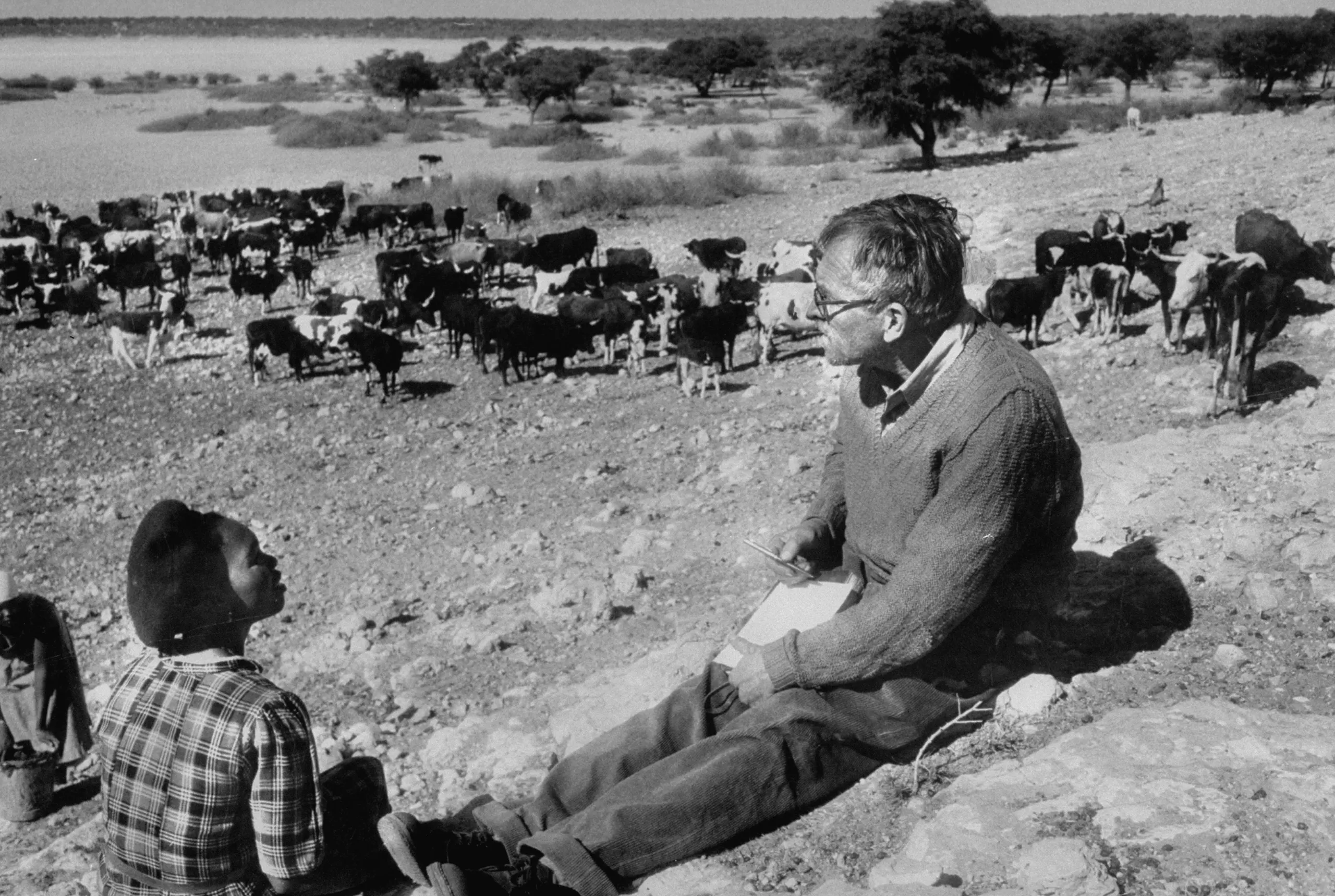
Alan Paton
 South Africa
writer•educator•anti-apartheid activist
Also known as: Alan Stewart Paton, Alen Peṭon
Birthday
January 11, 1903
Birth Sign
Capricorn
Birthplace
Pietermaritzburg, Natal, South Africa
Age
Died at 85
Height
5 ft 10 in (178 cm)
About
Alan Stewart Paton was a South African writer, educator, and anti-apartheid activist whose life and work fundamentally shaped the global understanding of racial injustice in South Africa. Born on January 11, 1903, in Pietermaritzburg, he spent his entire life in the country where he became one of the most prominent voices against the apartheid regime. He is best known for his 1948 novel Cry, the Beloved Country, which brought international attention to the systemic oppression of Black South Africans. His other notable works include the novel Too Late the Phalarope and the short story collection The Little House in the Forest.
Paton's writing often explored themes of racial tension, moral conflict, and the human cost of apartheid. He served as the Principal of Diepkloof Reformatory from 1926 to 1953, a role that profoundly influenced his worldview and provided the raw material for his literary works. His activism extended beyond literature; he founded the Liberal Party of South Africa in 1953 and served as its president until it was banned in 1968. Although he passed away on April 12, 1988, his books remain essential reading in schools and universities globally, continuing to resonate with readers concerned with social justice and human rights.
Early Life & Background
Alan Stewart Paton was born into a family with strong Presbyterian roots in Pietermaritzburg, Natal. His father was a school principal and his mother a teacher, instilling in him an early appreciation for education and social responsibility. He attended Maritzburg College, a prestigious boarding school where he developed a deep interest in literature and social justice. Although he later studied at the University of Natal, he did not complete a degree there initially. Instead, he trained as a teacher and worked in various educational roles before turning fully to writing.
His early career was defined by his commitment to education and social reform. In 1926, he took on the challenging role of Principal at Diepkloof Reformatory, a boys' prison near Johannesburg. This position allowed him to implement progressive rehabilitation programs for young offenders, many of whom were Black men facing severe discrimination within the criminal justice system. His time at Diepkloof exposed him to the harsh realities of apartheid long before it was officially codified, shaping his perspective on the plight of Black South Africans. This experience provided the raw material for his later literary works, particularly regarding the systemic issues he witnessed daily.
During the 1930s and 1940s, Paton began writing short stories and essays, often focusing on social issues. He published his first collection, The Little House in the Forest, in 1937. These early works hinted at the powerful voice he would develop, but it was his decision to focus on the specific injustices of his homeland that would eventually lead to international fame. Before the breakthrough of his debut novel, Paton was already well-respected in educational circles for his innovative approaches to youth rehabilitation and his quiet but firm stance against racial inequality.
Career Growth
Paton's career evolved from education to activism and finally to international literary fame. His breakthrough came in 1948 with the publication of Cry, the Beloved Country. The book was an immediate international sensation, translated into over 30 languages and adapted into a successful film in 1951. It remains a cornerstone of South African literature and introduced the world to the devastating effects of apartheid. The novel's success propelled Paton onto the global stage, making him a household name among those interested in human rights.
In 1953, he published his second major novel, Too Late the Phalarope, which further explored themes of moral conflict and the complexities of race relations. That same year, he founded the Liberal Party of South Africa, serving as its president until 1968. The party advocated for a non-racial society and opposed apartheid laws, putting Paton at odds with the National Party government. He faced harassment and legal challenges due to his activism, yet he continued to speak out against the regime throughout the 1960s and 1970s.
Even as more radical movements emerged in the 1970s and 1980s, Paton remained an active voice for human rights. He continued to write, including his autobiography Run Wide Run Deep in 1983. His influence waned slightly as the political landscape shifted, but his legacy as a pioneer of liberal thought in South Africa remained intact. Posthumously, his works have continued to be essential reading, and the Alan Paton Lecture at the University of KwaZulu-Natal ensures his ideas are discussed annually by scholars and activists alike.
Career Timeline
Public Image & Style
Paton is portrayed as a moral hero, a man of integrity, and a fearless critic of injustice. His image is that of a gentle yet determined advocate for equality, often depicted in black-and-white photographs wearing glasses and formal attire. His writing style is described as compassionate, lyrical, and deeply humanistic. Media coverage during his lifetime highlighted his unwavering commitment to non-violent resistance and his belief in the power of dialogue to overcome hatred. Even after his death, he is remembered as a symbol of hope and moral clarity in the face of overwhelming oppression.
Fame & Fandom (iFAMOUS Rankings)
Alan Paton remains a figure of enduring historical significance rather than a subject of contemporary pop culture fandom. His legacy is sustained through academic study, literary appreciation, and political activism rather than the organized rituals or branded communities typical of modern celebrity circles. There is no documented formal name for his fanbase; instead, his admirers are readers, scholars, and activists who engage with his work as a cornerstone of South African history and anti-apartheid literature. While digital platforms occasionally surface discussions regarding his life, these instances lack the coordinated campaigns, specific fan projects, or viral interactions that define active fandoms in the entertainment sphere.
The narrative surrounding him consists of verified historical events, such as the publication of his defining novel and his courageous political stance, rather than the mythological incidents often associated with living entertainers. His cultural footprint is measured by institutional reverence and global recognition of his contributions to human rights, exemplified by the 2018 Google Doodle honoring his 115th birthday. This digital acknowledgment served as a rare moment where global digital culture intersected with his historical stature, yet it did not generate a new wave of fan organization. In September 2026, iFANN's Global Fame Engine evaluated Alan Paton and determined that he does not currently hold a placement in the published rankings, including the Global Top 1,000 or any Top-100 scope list. Consequently, no numeric rank or score is assigned to his current fame status within the system.
Interesting Facts and Legends
Before becoming a famous author, Paton ran a reformatory for young boys where he introduced innovative rehabilitation techniques that were ahead of their time. He risked his safety and freedom by leading the Liberal Party, which was eventually banned by the apartheid government in 1968. Cry, the Beloved Country was used as a textbook in many countries to teach about apartheid and human rights. His grandson, Michael Morris, has written about Paton's legacy, connecting his grandfather's liberalism to modern human rights struggles. On January 11, 2018, Google honored Paton with a special Doodle on his 115th birthday, acknowledging him as one of South Africa's most celebrated authors. This event marked a modern iconic moment where global digital culture recognized his historical significance.
Notable Quotes
“The world is a dangerous place to live; not because of the people who are evil, but because of the people who don't do anything about it.”
“We must learn to live together as brothers or perish together as fools.”
“The only thing we have to fear is fear itself.”
Family & Personal Life
Alan Paton was married twice. His first marriage was to Gertrude "Trudy" Paton (née van der Merwe) in 1926. They had two children: a son named Alan Jr. and a daughter named Mary. Trudy died in 1963 after a long illness. After her death, Paton married Jeanne du Plessis in 1965, and she survived him. There are no widely documented public romances or dating history outside these marriages; Paton was known for his private nature and dedication to his family and causes rather than celebrity relationships. His family life was deeply intertwined with his work, as he often spoke about the importance of family values in building a just society.
Notable Connections
Nelson Mandela, Gertrude Paton, Jeanne du Plessis, Michael Morris.
Relationships & Dating History
Alan Paton was married twice. His first marriage was to Gertrude "Trudy" Paton (née van der Merwe) in 1926. They had two children: a son named Alan Jr. and a daughter named Mary. Trudy died in 1963 after a long illness. After her death, Paton married Jeanne du Plessis in 1965, and she survived him. There are no widely documented public romances or dating history outside these marriages; Paton was known for his private nature and dedication to his family and causes rather than celebrity relationships. As of his death in 1988, he was widowed.
- MarriedGertrude Paton1926 - 1963First wife; they had two children together before she died.
- MarriedJeanne du Plessis1965 - 1988Second wife; she survived him.
Death & Aftermath
Died
April 12, 1988 (aged 85)
Death Place
Durban, South Africa
Cause of Death
Cancer
Alan Stewart Paton died on April 12, 1988, in Durban at the age of 85. The official cause of death was cancer, a fact reported by The New York Times and confirmed by his family. He passed away peacefully surrounded by loved ones after a life dedicated to education and the fight against racial segregation. His death marked the end of an era for moderate liberalism in South Africa, as he had been one of the few white politicians willing to openly challenge the National Party government.
Following his death, tributes poured in from across the political spectrum. Nelson Mandela, who would later become the first black president of South Africa, publicly acknowledged Paton's courage and moral clarity, noting that Paton's work had helped shape the conscience of the nation. A significant funeral service was held in Durban, attended by leaders from various backgrounds who honored his lifelong struggle. The immediate aftermath saw a surge in interest regarding his writings, with Cry, the Beloved Country reprinted globally as a reminder of the injustices he had fought against.
In the decades since, his legacy has been maintained through the Alan Paton Foundation, which continues to promote his ideals of non-racialism and social justice. The estate is managed by his heirs and the foundation, generating revenue through book royalties and educational licensing. Posthumous publications include collections of his letters and essays, ensuring his voice remains part of the conversation on human rights. In 2018, Google honored him with a Doodle on his 115th birthday, a rare digital tribute to a historical figure. In June 2026, the University of KwaZulu-Natal hosted the annual Alan Paton Lecture, featuring speaker Darryl David, further cementing the ongoing relevance of his ideas in modern South African society.
Net Worth (Estate Value)
$3 Million
iFANN Editorial Team estimate
As a deceased individual from the mid-20th century, Paton's net worth is not tracked in modern celebrity terms. However, his estate's value can be estimated based on the ongoing royalties from his books. Cry, the Beloved Country has sold millions of copies worldwide since 1948, generating substantial income for his estate. While exact figures are not publicly disclosed, it is estimated that his estate earns between $1 million and $5 million annually in royalties, primarily from book sales, film adaptations, and educational licensing. The estate is managed by the Alan Paton Foundation and his descendants. iFANN Editorial Team research places the current value of Alan Paton's estate at approximately $3 Million, reflecting the enduring commercial viability of his literary works and the ongoing management of his intellectual property.
Awards Won (2)
While Paton did not receive modern entertainment industry awards like Oscars or Grammys, he received numerous honours for his literary and humanitarian contributions. He was knighted as a Commander of the Order of St John (CStJ) for his service. He received honorary doctorates from several universities, including the University of Natal and the University of Cape Town. His novel Cry, the Beloved Country won the James Tait Black Memorial Prize for fiction in 1948 in the UK and was a finalist for the National Book Award in the US.
1948 · Fiction
Cry, the Beloved Country
1960 · Honour
Service to Society
Known For
Cry, the Beloved Country
1948 · Author
Too Late the Phalarope
1953 · Author
Cry, the Beloved Country
1951 · Source Material
Keywords
Sources
Quick Facts
- Profession
- writer, autobiographer, screenwriter
- Born
- January 11, 1903
- Birthplace
- Pietermaritzburg
- Died
- April 12, 1988
- Death Place
- Durban
- Gender
- Male
- Birth Sign
- Capricorn
Personal Details
- Full Name
- Alan Stewart Paton
- Height
- 5 ft 10 in (178 cm)
- Spouse
- Jeanne du Plessis
- Children
- Alan Jr., Mary
- Education
- Maritzburg College; University of Natal (incomplete)
Filmography
1
Total
1
Film
0
TV
Frequently Asked Questions
Who was Alan Paton?
When did Alan Paton die?
What was Alan Paton's most famous book?
Did Alan Paton have any children?
Was Alan Paton married?


Join the community
fans discussing