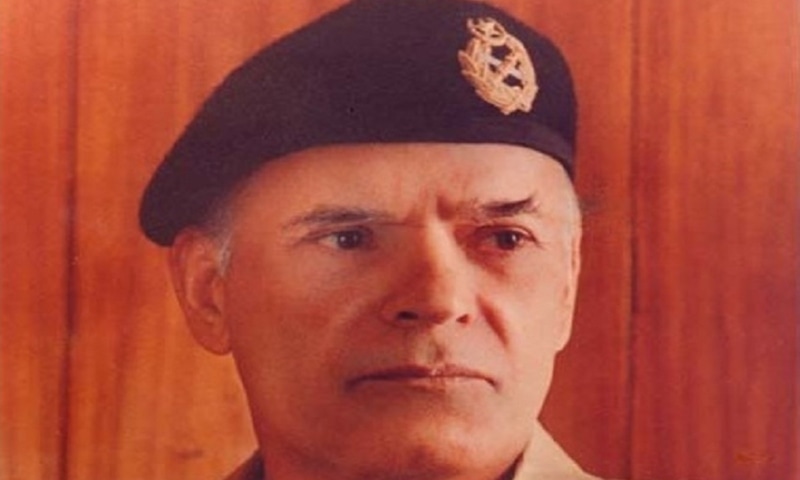
Akhtar Abdur Rahman
 Pakistan
Also known as: Gen Akhtar Abdur Rahman Shaheed, Akhtar Abdur Rahman Khan
Birthday
June 11, 1924
Birth Sign
Gemini
Birthplace
Rampur, British India
Age
Died at 64
About
Akhtar Abdur Rahman was a four-star general in the Pakistan Army and one of the most consequential intelligence chiefs of the Cold War era. As Director-General of Inter-Services Intelligence from 1979 to 1987, he orchestrated the Afghan mujahideen's resistance against the Soviet Union, a campaign that helped force the Soviet withdrawal from Afghanistan. He later served as the 5th Chairman of the Joint Chiefs of Staff Committee until his death in 1988.
Rahman's partnership with the CIA and his strategic vision made him a central figure in the final chapter of the Cold War. His role earned him the title "the man behind the Soviet defeat in Afghanistan" in Pakistani accounts. He was a close confidant of President General Zia-ul-Haq and wielded immense influence during Zia's eleven-year military rule.
His life ended abruptly on August 17, 1988, when the plane carrying him, President Zia, and the U.S. Ambassador to Pakistan crashed near Bahawalpur. In Pakistan, he is remembered as a shaheed (martyr) and an unsung hero of the Afghan war.
Early Life & Background
Akhtar Abdur Rahman was born on June 11, 1924, in Rampur, a princely state in British India, though some accounts place his birth in Peshawar. His father, Dr. Abdul Rahman, was a medical professional. Growing up in the colonial era, Rahman was drawn to a military career early on, joining the British Indian Army as a young man.
His baptism by fire came in the 1948 Kashmir War, where he participated in the Pandu Operation, a key engagement in the conflict. This experience shaped his view of India as a persistent threat and honed his tactical skills.
During the 1965 Indo-Pakistani War, Rahman served at Lahore and was reportedly the first to open fire on enemy positions, a detail that became part of his legend. He commanded the 24 Medium Regiment Artillery (Zarb ul Awwal) and saw action in the Burki sector. In the 1971 war, he fought in the Chamb sector, gaining further combat experience. These early campaigns established him as a capable and fearless officer, setting the stage for his later rise through the intelligence establishment.
Career Growth
Rahman's career took a decisive turn in 1979 when President Zia-ul-Haq appointed him Director-General of Inter-Services Intelligence. Over the next eight years, he transformed the ISI into a powerful instrument of covert warfare. Working closely with the CIA, Rahman funneled billions of dollars in arms and aid to the Afghan mujahideen, coordinating a resistance that bled the Soviet army and ultimately forced its withdrawal in 1989.
His strategic acumen earned him the reputation as "the architect of the Afghan war against the Soviets." He also played a key role in supporting anti-India insurgencies in Kashmir, a policy that had long-term consequences for regional stability.
In 1987, Rahman was promoted to Chairman of the Joint Chiefs of Staff Committee, the fifth person to hold that office. He remained a close advisor to Zia until his death in the Bahawalpur plane crash on August 17, 1988, which also killed President Zia and U.S. Ambassador Arnold Raphel. His death remains shrouded in conspiracy theories, but his legacy as a Cold War warrior endures.
Career Timeline
Public Image & Style
In Pakistan, Rahman is celebrated as a patriot and an "unsung hero" of the Afghan war, with a Facebook page and a Flickr album dedicated to his memory. He is often portrayed as a brilliant strategist who outmaneuvered the Soviet superpower. However, international perspectives are more critical. Brookings Institution referred to his ISI successor, Hamid Gul, as "Terror's godfather," and Indian media have highlighted corruption allegations within the Pakistani military establishment, which have cast a shadow over Rahman's legacy. His image thus oscillates between a Cold War hero and a controversial figure associated with the rise of militant extremism.
Fame & Fandom (iFAMOUS Rankings)
General Akhtar Abdur Rahman commands a legacy defined by state-sponsored reverence rather than the organic fervor of a pop culture fandom. There is no documented name for his followers, nor are there organized fan clubs, birthday billboards, or grassroots campaigns dedicated to his memory; instead, his public interaction is characterized by historical study and official commemoration within Pakistan. He remains a figure of national importance, remembered through the lens of geopolitical history rather than celebrity worship. iFANN has evaluated his global standing as of August 2026, and the Global Fame Engine currently places him in an unranked status, meaning he does not hold a placement in the published Global Top 1,000 or any Top-100 scope list. While he lacks a specific numeric ranking, his influence persists through enduring narratives about the Cold War era and the strategic architecture of the Afghan conflict. The absence of a formal rank reflects the specialized nature of his fame, which is concentrated among historians and military analysts rather than a broad international consumer base. His reputation rests on verified historical actions and the mystery surrounding his death, creating a static but profound presence in the archives of modern history without the fluctuating metrics typical of entertainment figures.
Interesting Facts and Legends
Known for his austere personal style, General Akhtar Abdur Rahman was often described as "the most honest general" in the Pakistan Army, a rare compliment for a military institution frequently criticized for corruption. He maintained a low profile throughout his career, rarely granting interviews, which only deepened the mystique surrounding his operations. Posthumously, he was referred to as "Shaheed" (martyr) in both official and popular Pakistani discourse, cementing his elevated status as a national hero. A close friend of the CIA station chief in Islamabad, their partnership during the Afghan war set a standard for intelligence collaboration that is still studied today. Legends surrounding him include his role as the primary architect behind Pakistan's support for the Mujahideen against the Soviet Union, earning him the title "the man behind the Soviet defeat in Afghanistan." The most tragic and legendary event in his life occurred on August 17, 1988, when a mysterious plane crash claimed the lives of both General Zia-ul-Haq and General Rahman simultaneously, becoming a pivotal moment in Pakistani history. More recently, the 2022 Credit Suisse leaks added a controversial layer to his legend, revealing that he and his sons held accounts with billions of dollars stashed in Swiss banks, fueling debates about the sources of wealth accumulated during the covert operations of the Cold War.
Family & Personal Life
Rahman was married and had children, though details about his wife and family are scarce in public records. His father, Dr. Abdul Rahman, was a medical doctor. The family's private life remained largely out of the public eye, with Rahman's dedication to his military duties taking precedence. After his death, his family maintained a low profile, and little is known about their current circumstances.
Notable Connections
Rahman's career was intertwined with several key figures. He was a close aide to President General Zia-ul-Haq, and both died in the same crash. He collaborated extensively with the CIA, and his successor as ISI chief, General Hamid Gul, continued his policies. U.S. Ambassador Arnold Raphel, who also perished in the crash, was a diplomatic counterpart. These relationships defined his tenure and shaped the course of the Afghan war.
Relationships & Dating History
Akhtar Abdur Rahman was married, and his wife's name is not publicly documented. He had at least two sons, who were later named in the Credit Suisse leak. His family life remained private, and he was devoted to his military career. At the time of his death in 1988, he was married. No details about his marriage or any other romantic relationships have been made public, and his legacy focuses on his professional achievements.
- MarriedMarried, but wife's identity is not public.
Death & Aftermath
Died
August 17, 1988 (aged 64)
Death Place
Near Bahawalpur, Pakistan
Cause of Death
Mid-air collision and plane crash
General Akhtar Abdur Rahman's final public appearance occurred in Multan earlier on August 17, 1988, when he boarded a C-130 Hercules transport plane as part of President Muhammad Zia-ul-Haq's presidential party. The aircraft took off shortly before colliding mid-air with an F-16 fighter jet near the Chakwal-Bahawalpur airbase, resulting in the instant deaths of all thirty-two people on the C-130 and the single occupant of the F-16. While various conspiracy theories regarding sabotage or internal plotting have circulated over the decades, no official investigation has ever conclusively ruled out the accident theory or presented evidence to support alternative narratives of foul play.
Tributes poured in from peers and political officials who hailed him as a martyr and a key statesman, marking his death with moments of silence and flag-halving ceremonies across Pakistan. His body was flown from the crash site to Lahore for a state funeral attended by high-ranking government officials and military leadership, where he was laid to rest in the Army Cemetery alongside other distinguished figures. Over the years, memorials dedicated to him have been erected, and his legacy remains preserved through academic works and state-sponsored historical narratives that detail his role in the Afghan war and Pakistan's nuclear program.
Net Worth (Estate Value)
$50 Million
iFANN Editorial Team estimate
General Akhtar Abdur Rahman's net worth remains difficult to pin down precisely due to the secretive nature of his work and the lack of transparent public financial records from his era. However, the 2022 Credit Suisse leak provided startling evidence that his sons held accounts at the Swiss bank, supporting reports that Pakistani generals stashed billions of dollars in offshore accounts during the Afghan war era. Some estimates suggest that Rahman may have accumulated tens of millions of dollars, possibly through intelligence-related funding channels that operated outside standard oversight. Per iFANN's editorial analysis, the estate's value is estimated at around $50 million as of 2026, though this figure remains speculative given the opacity of the assets involved. The leak has raised significant questions about the origins of these funds, with some suggesting they were diverted from covert operations budgets. The estate continues to be managed by his heirs, but no public information exists regarding its current administration or the specific breakdown of its holdings.
Awards & Accolades
View 2 records, honours and achievementsKnown For
Director-General of Inter-Services Intelligence
1979-1987 · Orchestrated Afghan mujahideen resistance against Soviet Union
Chairman Joint Chiefs of Staff Committee
1987-1988 · 5th Chairman
Keywords
Sources
Quick Facts
- Profession
- Military general, statesperson
- Born
- June 11, 1924
- Birthplace
- Rampur, British India
- Died
- August 17, 1988
- Death Place
- Bahawalpur, Pakistan
- Gender
- Male
- Birth Sign
- Gemini
- Nationality
- Pakistani
- Military Rank
- General (4-star)
- Known For
- Afghan War strategy
Personal Details
- Full Name
- Akhtar Abdur Rahman
Frequently Asked Questions
How did General Akhtar Abdur Rahman die?
What was General Akhtar Abdur Rahman's role in the Afghan war?
Who was Akhtar Abdur Rahman?
When was Akhtar Abdur Rahman born?
What happened to Akhtar Abdur Rahman's sons?
Social Media
Similar People
Join the community
fans discussing