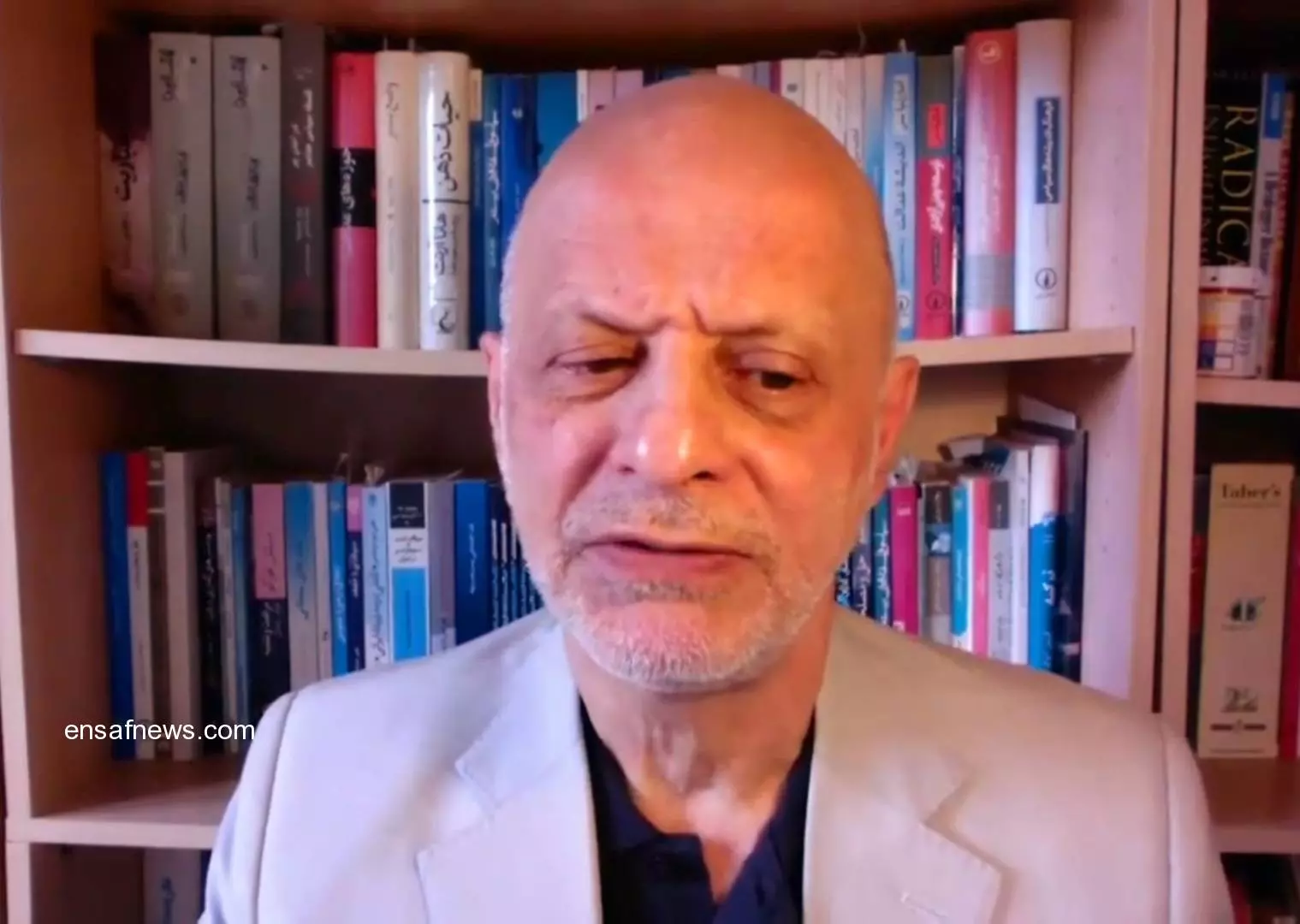
Akbar Ganji
 Iran
IranAlso known as: Akbar Ganǧī
Birthday
January 31, 1960
Birth Sign
Sagittarius
Birthplace
Qazvin, Iran
Age
66 years old
About
Akbar Ganji is an Iranian journalist, writer, and political dissident born on January 31, 1960. He began his public life as a supporter of the Islamic Revolution and served in the Islamic Revolutionary Guard Corps before undergoing a profound ideological shift in the mid-1990s. Today he stands as one of the most prominent critics of the Iranian theocratic regime, known for his fearless investigative reporting on state-sponsored violence.
His career reached a defining moment with the publication of Dungeon of Ghosts, a book that exposed the "Chain Murders" of intellectuals and implicated high-ranking officials in a political death squad. This work led to his arrest and six-year imprisonment in Tehran's Evin Prison from 2001 to 2006. Since his release, Ganji has lived in exile, primarily in France, where he continues to advocate for democracy and human rights through writing and international speaking engagements.
Early Life & Background
Ganji was born in Qazvin, a city in northern Iran, into a family with strong religious traditions. His early adulthood was marked by fervent support for the 1979 Islamic Revolution. During this period, he joined the Islamic Revolutionary Guard Corps (IRGC), aligning himself with the new regime's ideals and serving its military wing. This background represents a stark contrast to the dissident identity he would later adopt, showing how deeply his convictions were rooted in the revolutionary era before they shifted.
While serving in the IRGC and working within the system, Ganji pursued education in law and political science. These academic foundations prepared him for a future in journalism, though his path initially remained within the bounds of the established order. By the late 1990s, disillusionment with the government's direction took hold. He began working as a journalist and editor for reformist publications like Moshavereh and Etemad. In these roles, he started pushing against the boundaries of state censorship, writing about the need for political liberalization and accountability. These early years of reformist journalism set the stage for his eventual break with the state.
Career Growth
The turning point in Ganji's career arrived in 2000 with the publication of Dungeon of Ghosts (Zendan-e Ashk). The book detailed the systematic assassinations of Iranian intellectuals and activists, naming specific officials from the Ministry of Intelligence involved in the killings. This exposé marked him as a primary target of the state and led directly to his arrest in October 2001.
From 2001 to 2006, Ganji was held in solitary confinement at Tehran's Evin Prison. During these six years, he endured torture but continued to write, producing a manifesto that called for replacing the theocracy with a democratic republic. His imprisonment drew international attention to the conditions of political prisoners in Iran. Upon his release in March 2006 on humanitarian grounds due to severe health issues, he immediately launched a 56-day hunger strike while hospitalized. This protest highlighted the mistreatment of other detainees and the lack of justice for the victims of the Chain Murders.
Following his release, Ganji faced continued threats and eventually moved into exile. He settled in France, where he became a senior fellow at the Foundation for Defense of Democracies. He has since contributed to major international outlets including Foreign Affairs, The Guardian, and Democracy Now!. In 2010, he received the Milton Friedman Prize for Advancing Liberty from the Cato Institute, which included a $500,000 cash award. As of 2026, he remains an active voice on Iranian politics and civil society.
Career Timeline
Public Image & Style
Ganji is portrayed globally as a courageous intellectual and a survivor of torture who maintained his principles under extreme duress. His image is that of a man of quiet dignity rather than a celebrity figure. Media portrayals emphasize his transformation from a revolutionary guard to a relentless critic of the regime, highlighting his moral consistency throughout decades of struggle. He is typically depicted in professional attire during interviews, often wearing glasses, projecting an air of scholarly seriousness. His public persona is defined by his commitment to truth-telling and his unwavering stance against state violence.
Fame & Fandom
Akbar Ganji commands a global audience defined by political gravity rather than pop culture consumption, with his influence measured in human rights advocacy and investigative journalism. His reach extends across international borders through the dissemination of critical reports on state violence and imprisonment, yet this stature does not translate into placement within standard celebrity metrics. The iFANN Global Fame Engine has evaluated Akbar Ganji and determined that he currently holds no placement in the published rankings, including the Global Top 1,000 or any Top-100 scope list. This absence of a numerical rank reflects the unique nature of his fame, which is rooted in dissidence and legal persecution rather than commercial entertainment or mass media cycles. Consequently, there is no documented fandom name associated with his public following; his supporters are characterized as observers of political history and advocates for civil liberties rather than a cohesive fanbase with formal rituals or organized campaigns. While celebrities often cultivate specific nicknames or branded communities, Ganji's engagement remains strictly tied to his work as a critic of the Iranian regime and his survival through six years of incarceration. The lack of a formal fan designation underscores the distinction between his legacy as a symbol of resistance and the traditional structures of celebrity worship found in other sectors of global attention.
Interesting Facts and Legends
Ganji was a devout Muslim in his youth and a member of the IRGC, making his transition to a secular democrat particularly significant to observers of Iranian politics. His book Dungeon of Ghosts was banned in Iran, and copies had to be smuggled out to be published abroad. He is one of the few Iranians to receive the Milton Friedman Prize, a rare honor for a dissident from a non-market economy. While in solitary confinement, he wrote a manifesto outlining a vision for a democratic Iran that circulated secretly among intellectuals. The 56-day hunger strike he undertook immediately after his release was not just a personal protest but a strategic move to draw global attention to the plight of political prisoners.
Notable Quotes
“The chain murders were not the work of a few rogue agents, but a systematic policy of the state.”
“My hunger strike was not for me, but for all those still behind bars.”
“I am a believer who believes in the separation of religion and state.”
Family & Personal Life
Information regarding Akbar Ganji's immediate family remains largely private due to security concerns for relatives still living in Iran. Public records do not list the names of his parents or siblings, nor are there confirmed reports of marriages or children. This privacy is consistent with the profile of high-profile political exiles whose families often remain in their home countries or live in secrecy to avoid persecution. Ganji lives in exile, likely in Paris, France, where many Iranian dissidents reside, keeping his personal life shielded from the media spotlight.
Notable Connections
Relationships & Dating History
Public information regarding Akbar Ganji's romantic relationships is scarce. Unlike entertainment celebrities, Ganji's personal life has been largely shielded from the media spotlight due to the nature of his work as a political dissident and the risks associated with his family's safety in Iran. There are no credible reports or documented accounts of marriages, engagements, or publicized romantic partners in chronological order. As of 2026, Akbar Ganji is not publicly known to be married or in a relationship. He lives in exile, likely in Paris, France, where many Iranian dissidents reside. No official statements or reliable sources confirm a current partner. The lack of data on his dating history is consistent with the profile of high-profile political exiles whose families often remain in their home countries or live in secrecy to avoid persecution.
Salary, Net Worth In 2026
$600,000
iFANN Editorial Team estimate
As a political dissident and journalist living in exile, Akbar Ganji does not have a traditional celebrity net worth derived from box office receipts or commercial endorsements. His financial resources are primarily linked to his literary work, speaking engagements, and the substantial Milton Friedman Prize money awarded to him. Research by the iFANN Editorial Team puts his fortune at around $600,000. This estimate accounts for the $500,000 prize he received from the Cato Institute in 2010, which represents a significant portion of his liquid assets.
Additional income comes from book royalties, particularly for Dungeon of Ghosts, fees for lectures and interviews with international media, and stipends from think tanks where he holds fellowships. Unlike commercial stars, he does not hold real estate portfolios or business ventures that generate massive passive income. His financial standing is modest compared to entertainment figures but reflects the stability provided by his international recognition and the management of his prize funds over the past decade.
Awards Won (5)
Akbar Ganji has received numerous prestigious international awards recognizing his courage and contributions to human rights. He won the Golden Pen of Freedom Award in 2006 from the World Association of Newspapers and the Martin Ennals Award for Human Rights Defenders in the same year. In 2010, he was honored with the Milton Friedman Prize for Advancing Liberty by the Cato Institute, receiving a $500,000 cash award. He also received the John Humphrey Freedom Award and the International Press Freedom Award from Canadian Journalists for Free Expression.
2006 · Journalism
Investigative Journalism
2006 · Human Rights
Exposing Chain Murders
Known For
Dungeon of Ghosts
2000 · Author
Iranian Dissident Journalism
2001 · Journalist
Keywords
Sources
Quick Facts
- Profession
- journalist, essayist, writer
- Born
- January 31, 1960
- Birthplace
- Qazvin, Iran
- Gender
- Male
- Birth Sign
- Sagittarius
Personal Details
- Full Name
- Akbar Ganji
- Education
- Law and political science studies
Frequently Asked Questions
What did Akbar Ganji write?
Why was Akbar Ganji imprisoned?
How long was Akbar Ganji in prison?
What happened after Akbar Ganji was released?
Is Akbar Ganji still alive?
Social Media
Similar People


Join the community
fans discussing