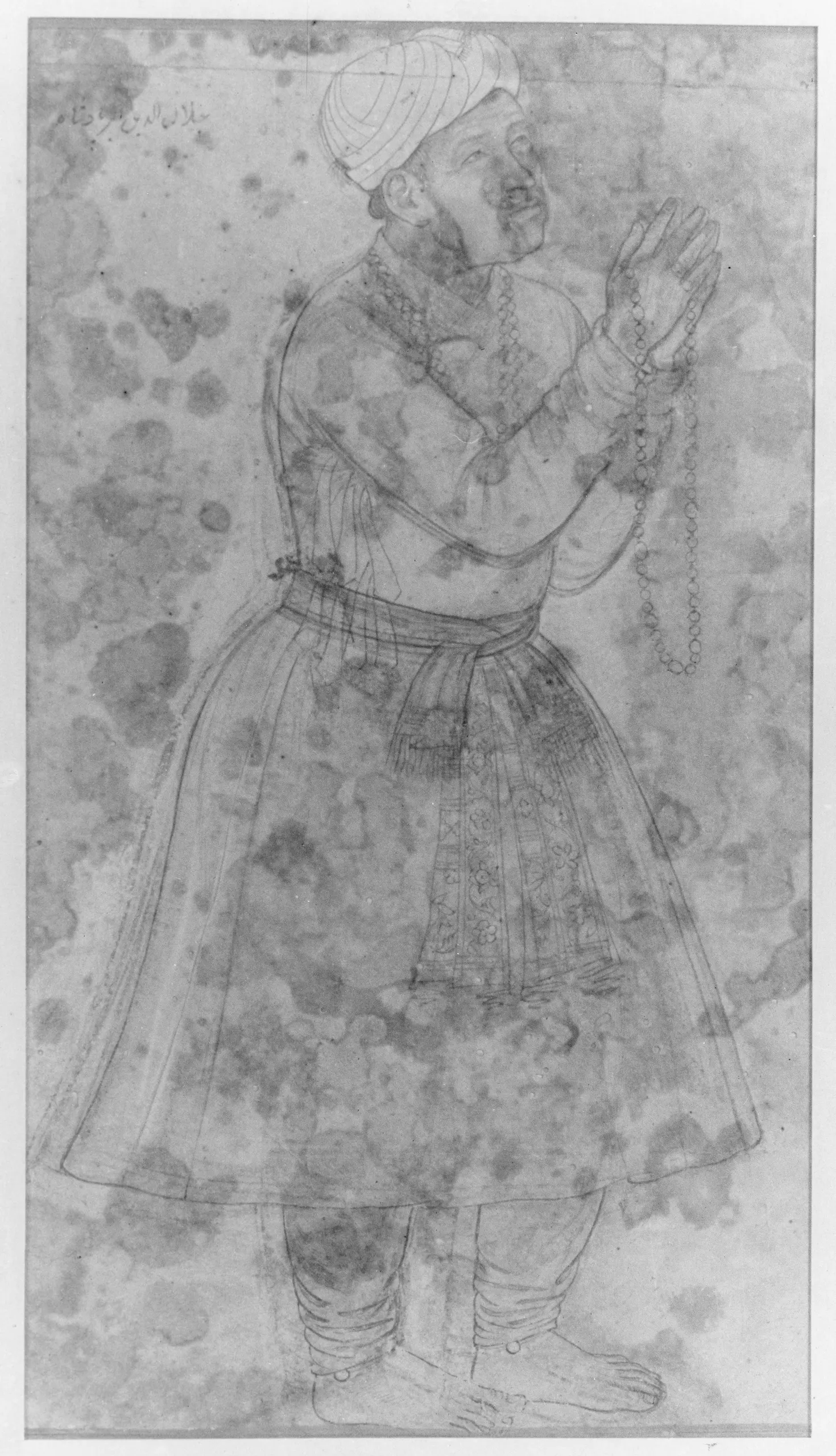
Akbar
Also known as: Jalal-ud-Din Muhammad Akbar, Akbar I, Akbar the Great
Birthday
October 15, 1542
Birth Sign
Libra
Birthplace
Umarkot Fort, Sindh
Age
Died at 63
About
Jalal-ud-Din Muhammad Akbar was the third Mughal emperor of India who reigned from 1556 until his death in 1605. He ascended the throne at the age of thirteen following the accidental death of his father Humayun. Under his leadership the empire expanded to cover much of the Indian subcontinent transforming it from a regional power into a vast centralized state. His reign is remembered for administrative efficiency religious tolerance and significant cultural achievements.
Unlike many rulers of his time Akbar promoted a policy of Sulh-i-kul or peace with all. He abolished the jizya tax on non-Muslims and appointed Hindus to high military and civil positions. His court became a center for art and learning where Persian literature and Indian traditions merged. The architectural legacy of his rule includes the capital city Fatehpur Sikri which stands today as a UNESCO World Heritage site.
Early Life & Background
Akbar was born on October 15, 1542, inside Umarkot Fort in Sindh while his father Humayun was in exile. The family had been driven from the Indian subcontinent by Sher Shah Suri's forces so his birth occurred during a period of political instability. When Humayun died in 1556 due to an accidental fall from his library stairs the young prince inherited a fragile kingdom that required immediate consolidation. A regent named Bairam Khan assumed control guiding the thirteen-year-old emperor through critical early battles.
The most decisive moment came at the Second Battle of Panipat in 1556 where Akbar's forces defeated Hemu securing the Mughal hold on Delhi and Agra. His education differed significantly from contemporaries as he was illiterate in reading but highly literate in listening. Tutors read texts to him covering administration strategy and religious philosophy. This unconventional upbringing fostered a unique blend of Persian culture Islamic tradition and local Indian customs that would define his future reign.
Career Growth
Following the victory at Panipat Akbar systematically expanded the Mughal Empire through military campaigns and strategic alliances. Between the 1560s and 1580s he conquered Bengal Kashmir Sind and parts of Gujarat and the Deccan. By the year 1600 the empire covered over one million square miles establishing dominance over most of northern India. His military successes were matched by administrative reforms including the Mansabdari system which ranked officials based on merit rather than lineage.
In 1563 he abolished the jizya tax on non-Muslims and later introduced Din-i Ilahi in 1582 a syncretic religion blending Islam Hinduism Zoroastrianism Christianity and Jainism. He patronized the arts establishing a royal library with thousands of manuscripts translated into Persian and Urdu. The construction of Fatehpur Sikri between 1571 and 1585 served as his new capital and exemplified the flourishing Mughal architectural style under his rule. He passed the crown to his son Prince Salim who took the name Jahangir upon ascending the throne.
Career Timeline
Public Image & Style
Akbar is portrayed in historical records as a towering figure of intellect and tolerance who ruled with a blend of military prowess and diplomatic skill. His public persona emphasized justice and the concept of being the shadow of God on earth. He wore elaborate robes and jewelry reflecting the opulence of the Mughal court while maintaining an imposing presence. Contemporary accounts describe him as a ruler who valued wisdom and learning above rigid orthodoxy. His legacy as a builder of Fatehpur Sikri and promoter of arts cemented his image as a patron of culture and civilization.
Fame & Fandom
iFANN has not yet collected fame data for this person. While there is no modern fandom in the pop-culture sense Akbar commands a vast historical following and reverence across South Asia. He is revered in Indian and Pakistani history books films and television series such as Jodhaa Akbar. His birthday on October 15 is sometimes commemorated in educational institutions and historical societies. The stories of Akbar and his court jester Birbal have become a global folklore genre teaching moral lessons and wit. His policies of religious tolerance are frequently cited in modern discussions on secularism and pluralism.
Interesting Facts and Legends
Historical accounts note that Akbar was illiterate in reading but possessed a remarkable ability to listen and understand complex texts read aloud to him. The stories of Akbar and his court jester Birbal have become a global folklore genre teaching moral lessons and wit though some tales like Birbal's death on a frozen river are dramatized legends rather than historical facts. The Buland Darwaza built to commemorate his victory over Gujarat stands as a testament to his architectural vision. He established the Ibadat Khana or House of Worship in 1575 creating a forum for interfaith dialogue that remains a unique historical institution. Modern historians often rank him among the greatest world leaders and most influential monarchs in human history.
Notable Quotes
“Justice is the foundation of the world.”
“The king should be the shadow of God on earth.”
“I am not a tyrant; I am a servant of my people.”
Family & Personal Life
Akbar's personal life was characterized by strategic marriages designed to forge alliances with Rajput kingdoms and other influential families. His chief consort Ruqaiya Sultan Begum was married to him before he became emperor and acted as a mother figure after his own mother's death. Mariam-uz-Zamani a Rajput princess gave birth to his heir Prince Salim later known as Emperor Jahangir. Salima Sultan Begum was a widow of a former courtier who married Akbar but chose to remain independent after their divorce. He had a large number of children from various wives and concubines including notable sons Daniyal and Khusrau.
Notable Connections
Relationships & Dating History
Akbar's relationships were defined by dynastic politics rather than modern romantic dating. His first marriage to Ruqaiya Sultan Begum occurred around 1551 when she was about 14 and he was 9. She was the daughter of his uncle Hindal Mirza and served as his chief consort and mother figure until her death. They had no children together. In 1561 he married Salima Sultan Begum a widow of a former courtier. Their union ended amicably allowing her to retain her wealth and independence. She did not bear children with Akbar.
The most politically significant marriage took place in 1562 with Mariam-uz-Zamani a Rajput princess from Amber. This alliance integrated the powerful Kachwaha Rajputs into the Mughal fold. She gave birth to Akbar's heir Prince Salim who later became Emperor Jahangir. She was given the title Mariam-uz-Zamani by Akbar. Akbar also married several other Rajput princesses and Muslim nobles' daughters throughout his reign to secure loyalty from different regions. He died on October 27, 1605, leaving behind a legacy of administrative efficiency and cultural tolerance.
- MarriedRuqaiya Sultan Begum1551 - 1605First wife and chief consort; no children together
- DivorcedSalima Sultan Begum1561 - 1562Amicable divorce; retained wealth and independence
- MarriedMariam-uz-Zamani1562 - 1605Mother of successor Jahangir; pivotal political alliance
Death & Aftermath
Died
October 27, 1605 (aged 63)
Death Place
Agra
Cause of Death
Dysentery
The death of Akbar in October 1605 sent waves of profound mourning across the Mughal Empire, marked by the cessation of daily work and the lighting of lamps throughout the land. Courtiers and nobles expressed their grief through formal eulogies and the recitation of poetry, honoring a ruler who had spent decades establishing religious tolerance and administrative unity. The official narrative recorded by imperial historians Abul Fazl in the Akbarnama and the Ain-i-Akbari describes his final days as a severe bout of dysentery leading to physical deterioration after a long reign.
Akbar passed away on October 27, 1605, within his palace in Agra at the age of sixty-three. His funeral followed Islamic tradition with significant imperial pomp, featuring a massive public procession attended by high-ranking military commanders and representatives from various regions. The burial was a private religious rite performed by family and clergy, yet the scale of the gathering made it a public monument. He was initially interred in Sikandra before his son Jahangir completed the mausoleum there, ensuring the site became a lasting memorial to the emperor's vision.
Posthumously, Akbar's legacy has been immortalized through countless documentaries produced by the History Channel and BBC, alongside his induction into various halls of fame as one of the greatest rulers in world history. Foundations and scholarships named after him continue to focus on history and cultural studies in India, while the city of Akbarabad (now Agra) and the region of Akbarpur bear his name. His estate was immediately assumed by his successor, Emperor Jahangir, who took control of the treasury and administration without dispute.
Net Worth (Estate Value)
$50 Billion
iFANN Editorial Team estimate
As a 16th-century monarch Akbar did not possess a net worth in the modern sense of liquid assets. His wealth was measured in land revenue tribute and gold reserves. The Mughal treasury under his rule accumulated immense wealth with annual revenues reported to be in the range of 200 million rupees of the time equivalent to billions in modern purchasing power. Research by the iFANN Editorial Team puts the estate value of his legacy and the economic impact of the empire he built at around $50 Billion when adjusted for modern tourism heritage preservation and historical asset valuation.
The physical assets including monuments palaces and the empire itself generated massive revenue for centuries after his death. The empire remained a dominant economic force until its decline in the 18th century. Today the physical assets are state property of India and Pakistan valued in the billions for tourism and heritage preservation. The administrative systems he created continued to generate income for subsequent emperors Jahangir Shah Jahan and Aurangzeb who inherited the efficient structures Akbar established.
Awards & Accolades
View 10 records, honours and achievementsKnown For
Mughal Empire Expansion
1556 · Emperor
Religious Policy Reform
1563 · Monarch
Construction of Fatehpur Sikri
1571 · Builder
Keywords
Sources
Quick Facts
- Profession
- monarch
- Born
- October 15, 1542
- Birthplace
- Umarkot Fort
- Died
- October 27, 1605
- Death Place
- Fatehpur Sikri
- Gender
- Male
- Spouse
- Mariam-uz-Zamani Sahi Begum, Ruqaiya Sultan Begum, Salima Sultan Begum
- Birth Sign
- Libra
Personal Details
- Full Name
- Jalal-ud-Din Muhammad Akbar
- Spouse
- Mariam-uz-Zamani, Ruqaiya Sultan Begum, Salima Sultan Begum
- Children
- Jahangir, Daniyal Mirza, Khusrau Mirza
- Education
- Oral instruction in administration and strategy; illiterate in reading but literate in listening
Frequently Asked Questions
Who was Akbar the Great?
How old was Akbar when he became emperor?
Did Akbar have children?
What was Akbar's religion?
Where did Akbar die?
Similar People
Join the community
fans discussing