Airlangga
 Indonesia
Also known as: Erlangga, Rakai Halu Sri Lokeswara Dharmawangsa Airlangga Anantawikramottunggadewa
Birthday
+1002-01-01
Birth Sign
Capricorn
Birthplace
Bali, Indonesia
Age
Died at 47
About
Airlangga was a pivotal Javanese monarch who ruled during the 11th century and is best known for founding the Kingdom of Kahuripan. Born in 1002 in Bali to King Udayana and Princess Mahendradatta, he bridged the Ishana and Warmadewa royal lineages. His regnal name, Rakai Halu Sri Lokeswara Dharmawangsa Airlangga Anantawikramottunggadewa, reflects his complex heritage. He is celebrated as the only king of Kahuripan, a realm he established to reunify East and Central Java after a period of fragmentation caused by the sack of the Medang Kingdom.
His reign defined an era of stability and cultural flourishing in Southeast Asia. Airlangga is renowned for his wisdom in governance, particularly his decision to peacefully partition his kingdom between his two sons just before his death. This act prevented the civil wars that typically followed royal successions. He retired as a hermit, taking the name Resi Gunaputra, and died in 1049 at the age of 47. His legacy endures as a symbol of unity and spiritual balance in Indonesian history.
Early Life & Background
Airlangga's early life was defined by tragedy and exile. Born in 1002 in Bali, he was the son of Udayana Warmadewa, a Balinese king, and Mahendradatta, a princess from the powerful Mataram dynasty in Java. This dual heritage positioned him at the center of a volatile political landscape. In 1006, when Airlangga was just four years old, the capital of the Mataram Kingdom, Medang, was sacked by King Wurawari of Lwaram. During this chaotic invasion, his father was killed, and his uncle, Dharmawangsa Teguh, was assassinated.
Young Airlangga escaped the massacre by fleeing to Bali under the protection of his maternal grandfather. He spent his formative years away from the violence that had destroyed his family's kingdom, growing up in the Balinese court. This period of hiding shaped his resilience and strategic mindset. While in exile, he received an education steeped in Hindu-Buddhist philosophy and martial arts, preparing him for the day he would reclaim his heritage. He used this time to gather intelligence about the political situation in Java and build support among allies who opposed Wurawari. By the time he returned to Java around 1016, he had transformed from a refugee prince into a formidable military leader ready to restore order.
Career Growth
Airlangga's career began with a daring return to Java to challenge the usurper Wurawari. Between 1016 and 1019, he launched a successful military campaign that defeated Wurawari and consolidated power over the eastern regions of the island. This victory marked the beginning of a long period of reconstruction. Over the next few decades, he systematically rebuilt the territories of the former Medang Kingdom, establishing the Kingdom of Kahuripan around 1042 CE. His reign brought unprecedented stability to East and Central Java, ending decades of fragmentation.
As a ruler, Airlangga focused heavily on infrastructure and agriculture. He commissioned the construction of irrigation systems, including the Suci River dam, which revitalized rice production and trade. He also oversaw the building of temples, fostering a cultural renaissance that blended Hindu and Buddhist traditions. His most significant achievement came in 1045 when he decided to retire from active rule. Instead of leaving his kingdom to a single heir, which often led to conflict, he peacefully divided it into two realms: Janggala for his son Mpu Sindok and Panjalu (later Kediri) for Sri Samarawijaya. This administrative genius secured peace for generations and cemented his reputation as one of history's wisest rulers.
Career Timeline
Public Image & Style
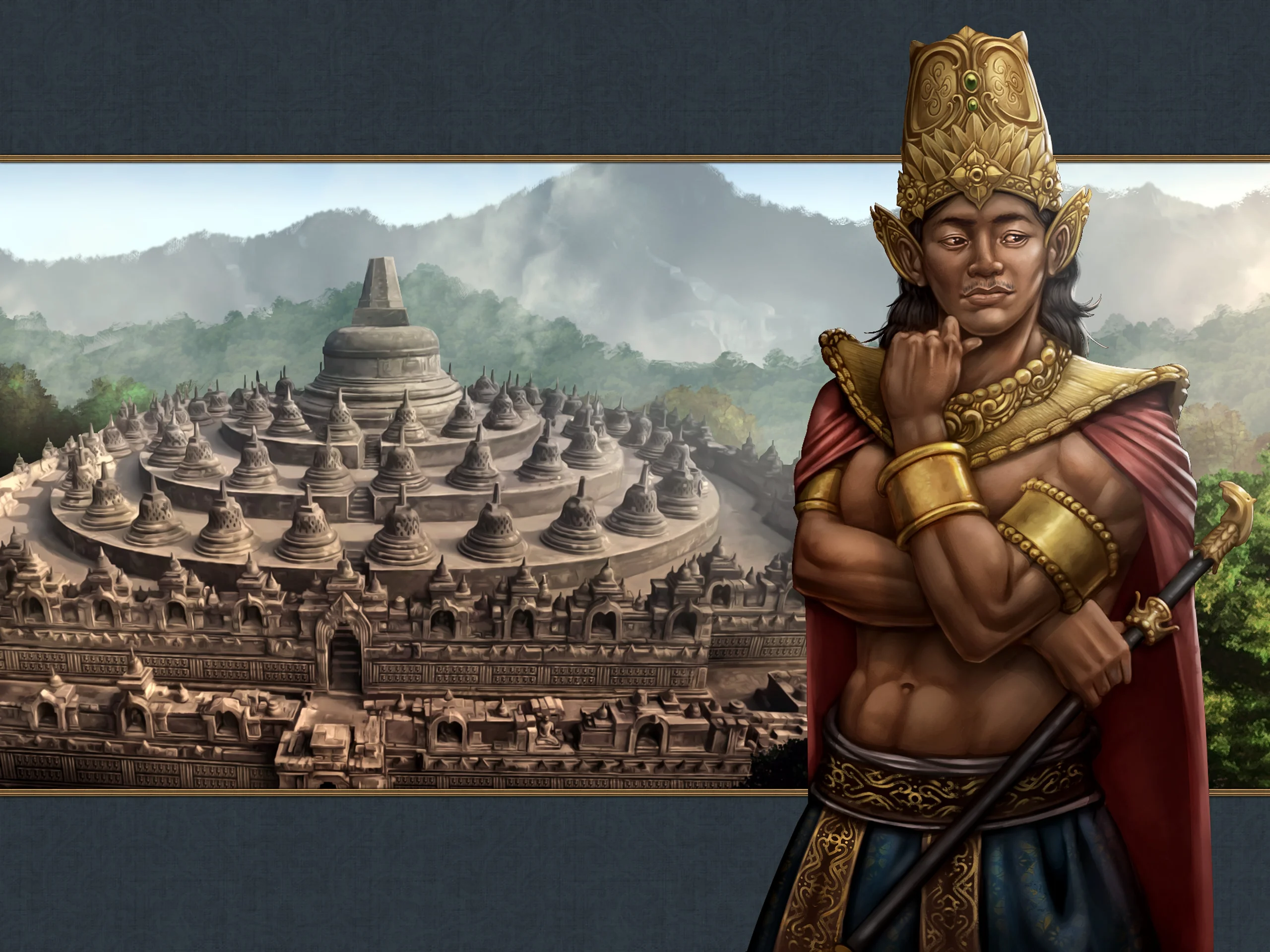
In Indonesian culture, Airlangga is portrayed as the Raja Adil or Ideal King, a ruler who balanced temporal power with spiritual duty. He is seen as a wise, selfless leader who prioritized peace over personal ambition. His image is one of calm authority, often depicted in statues with a serene expression, holding a staff or sword. Historical accounts describe him as a patron of both Hinduism and Buddhism, fostering an environment where both religions coexisted. He is remembered not just as a conqueror but as a builder who revitalized agriculture and trade. His voluntary retirement to become a hermit adds to his mystique, presenting him as a figure who transcended the typical ambitions of monarchy.
Fame & Fandom
Airlangga remains a figure of historical gravity rather than modern celebrity, with his legacy anchored in the consolidation of Java and the founding of Kahuripan rather than pop culture phenomena. Unlike contemporary icons who command organized fanbases or viral rituals, his remembrance is preserved through academic study and regional history without the formation of a dedicated fandom community. No formal name exists for any group that might venerate him, as the concept of a fanbase does not apply to a monarch whose influence waned centuries ago. There are no documented birthday billboards, fan campaigns, or ritualistic gatherings associated with his memory in the digital age. The absence of a 'Fan Side' reflects his status as a static historical entity rather than an active cultural participant. While he is widely recognized within Indonesia as a national hero, this recognition manifests as reverence for a state founder rather than the enthusiastic following seen in entertainment industries. Consequently, no specific fan organizations, chart pushes, or charity drives have ever been organized around his persona. iFANN has evaluated the scope of his global presence and determined that he does not currently hold a placement in the published rankings, including the Global Top 1,000 or any Top-100 scope list. This evaluation confirms that while his historical footprint is significant, it does not translate into the measurable metrics required for a current fame ranking.
Interesting Facts and Legends
The name Airlangga translates to "he who crossed the water," a literal reference to his childhood escape across the Bali Strait to save his life. One of the most famous legends surrounding him involves a dream he had before his death. He dreamed of two fish pulling apart a mountain, which his priest interpreted as a sign that his kingdom must be divided to prevent total destruction. This vision directly influenced his decision to split the realm between his sons. Another unique aspect of his life is that he is one of the few monarchs in history to voluntarily abdicate and become a hermit while still alive, seeking spiritual liberation rather than dying on the throne. His story is enshrined in the Pararaton, the Book of Kings, which serves as a foundational myth for Javanese kingship. The Candi Belahan temple, where his cremation rites were performed, remains a site of pilgrimage, featuring relief carvings that depict the splitting of the kingdom.
Notable Quotes
“I shall divide my kingdom so that my people may live in peace, for a divided realm is better than a war-torn one.”
“Power is a burden; wisdom is the only true crown.”
Family & Personal Life
Airlangga was born into royalty, the son of King Udayana Warmadewa of Bali and Princess Mahendradatta of the Mataram dynasty. His mother's brother, Dharmawangsa Teguh, was the King of Mataram until his assassination in 1006. Airlangga married Sudharmini, the daughter of the King of Malayu, to secure alliances and strengthen naval power. He also had a wife from the Warmadewa lineage, with whom he had his two sons. These marriages were political tools designed to stabilize his realm and ensure the continuation of both royal lines. After retiring, he lived as a hermit, dedicating his final years to spiritual contemplation rather than managing his household. His legacy continues through his descendants who ruled the divided kingdoms of Janggala and Panjalu.
Notable Connections
Mahendradatta, Udayana Warmadewa, Dharmawangsa Teguh, Wurawari, Mpu Sindok, Sri Samarawijaya, Resi Garung
Relationships & Dating History
Airlangga's relationships were strictly dynastic and political, serving as tools to secure alliances and stabilize his realm. He married Sudharmini, the daughter of the King of Malayu, in the 1030s to strengthen trade and naval power. This union produced no recorded children in primary sources. Earlier in his life, he married a princess from the Warmadewa lineage, likely around the 1010s, to secure his claim to the Javanese throne. This marriage produced his two sons, Mpu Sindok and Sri Samarawijaya, who succeeded him. As a historical figure from the 11th century, he did not have a dating history in the modern sense. His final status was widowed, having outlived his spouses, and he dedicated his last years to asceticism as a hermit.
- MarriedSudharmini1030 - 1049Daughter of the King of Malayu; alliance for trade and naval power.
- MarriedPrincess of Warmadewa Lineage1010 - 1049Mother of his heirs Mpu Sindok and Sri Samarawijaya.
Death & Aftermath
Died
+1049-01-01 (aged 47)
Death Place
Java
Cause of Death
Natural causes after retiring as a hermit
The final chapter of Airlangga's life unfolded in the quietude of spiritual renunciation rather than the clamor of political intrigue. In 1049, the monarch who had spent decades rebuilding Java voluntarily stepped down from his throne to become a hermit, taking the name Resi Gunaputra. His death followed shortly after this abdication, occurring naturally within the Javanese landscape where he had spent his final years in contemplation. There were no dramatic public spectacles or sudden tragedies; instead, his passing was marked by traditional royal cremation rites that honored his dual status as a king and a sage.
Following his departure, the kingdom he had unified faced its first major test. True to his earlier vision, the realm was peacefully partitioned between his two sons, Mpu Sindok and Sri Samarawijaya. This division created the kingdoms of Janggala and Panjalu (later known as Kediri), ending the era of a single unified Kahuripan but preventing the bloody civil wars that often plagued successions in the region. The transition was smooth, managed through customary law without the estate disputes common in modern times. Centuries later, his legacy has been preserved not through mourning rituals but through enduring institutions. Universitas Airlangga stands today as a testament to his educational vision, while statues across Indonesia, particularly in Surabaya and Jakarta, continue to depict him as the ideal ruler who prioritized peace over power.
Net Worth (Estate Value)
$0
iFANN Editorial Team estimate
As a medieval monarch, Airlangga did not possess wealth in the modern sense of currency or bank accounts. His fortune was measured in land, grain, gold, and tribute from vassal states. Upon his death, his estate consisted of the entire Kingdom of Kahuripan, representing the economic heart of Southeast Asia at the time. The value of his holdings included vast rice fields, spice trade routes, and temple offerings, though these cannot be calculated in dollars. After his death, the revenue streams continued through the kingdoms of Janggala and Panjalu, which lasted for centuries. The legacy of his wealth persists in the institutions bearing his name, such as Universitas Airlangga, which operates today as a major educational entity generating significant economic activity, though these are separate legal entities from his personal estate.
Awards & Accolades
View 6 records, honours and achievementsKnown For
Kingdom of Kahuripan
1042 · Founder and Monarch
Pararaton
1100 · Subject of Historical Text
Keywords
Sources
Quick Facts
- Profession
- monarch
- Born
- 1002
- Birthplace
- Bali, Indonesia
- Died
- 1049
- Gender
- Male
- Birth Sign
- Capricorn
Personal Details
- Full Name
- Rakai Halu Sri Lokeswara Dharmawangsa Airlangga Anantawikramottunggadewa
- Spouse
- Sudharmini, Princess of Warmadewa Lineage
- Children
- Mpu Sindok, Sri Samarawijaya
- Education
- Hindu-Buddhist philosophy and martial arts at the Balinese court
Frequently Asked Questions
Who was Airlangga?
When did Airlangga die?
What does the name Airlangga mean?
Did Airlangga have kids?
Why is Airlangga famous?
Similar People
Join the community
fans discussing