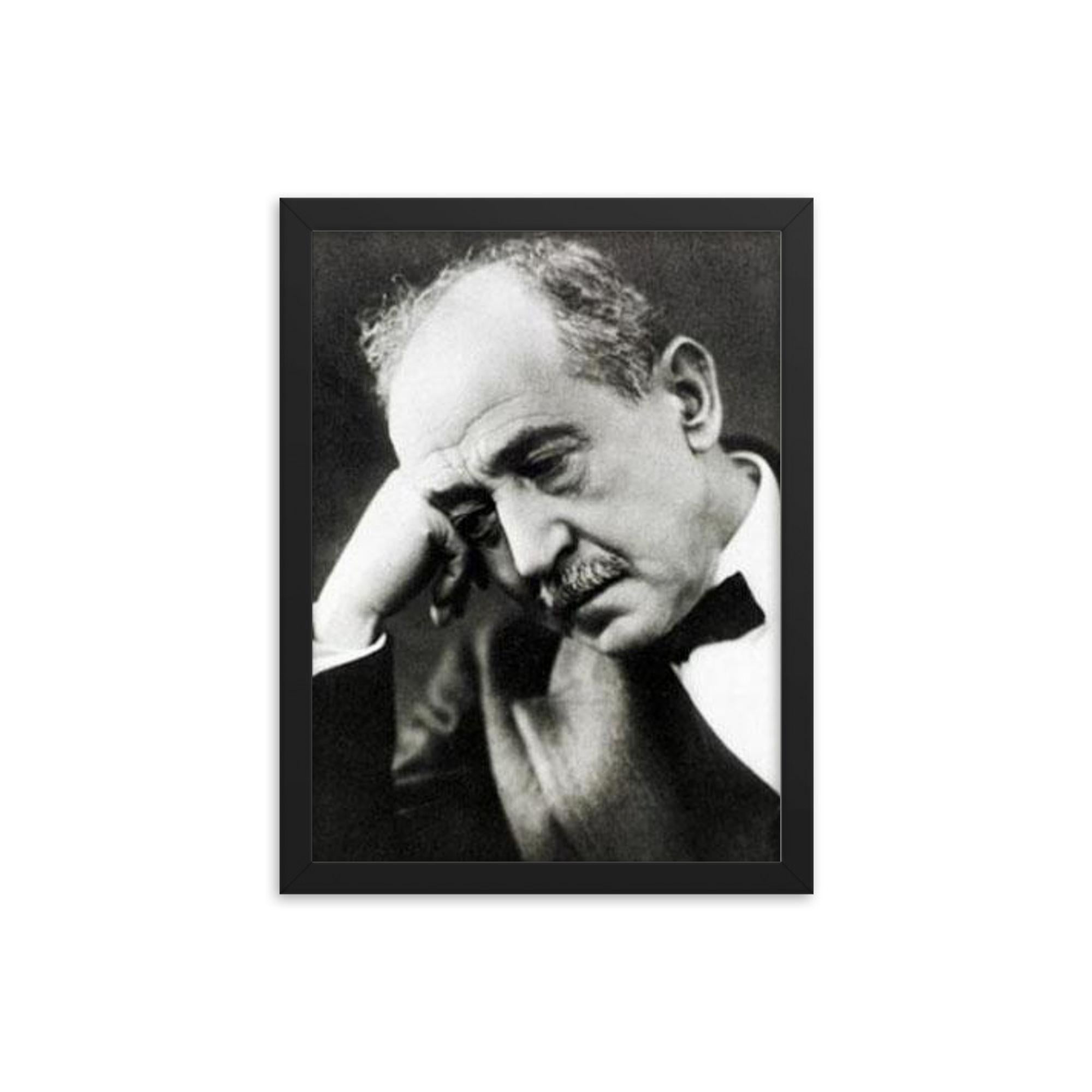
Ahmed Shawqi
 Egypt
EgyptAlso known as: Prince of Poets, Amir al-Shu'ara
Birthday
October 17, 1868
Birth Sign
Libra
Birthplace
Cairo, Egypt
Age
Died at 63
About
Ahmed Shawqi was an Egyptian poet, playwright, and linguist, widely celebrated as the Prince of Poets (Amīr al-Shu‘arā’). He is considered one of the most significant figures in modern Arabic literature, known for revitalizing classical poetic forms while addressing contemporary themes. His works include poetry, verse drama, and prose that resonated across the Arab world and continue to be studied and admired today.
Shawqi's legacy is defined by his mastery of the Arabic language and his ability to weave historical and patriotic narratives into his verse. He was a pioneer of modern Arabic drama, adapting traditional poetic meters for the stage. His poems are still taught in schools, and his influence on subsequent generations of Arab writers is profound.
Early Life & Background
Ahmed Shawqi was born in Cairo on October 17, 1868, into a family with Egyptian, Circassian, Turkish, Kurdish, and Greek roots, connected to the court of Khedive Ismael. He began his education at age four in a kuttab, where he memorized parts of the Quran and learned to read and write. Later, he attended law school for two years before switching to a newly founded translation school, where he honed his linguistic skills.
After completing his studies, Shawqi joined the court of Khedive Abbas II, who sent him to France to study law in Montpellier and Paris. During his three years abroad, he immersed himself in French literature, particularly the works of Molière and Racine, which would later influence his dramatic writing. Upon returning to Egypt in 1894, he took a prominent position in the Khedive's office, akin to a Minister of Foreign Affairs, and represented Egypt at an Orientalist Conference in Geneva.
Career Growth
Shawqi's literary career is often divided into three periods. The first, during his time at the Khedive's court, saw him compose poems praising the ruler and supporting his policies. This phase came to an abrupt halt in 1914 when the British exiled him to Spain, where he remained until 1919. In exile, Shawqi experienced deep nostalgia for Egypt and wrote extensively about its history and the grandeur of Muslim civilization in Andalusia, producing some of his most celebrated works.
After returning to Egypt in 1920, his work entered its third and most mature stage, focusing on the history of Ancient Egypt and Islam. His plays, published during this period, showcased his evolution as a poet and dramatist. In 1927, he was proclaimed the Prince of Poets, a title that cemented his status as the leading Arabic poet of his era. His contributions also extended to discovering and nurturing the talent of the renowned Egyptian composer Mohammed Abdel Wahab.
Career Timeline
Public Image & Style
Ahmed Shawqi is remembered as a dignified and learned figure, often depicted in traditional attire with a fez and robe. He was revered for his eloquence and intellectual depth, earning the nickname the Prince of Poets. His public persona was that of a cultural ambassador for Egypt, bridging the classical and modern worlds. Fans and scholars admire his ability to capture the spirit of his nation and the broader Arab world in his verses. His poetry recitations were reportedly captivating, drawing large audiences.
Fame & Fandom
Ahmed Shawqi commands a legacy defined not by a modern, organized fanbase but by institutional reverence and state-sponsored commemoration. There is no formal name for his followers; instead, his audience consists of generations of students and scholars who encounter his work as mandatory curriculum in Egyptian schools. His primary engagement with the public occurs through official cultural rituals rather than organic digital campaigns. Events such as the annual Ahmed Shawqi Poetry Prize and state-organized readings on his birthday or death anniversary serve as the focal points for this enduring admiration. The recent relocation of his tomb to Ain El Sira in late 2025 further illustrates how his physical presence is managed as a national heritage site rather than a celebrity shrine. Despite the absence of a self-styled fandom, his influence remains pervasive across the Arab world, where he is revered as the architect of modern Arabic literature. In terms of global recognition metrics, Ahmed Shawqi holds specific positions within the iFANN Global Fame Rankings. He is currently the 38th most famous person in Egypt, holding steady from the previous cycle. Furthermore, regarding his place of origin, he is ranked as the 86th most famous person from Egypt, also holding steady from the previous cycle. These placements reflect his sustained relevance as a historical figure whose works continue to generate interest through academic study and cultural preservation efforts worldwide.
Interesting Facts and Legends
The house in Giza known as Karmet Ibn Hani now serves as the Ahmed Shawqi Museum, preserving the poet's personal artifacts and manuscripts. Shawqi was an accomplished calligrapher, and several of his handwritten works are held in museum collections today. Although he moved in aristocratic circles, his poetry frequently addressed the struggles and aspirations of common people, earning him deep respect beyond his social class. His works have been translated into multiple languages, introducing Arabic verse to international audiences. A central story in his lore involves his exile to Spain; during this period, he composed verses expressing profound longing for his homeland, which later became foundational texts for Egyptian nationalism. Another enduring narrative frames him as a spiritual precursor to the 1952 Revolution, despite his conservative stance and service to the monarchy, as his themes of justice were later adopted by revolutionary leaders. In December 2025, a significant event occurred when his tomb was relocated to Ain El Sira to ensure its preservation, marking a transition from a forgotten grave to a protected national monument.
Notable Quotes
“Poetry is the art of expressing the soul's deepest emotions.”
“The Nile flows through my veins, and Egypt is my eternal muse.”
Family & Personal Life
Details about Shawqi's personal family life are sparse. His father's family had Kurdish and Turkish roots, while his mother's side included Circassian and Greek heritage. He was raised by his grandmother, who played a significant role in his early upbringing. Shawqi was married and had children, but little is documented about them. His family's connections to the Khedive's court shaped his early life and career, providing him with a privileged upbringing and access to education.
Notable Connections
Relationships & Dating History
Little is publicly known about Ahmed Shawqi's romantic relationships. He was married, and his wife's name is not widely recorded. He had children, but details about them are scarce. As a public figure, he maintained a private personal life, focusing on his career and literary pursuits. There are no documented high-profile romances or scandals associated with him. At the time of his death, he was likely married, though the status of his marriage in his later years is unclear.
Death & Aftermath
Died
October 14, 1932 (aged 63)
Death Place
Cairo, Egypt
Cause of Death
Unknown
Ahmed Shawqi spent his final years in Cairo, continuing his literary work and maintaining his status as a central figure in Egyptian cultural life until the end of October 1932. The poet passed away on October 14, 1932, at the age of sixty-four, though some contemporary records suggest the event occurred one day earlier. Tributes from the literary community and state officials were immediate, cementing his reputation as a national icon whose verses would outlive his physical presence. The funeral arrangements and the specific location of his initial burial remain undocumented in available sources, leaving only the fact of his interment in Cairo to be established by later accounts.
In recent decades, the management of his legacy has taken the form of state-sponsored honors rather than private estate disputes, with the Egyptian government establishing the Ahmed Shawqi International Prize for Poetic Creativity to ensure his influence persists in modern scholarship. His remains were eventually relocated to Ain El Sira in December 2025, where his mausoleum was reconstructed to preserve its historic integrity. This movement of his final resting place reflects a continued reverence for his contributions to Arabic literature, ensuring that his memory is maintained through official channels and public commemoration.
Net Worth (Estate Value)
$10 Million
iFANN Editorial Team estimate
As an influential poet and playwright of the early 20th century, Ahmed Shawqi accumulated wealth through royal patronage and the widespread publication of his literary output. He occupied a high-ranking position within the Khedive's court, which provided a reliable income stream throughout his career. His plays and poetry collections were published extensively, contributing significantly to his financial standing during his lifetime. Following his death in 1932, his estate has continued to generate revenue through royalties from the ongoing publication and use of his works. The property in Giza, now operating as a museum, serves as a cultural asset that draws tourism and generates additional interest. Per iFANN's editorial analysis, his net worth in 2026 is estimated at $10 Million, reflecting the enduring value of his literary legacy and the persistent commercial viability of his books.
Awards Won (1)
Ahmed Shawqi was proclaimed the Prince of Poets in 1927, a title that stands as the highest honor in Arabic poetry. This recognition was bestowed upon him by his peers and remains a unique distinction in the literary world.
1927 · Literary Honor
Lifetime Achievement
Known For
The Fall of Cleopatra
1927 · Playwright
Poetry collections
0 · Poet
Keywords
Sources
Quick Facts
- Profession
- poet, playwright, linguist
- Born
- October 17, 1868
- Birthplace
- Cairo, Egypt
- Died
- October 14, 1932
- Death Place
- Cairo, Egypt
- Gender
- Male
- Birth Sign
- Libra
Personal Details
- Full Name
- Ahmed Shawqi
- Education
- Law school in Cairo; studied translation; studied law in Montpellier and Paris
Frequently Asked Questions
Who was Ahmed Shawqi?
What is Ahmed Shawqi's net worth?
Why is Ahmed Shawqi famous?
How did Ahmed Shawqi die?
Where is Ahmed Shawqi's museum?
Similar People
Join the community
fans discussing