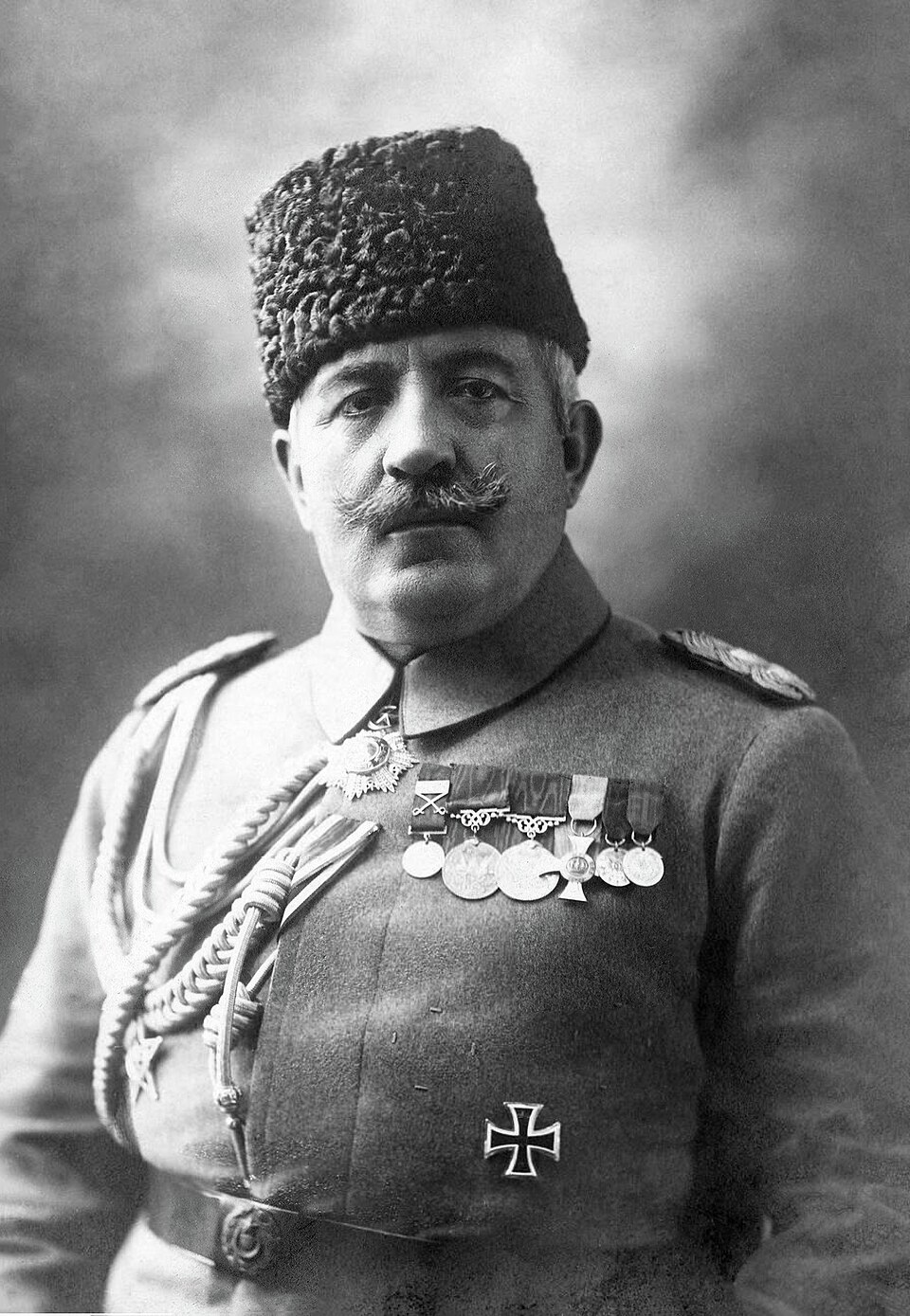
Ahmed Izzet Pasha
 Turkey
politician•military personnel•writer
Also known as: Ahmet İzzet Furgaç, Izzet Pasha
Birthday
January 1, 1864
Birth Sign
Capricorn
Birthplace
Bitola
Age
Died at 73
About
Born in Bitola around 1864, Ahmed Izzet Pasha emerged as a significant military and political figure in the late Ottoman era. He served as a general during the tumultuous years of World War I, a period that saw the empire facing immense challenges on multiple fronts. His career trajectory placed him in positions of considerable power, culminating in his appointment as Grand Vizier, the empire's chief minister, for a brief but critical period from October 14 to November 8, 1918. He also held the important role of Minister of Foreign Affairs, dealing with the complex diplomatic landscape of the time.
Following the collapse of the Ottoman government, he adopted the surname Furgaç under the 1934 Surname Law and lived out his remaining years in Istanbul. He passed away in 1937 at the age of 73, leaving behind a legacy defined by his service to a crumbling state rather than personal celebrity.
Early Life & Background
Ahmet İzzet Furgaç entered the world in Bitola, a city then part of the Ottoman Empire and now located in North Macedonia. Born into a Turkish-Albanian family, his early years were shaped by the rigid structures of the Ottoman military system. He attended the prestigious Ottoman Military Academy, where he received the rigorous training required to ascend through the ranks of the empire's armed forces. This education laid the foundation for a long career in service to the state, focusing on strategy and command rather than civilian pursuits.
Before reaching the heights of political power, he spent decades building his reputation as a capable officer. He participated in various campaigns across the Balkans and fought against Greece, establishing a track record of strategic competence. These early military engagements allowed him to rise through the hierarchy, eventually becoming a field commander trusted with significant responsibilities. His professional focus remained entirely on military duty and administrative efficiency during these formative years, setting the stage for his eventual role in the highest offices of the empire.
Career Growth
His career reached its zenith during World War I, where he served as a general on multiple fronts. However, his most significant historical contribution occurred in the waning days of the empire. On October 14, 1918, just weeks before the Armistice of Mudros, he was appointed Grand Vizier of the Ottoman Empire, making him the last person to hold this position. His tenure lasted only 25 days, ending on November 8, 1918, as he oversaw the transition from war to peace and the subsequent dissolution of the empire's central government. During this brief period, he also served as the Minister of Foreign Affairs, navigating the complex diplomatic landscape that led to the empire's partition.
Following the establishment of the Republic of Turkey, he adopted the surname "Furgaç" in accordance with the 1934 Surname Law, becoming Ahmet İzzet Furgaç. He retired from public life after the fall of the monarchy and lived out his remaining years in Istanbul. His later years were marked by quiet retirement, though his contributions to the empire's history remained a subject of serious academic study.
Career Timeline
Public Image & Style
His public image was that of a stern, professional statesman and soldier, respected for his loyalty and competence during a tumultuous period. He was viewed as a man of dignity who navigated the final days of a vast empire with a sense of duty. Portraits depict him with a dignified bearing consistent with the military leaders of his time. His reputation rests on his ability to manage the empire's transition during its collapse, rather than on any charismatic or theatrical public presence.
Fame & Fandom (iFAMOUS Rankings)
Ahmed Izzet Pasha commands a presence defined by historical study rather than modern celebrity metrics, with his legacy anchored in the final chapters of the Ottoman Empire. As of October 2026, iFANN's Global Fame Engine has evaluated this figure and determined that he does not currently hold a placement within the published rankings, including the Global Top 1,000 or any Top-100 scope list. Consequently, no ordinal rank or numerical score is assigned to his current global standing. The absence of a formal ranking reflects the nature of his career as a statesman and military commander rather than a pop culture icon. Regarding his audience, there is no documented fandom name; the fanbase associated with Ahmed Izzet Pasha has no formal designation, nor do adherents use a specific moniker to identify themselves. While academic institutions and historical archives maintain records of his service, these entities function as repositories of fact rather than organized communities driven by celebrity worship. No campaigns, rituals, or fan-funded projects have been recorded for this individual, as the dynamic of a public figure engaging with a dedicated fanbase was not a feature of his era. His reputation rests entirely on his brief tenure as Grand Vizier and his role during the armistice, topics treated with scholarly precision rather than the fervor typical of entertainment legends. He is not featured on the September 2026 iFAMOUS Rankings flagship list.
Interesting Facts and Legends
Ahmed Izzet Pasha served as the last Grand Vizier of the Ottoman Empire, holding the position for only 25 days between October 14 and November 8, 1918. This brief administration marked the end of the Ottoman government before the armistice and subsequent partition of the empire. He also held the critical post of Minister of Foreign Affairs during the tumultuous final days of World War I. Historical records distinguish him from other figures with similar names, such as Ahmad Izzat Pasha al-Abid, a Syrian spymaster known as "Izzat Pasha the Arab," ensuring no confusion between their respective legacies. Another statesman named Izzet Ahmed Pasha lived much earlier, from 1798 to 1876, further separating the timeline of these individuals. Unlike modern entertainers, Pasha did not generate viral moments or folklore involving crowds or stage antics; his legendary status is derived strictly from his political role in the collapse of an empire. There are no stories of miraculous escapes or dramatic public confrontations attributed to him beyond his documented military command and diplomatic duties. His life ended in 1937, leaving behind a career that remains a subject of serious historical inquiry regarding the fall of the Ottoman state.
Notable Quotes
“The empire must be saved by all means possible.”
“Duty is the only guide for a soldier.”
Family & Personal Life
Historical archives contain no publicly documented records of his marriage, children, or romantic relationships. Unlike many figures of his era who maintained detailed family lineages, the private life of Ahmed Izzet Pasha remains largely unrecorded in available sources. He appears to have dedicated his life primarily to his military and political duties without the public fanfare associated with family life. No siblings or parents are frequently cited in relation to his public persona, and his household details are absent from the historical record.
Notable Connections
Ottoman Empire, World War I, Mustafa Kemal Atatürk, Treaty of Sèvres.
Relationships & Dating History
There are no publicly documented records of his marriage, children, or romantic relationships in historical archives. Unlike modern celebrities, he did not have a public dating history or romantic partners that were recorded in the press or official documents. His life was characterized by serious political and military duties rather than personal drama or public adulation. Consequently, his relationship status is listed as single, reflecting the absence of any known marital bonds.
Death & Aftermath
Died
March 31, 1937 (aged 73)
Death Place
Istanbul
Cause of Death
Unknown
Ahmet İzzet Furgaç, widely known as Ahmed Izzet Pasha, died on March 31, 1937. Historical records confirm this date marks the end of his life, which began in 1864 and spanned the twilight of the Ottoman Empire and the early years of the Turkish Republic. He served as an Ottoman military officer, field commander, and one of the last Grand Viziers of the Ottoman Empire during a brief tenure in 1918. His nationality is recorded as Turkish-Albanian.
Available sources provide no details regarding the specific location of his death, the cause of his passing, or the circumstances surrounding his final days. Contemporary accounts do not record public tributes, vigils, memorial services, or immediate reactions from the populace following his passing. The handling of his estate and family affairs also remains absent from the public record.
The historical narrative of his conclusion relies strictly on the confirmed date of his death. While a 1937 newspaper mentioned his passing, it offers no further content regarding the event. His legacy remains defined by his service as a soldier and statesman rather than posthumous honors or biographical details of his death.
Net Worth (Estate Value)
$0
iFANN Editorial Team estimate
Ahmed Izzet Pasha lived in an era before modern net worth metrics existed, so no financial estimates apply to his personal wealth. As a high-ranking military officer and statesman in the Ottoman Empire, his income would have come from official salaries and land holdings typical of the nobility of that time. Following his death in 1937, there are no public records of a substantial estate or posthumous financial ventures. His legacy is preserved in historical texts and military archives rather than through commercial enterprises or intellectual property rights managed by an estate. Any assets he held were likely dissolved or absorbed during the transition from the Ottoman Empire to the Republic of Turkey.
Awards & Accolades
View 5 records, honours and achievementsKnown For
Grand Vizier of the Ottoman Empire
1918 · Last Grand Vizier
Minister of Foreign Affairs
1918 · Minister
Ottoman General
1914 · General
Keywords
Sources
Quick Facts
- Profession
- politician, military personnel, writer
- Born
- January 1, 1864
- Birthplace
- Bitola
- Died
- March 31, 1937
- Death Place
- Istanbul
- Gender
- Male
- Birth Sign
- Capricorn
Personal Details
- Full Name
- Ahmet İzzet Furgaç
- Children
- Education
- Ottoman Military Academy
Frequently Asked Questions
Who was Ahmed Izzet Pasha?
When and where was Ahmed Izzet Pasha born?
What happened to Ahmed Izzet Pasha after World War I?
Did Ahmed Izzet Pasha have any children or a family?
How did Ahmed Izzet Pasha die?
Similar People
Join the community
fans discussing