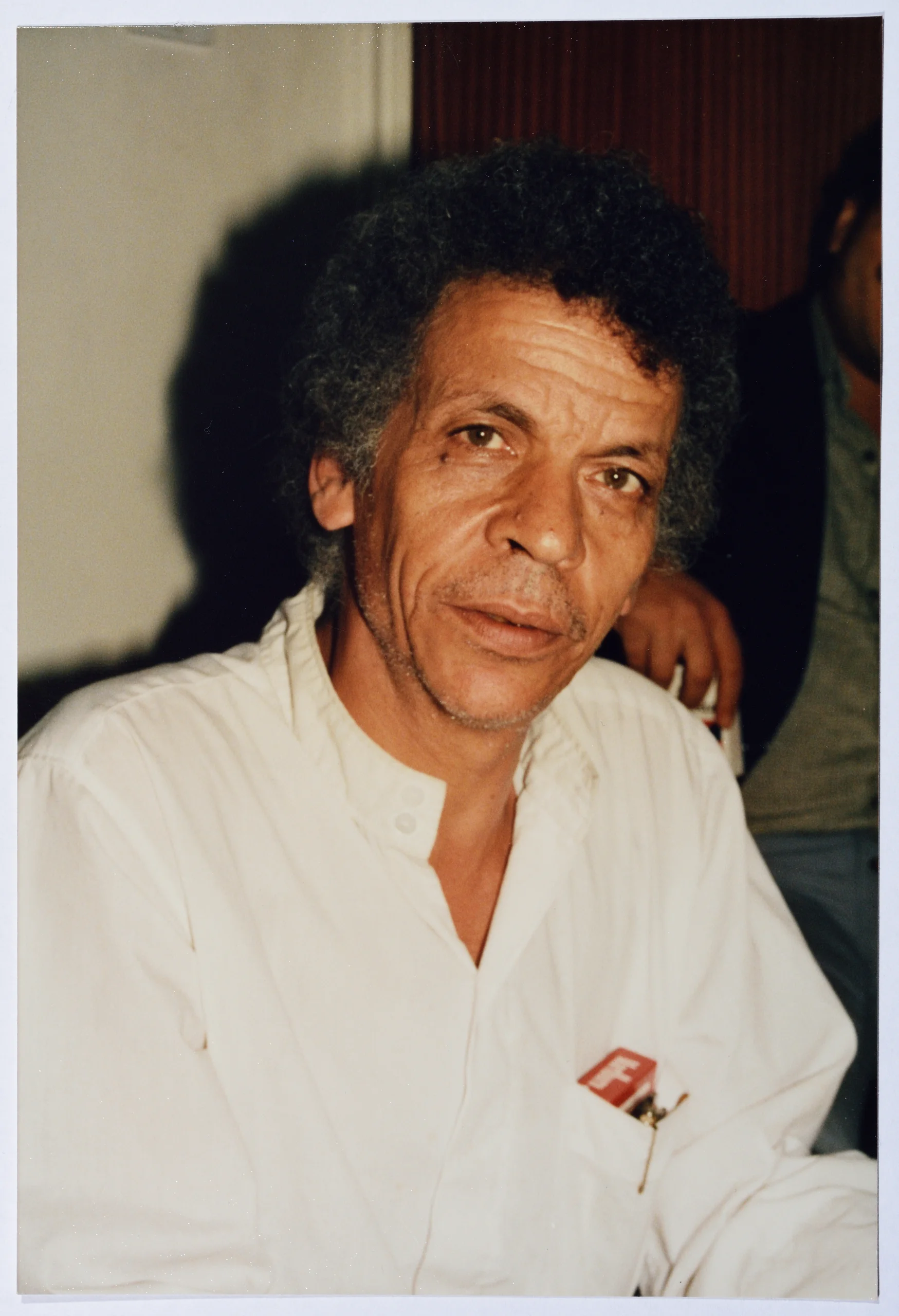
Ahmed Fouad Negm
 Egypt
EgyptAlso known as: El-Fagumi
Birthday
May 22, 1929
Birth Sign
Gemini
Birthplace
Kafr Abu Najm, Sharqia Governorate, Egypt
Age
Died at 84
About
Ahmed Fouad Negm, known across the Arab world as El-Fagumi, was an Egyptian vernacular poet whose sharp, working-class verses made him the unmistakable voice of the disenfranchised. Born in 1929 in the Nile Delta, he turned the everyday Arabic of Cairo's streets into poetry that cut through the formal literary tradition. His words, set to music by his longtime partner Sheikh Imam, became anthems of resistance that outlived every regime they challenged.
Negm's legacy is measured not in awards but in the way his lines were chanted in Tahrir Square during the 2011 revolution, decades after they were written. He spent years in prison for his critiques, yet never softened his stance. When he died in 2013 at 84, tributes poured in from across the political spectrum, all acknowledging that Egypt had lost its most fearless poetic conscience.
Early Life & Background
Negm's path to poetry was anything but smooth. His father, a police officer, died when he was six, leaving the family in poverty. His mother struggled to raise him and his siblings in the village of Kafr Abu Najm, but young Ahmed was restless. He drifted through odd jobs, eventually landing in trouble with the law. In his late teens, he spent three years in prison for forging documents, and it was there, behind bars, that he discovered his calling.
Prison gave Negm time to read and to write. He started composing verses in the colloquial Egyptian dialect, a deliberate break from the classical Arabic that dominated literary circles. The language of the streets felt honest to him, and he never looked back. After his release, he worked as a journalist and activist, but his real education came from the people he met in cafés and on the streets of Cairo. By the early 1960s, he had a growing reputation as a poet who spoke for those who had no voice.
Career Growth
Negm's breakthrough came in 1962 when he met Sheikh Imam, a blind composer with a gift for melody. Together, they created a new kind of protest music, blending Negm's fiery verses with Imam's simple, haunting tunes. Their songs, like 'El-Masloub' (The Crucified One) and 'Ana el-Shaab' (I am the People), spread like wildfire through cassettes and live performances, even as the authorities tried to ban them.
The duo's popularity grew through the 1960s and 1970s, but so did their troubles. Negm was imprisoned repeatedly under Nasser, Sadat, and Mubarak, sometimes for years at a time. Yet each release seemed to fuel his legend. He continued to write and perform, often in underground venues, and his work circulated widely despite censorship. In the 1980s and 1990s, he branched out into solo projects, working with younger musicians and poets, while never losing his edge. The 2011 revolution brought his poetry to a new generation, and his lines were everywhere in the protests. He died in 2013, just two years after seeing his words help topple a dictator.
Career Timeline
Public Image & Style
In the Arab world, Negm is remembered as the 'Poet of the People,' a figure who embodied the struggles and hopes of the working class. His public image was that of a fearless critic, with his signature mustache and intense gaze. He dressed simply, often in a gallabeya, and spoke with the same directness that marked his poetry. Fans saw him as a folk hero, someone who never sold out. His work with Sheikh Imam is still performed at protests and cultural events, and his face appears on murals and posters across Egypt. For many, he represents the idea that poetry can be a weapon, and that the voice of the people cannot be silenced.
Fame & Fandom
Ahmed Fouad Negm holds no current placement in the iFANN Global Top 1,000 rankings or any scope-specific list as of August 2026. The iFANN Global Fame Engine has evaluated his profile, yet he remains unranked in the published charts. This absence of a numeric position does not diminish his stature; it simply reflects that his fame operates outside the metrics of commercial pop culture and modern celebrity cycles. His legacy is measured in the streets of Cairo rather than on a leaderboard. Negm's audience lacks a formalized name like those found in contemporary fandoms. He is universally known as the 'Poet of the People,' a title earned through decades of speaking for the disenfranchised in vernacular Arabic. His followers were never a tribe of ticket-buying superfans but the Egyptian working class itself, who chanted his verses during the 2011 revolution and beyond. There are no fan clubs with official rosters or coordinated social media campaigns driven by a specific group identity. Instead, his influence spread organically through underground recordings and oral tradition. Posthumous initiatives, such as the planned museum in his former home and the establishment of a colloquial poetry award by Naguib Sawiris, serve as institutional tributes rather than fan-led projects. The connection between Negm and his public was defined by shared struggle and political dissent, transforming his poetry into a national anthem for resistance long before his death in 2013.
Interesting Facts and Legends
Negm's nickname 'El-Fagumi' stems from the Arabic word for 'rustic' or 'of the people,' reflecting his humble roots. He possessed a quick wit that often turned stiff political jargon into biting, playful verse. A favorite technique involved using mundane objects like a broken radio or a stray cat to symbolize state power. Known for his stubbornness, he refused to soften his language even when government officials offered deals to tone down his critiques. Late in life, he found solace in football, joking that the national team's losses served as a form of protest. His work eventually reached new audiences after being translated into English posthumously. Beyond these facts, legends surround his enduring impact. During the 2011 Egyptian Revolution, his poem 'Who Are They And Who Are We?' became a central ideological text recited in Tahrir Square, effectively turning him into a voice for a nation while he was still alive. Upon his death on December 3, 2013, the outpouring of grief was described by Al Jazeera as a farewell to the people's poet, marking a national loss felt across the globe. While some narratives exaggerate his role as a singular martyr who never stopped dreaming of revolution, the consistent story maintained by admirers is one of a fearless dissident whose words catalyzed historical change.
Notable Quotes
“I am the people, and I will not be silenced.”
“Who are they and who are we?”
“Poetry is the weapon of the weak.”
Family & Personal Life
Negm married Safinaz Kazem, an Egyptian writer and intellectual, and they had two children together. The family lived in Cairo, where Negm's home became a gathering place for artists and activists. His wife was a steady presence, supporting his work through the many years of imprisonment and censorship. After his death, Safinaz and their children have worked to preserve his legacy, managing his estate and supporting cultural events that celebrate his poetry. The family has largely stayed out of the spotlight, but they occasionally speak publicly about Negm's life and work, keeping his memory alive.
Notable Connections
Ahmed Fouad Negm is most closely associated with Sheikh Imam, his longtime musical collaborator, with whom he created some of the most iconic protest songs in Arab history. He also worked with publisher Mohammed Hashem, who helped bring his work to a wider audience. His poetry inspired countless artists, including the musicians who performed at his funeral and the activists who carried his words into Tahrir Square.
Relationships & Dating History
Negm's personal life was relatively private, especially compared to his public persona. He married Safinaz Kazem, an Egyptian writer, and they remained together until his death. Their marriage was a partnership of equals, with Safinaz supporting his work through the many years of imprisonment and censorship. There are no records of other significant romantic relationships, and Negm's focus was always on his poetry and activism. At the time of his death, he was still married to Safinaz, who survived him.
- MarriedSafinaz Kazem? - 2013Married until his death in 2013; she survived him.
Death & Aftermath
Died
December 3, 2013 (aged 84)
Death Place
Cairo, Egypt
Cause of Death
Natural causes associated with advanced age
The early morning hours of December 3, 2013, found Ahmed Fouad Negm in his Cairo home, where the poet who spent decades translating the grit of the Nile Delta into verse finally fell silent at the age of 84. His friend and publisher Mohammed Hashem confirmed the passing to international outlets that day, noting the event occurred without any specific medical diagnosis or foul play., multiple news agencies characterized the death as a natural result of his advanced age, treating the moment as a quiet end for a man whose voice had often been raised against the state.
Tributes poured in immediately from across Egypt and the globe, with major publications like The New York Times and The Guardian dedicating prominent coverage to a man they called the 'poet of the people.' Critics and peers alike highlighted his role as an unyielding champion of the underclass, recalling how his colloquial verses had become anthems for resistance during the 2011 revolution just two years prior. Cultural institutions such as the Prince Claus Fund moved quickly to recognize his enduring legacy, while retrospective analyses appeared in journals like Jadaliyya to cement his place in literary history.
Details regarding the specific funeral rites or burial site remain unrecorded in available reports, though the scale of the mourning suggested a significant public gathering befitting a national icon. In the years following his death, his collaborations with Sheikh Imam, including the song 'Ana Atoub An Hobak,' continued to circulate widely as symbols of Egyptian cultural identity. His family managed the estate quietly, ensuring his works remained accessible while preserving the memory of the man who turned the streets of Cairo into a stage for poetry.
Net Worth (Estate Value)
$100 Thousand
iFANN Editorial Team estimate
Negm's net worth remains difficult to quantify in traditional terms. As a dissident poet facing decades of censorship, he never accumulated significant personal wealth. His income stemmed from modest royalties, occasional state-sanctioned performances, and book sales, though much of his work circulated underground for free. At the time of his death in 2013, his estate held minimal assets with no major investments. Per iFANN's editorial analysis, his estate is valued at $100 Thousand as of 2026, reflecting ongoing but modest revenue from book sales, educational licensing, and tribute concerts managed by his family.
Awards Won (1)
Negm received the Prince Claus Award in 2013, recognizing his courageous contribution to culture and society. This prestigious honor, presented just before his death, acknowledged his lifelong commitment to using poetry as a tool for social justice. While he did not receive Western-style entertainment awards, his impact is measured by his enduring influence on Arab literature and activism.
2013 · Culture and Development
Lifetime achievement in poetry
Known For
Ana el-Shaab
1960s · Poet
El-Masloub
1960s · Poet
Keywords
Sources
Quick Facts
- Profession
- poet, writer
- Born
- May 22, 1929
- Birthplace
- Kafr Abu Najm, Sharqia Governorate, Egypt
- Died
- December 3, 2013
- Death Place
- Cairo, Egypt
- Gender
- Male
- Spouse
- Safinaz Kazem
- Birth Sign
- Gemini
Personal Details
- Full Name
- Ahmed Fouad Negm
- Spouse
- Safinaz Kazem
- Children
- Two children (names not public)
Frequently Asked Questions
What was Ahmed Fouad Negm's most famous poem?
Why was Ahmed Fouad Negm imprisoned?
Did Ahmed Fouad Negm have any children?
What was Ahmed Fouad Negm's nickname?
How did Ahmed Fouad Negm die?
Similar People
Join the community
fans discussing