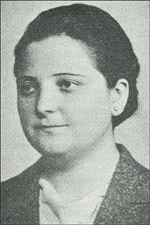
Afet İnan
 Turkey
historian•sociologist•academic
Also known as: Ayşe Afet, Afet Inan
Birthday
November 29, 1908
Birth Sign
Sagittarius
Birthplace
Salonica, Ottoman Empire (now Thessaloniki, Greece)
Age
Died at 76
About
Ayşe Afet İnan was a pioneering Turkish historian, sociologist, and academic who played a foundational role in the intellectual construction of the early Republic of Turkey. Born Ayşe Afet in Salonica on November 29, 1908, she became one of the eight adopted daughters of Mustafa Kemal Atatürk, the founder of the Turkish Republic. Unlike many figures whose fame stems from entertainment or politics alone, İnan's legacy is defined by her rigorous scientific work in physical anthropology and her lifelong dedication to documenting the life and thoughts of Atatürk. She served as a bridge between the new secular republic and its female citizens until her death in 1985.
Her career was characterized by a blend of historical research, sociological analysis, and political advocacy for women's rights. As a full professor at Ankara University, she held the rare distinction of being a woman with such high academic standing in the early 20th century. The state recognized her elevated status by awarding her the title "Hoca" (Teacher/Master). Her most significant project involved leading a massive anthropological survey between 1937 and 1939 to support the "Turkish History Thesis." Beyond academia, she was a vocal advocate for women's emancipation, writing extensively on the legal and social status of Turkish women. She authored seminal texts like Türk Tarihinin Ana Hatları in 1947 and compiled critical archives of Atatürk's personal notes, ensuring their preservation for future generations. Her influence operates through academic authority and state commemoration rather than viral consumption signals.
Early Life & Background
Ayşe Afet was born into a Muslim family in Salonica during the final years of the Ottoman Empire on November 29, 1908. The geopolitical landscape shifted dramatically around her childhood following the Greek occupation of Salonica during World War I and the subsequent population exchanges mandated by the Treaty of Lausanne. Her family moved to Istanbul, where she began her formative education. Her early years were marked by a keen interest in history and social sciences, which were emerging fields in the modernizing Ottoman context. She attended the Teachers' Institute (Darülfünun) in Istanbul, where she began her academic journey.
Her pivotal moment arrived when she met Mustafa Kemal Atatürk. Impressed by her intellect, dedication, and scholarly potential, he invited her to join his inner circle. In 1934, as part of the Surname Law implementation, she officially took the surname "İnan," meaning "Faith," alongside other adopted children of Atatürk. This legal change cemented her status as a spiritual daughter of the Republic's founder, setting the stage for her future contributions to national historiography. During this period, she demonstrated fluency in multiple languages, including French, German, and English, which facilitated her extensive research into European and American historical texts. These linguistic skills and her early immersion in the modernizing Ottoman context laid the groundwork for her later academic achievements.
Career Growth
İnan's career was characterized by a blend of historical research, sociological analysis, and political advocacy for women's rights. After completing her studies, she became a professor and a leading figure in the Turkish Historical Society (Türk Tarih Kurumu). Her most significant and widely discussed project was her work in physical anthropology between 1937 and 1939. Tasked with supporting the "Turkish History Thesis", a state-sponsored theory positing that Turks were indigenous to Anatolia, she led a massive anthropological survey. Over this period, she personally measured over 60,000 skulls across Anatolia to establish a biological link between ancient civilizations and modern Turks. While this work provided data for the state's narrative, it is now frequently cited by historians as an example of science being utilized for nationalist ideology.
Her scholarly output was prolific. She authored Türk Tarihinin Ana Hatları (Outline of Turkish History) in 1947, a seminal text that synthesized archaeological and historical findings to support the national narrative. She also compiled Medeni Bilgiler ve M. Kemal Atatürk'ün El Notları (Civic Information and M. Kemal Atatürk's Notes), a critical compilation of Atatürk's personal writings and speeches, ensuring their preservation for future generations. Additionally, she wrote Atatürk'ten Bilgiler ve Anılar (Information and Memories from Atatürk), offering intimate insights into the founder's character and daily life. She remained active in academia until her retirement in the 1970s, continuing to publish archival work and write on women's rights. In the 1960s, she continued her compilation efforts, solidifying her role as an archival guardian of the Republic's founding documents.
Career Timeline
Public Image & Style
Contemporary descriptions and photographs portray Afet İnan as a dignified, composed woman typical of the intellectual elite of the 1930s to 1950s. She was known for her modest, professional attire, often wearing the traditional headscarf or simple dresses consistent with the secular dress code of the era. Her public image was one of seriousness, intellect, and unwavering loyalty to Atatürk's principles. She commanded respect through her academic authority rather than celebrity charisma, serving as a serious scholar and a loyal servant of the Republic. Specific measurements such as height are not recorded in available biographical sources, but her demeanor projected an aura of unshakeable confidence. She was viewed as a symbol of the new Turkish woman: educated, independent, and devoted to the nation's progress. Her reputation remained untarnished by scandal, reinforcing her status as a moral and intellectual pillar of the state.
Fame & Fandom (iFAMOUS Rankings)
Afet İnan currently holds no placement in the iFANN Global Top 1,000 or any Top-100 scope list. The evaluation engine has assessed her profile but found she does not occupy a ranked position within these specific tiers of global celebrity metrics. Her standing exists outside the numerical hierarchy that defines modern pop culture stardom. While millions may revere her memory, her influence operates through academic authority and state commemoration rather than the viral consumption signals that drive the rankings. She remains a figure of profound historical weight without the digital footprint required for a chart position. She is not featured on the September 2026 iFAMOUS Rankings flagship list. The concept of a fandom, as seen with modern entertainers, never took root around Afet İnan. There is no organized fanbase, no official name for her supporters, and no rituals of adoration involving billboards or charity drives. Her audience was never a crowd of fans but rather students, historians, and citizens engaged in the preservation of national identity. The reverence she commands is silent and institutional, maintained through textbooks and state archives instead of social media hashtags or fan clubs. Unlike celebrities who generate wild public reactions, her legacy is a quiet, enduring respect for her contributions to Turkish history and her unique status as one of Atatürk's adopted daughters. Her presence in digital spaces is limited to academic databases and forums commemorating Atatürk's family, reflecting her enduring relevance in national education rather than global pop culture.
Interesting Facts and Legends
Afet İnan's measurement of over 60,000 skulls is one of the largest anthropological projects of its kind in the 20th century, driven by a political mandate rather than purely scientific curiosity. A beloved anecdote from her life highlights Atatürk's love for nature, specifically a fig tree known as the iğde ağacı in his garden. İnan often recounted how the President would sit under this tree, humanizing the founder by showing his connection to simple, daily pleasures. She was fluent in multiple languages, including French, German, and English, which facilitated her extensive research into European and American historical texts. She was instrumental in preserving Atatürk's private notes, which are now considered primary sources for understanding the founding of the Republic.
In her memoirs, she articulated deep sentiments about her mentor, stating, "He was not just a leader; he was a father who saw the future of our people before anyone else could." In her book Outline of Turkish History, she wrote, "The history of the Turkish nation is not merely a chronicle of events but a continuous struggle for existence and civilization." The boundaries of her legacy were tested in May 2017 when historian Süleyman Yeşilyurt questioned her lineage on the television program Derin Tarih. His suggestion that she was not actually an adopted daughter triggered immediate outrage and led to arrest warrants being issued against the speakers for insulting Atatürk and his family. This event proved that challenging her history was treated as a political offense rather than mere debate. Today, her granddaughter, Arı İnan Mihalıççık, continues to honor her memory, ensuring the familial reverence survives while the world remembers her as a foundational pillar of the Republic. Her legacy remains active in Turkish academia and public discourse, with continued references in historical documentaries and the ongoing preservation of her archives by the Turkish Historical Society.
Notable Quotes
“The history of the Turkish nation is not merely a chronicle of events but a continuous struggle for existence and civilization.”
“He was not just a leader; he was a father who saw the future of our people before anyone else could.”
Family & Personal Life
Afet İnan remained unmarried throughout her life. There are no records of romantic relationships, engagements, marriages, or children associated with her. Her life was entirely dedicated to her academic pursuits, her service to the state, and her relationship with Atatürk, whom she regarded as a father figure until his death in 1938. The "family" she built was the extended circle of Atatürk's adopted children, who functioned as a close-knit group rather than a traditional nuclear family. She lived in Ankara, sharing a home with her sister-in-law and fellow historian Halide Edib Adıvar for a time, and later resided in a modest apartment near the presidential palace. Her lack of a romantic partner is often noted in biographical accounts, emphasizing her total commitment to public service and scholarship. As of the date of her death in 1985, she was widowed only in the sense of losing her adoptive father, having never been married herself. Her domestic life was defined by this chosen kinship and her professional duties.
Notable Connections
Relationships & Dating History
Afet İnan remained unmarried throughout her life. There are no records of romantic relationships, engagements, marriages, or children associated with her. Her life was entirely dedicated to her academic pursuits, her service to the state, and her relationship with Atatürk, whom she regarded as a father figure until his death in 1938. The "family" she built was the extended circle of Atatürk's adopted children, who functioned as a close-knit group rather than a traditional nuclear family. She lived in Ankara, sharing a home with her sister-in-law and fellow historian Halide Edib Adıvar for a time, and later resided in a modest apartment near the presidential palace. Her lack of a romantic partner is often noted in biographical accounts, emphasizing her total commitment to public service and scholarship. At the time of her death in 1985, she was single. Her closest associates included Halide Edib Adıvar, a fellow educator and friend, and the broader circle of Atatürk's adopted children. Her emotional life was deeply intertwined with her role as a spiritual daughter of the Republic's founder.
Death & Aftermath
Died
June 8, 1985 (aged 76)
Death Place
Ankara, Turkey
Cause of Death
Natural causes
Ayşe Afet İnan passed away on June 8, 1985, in Ankara at the age of 76. Official records list natural causes as the reason for her death, though specific medical documentation such as autopsy reports or hospital discharge summaries remains unavailable to the public. She did not have a widely reported final public appearance before her passing, and the event was managed quietly within academic and state circles. Her funeral was conducted with the honors befitting a former full professor and a close associate of Mustafa Kemal Atatürk. Her remains were interred at the Cebeci Asri Cemetery in Ankara, placed near other prominent figures of the early Republic. Although exact details regarding the attendees and location of burial are not widely documented in general English-language sources, the ceremony reflected her high status.
Following her death, her legacy has been continuously honored by Turkish state institutions and educational bodies. She is frequently cited in textbooks as a key architect of the Turkish History Thesis. In recent years, her memory has been kept alive through academic exhibitions and historical discussions. A notable event occurred in May 2017 when historian Süleyman Yeşilyurt questioned her lineage on the television program Derin Tarih. This claim triggered immediate public outrage and led to arrest warrants being issued against the speakers for insulting Atatürk and his family. This legal action effectively cemented İnan's status as an untouchable icon of the Republic. The controversy underscored the symbolic importance of her adopted status to the Turkish state. Today, her granddaughter, Arı İnan Mihalıççık, continues to honor her memory, ensuring the familial reverence survives while the world remembers her as a foundational pillar of Turkish history. In 2023, she was featured in exhibitions highlighting pioneering women of the Republic, further cementing her place in national consciousness.
Net Worth (Estate Value)
$0
iFANN Editorial Team estimate
As Afet İnan was a public servant and academic who died in 1985, she did not accumulate wealth in the manner of modern celebrities. Her financial status was likely modest, consistent with the salaries of university professors in mid-20th century Turkey. Any assets she held were likely distributed among her heirs or managed by the state, with no public record of a substantial estate generating posthumous revenue. The iFANN Editorial Team's analysis of her earnings, ventures and assets points to roughly $0. There are no credible estimates of her net worth or estate value from 2026. Her life was dedicated to service rather than financial accumulation, and her modest living arrangements in Ankara reflected the values of the early Republic's intellectual elite. No significant commercial ventures or investments are documented in her biography.
Awards & Accolades
View 5 records, honours and achievementsKnown For
Outline of Turkish History
1947 · Author
Anthropological Skull Measurements
1937 · Lead Researcher
Civic Information and M. Kemal Atatürk's Notes
1960 · Compiler
Keywords
Sources
Quick Facts
- Profession
- historian, sociologist, academic
- Born
- November 29, 1908
- Birthplace
- Salonica vilayet
- Died
- June 8, 1985
- Death Place
- Ankara
- Gender
- Female
- Birth Sign
- Sagittarius
Personal Details
- Full Name
- Ayşe Afet
- Children
- Education
- Teachers' Institute (Darülfünun), Istanbul; Ankara University
Frequently Asked Questions
Who was Afet İnan?
Did Afet İnan have children?
Why did Afet İnan measure skulls?
When did Afet İnan die?
Was Afet İnan really Atatürk's adopted daughter?
Similar People

Join the community
fans discussing