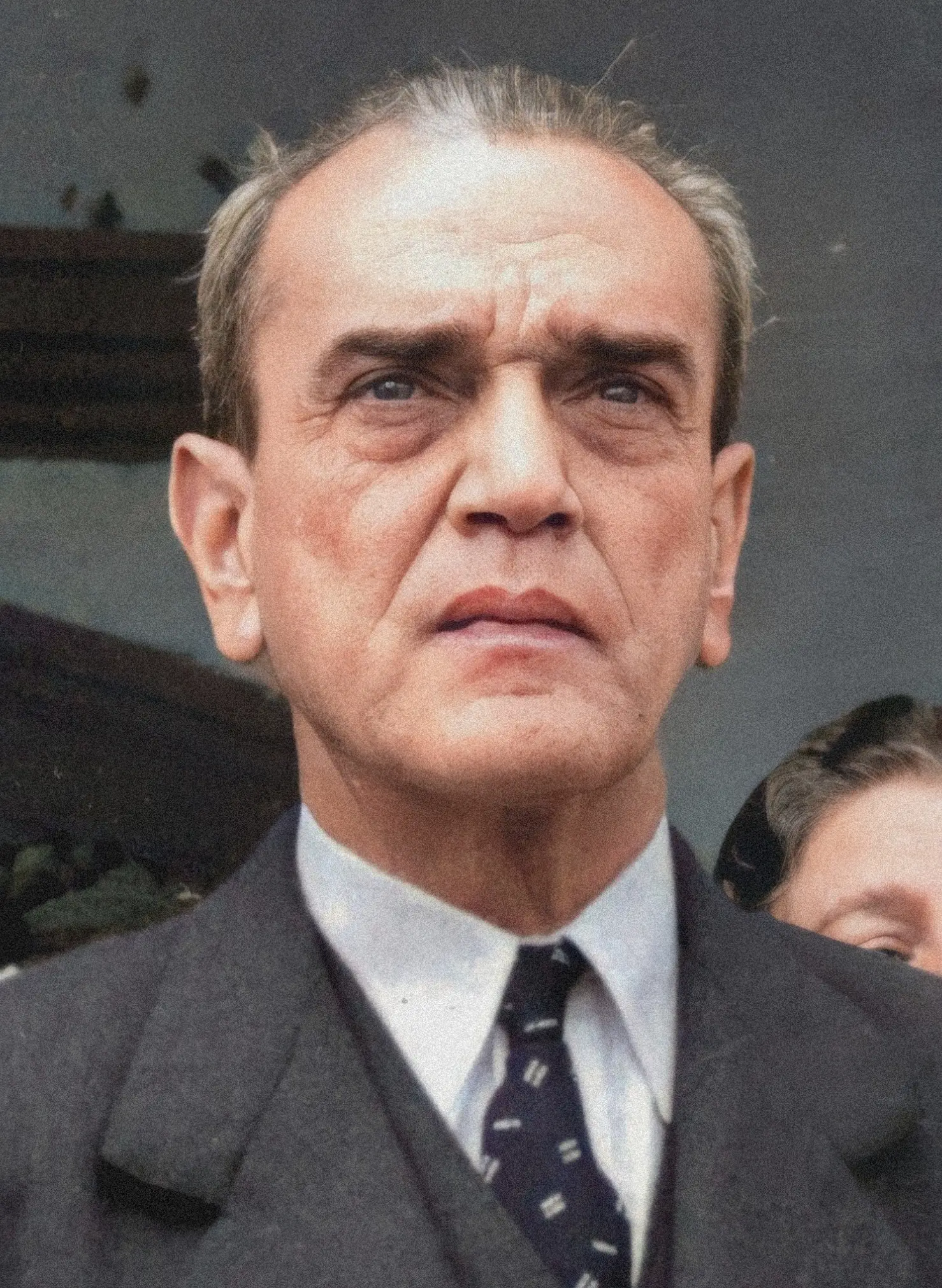
Adolfo Ruiz Cortines
 Mexico
Birthday
December 30, 1890
Birth Sign
Sagittarius
Birthplace
Veracruz, Mexico
Age
Died at 82
About
Adolfo Ruiz Cortines was a Mexican politician and military veteran who served as the President of Mexico from 1952 to 1958. A member of the Institutional Revolutionary Party (PRI), he was the last president to have participated in the Mexican Revolution, a credential that shaped his political identity and legacy. His administration is best remembered for granting women the right to vote in national elections, a constitutional change that marked a turning point in Mexican democracy.
Ruiz Cortines came to power during the period known as the Mexican Miracle, when the country experienced rapid economic growth and modernization. His government established institutions like the National Housing Institute and the National Nuclear Energy Commission, while also launching major public health, education, and infrastructure projects. He was described by contemporary observers as quiet and reserved, a contrast to the more flamboyant politicians of his era.
He died on December 3, 1973, in Mexico City, at the age of 82. Today, his legacy lives on through streets, institutions, and the annual Medalla Adolfo Ruiz Cortines awarded in Veracruz.
Early Life & Background
Adolfo Ruiz Cortines was born on December 30, 1890, in Veracruz, Mexico, though some sources cite 1889. Orphaned at a young age, he was raised by relatives in the port city. His formal education was limited, and he never attended university. As a young man, he worked as an accountant and in commercial positions, gaining practical skills that would later serve him in public office.
The outbreak of the Mexican Revolution in 1910 changed the course of his life. Ruiz Cortines joined the revolutionary forces and fought in the conflict, an experience that connected him to the political networks that would dominate Mexico for decades. His participation in the Revolution became a defining credential, and he remained the last Mexican president who had fought in that war.
After the Revolution, he entered government service, holding various administrative posts that provided a steady climb through the ranks. These early years, spent in relative obscurity, laid the groundwork for a political career that would eventually lead to the presidency.
Career Growth
Ruiz Cortines's political career advanced methodically through the Institutional Revolutionary Party (PRI). He served as Governor of Veracruz from 1944 to 1948, where he gained a reputation for efficient administration. Following his governorship, he was appointed Secretary of the Interior under President Miguel Alemán Valdés, a key position that made him a natural successor.
He was elected President of Mexico in July 1952 and assumed office on December 1 of that year. His presidency coincided with the economic expansion known as the Mexican Miracle. The landmark achievement of his term was the 1953 constitutional amendment granting women the right to vote in national elections, though women did not actually cast ballots until the 1958 elections. His administration also established the National Housing Institute and the National Nuclear Energy Commission, and launched projects in public health, education, and infrastructure that modernized the country.
Ruiz Cortines left office in 1958, having overseen a period of stability and growth. He remained a respected figure in Mexican politics until his death in 1973.
Career Timeline
Public Image & Style
Ruiz Cortines was known for his quiet and reserved demeanor, a sharp contrast to the more charismatic politicians of his time. US diplomatic records from his presidency described him as "usually quiet and reserved," and an art historian called him "a progressive who succeeded the corrupt government of Miguel Alemán." Public opinion in Mexico, as reflected in Reddit discussions, generally regards him favorably; one commenter noted, "He was a good president from 1952 to 1958, like all of them, with his nuances. There was economic prosperity and he cared about the people."
His image is that of a steady, unflashy administrator who prioritized institutional building over personal spectacle. Today, his name on streets and institutions across Mexico serves as a quiet reminder of his tenure.
Fame & Fandom (iFAMOUS Rankings)
Adolfo Ruiz Cortines remains a figure of historical significance rather than contemporary celebrity, with his legacy anchored in mid-twentieth-century Mexican governance. In the August 2026 evaluation by the iFANN Global Fame Engine, he is currently evaluated as unranked, meaning he does not hold a placement within the published Global Top 1,000 or any Top-100 scope list. This absence from the rankings reflects his status as a deceased political leader whose public presence has faded into the archives of state history rather than the active currents of modern pop culture. Unlike living entertainers who drive search traffic and media consumption, Ruiz Cortines commands attention only through institutional memory and civic commemoration. There is no formal fandom name associated with him, nor does a fanbase exist that engages in chart pushes, streaming campaigns, or birthday tributes. The interactions resembling fan behavior are strictly governmental and academic; the Mexican government continues to award the Medalla Adolfo Ruiz Cortines for public service, and his name adorns streets and communities across the nation. These acts represent state recognition rather than organic fan worship. Political discourse occasionally references his tenure regarding ethics and austerity, but these discussions belong to the realm of analysis rather than fandom. His mythology consists entirely of verified historical facts regarding his presidency and character, specifically his role in enfranchising women and his reputation as an austere administrator. He died in 1973, ending a life defined by public service rather than private wealth or cultural stardom. Consequently, the concepts of viral incidents, crowds shutting down streets, or on-stage moments do not apply to his narrative. Any stories told about him are biographical records of his political career, preserved in museums and official documents rather than retold as folklore.
Interesting Facts and Legends
Adolfo Ruiz Cortines holds the distinction of being the last Mexican president born in the 19th century and the final leader to have fought in the Mexican Revolution. His former residence in Veracruz now functions as the Casa-Museo Adolfo Ruiz Cortines, preserving the artifacts of his life. Streets and boulevards bearing his name appear in cities such as Acapulco, Hermosillo, and Xalapa. The state of Veracruz awards the Medalla Adolfo Ruiz Cortines to distinguished citizens, a honor recently received by poet Luis Antonio Rodríguez Pulido in 2021. Ceremonies in December 2024 marked the 135th anniversary of his birth, calculated from his 1889 arrival. Historical accounts describe him as an austere, graying man with a methodical manner who presided over significant economic changes during the Mexican Miracle era. A primary historical achievement cited in all sources is his role in enfranchising women through a constitutional amendment in 1953, though women did not actually vote until 1958. He died of a heart attack on December 4, 1973, at the age of 82, leaving behind a legacy of quiet administration and strict personal integrity.
Family & Personal Life
Adolfo Ruiz Cortines married María de las Mercedes López Páez in 1934. The couple had no children together. He was a widower in his later years, and no children from any relationship are documented in the historical record. Details about his parents and siblings are scarce, as he was orphaned at a young age and raised by relatives in Veracruz.
Notable Connections
Ruiz Cortines was closely associated with President Miguel Alemán Valdés, under whom he served as Secretary of the Interior and whom he succeeded in office. His wife, María de las Mercedes López Páez, was his lifelong partner. Photographer Mariana Yampolsky created a notable portrait of him, capturing his reserved demeanor.
Relationships & Dating History
Adolfo Ruiz Cortines married María de las Mercedes López Páez in 1934. The couple had no children together. They remained married until her death, after which Ruiz Cortines lived as a widower. He did not remarry and no other public relationships are documented. At the time of his death in 1973, he was a widower.
- MarriedMaría de las Mercedes López Páez1934 - presentThey married in 1934 and had no children together.
Death & Aftermath
Died
December 3, 1973 (aged 82)
Death Place
Mexico City, Mexico
Cause of Death
Heart attack
Adolfo Ruiz Cortines, the austere and methodical forty-seventh President of Mexico, passed away in Mexico City on Monday, December 3, 1973. At eighty-two years of age, the former military veteran and politician succumbed to a heart attack, marking the end of a life defined by quiet governance rather than public spectacle. The death concluded a period of stability for the nation that he had helped steer during the Mexican Miracle. Immediate reaction to the news included obituaries in major international publications such as The New York Times, which highlighted his constitutional achievement of granting women the right to vote in national elections.
Historical assessments from peers described him as a leader who maintained a steady course while caring about the people, contrasting his tenure with the corruption of his predecessor. Posthumously, his legacy persists primarily through his political reforms, particularly the enfranchisement of Mexican women, which remains a central point in summaries of his presidency. A town in Sinaloa, Mexico, bears his name, serving as a geographical dedication to his memory.
Net Worth (Estate Value)
$1 Million
iFANN Editorial Team estimate
As a historical figure who passed away in 1973, Adolfo Ruiz Cortines's personal net worth is not well documented, and his estate's current value is not a matter of public record. During his lifetime, he was a career politician and civil servant, not a businessman, so his earnings came from government salaries and pensions. His presidency during the Mexican Miracle era was marked by economic growth, but he personally did not accumulate significant wealth from his time in office. His legacy, however, has financial dimensions through commemorative institutions and public works named in his honor. The Casa-Museo in Veracruz operates as a cultural site, and the Medalla Adolfo Ruiz Cortines is awarded annually, though these do not generate notable revenue for an estate. Per iFANN's editorial analysis, the estimated net worth of $1 Million reflects his modest public service background rather than accumulated private wealth.
Awards & Accolades
View 4 records, honours and achievementsKnown For
President of Mexico
1952-1958 · President
Governor of Veracruz
1944-1948 · Governor
Secretary of the Interior
1948-1952 · Secretary
Keywords
Sources
Quick Facts
- Profession
- politician, military personnel
- Born
- December 30, 1890
- Birthplace
- Veracruz, Mexico
- Died
- December 3, 1973
- Death Place
- Mexico City
- Gender
- Male
- Birth Sign
- Sagittarius
Personal Details
- Full Name
- Adolfo Ruiz Cortines
- Spouse
- María de las Mercedes López Páez
Frequently Asked Questions
What did Adolfo Ruiz Cortines do?
How old was Adolfo Ruiz Cortines when he died?
Did Adolfo Ruiz Cortines have children?
What were Adolfo Ruiz Cortines's main contributions to Mexico?
Who was Adolfo Ruiz Cortines?
Similar People
Join the community
fans discussing