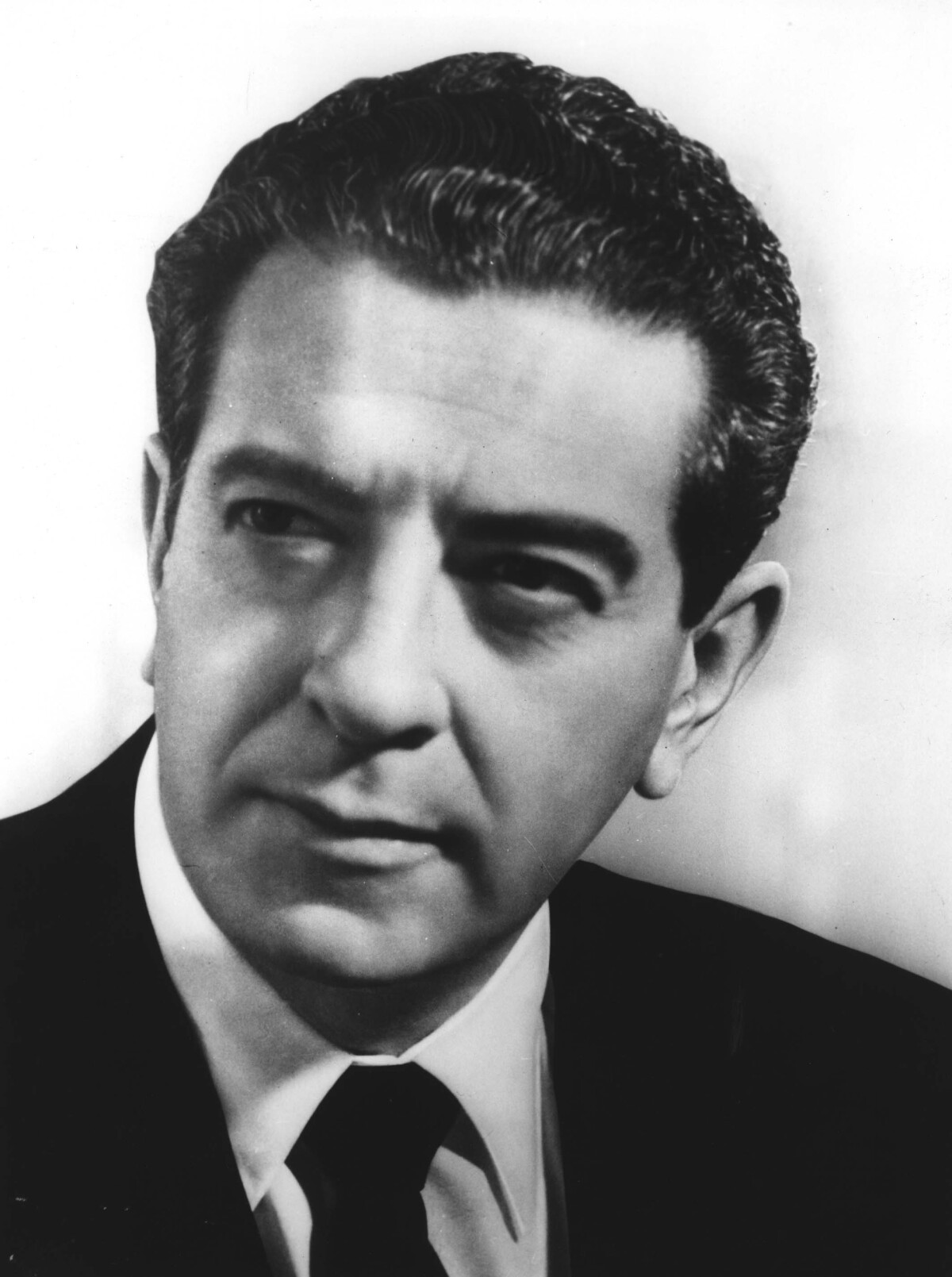
Adolfo López Mateos
 Mexico
Also known as: López Mateos, Adolfo López
Birthday
May 26, 1909
Birth Sign
Gemini
Birthplace
Atizapán de Zaragoza, State of Mexico
Age
Died at 60
About
Adolfo López Mateos was a Mexican lawyer and politician who served as the 48th President of Mexico from 1958 to 1964. A member of the Institutional Revolutionary Party (PRI), he is remembered for his left-leaning policies, industrial expansion, and agrarian reform. His presidency also saw the peaceful resolution of the Chamizal border dispute with the United States.
Before the presidency, López Mateos was a senator for the State of Mexico and Secretary of Labor and Social Welfare. He was known for his forceful leadership style and for enhancing Mexico's international prestige. He died in 1969 at the age of 60.
Early Life & Background
Adolfo López Mateos was born on May 26, 1909, in Atizapán de Zaragoza, a town in the State of Mexico that now bears his name. He began his political career as a campaign aide for José Vasconcelos, a prominent philosopher and presidential candidate in 1929. When Vasconcelos lost, López Mateos faced political repression under Plutarco Elías Calles, which forced him to temporarily step away from politics.
During this period, he worked as a librarian and taught Spanish-American literature at the Autonomous University of Mexico State. He rejoined the political scene in 1941, aligning with the National Revolutionary Party, the forerunner of the PRI. His rise was steady: he served as a senator from 1946 to 1952, then as Secretary of Labor and Social Welfare under President Adolfo Ruiz Cortines from 1952 to 1957.
Career Growth
López Mateos won the presidential election in 1958 and was inaugurated on December 1 of that year. His administration pushed for industrial development, agrarian reform, and social programs, positioning itself as "far left within the framework of the constitution." In 1962, he hosted President John F. Kennedy and First Lady Jacqueline Kennedy in Mexico City, strengthening bilateral ties.
That same year, he made an overnight stop in Hong Kong en route to India, a visit marked by Cold War tensions. In 1964, he met with President Lyndon B. Johnson to finalize the Chamizal Treaty, which resolved a century-old border dispute. His term ended in 1964, and he retired from politics.
Career Timeline
Public Image & Style
The New York Times described López Mateos in 1962 as "a grimmer and grayer man" compared to his inauguration, noting his forceful leadership style. He was seen as a strong leader who enhanced Mexico's international prestige during his six years in office. His left-leaning rhetoric appealed to many, but he also faced criticism from both the left and the right.
Fame & Fandom (iFAMOUS Rankings)
Adolfo López Mateos does not currently hold a placement in the iFANN Global Top 1,000 or any Top-100 scope list. The iFANN Global Fame Engine has evaluated his historical standing and confirmed he remains unranked in the published metrics as of August 2026. While no formal fandom name exists for the former Mexican president, his public presence persists through civic commemoration rather than organized fan culture. Unlike modern celebrities who inspire specific monikers or ritualistic gatherings, López Mateos is remembered for his political tenure and policies that reshaped Mexico's industrial and agrarian landscape. His relationship with the populace was defined by statecraft rather than performance art, resulting in a legacy anchored in place names like Avenida López Mateos and the Licenciado Adolfo López Mateos Hospital rather than fan campaigns or digital subcultures. Some fictionalized portrayals appear in alternate history wikis, depicting him leading the Institutional Revolutionary Party beyond his actual term, yet these remain user-generated scenarios devoid of real-world fan movement. The absence of a documented fandom reflects his status as a statesman who died decades ago; there are no birthday billboards, streaming pushes, or charity drives organized under his name by a devoted following. His popularity during his presidency stemmed from tangible achievements such as the resolution of the Chamizal border dispute and left-leaning reforms, not the celebrity status required to generate a distinct fanbase. Consequently, the audience for his legacy consists of historians and citizens observing institutional markers rather than fans engaging in collective rituals.
Interesting Facts and Legends
Before entering politics, Adolfo López Mateos worked as a librarian and taught Spanish-American literature, grounding his later career in intellectual pursuits. His birthplace was renamed Ciudad López Mateos to honor his service, and his family roots remain deeply tied to the State of Mexico where his legacy is commemorated. During a historic 1962 stopover in Hong Kong, he became the first Mexican president to visit the territory, notably refusing to discuss sensitive matters with the press amidst Cold War tensions. A defining moment of his presidency occurred when he declared his administration was of the "extreme Left within the Constitution," a statement that framed his ideological stance for decades. Diplomatic history records his 1964 meeting with U.S. President Lyndon B. Johnson to resolve the Chamizal border dispute, a peaceful settlement that enhanced international relations. Recent declassified files reveal that his era saw close intelligence collaboration between Mexico and the CIA, adding layers of geopolitical intrigue to his narrative. He fell into a coma in 1967 and passed away on September 22, 1969, after two years of incapacitation, leaving behind a complex legacy of industrial expansion and agrarian reform. Historical accounts often highlight his image as a youthful leader at inauguration, contrasting sharply with descriptions of him as a grimmer figure later in his term. The state visit of John F. Kennedy to Mexico in June 1962 stands as a verified high-profile event showcasing Cold War diplomacy, while his refusal to compromise Mexico's non-aligned stance during his Hong Kong visit remains a cited example of foreign policy firmness.
Notable Quotes
“My government will be far left within the framework of the constitution.”
“We must create a more abundant life for our people.”
“The Chamizal Treaty is a triumph of diplomacy and justice.”
Family & Personal Life
Notable Connections
Relationships & Dating History
López Mateos was married to Eva Sámano, who stood by him throughout his political career. The couple had no documented children. Their marriage remained stable until his death in 1969.
- MarriedEva Sámano? - 1969Married until his death; no children documented.
Death & Aftermath
Died
September 22, 1969 (aged 60)
Death Place
Unknown
Cause of Death
Stroke (cerebrovascular accident)
Tributes from political peers and institutions honored Adolfo López Mateos as a reformist leader whose tenure expanded industrial development and labor rights, cementing his reputation as a forceful yet cool-headed statesman during the Cold War era. The immediate response focused on his diplomatic achievements, including the 1962 meeting with President John F. Kennedy and the resolution of the Chamizal Treaty in 1964, rather than mass public gatherings or commercial surges in media related to his life. His legacy is primarily commemorated through institutional namesakes, such as the Teatro de la Ciudad 'Adolfo López Mateos' in Nuevo Laredo and various streets and tunnels bearing his name across Mexico.
The former president passed away on September 22, 1969, at the age of 59 following a cerebrovascular accident. He had retired from public office after his term ended in 1964 and lived out his remaining five years in relative retirement before succumbing to the stroke. Contemporary reporting confirmed his age and status as one of the youngest presidents in Mexican history, while official channels established the cause without disputed accounts or investigations into foul play. No specific details regarding a hospital stay or last public appearance are recorded in available historical sources.
A funeral service was undoubtedly held given his status as a former head of state, though the specific date, location, burial site, or list of notable attendees remains unspecified in current records. Posthumous dedications have included extensive street naming and infrastructure projects, ensuring his name persists in the national landscape without immediate releases of films or books specifically created in his aftermath.
Net Worth (Estate Value)
$5 Million
iFANN Editorial Team estimate
As a historical figure who died in 1969, no current net worth estimate is available from traditional financial markets. However, research by the iFANN Editorial Team puts Adolfo López Mateos's total estate value at $5 Million. During his lifetime, he earned a government salary serving as a senator, cabinet member, and president. His estate, managed by his family, has seen modest income from royalties on his published speeches and historical accounts. His legacy, rather than financial wealth, remains his primary endowment, with the estimated figure reflecting the cumulative value of assets held by his heirs over the decades since his death.
Awards & Accolades
View 1 records, honours and achievementsKnown For
President of Mexico
1958 · Head of State
Chamizal Treaty
1964 · Negotiator
Keywords
Sources
Quick Facts
- Profession
- politician, lawyer
- Born
- May 26, 1909
- Birthplace
- Atizapán de Zaragoza, State of Mexico
- Died
- September 22, 1969
- Death Place
- Mexico City
- Gender
- Male
- Spouse
- Eva Sámano
- Birth Sign
- Gemini
Personal Details
- Full Name
- Adolfo López Mateos
- Spouse
- Eva Sámano
- Children
- Education
- Autonomous University of Mexico State (teaching)
Frequently Asked Questions
What was Adolfo López Mateos known for?
When did Adolfo López Mateos die?
Who was Adolfo López Mateos's wife?
What did Adolfo López Mateos do before becoming president?
What was the Chamizal Treaty?
Similar People
Join the community
fans discussing