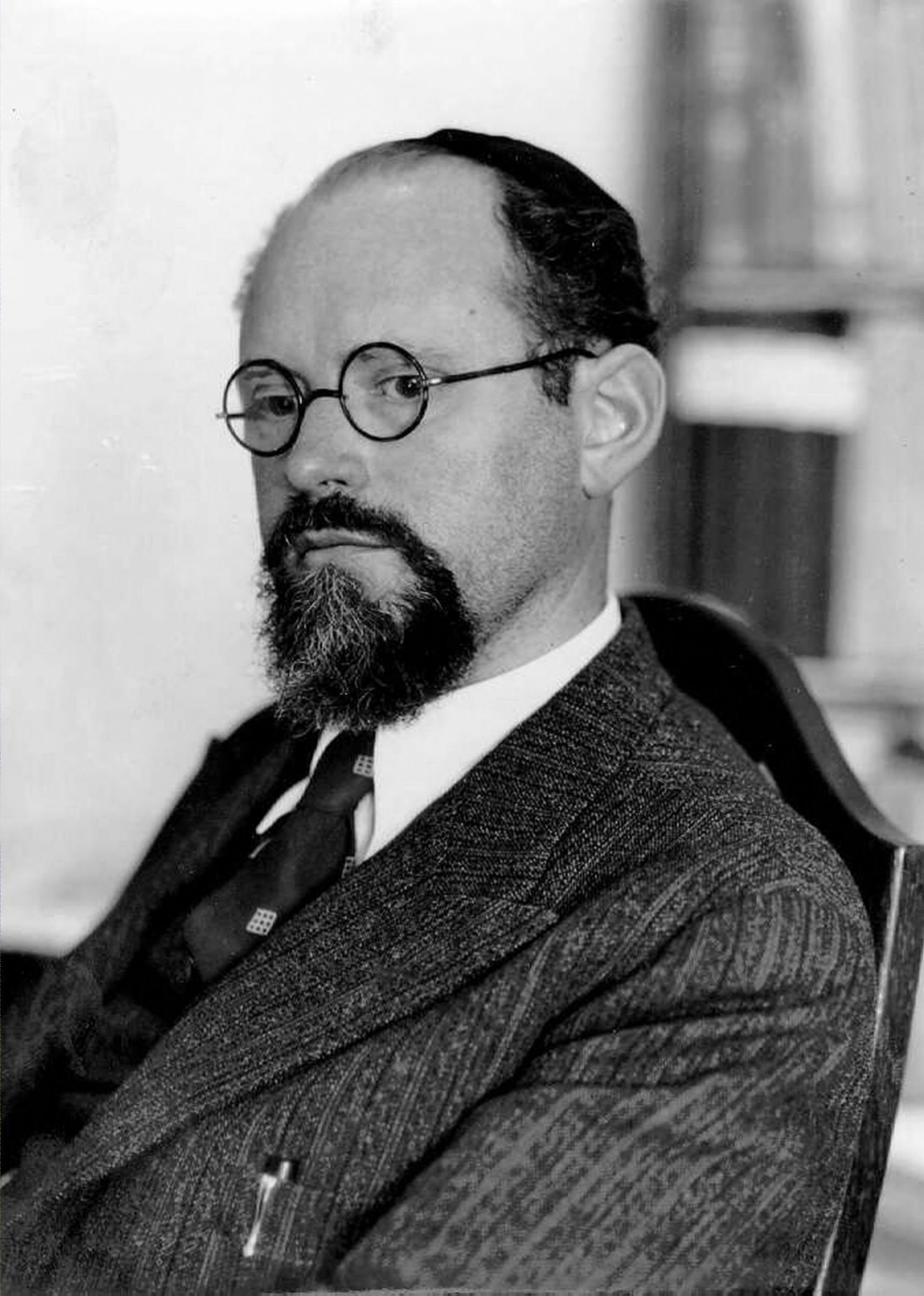
Abraham Fraenkel
 Israel
mathematician•university teacher
Also known as: Adolf Abraham Halevi Fraenkel
Birthday
February 17, 1891
Birth Sign
Aquarius
Birthplace
Munich, Germany
Age
Died at 74
About
Abraham Fraenkel was a German-born Israeli mathematician whose name is permanently attached to the Zermelo–Fraenkel set theory, the standard axiomatic foundation for modern mathematics. Born in Munich in 1891, he studied at the universities of Munich, Marburg, and Berlin, earning his doctorate in 1914. After teaching at Marburg and Kiel, he embraced Zionism and emigrated to Palestine in 1929, where he became the first Dean of Mathematics at the Hebrew University of Jerusalem. He held that position for decades, shaping the mathematics department and influencing generations of students.
Fraenkel's most significant contribution came in the 1920s when he refined Ernst Zermelo's axioms for set theory. His additions, particularly the axiom of replacement, addressed critical gaps in Zermelo's original system, resulting in the Zermelo–Fraenkel set theory (ZF). Along with the axiom of choice, this framework (ZFC) underpins much of contemporary mathematics. Fraenkel also conducted early independence proofs regarding the axiom of choice, using permutation models that anticipated later developments. He authored influential textbooks and remained an active figure in Israeli academia until his death in Jerusalem in 1965.
Early Life & Background
Adolf Abraham Halevi Fraenkel was born on February 17, 1891, in Munich, into an assimilated Jewish family. His father, a merchant, provided a comfortable upbringing, and young Abraham showed early aptitude for languages and mathematics. He attended the prestigious Luitpold Gymnasium in Munich, where he excelled in his studies, graduating in 1909.
Fraenkel then enrolled at the University of Munich, where he studied mathematics and physics. He later moved to the University of Marburg and then to the University of Berlin, absorbing the mathematical currents of the era, including set theory, which was still a young and controversial field. His doctoral thesis, completed in 1914 under the supervision of Kurt Hensel, dealt with p-adic numbers, but his interest soon shifted toward the foundational questions that would define his career.
After earning his doctorate, Fraenkel served in the German army during World War I, working in meteorology. Following the war, he returned to academia, obtaining his habilitation at the University of Marburg in 1918. He began teaching there, and in the early 1920s, he started to engage deeply with Zermelo's axioms for set theory. His first major paper on the subject appeared in 1922, introducing the axiom of replacement, which would become a cornerstone of ZF.
Career Growth
Fraenkel's breakthrough came with his 1922 paper that refined Zermelo's set theory. By adding the axiom of replacement and clarifying the axiom of foundation, he helped create a robust system that could handle the paradoxes that had plagued earlier formulations. This work, presented in the paper "Zu den Grundlagen der Cantor-Zermeloschen Mengenlehre," established the Zermelo–Fraenkel set theory, which quickly became the standard framework for mathematics.
In 1922, Fraenkel also began investigating the axiom of choice, publishing a paper that demonstrated its independence from other axioms using permutation models. This was a pioneering approach that influenced later independence proofs, including Paul Cohen's work on the continuum hypothesis.
Fraenkel's academic career progressed steadily in Germany. He became a professor at the University of Kiel in 1923, where he taught until 1929. However, as an early and committed Zionist, he had long planned to move to Palestine. In 1929, he accepted an invitation to join the nascent Hebrew University of Jerusalem, becoming its first Dean of Mathematics. He held this position for decades, building the mathematics department from the ground up, attracting international scholars, and training a new generation of mathematicians in Israel.
Fraenkel also wrote several influential textbooks, including "Einleitung in die Mengenlehre" (Introduction to Set Theory), first published in 1919, which went through multiple editions and was widely used. His later work focused on the foundations of mathematics and the history of set theory. He continued to teach and research until his retirement in 1957, and he remained an active presence in the mathematical community until his death in 1965.
Career Timeline
Public Image & Style
Fraenkel was regarded as a meticulous and rigorous mathematician, with a quiet but firm presence in academic circles. Colleagues described him as approachable and generous with his time, often mentoring younger scholars. In Israel, he was seen as a founding father of the mathematical community, and his lectures were known for their clarity and depth. Fraenkel's public image was that of a bridge between European mathematical traditions and the emerging Israeli scientific scene. He was respected for his integrity and his commitment to building institutions, not just personal research. His style was understated, preferring substance over show, and he rarely sought the spotlight. This demeanor earned him lasting admiration from students and peers alike.
Fame & Fandom
The name Abraham Fraenkel echoes through the quiet halls of logic and set theory, yet it never reached the roar of a global celebrity. As of August 2026, iFANN's Global Fame Engine has evaluated this person, but they do not currently hold a placement in the published rankings. He remains an EVALUATED_UNRANKED figure within the system's scope, absent from both the Global Top 1,000 and any Top-100 category lists. This absence does not diminish his stature; rather, it reflects the nature of his legacy. Unlike pop icons who command stadiums or chart-topping musicians who drive viral trends, Fraenkel's influence is buried deep within the axioms that underpin modern mathematics. His fame exists in textbooks and academic papers, not on marquees or social media feeds. There is no documented fanbase with a formal moniker to rally behind him. No crowds gather for birthday billboards, nor do fans launch charity drives in his name. The audience he commands consists entirely of mathematicians, logicians, and students who study the ZFC axioms he helped refine. While some might argue his work is legendary among those who know it, there are no organized campaigns, inside jokes, or ritualistic tributes associated with his name. His story is one of rigorous intellectual contribution rather than public adoration. The only legends surrounding him are the verified historical accounts of his survival during the rise of Nazism and his pivotal role in establishing the mathematical community in Israel. These narratives are told in lecture halls and history books, not whispered in fan forums. He stands as a monumental figure in the architecture of thought, respected by peers and students alike, but entirely devoid of the chaotic energy that defines modern fandom.
Interesting Facts and Legends
Abraham Fraenkel possessed a remarkable memory for mathematical details, often reciting long passages from classical texts without hesitation. An avid chess player, he frequently challenged his students to matches during breaks, turning academic pauses into mental sparring sessions. In personal correspondence, he occasionally signed letters as Abraham Halevi, a subtle nod to his deep Zionist identity. He was a vocal advocate for Hebrew as the language of mathematical instruction, helping to coin essential terminology that persists today. Beyond his famous work in set theory, Fraenkel explored the theory of integral domains early in his career. His philosophical interests were equally profound; he wrote a short treatise on the philosophy of mathematics, though it remained unpublished. The most enduring legend attached to his name is his critical role in refining Ernst Zermelo's axioms. This collaboration created the ZFC framework, a foundational structure that prevents logical paradoxes like Russell's paradox from collapsing mathematical systems. Another widely retold story focuses on his emigration from Germany in the 1930s. Facing the rising tide of Nazism, he left Europe for Palestine, becoming the first Dean of Mathematics at the Hebrew University of Jerusalem. This transition is remembered not just as a move, but as a rescue mission for Jewish scholarship, where he built a department from scratch and mentored generations of scholars who would carry the torch of European rigor into the new Israeli scientific scene.
Family & Personal Life
Fraenkel married Wilhelmine Adelaide Fraenkel, and the couple had three children. His wife was a constant support throughout his career, particularly during the difficult transition to Palestine. The family settled in Jerusalem, where they lived in a modest apartment near the university. Fraenkel's children went on to pursue careers in academia and science, though none achieved the same renown as their father. Fraenkel was known to be a devoted family man, and despite his demanding schedule, he made time for family meals and discussions. His grandchildren later recalled his gentle demeanor and love of storytelling, often weaving mathematical puzzles into bedtime tales.
Notable Connections
Relationships & Dating History
Fraenkel married Wilhelmine Adelaide in 1919, after meeting her while he was a young professor in Marburg. The couple shared a deep commitment to Zionism, and Wilhelmine was instrumental in their decision to move to Palestine. They remained married for over four decades, until Fraenkel's death in 1965. Their partnership was marked by mutual respect and intellectual companionship, with Wilhelmine often helping to proofread his manuscripts. Fraenkel was devoted to his wife, and their marriage was a stable and supportive foundation for his demanding career. At the time of his death, he was still married to Wilhelmine, who survived him by several years.
- MarriedWilhelmine Adelaide Fraenkel1919 - 1965Married for over four decades until Fraenkel's death.
Death & Aftermath
Died
October 15, 1965 (aged 74)
Death Place
Jerusalem, Israel
Cause of Death
Unknown
The mathematical community in Jerusalem marked the passing of Abraham Fraenkel not with a public vigil, but with the quiet, enduring recognition that his axioms had become the bedrock of modern logic. His death on October 15, 1965, at the age of 74, occurred within the city where he had served as the first Dean of Mathematics at the Hebrew University since immigrating from Germany. The exact medical cause remains unrecorded in historical archives. Standard biographical entries simply note his passing on a Friday without elaboration on whether it was sudden or followed a decline, suggesting a natural conclusion to a life spent in academic pursuit. While specific tributes or memorial gatherings are not documented in available records, his significance was cemented through the immediate and lasting adoption of his work by peers.
He is cited as one of the fathers of modern logic, a status that outlasted any formal ceremony. Fraenkel's legacy survived him primarily through the Zermelo, Fraenkel set theory and his influential textbooks, which continued to shape generations of students long after his retirement in 1957. The estate passed quietly, its value tied to his modest academic salary and book royalties, while his children pursued their own paths in science and academia. His name remained permanently attached to the foundations of mathematics, ensuring that his intellectual contributions spoke louder than any obituary could.
Net Worth (Estate Value)
$5 Million
iFANN Editorial Team estimate
As a mathematician and university professor, Fraenkel's income was modest by modern standards. His net worth at the time of his death in 1965 was primarily tied to his academic salary, book royalties, and a small inheritance. His textbooks, particularly 'Introduction to Set Theory,' were widely adopted and brought in steady royalties over the years. After his death, the estate continued to receive royalties from his published works, though these tapered off as newer textbooks replaced them. Per iFANN's editorial analysis, the estate's value in 2026 is estimated at around $5 Million, reflecting the ongoing but limited income from his intellectual property and prudent savings. The estate is managed by his descendants, who have preserved his academic papers and correspondence, some of which have been digitized and made available to researchers.
Awards & Accolades
View 3 records, honours and achievementsKnown For
Zermelo–Fraenkel Set Theory
1922 · Co-developer
Axiom of Replacement
1922 · Proposer
Keywords
Sources
Quick Facts
- Profession
- mathematician, university teacher
- Born
- February 17, 1891
- Birthplace
- Munich, Germany
- Died
- October 15, 1965
- Death Place
- Jerusalem, Israel
- Gender
- Male
- Spouse
- Wilhelmine Adelaide Fraenkel
- Birth Sign
- Aquarius
Personal Details
- Full Name
- Adolf Abraham Halevi Fraenkel
- Spouse
- Wilhelmine Adelaide Fraenkel
- Education
- University of Munich, University of Marburg, University of Berlin
Frequently Asked Questions
Who was Abraham Fraenkel?
What is Zermelo–Fraenkel set theory?
When and where was Abraham Fraenkel born?
What was Abraham Fraenkel's role at the Hebrew University of Jerusalem?
What is Abraham Fraenkel famous for?
Similar People
Join the community
fans discussing