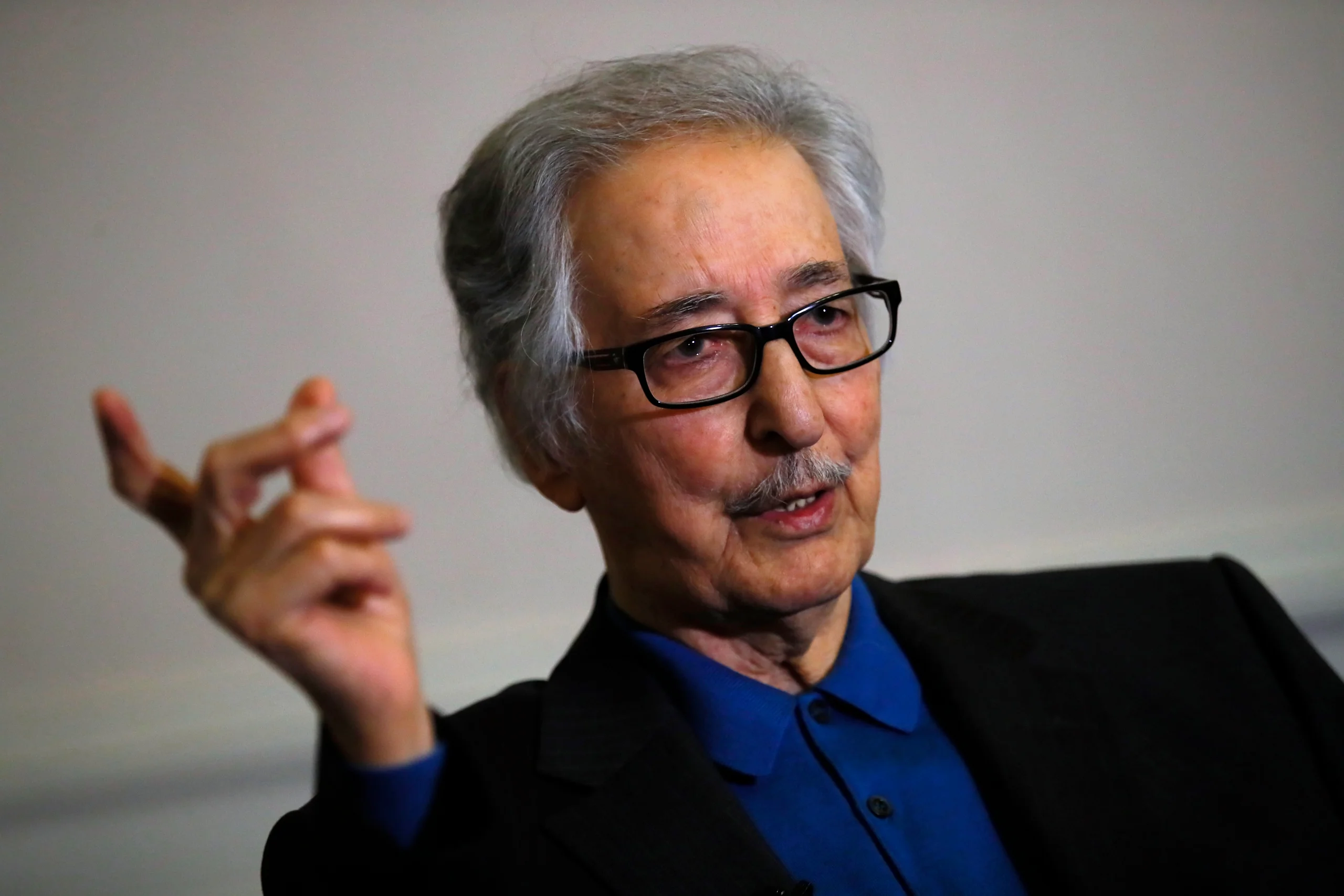
Abolhassan Banisadr
 Iran
IranAlso known as: Abolhassan Bani Sadr, Abolhassan Banisadr
Birthday
March 22, 1933
Birth Sign
Aries
Birthplace
Hamadan, Iran
Age
Died at 88
About
Abolhassan Banisadr was an Iranian politician, economist, and writer who served as the first president of the Islamic Republic of Iran. He was elected in January 1980 with nearly 79 percent of the vote, but his presidency lasted only 16 months before he was impeached and forced into exile. His brief tenure was defined by power struggles with the clerical establishment and the outbreak of the Iran-Iraq War, which ultimately led to his downfall.
After fleeing to France in 1981, Banisadr became a persistent critic of the regime he helped establish. He co-founded the National Council of Resistance of Iran and spent four decades writing and speaking against the government, particularly targeting Supreme Leader Ali Khamenei. His critiques extended to the 2009 Green Movement protests, which he analyzed in depth. He died in Paris on October 9, 2021, at the age of 88, leaving a complex legacy as both a revolutionary and a dissident.
Early Life & Background
Born in Hamadan in 1933, Banisadr grew up in a religious household. His father was a Shia cleric who maintained a close relationship with Ayatollah Ruhollah Khomeini, a connection that would shape his future. He studied law, theology, and sociology at the University of Tehran, where he became involved in underground opposition to the Shah's regime. His activism led to two imprisonments, and in the 1960s he moved to France to pursue a doctorate in economics at the Sorbonne. While in Paris, he deepened his ties with Khomeini, meeting him for the first time in 1972 at his father's funeral. Banisadr's economic theories, which emphasized self-reliance and Islamic principles, caught the attention of the exiled ayatollah, and he became one of Khomeini's trusted advisors. He returned to Iran in February 1979, aboard the same plane as Khomeini, shortly after the Shah fled the country.
Career Growth
Banisadr's political ascent was rapid. In late 1979, he briefly served as minister of foreign affairs in the interim government, but his main prize came on January 25, 1980, when he was elected president with 78.9 percent of the vote. He was inaugurated on February 4, but his presidency was fraught from the start. He clashed with the clerical establishment over economic policy and the direction of the revolution, and the Iran-Iraq War, which began in September 1980, further destabilized his rule. He narrowly survived two helicopter crashes near the Iraqi border in August and September of that year, which many saw as attempts on his life. The power struggle culminated in his impeachment by parliament on June 21, 1981, and his dismissal by Khomeini the next day. Banisadr fled to France, where he co-founded the National Council of Resistance of Iran with Massoud Rajavi. From exile, he wrote extensively, including analyses of the 2009 Green Movement protests, and remained a vocal opponent of the regime until his death.
Career Timeline
Public Image & Style
In Iran, Banisadr is remembered as a controversial figure: a revolutionary who turned against the system. In the West, he was often seen as a moderate voice within the Islamic Republic, though his later years were marked by bitter opposition. His public image was that of an intellectual and a dissident, more comfortable with economic theory than political infighting. He was known for his calm demeanor and measured speech, which contrasted with the fiery rhetoric of many of his contemporaries. His critiques of the regime, particularly his analysis of the 2009 protests, earned him respect among opposition figures and scholars.
Fame & Fandom
Abolhassan Banisadr never cultivated a fanbase in the manner of pop stars or athletes. His supporters were political allies and constituents who rallied behind his vision for a moderate Islamic republic rather than fans drawn by charisma or celebrity. There is no formal name for this group, nor are there organized campaigns, ritualistic gatherings, or viral moments that define a cultural following. The legends surrounding him are not myths but historical records: his election as the first president of the new regime, his tense management of the hostage crisis, and his dramatic flight into exile after impeachment. He died in Paris in 2021, ending a forty-year exile as a polarizing dissident rather than a beloved icon. Despite the absence of a traditional fandom, his standing in global history remains significant. According to the iFANN Global Fame Rankings, he holds specific positions among notable figures from his region. He is currently ranked as the 35th most famous person from Iran, a placement holding steady from the previous cycle within the broader scope of global attention tracked across media coverage, search, and consumption signals worldwide.
Interesting Facts and Legends
Banisadr was known for his distinctive economic theories, which he called "Islamic economics," and he wrote several books on the subject. An accomplished chess player, he frequently employed chess metaphors in his political writings. A lesser-known quirk involved his habit of carrying a small notebook to jot down ideas throughout his life. Despite holding high office, he preferred simple living and was known to cook his own meals. After his impeachment, he referred to his removal as a "creeping coup d'état," a phrase he used in many later writings. Historical accounts highlight his tenure during the 444-day U.S. embassy hostage crisis, where he attempted diplomatic solutions against pressure from hardline clerics. The defining incident of his public life remains his flight from Iran to Paris in June 1981 to avoid arrest, marking the end of the moderate faction's influence in the early Islamic Republic.
Notable Quotes
“I have always defended freedom in the face of new tyranny and oppression in the name of religion.”
“The revolution was a dream, but the reality became a nightmare.”
“I was removed not by the will of the people, but by a creeping coup d'état.”
“The Islamic Republic has betrayed the very principles of the revolution.”
Family & Personal Life
Banisadr was married to Ozra Banisadr, who stood by him through his presidency and exile. The couple had two daughters and a son. His family remained close-knit, and after his death, they released a statement saying he had "defended freedom in the face of new tyranny and oppression in the name of religion." His father, a Shia cleric, was a formative influence, and his relationship with Khomeini was partly forged through his father's connections.
Notable Connections
Banisadr's political life was intertwined with several key figures. He was closely associated with Ayatollah Ruhollah Khomeini, who initially supported him but later dismissed him. Massoud Rajavi, leader of the People's Mujahedin of Iran, was his ally in exile, and together they founded the National Council of Resistance of Iran. He also drew inspiration from Mohammad Mosaddegh, Iran's prime minister in the 1950s, whose nationalist policies influenced his own economic thinking.
Relationships & Dating History
Banisadr married Ozra Banisadr in the 1950s, and the couple remained together for over six decades. Ozra was a constant presence throughout his political career and exile, and she survived him. They had two daughters and a son together. Their marriage was described as supportive and stable, with Ozra often shielding him from political pressures at home.
- MarriedOzra Banisadr1955 - 2021Married for over 60 years, had two daughters and a son.
Death & Aftermath
Died
October 9, 2021 (aged 88)
Death Place
Paris, France
Cause of Death
Long illness
Abolhassan Banisadr, the first president of the Islamic Republic of Iran, died on October 9, 2021. Reports state he passed away at the age of 88 in a hospital in Paris, France, after living in exile for over 40 years. While the exact date is confirmed, the specific name of the Paris hospital was not detailed in the provided search results. Regarding the cause of death, sources uniformly attribute his passing to a long illness but do not provide a specific medical diagnosis or mention an autopsy.
Public reaction included immediate tributes from various media outlets and political figures who recognized his historical significance. The Guardian described him as a thoughtful, French-educated, Islamic intellectual who sought an Islamic government based on freedom and social justice. The New York Times noted his attempt to resist the currents of Islamic radicalism before being forced out of office. Tributes appeared limited to obituaries and commentary within international journalism rather than large-scale public gatherings.
The funeral or memorial details are not explicitly covered in the provided search results. Given that Banisadr lived in exile in France and died in a Paris hospital, it is highly probable that his funeral took place in France; however, the specific date, location, whether the service was public or private, notable attendees, and the method of disposition were not found in the text snippets. His legacy remains defined by his role as the first president of the Islamic Republic and his subsequent life in exile.
Net Worth (Estate Value)
$1 Million
iFANN Editorial Team estimate
Given his long exile and political career, Banisadr's financial situation remained modest throughout his later years. He earned income primarily from his writings, including books and articles, and from various speaking engagements. He also received support from the National Council of Resistance of Iran. Per iFANN's editorial analysis, his estate was valued at approximately $1 Million upon his death, comprising mainly his Paris apartment and royalty earnings from his publications. His family continues to manage his literary legacy.
Awards & Accolades
Known For
President of Iran
1980 · First President of the Islamic Republic of Iran
National Council of Resistance of Iran
1981 · Co-founder
Political writings
1981-2021 · Author and critic
Keywords
Sources
Quick Facts
- Profession
- Politician, Economist, Writer
- Born
- March 22, 1933
- Birthplace
- Hamadan, Iran
- Died
- October 9, 2021
- Death Place
- Paris, France
- Gender
- Male
- Spouse
- Ozra Banisadr
- Children
- Two daughters, one son
- Education
- University of Tehran; Sorbonne University
- Presidency
- January 25, 1980 - June 22, 1981
Personal Details
- Full Name
- Abolhassan Banisadr
- Spouse
- Ozra Banisadr
- Children
- Two daughters and one son
- Education
- University of Tehran; Sorbonne University
Frequently Asked Questions
Who was Abolhassan Banisadr?
When and where was Abolhassan Banisadr born?
When and where did Abolhassan Banisadr die?
What was Abolhassan Banisadr's role in the Iranian Revolution?
Why was Abolhassan Banisadr impeached?
Social Media
Similar People

Join the community
fans discussing