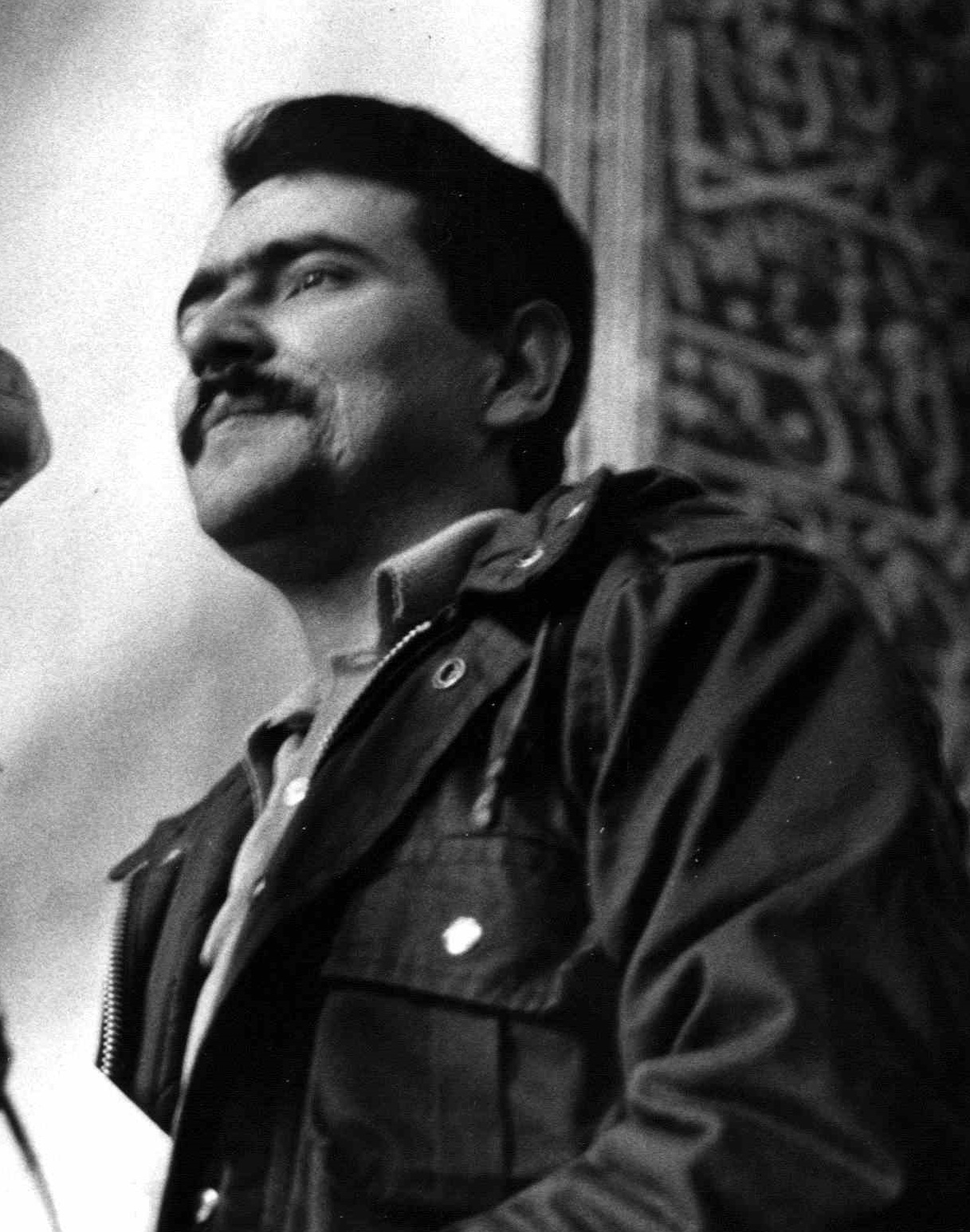
Massoud Rajavi
 Iran
politician•partisan•military leader
Birthday
August 18, 1948
Birth Sign
Leo
Birthplace
Tabas, Iran
Age
78 years old
About
Massoud Rajavi was an Iranian politician and revolutionary who led the People's Mojahedin Organization of Iran (MEK) and later the National Council of Resistance of Iran (NCRI). Born in Tabas in 1948, he became the face of the armed opposition to the Islamic Republic, blending guerrilla tactics with a vision for a democratic, secular Iran. His leadership defined the MEK for over two decades, and his legacy remains deeply polarizing.
Rajavi took command of the MEK in 1979, steering it through the revolution, the hostage crisis, and the Iran-Iraq war. In 1981 he also assumed leadership of the NCRI, an umbrella coalition of anti-regime groups. His strategic alliance with Saddam Hussein during the war alienated many Iranians but also provided the MEK with military and financial backing.
Since his disappearance in March 2003, his wife Maryam Rajavi has served as the MEK's public face, continuing the struggle for regime change in Iran. As of 2026, the organization remains active, with resistance units operating inside Iran and Maryam Rajavi delivering annual Nowruz addresses outlining a path to a free Iran.
Early Life & Background
Massoud Rajavi was born on August 18, 1948, in Tabas, a small desert town in eastern Iran. His father, a religious scholar, instilled in him a sense of political consciousness from an early age. Growing up, Rajavi witnessed the authoritarian rule of the Shah and the growing discontent that would eventually culminate in the 1979 revolution.
He enrolled at Tehran University to study political law, where he became deeply involved in student activism. It was there that he first encountered the ideas of the People's Mojahedin, a left-leaning Islamic organization that combined Marxist analysis with religious faith. Rajavi was drawn to their blend of anti-imperialism and social justice, and he joined the MEK in the late 1960s.
During the 1970s, the MEK operated underground, conducting guerrilla operations against the Shah's regime. Rajavi rose through the ranks, known for his organizational skills and ideological commitment. He was arrested and imprisoned in 1972, spending four years in the Shah's prisons, where he endured torture but emerged more resolute. His time in prison also allowed him to study revolutionary theory and forge connections with fellow inmates who would later become key MEK figures.
After his release in 1976, Rajavi went into hiding, eventually fleeing to France and then to Iraq, where he continued to build the organization's infrastructure. By the time the revolution broke out in 1979, Rajavi had become one of the MEK's most prominent leaders, ready to step into the spotlight.
Career Growth
Rajavi's rise to the top of the MEK came in 1979, when he assumed leadership of the organization. Under his direction, the MEK initially supported the revolution but soon clashed with Ayatollah Khomeini's clerical government. In 1981, after the MEK's mass protests were brutally suppressed, Rajavi fled to Paris, where he established the National Council of Resistance of Iran (NCRI) as a coalition of anti-regime groups.
From Paris, Rajavi orchestrated a campaign of bombings and assassinations inside Iran, including the 1981 bombing of the Islamic Republican Party headquarters that killed over 70 senior officials. In 1986, he moved the MEK's base to Iraq, where Saddam Hussein provided military aid and training. This alliance proved controversial, as the MEK fought alongside Iraqi forces during the Iran-Iraq war, a decision that tarnished its reputation among many Iranians.
After the war, Rajavi focused on building a government-in-exile, with the NCRI gaining recognition from some Western nations. In 1993, he declared his wife Maryam Rajavi as his co-leader and the future president of Iran, a move that reshaped the organization's structure. Throughout the 1990s, the MEK conducted cross-border raids into Iran and continued to advocate for regime change.
Rajavi's disappearance in March 2003, just days before the US invasion of Iraq, marked a turning point. He was reportedly last seen in Camp Ashraf, the MEK's base in Iraq, and has not been publicly heard from since. His wife Maryam took over the public leadership, and the MEK has since been delisted as a terrorist organization by the US and the EU, allowing it to operate more openly in the West.
Career Timeline
Public Image & Style
Massoud Rajavi's public image was a study in contradictions. To his followers, he was a charismatic and visionary leader who sacrificed everything for the cause of Iranian freedom. They saw him as a brilliant strategist who outwitted the regime and built a powerful resistance movement. His speeches were legendary, blending religious imagery with revolutionary fervor.
To his detractors, Rajavi was a ruthless and authoritarian figure who imposed a cult of personality on the MEK. Reports of forced confessions, executions of dissenting members, and a rigid ideological line painted a darker picture. His alliance with Saddam Hussein during the Iran-Iraq war was widely condemned, and the MEK was designated as a terrorist organization by the US and EU for many years.
In the West, Rajavi was often portrayed as a mysterious and enigmatic figure, shrouded in secrecy. His disappearance in 2003 only added to the intrigue, with many questions remaining unanswered. Today, the MEK's public image is largely shaped by Maryam Rajavi, who has sought to rebrand the organization as a democratic opposition force, distancing it from its more militant past.
Fame & Fandom (iFAMOUS Rankings)
Massoud Rajavi stands as a polarizing figure whose global recognition stems from his decades-long leadership of the People's Mojahedin Organization of Iran rather than commercial celebrity status. In August 2026, iFANN evaluated his standing and confirmed that he is currently unranked in the published rankings. While he does not appear on the published charts, his influence remains deeply embedded within specific political circles where his name carries immense weight. Unlike pop icons who rely on viral moments or chart-topping hits, Rajavi's legacy is defined by a structured resistance movement rather than a loose fanbase. His supporters identify as members of the MEK and the National Council of Resistance of Iran, operating as a disciplined political organization rather than casual admirers. There is no formal fandom name documented for his following; instead, his adherents are characterized by their dedication to a revolutionary cause. The group engages in organized advocacy, rallies, and commemorative events that mirror political activism more closely than traditional fan rituals. Recent reports indicating his death around 2020 have shifted the nature of his remembrance from active devotion to a figure believed missing since 2003, turning his story into a narrative of political martyrdom. This transition has reinforced his standing in historical records without generating the chaotic adoration typical of modern celebrities. His presence is felt through the continued operations of the NCRI and the persistent calls for regime change, proving that his fame rests on ideological conviction rather than mass market appeal.
Interesting Facts and Legends
Known for his sharp oratory skills, Massoud Rajavi often delivered speeches lasting hours, captivating audiences with revolutionary rhetoric that blended religious imagery with strategic vision. A prolific writer, he authored several books on revolutionary theory, including 'The Path of the Mojahed' and 'Our Revolution'. Despite his public prominence, he remained notoriously private about his personal life, rarely granting interviews or appearing in the media. He was an early advocate for women's rights within the MEK, promoting women to leadership positions long before it was common in Middle Eastern political organizations. His favorite pastime was reading history, particularly biographies of military leaders and revolutionaries.
A widely retold legend concerns his disappearance in March 2003 while in Iraq, which became the central mystery of his life for two decades. For years, this event fueled speculation about his fate among supporters, framing it as a pivotal moment of persecution. However, recent reporting clarifies that he actually died in custody under US guard around 2020, a fact only recently brought to light by Iranian media. Another core part of his political mythology involves founding the NCRI alongside his wife, Maryam Rajavi, viewed by followers as a historic mission to overthrow the Khomeini regime. These narratives serve as the movement's survival stories, emphasizing his deep-rooted resistance against the religious dictatorship.
Notable Quotes
“The Iranian people have a right to freedom, and we will never stop fighting until they have it.”
“Our struggle is not just against a regime, but for a new society based on justice and democracy.”
“The MEK is the vanguard of the Iranian resistance, and we will lead the people to victory.”
Family & Personal Life
Massoud Rajavi's family life was deeply intertwined with his political career. He was married three times. His first wife, Ashraf Rabiei, was a fellow MEK member and they had children together. However, their marriage ended in divorce, and Ashraf later died in a mysterious fire in 1983, which some attribute to internal MEK disputes.
His second wife, Firouzeh Banisadr, was the daughter of Iran's first president, Abolhassan Banisadr. They married in 1981, but the union was short-lived, ending in divorce within a year.
In 1985, Rajavi married Maryam Rajavi, a British-educated MEK member who would become his co-leader and the organization's public face after his disappearance. Their partnership was both personal and political, with Maryam taking on a prominent role in the NCRI. As of 2026, Maryam continues to lead the MEK from exile, and the couple's relationship remains a subject of fascination among followers and critics alike.
Notable Connections
Massoud Rajavi is closely associated with the People's Mojahedin Organization of Iran (MEK) and the National Council of Resistance of Iran (NCRI). His wife Maryam Rajavi has been his most prominent partner, both personally and politically. He also had ties to Iraqi leader Saddam Hussein, who provided military support to the MEK during the Iran-Iraq war. Other notable figures include his first wife Ashraf Rabiei, and Firouzeh Banisadr, daughter of former Iranian president Abolhassan Banisadr.
Relationships & Dating History
Massoud Rajavi's personal life was marked by three marriages, each with significant political implications. His first wife was Ashraf Rabiei, a fellow MEK member and activist. They married in the late 1960s and had children together, but their relationship deteriorated as Rajavi's political ambitions grew. They divorced in the early 1980s, and Ashraf died in a fire in 1983 under circumstances that remain controversial.
In 1981, Rajavi married Firouzeh Banisadr, the daughter of Iran's first president, Abolhassan Banisadr. The marriage was seen as a political alliance, but it lasted less than a year, ending in divorce in 1982.
His third marriage was to Maryam Rajavi in 1985. Maryam was a British-educated MEK member who quickly rose to prominence within the organization. They became co-leaders in 1993, with Maryam designated as the future president of Iran. After Massoud's disappearance in 2003, Maryam became the sole public leader of the MEK, a role she continues to hold as of 2026. The couple had no children together.
- MarriedAshraf Rabiei1969 - 1982Fellow MEK member, had children together, divorced in early 1980s.
- MarriedFirouzeh Banisadr1981 - 1982Daughter of former Iranian president Abolhassan Banisadr, short-lived political marriage.
- MarriedMaryam Rajavi1985 - presentCurrentCo-leader of MEK, became public face after Massoud's disappearance.
Salary, Net Worth In 2026
$5 Million
iFANN Editorial Team estimate
Massoud Rajavi's net worth is difficult to estimate due to the secretive nature of his organization and the complexities surrounding his final years. Per iFANN's editorial analysis, his estate is believed to be valued at around $5 Million as of 2026. The MEK has historically received funding from various sources, including donations from supporters and, during the 1980s, financial backing from Saddam Hussein's regime. Since Rajavi's disappearance, the MEK has continued to operate, with Maryam Rajavi leading the organization. The group has made significant financial investments in public relations and lobbying efforts in the West, which have helped improve its image and secure delisting from terrorist lists. However, the exact financial status of the organization remains opaque. Rajavi's personal wealth likely derives from his assets accumulated during his years as a political leader, though no specific figures have been publicly disclosed. The $5 Million figure represents a rough estimate based on the known assets and properties associated with the MEK leadership.
Awards & Accolades
Known For
People's Mojahedin Organization of Iran (MEK)
1979 · Leader
National Council of Resistance of Iran (NCRI)
1981 · Leader
Keywords
Sources
Quick Facts
- Profession
- politician, partisan, military leader
- Born
- August 18, 1948
- Birthplace
- Tabas, Iran
- Gender
- Male
- Spouse
- Maryam Rajavi, Firouzeh Banisadr, Ashraf Rabiei
- Birth Sign
- Leo
- Education
- Degree in political law from Tehran University
Personal Details
- Spouse
- Maryam Rajavi, Firouzeh Banisadr, Ashraf Rabiei
- Education
- Degree in political law (or political science) from Tehran University
Frequently Asked Questions
Who is Massoud Rajavi?
When was Massoud Rajavi born?
What happened to Massoud Rajavi?
What is Massoud Rajavi known for?
Is Massoud Rajavi still alive in 2026?
Join the community
fans discussing