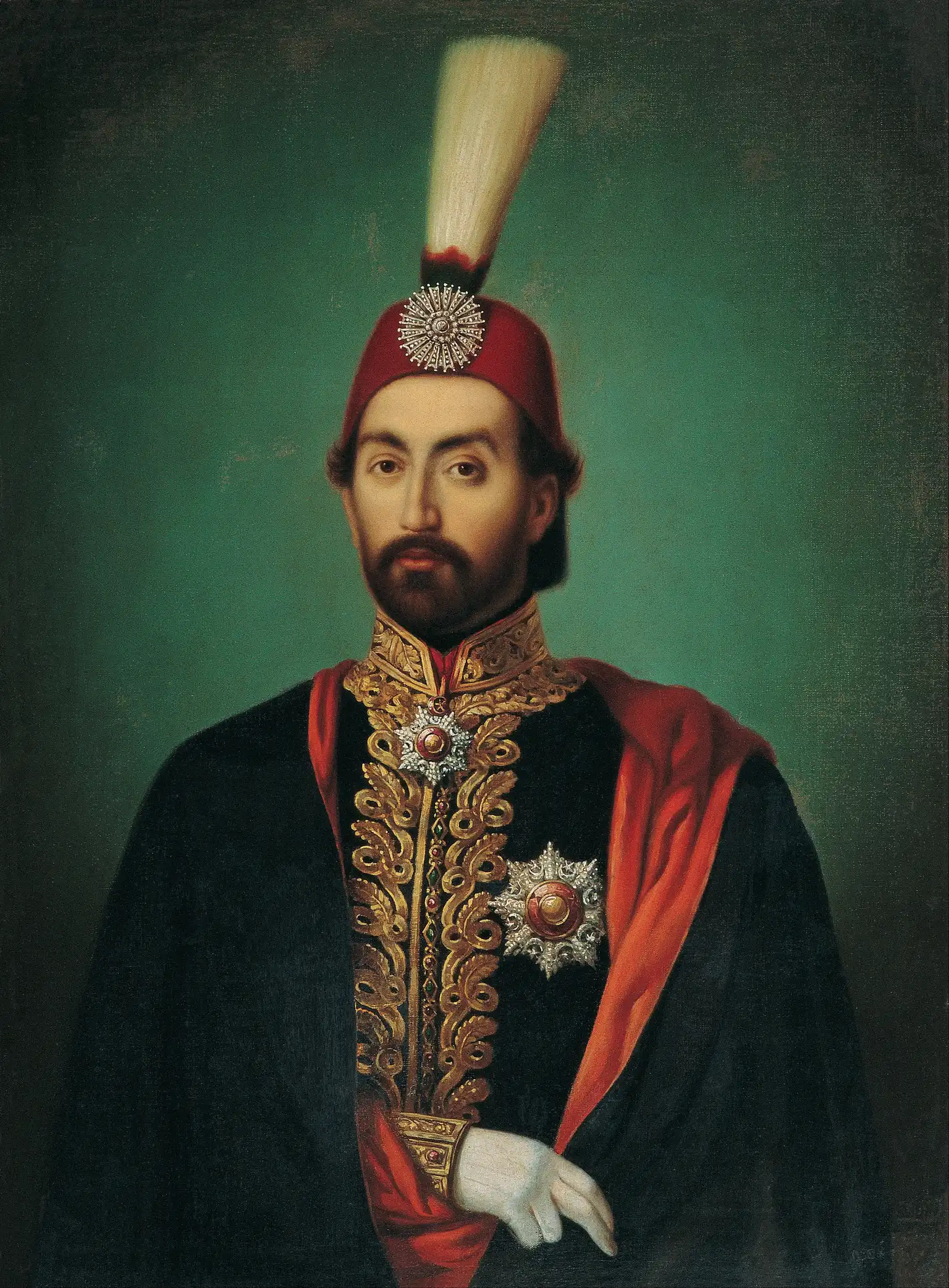
Abdülmecid II
 Turkey
painter•musician•last Ottoman Caliph
Also known as: Abdülmecit II, Abdulmecid II, Abdulmejid II, Abdülmecid Efendi, Şehzade Abdülmecid Efendi
Birthday
May 29, 1868
Birth Sign
Sagittarius
Birthplace
Beşiktaş, Istanbul, Ottoman Empire
Age
Died at 76
About
Abdülmecid II stands as a unique figure in history, distinguished as the final Ottoman Caliph who held the title from 1924 until its abolition later that same year. Unlike his predecessors who combined the roles of Sultan and Caliph, he served solely as the spiritual leader of the Muslim world following the abolition of the Ottoman Sultanate by Mustafa Kemal Atatürk. A man of profound artistic talent, he was a skilled painter, musician, and linguist who spoke nine languages fluently. His life bridged the twilight of the Ottoman Empire and the dawn of the Turkish Republic, culminating in decades of exile in Europe where he died without ever returning to Turkey. He is remembered not for political power, but for his cultural refinement and his role as a bridge between the Ottoman past and the modern Turkish present. His style was characterized by a blend of traditional Ottoman attire and European influences, reflecting his upbringing and education. He was known for his multilingual abilities and his ability to navigate both European and Islamic cultural spheres with ease.
Born into the imperial harem system, he was educated by a mix of Turkish and French instructors, allowing him to master European languages and customs alongside classical Islamic studies. Before his brief political prominence, he was known more for his cultural refinement than military prowess, spending much of his youth composing music and sketching. His tenure as Caliph lasted only a few months before he was stripped of his title and ordered into exile along with the rest of the Ottoman dynasty.
Early Life & Background
Abdülmecid II was born Şehzade Abdülmecid Efendi on May 29, 1868, in the Beşiktaş district of Istanbul, then the capital of the Ottoman Empire. He was the son of Sultan Abdulaziz and Gülcemal Kadınefendi. Born into the imperial harem system, his early life was defined by the strict protocols of the Topkapi Palace. As a prince (*Şehzade*), he was subject to the practice of confinement, where princes were kept within the palace walls to prevent them from building political power bases that could challenge the reigning Sultan. This isolation was a standard Ottoman custom designed to maintain dynastic stability but often resulted in princes having limited exposure to the outside world until they ascended the throne or were exiled.
He received a rigorous education tailored for future leadership, though it was distinctively cosmopolitan. Unlike many of his contemporaries who relied solely on traditional Islamic tutors, Abdülmecid was educated by a mix of Turkish and French instructors. This dual curriculum allowed him to master European languages and customs alongside classical Islamic studies. By the time he reached adulthood, he had become fluent in Arabic, Persian, Turkish, French, and other languages, eventually speaking a total of nine. His early interests leaned heavily toward the arts; he developed a deep appreciation for music and painting, skills he would cultivate throughout his life. Before his political prominence, he was known more for his cultural refinement than military or administrative prowess, spending much of his youth composing music and sketching.
The collapse of the Ottoman Empire following World War I drastically altered his trajectory. With the defeat in the war and the subsequent partition of the empire, the Grand National Assembly of Turkey abolished the Sultanate in November 1922. The last Sultan, Mehmed VI, fled the country, leaving a vacuum in the leadership of the Islamic world. In March 1924, the newly established secular Republic of Turkey moved to abolish the Caliphate entirely, fearing it would serve as a rallying point for counter-revolutionary forces. However, the Assembly initially elected Abdülmecid II as the Caliph to serve a transitional role, hoping to placate conservative elements while maintaining the new republic's sovereignty.
Career Growth
Abdülmecid's career trajectory shifted dramatically with the collapse of the Ottoman Empire. Following the defeat in World War I and the subsequent partition of the empire, the Grand National Assembly of Turkey abolished the Sultanate in November 1922. The last Sultan, Mehmed VI, fled the country, leaving a vacuum in the leadership of the Islamic world. In March 1924, the newly established secular Republic of Turkey moved to abolish the Caliphate entirely, fearing it would serve as a rallying point for counter-revolutionary forces. However, the Assembly initially elected Abdülmecid II as the Caliph to serve a transitional role, hoping to placate conservative elements while maintaining the new republic's sovereignty.
His tenure as Caliph lasted only a few months. On March 3, 1924, the same day the office was officially abolished, Abdülmecid was stripped of his title and ordered into exile along with the rest of the Ottoman dynasty. This marked the end of his political career and the beginning of his life as a private citizen and artist abroad. He was not merely a figurehead during his brief reign; he actively sought to modernize the institution of the Caliphate, adopting the title *Halîfe-i Müslimîn* ("Caliph of the Muslims") to emphasize a role focused on spiritual unity rather than temporal rule.
Beyond politics, Abdülmecid II is celebrated for his significant contributions to the arts. He was a prolific painter, creating works that blended European techniques with Ottoman themes. His notable paintings include The Abyssinian Woman and The Arab Woman, which showcased his ability to capture human subjects with sensitivity and technical skill. He was also a talented musician, proficient in playing the tanbur (a long-necked string instrument), piano, and cello. He composed classical Turkish music and was known to play these instruments for family gatherings and intimate circles even during his exile.
In later years, his artistic legacy was re-evaluated and celebrated. A major retrospective exhibition titled "Abdülmecid Efendi" was held at the Sakıp Sabancı Museum in Istanbul in December 2021, bringing his paintings and musical talents back into the public eye. The exhibition highlighted how he synthesized European and Islamic traditions, cementing his reputation as a cultural bridge between two worlds. Despite his royal status, he was not an official court painter in the traditional sense; his art was a personal pursuit that became his primary mode of expression after losing his political power.
Career Timeline
Public Image & Style
Abdülmecid II is portrayed as a tragic hero and a cultural synthesizer. He is remembered not for political power, but for his artistic achievements and his role as a bridge between the Ottoman past and the modern Turkish present. His style was characterized by a blend of traditional Ottoman attire and European influences, reflecting his upbringing and education. He was known for his multilingual abilities and his ability to navigate both European and Islamic cultural spheres. Contemporary descriptions portray him as a refined and dignified figure, embodying the cosmopolitan aesthetic of the late Ottoman elite. His public image is one of quiet dignity and artistic depth, contrasting with the often turbulent political figures of his era. He is viewed as a tragic figure who lost his kingdom but retained his cultural identity. The media portrays him as a bridge between empires, a man of peace and art in a time of war and revolution.
Fame & Fandom
Abdülmecid II stands apart in the historical record not as a figure of modern celebrity frenzy, but as a subject of enduring, scholarly reverence. His legacy is defined by the quiet dignity of an artist and the weight of being the final Caliph, drawing an audience that values deep historical context over viral moments. There is no formal name for his fanbase, nor are there organized campaigns or rituals; instead, devotion manifests through academic study and a continued fascination with the cultural synthesis he embodied during his exile. This unique form of fandom treats him less as a pop icon and more as a pivotal bridge between empires.
The scope of his recognition remains remarkably stable across decades, reflecting a consistent global interest in the end of the Ottoman era. He holds a steady position in the collective consciousness, currently recognized as the 35th most famous person from Turkey. These placements, tracked within the iFANN Global Fame Rankings, measure attention across media coverage, search activity, and consumption signals worldwide, ensuring that figures like Abdülmecid II remain visible even without modern marketing machinery. Discussions about him occur on historical forums, Wikipedia, and educational platforms, but there are no official accounts or verified profiles associated with him. His "devotees" are primarily historians, scholars, and individuals interested in Islamic history and the Ottoman legacy.
Interesting Facts and Legends
Abdülmecid II spoke nine languages, a rare achievement for an Ottoman prince of his time. He was the only Caliph who was never a Sultan. His tomb was reportedly neglected in India for a period before being re-interred or recognized in Medina. When ISIS claimed the Caliphate in 2014, historians immediately refuted it based on the fact that Abdülmecid II was the last legitimate Caliph. He composed music on the tanbur, a traditional Ottoman string instrument. Specific physical measurements such as height are not well-documented in surviving sources. Direct quotes from Abdülmecid II are scarce in English-language sources, as his writings were primarily in Ottoman Turkish. There are no known magazine covers featuring Abdülmecid II in the modern era, as he died before the rise of the celebrity magazine culture. Historical photographs exist, but they are archival rather than cover features. No active campaigns or movements seek to restore the Caliphate under his name, as the title is considered historically concluded.
Family & Personal Life
Abdülmecid II was married three times. His spouses were Şehsuvar Hanım, Mehisti Hanim, and Hayrünissa Hanım. Unlike the typical harem structure of previous sultans, his marriages were relatively conventional for the era, though details regarding the specific dates of these unions are less documented than his political timeline. He did not have children, a fact that contributed to the eventual end of the direct male line of succession for the Caliphate following his death. There are no records of romantic relationships outside of these marriages, nor any publicized affairs or dating history, consistent with the secluded nature of Ottoman princes and the strict social codes of the time.
Notable Connections
Relationships & Dating History
Abdülmecid II was married three times: Şehsuvar Hanım, Mehisti Hanim, and Hayrünissa Hanım. Each union followed the standard Ottoman marital structure for princes, though specific dates and detailed records of these events are not widely documented in public archives. Unlike the typical harem structure of previous sultans, his marriages were relatively conventional for the era. He did not have children, a fact that contributed to the eventual end of the direct male line of succession for the Caliphate following his death. There are no records of romantic relationships outside of these marriages, nor any publicized affairs or dating history, consistent with the secluded nature of Ottoman princes and the strict social codes of the time. His status as a widower persisted until his death in 1944, with no current partners or ongoing relationships recorded.
- MarriedŞehsuvar HanımOne of his three wives; specific dates and details of the union are not widely documented.
- MarriedMehisti HanimSecond wife; part of the standard Ottoman marital structure for princes.
- MarriedHayrünissa HanımThird wife; no children were born from this marriage or any other.
Death & Aftermath
Died
August 23, 1944 (aged 76)
Death Place
Nice, France
Cause of Death
Natural causes (undisclosed)
Abdülmecid II passed away on August 23, 1944, in Nice, France, at the age of 76. He died while living in exile, having been banned from returning to his homeland since the abolition of the Ottoman Sultanate and Caliphate in 1924. The specific medical cause of his death was never officially recorded or widely publicized, likely due to his status as a private citizen far from the political center and the global distraction of World War II. His final years were spent in relative obscurity in Europe, detached from the capital he once symbolized. His final days were spent in relative obscurity, far from the capital he once symbolized.
Following his death, his funeral was held in Cairo, Egypt, where he was laid to rest in the Al-Rifa'i Mosque complex. This location was chosen because many members of the deposed Ottoman dynasty had settled there after their expulsion from Turkey. He was buried alongside his father, Sultan Abdulaziz, and other family members. For a period after his burial, historical accounts suggest his tomb was neglected, adding a layer of mystery to his final resting place. Later, his remains were reportedly recognized and honored in Medina, Saudi Arabia, complicating the narrative of his posthumous recognition.
The abolition of the caliphate and his subsequent exile marked the definitive end of the Ottoman dynasty's political influence. Decades later, his legacy has been reclaimed as a symbol of the transition from empire to nation-state. In 2014, when Abu Bakr al-Baghdadi claimed the title of Caliph for ISIS, the claim was widely debunked by historians specifically because the legitimate succession had concluded with Abdülmecid II, reinforcing his status as the last true Caliph. A major retrospective exhibition titled "Abdülmecid Efendi" was held at the Sakıp Sabancı Museum in Istanbul in December 2021, bringing his paintings and musical talents back into the public eye and highlighting how he synthesized European and Islamic traditions. Stories of his life in Nice and Rome highlight his resilience as an artist in exile, painting scenes that reflected his longing for home and his mastery of cross-cultural aesthetics.
Net Worth (Estate Value)
$0
iFANN Editorial Team estimate
As a historical figure who died over 80 years ago, Abdülmecid II has no net worth in the modern sense. His estate, if any, would have been absorbed into the state or dispersed among heirs long ago. There are no credible estimates of his wealth, as he lived in exile and did not accumulate personal assets in the manner of modern celebrities. Any financial value attributed to him today is related to the cultural and historical value of his art and legacy, not personal liquidity. While he did not receive modern awards like Oscars or Grammys, his honorary distinctions are rooted in his religious and cultural significance. He is recognized by scholars and institutions as a pivotal figure in Islamic history and a patron of the arts. The 2021 exhibition at the Sakıp Sabancı Museum serves as a modern institutional honor, acknowledging his artistic contributions.
Awards & Accolades
View 4 records, honours and achievementsKnown For
The Last Ottoman Caliph
1924 · Historical Figure
The Abyssinian Woman
1920 · Painter
The Arab Woman
1920 · Painter
Keywords
Sources
Quick Facts
- Profession
- painter, musician, last Ottoman Caliph
- Born
- May 29, 1868
- Birthplace
- Beşiktaş, Istanbul
- Died
- August 23, 1944
- Death Place
- Nice, France
- Gender
- Male
- Spouse
- Şehsuvar Hanım, Mehisti Hanim, Hayrünissa Hanım
- Birth Sign
- Sagittarius
- Languages Spoken
- Nine languages including Turkish, Arabic, Persian, French
Personal Details
- Full Name
- Şehzade Abdülmecid Efendi
- Spouse
- Şehsuvar Hanım, Mehisti Hanim, Hayrünissa Hanım
- Children
- Education
- Private education by Turkish and French tutors; fluent in nine languages
Frequently Asked Questions
Who was the last Ottoman Caliph?
Where did Abdülmecid II die?
Was Abdülmecid II a painter?
Why was Abdülmecid II exiled?
Does Abdülmecid II have descendants?
Similar People
Join the community
fans discussing