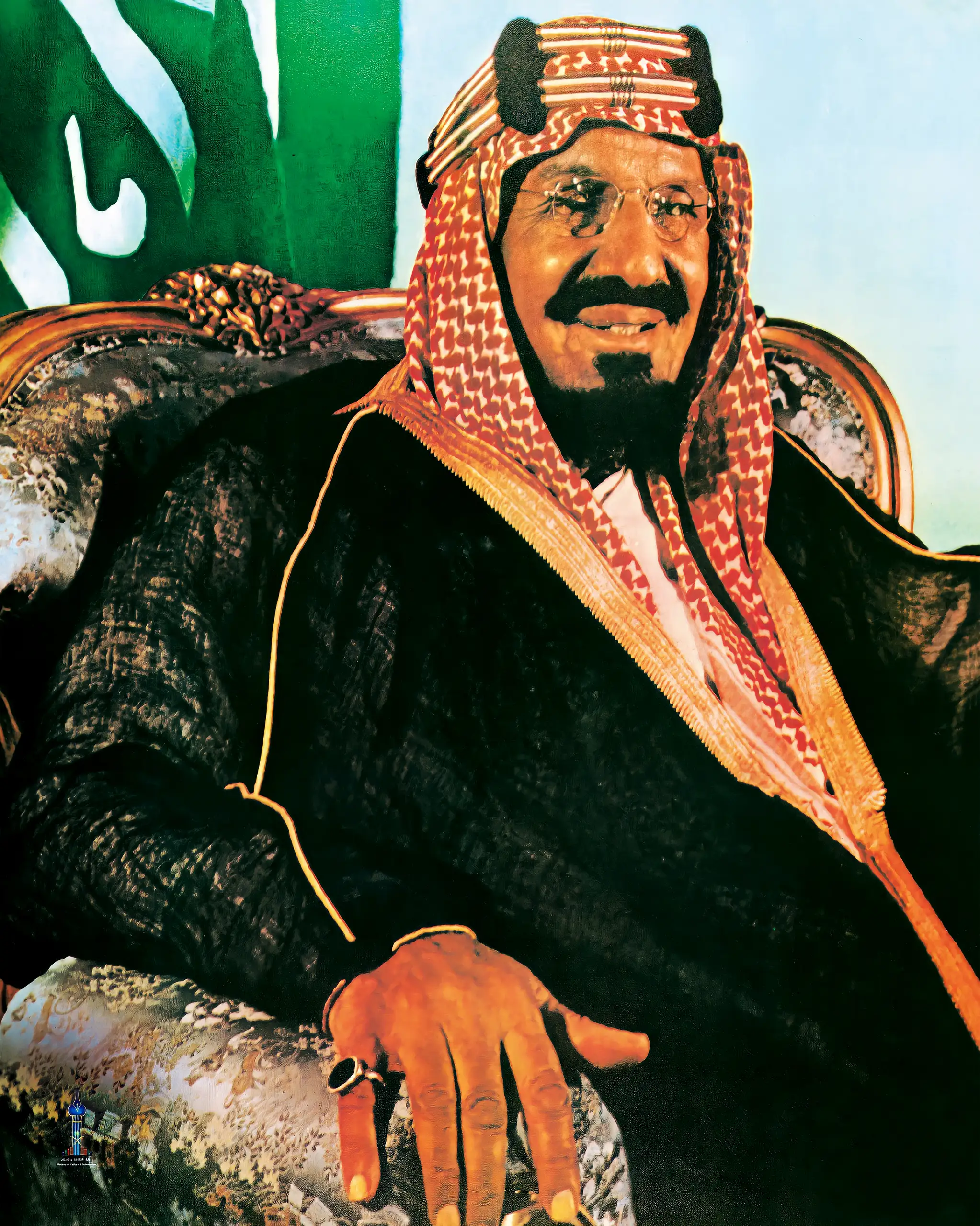
Abdulaziz bin Muhammad Al Saud
 Saudi Arabia
Also known as: Abdul Aziz ibn Muhammad, Abdul-Aziz bin Muhammad Al Saud, Abdelaziz bin Mohámed
Birthday
1721
Birth Sign
Capricorn
Birthplace
Diriyah
Age
Died at 82
About
Abdulaziz bin Muhammad Al Saud was the second ruler of the Emirate of Diriyah and a foundational figure in the formation of the First Saudi State. Born around 1721 in the oasis town of Diriyah, he was the eldest son of Muhammad bin Saud and the son-in-law of the religious reformer Muhammad ibn Abd al-Wahhab. He assumed the title of Imam upon his father's death in 1765 and ruled until his assassination in 1803.
Known to his people as the mahdi zamanihi or savior of his time, he transformed a small, fragile emirate into a formidable regional power through relentless military expansion and the consolidation of religious reforms. His reign is credited with laying the cornerstone for modern Saudi Arabia, blending military authority with spiritual doctrine to reshape the political landscape of the Arabian Peninsula.
Early Life & Background
Born in the early 1720s within the walls of Diriyah, Abdulaziz grew up during a critical period of tribal consolidation in central Arabia. His childhood was defined by the rising influence of the House of Saud and their emerging alliance with the religious movement led by Muhammad ibn Abd al-Wahhab. As the heir apparent to the throne, he received a traditional Islamic education and was groomed from a young age to lead. His formative years were spent observing the strategic challenges of unifying disparate tribes under a single banner.
Before ascending to the throne, Abdulaziz participated in military campaigns alongside his father, learning the arts of governance and warfare. He played a pivotal role in solidifying the partnership between the royal family and the Wahhabi religious leaders. This alliance was not merely political but deeply spiritual, merging the sword of the state with the pen of the theologian. By the time his father died in 1765, Abdulaziz had already established himself as a capable leader ready to expand the emirate's borders and enforce the religious reforms that would define his era.
Career Growth
Abdulaziz began his reign in 1765 following the death of his father, immediately focusing on expanding the territory of the First Saudi State. His first major victory came in 1773 when his forces captured Riyadh, a strategic stronghold that opened the door for further conquests across the peninsula. Throughout the 1780s and 1790s, his armies pushed eastward and southward, bringing much of central and eastern Arabia under his control.
A defining milestone of his career occurred in 1801 when his troops captured Karbala, a significant event that sent shockwaves through the Ottoman Empire. The crowning achievement of his rule was the conquest of Mecca in 1803. During this campaign, his forces entered the holy city and cleansed the Kaaba of practices deemed un-Islamic by Wahhabi doctrine, including the removal of statues and shrines. This act fundamentally shifted the geopolitical and religious landscape of the Islamic world. His leadership continued until November 1803, leaving behind a unified state that would serve as the foundation for future generations.
Career Timeline
Public Image & Style
Abdulaziz is remembered as a fearless leader who combined military prowess with deep religious conviction. His public persona was that of a pious warrior, dedicated to spreading the Wahhabi reformist doctrine while defending the faith against external threats. Contemporary chronicles describe him as a man of decisive action who did not shy away from leading campaigns personally. His image as the mahdi zamanihi cemented his status as a divinely guided figure in the eyes of his followers, distinguishing him from mere warlords of the period.
Fame & Fandom (iFAMOUS Rankings)
The story of Abdulaziz bin Muhammad Al Saud is not one of a modern celebrity cult, but rather the enduring reverence of a nation for its foundational patriarch. While contemporary pop stars might boast of organized fan clubs or viral hashtags, this 18th-century ruler commands a different kind of devotion: the deep, scholarly, and nationalistic pride of a people who trace their statehood directly to his reign. There is no formal fandom name documented for him, as the concept of a fanbase does not apply to a monarch who passed away over two centuries ago. His audience today consists of historians, students of Islamic geopolitics, and citizens celebrating Founding Day, engaging with his legacy through museums in Diriyah and academic texts rather than social media campaigns or birthday billboards. The engagement is strictly historical, framed by national heritage initiatives that link the First Saudi State to modern Vision 2030 goals, treating his memory as a pillar of identity rather than a subject of entertainment consumption. Regarding his standing in the global consciousness, iFANN has evaluated his profile against current metrics of fame. Abdulaziz bin Muhammad Al Saud is currently evaluated as unranked in the Global Top 1,000 and holds no placement on any published scope list. This absence from the rankings reflects his status as a historical figure whose influence is measured in centuries of state-building rather than contemporary search volume or media saturation. He remains a titan of history without a numeric score attached to his name in the modern era. The scale of his impact is undeniable in the regions he shaped, yet it exists outside the parameters of the real-time popularity signals that drive the Global Fame Engine's current leaderboards.
Interesting Facts and Legends
Abdulaziz earned the enduring title mahdi zamanihi, which translates to "the savior of his time," reflecting the profound stability and religious revival he brought to the region. Historical accounts often highlight his nickname as a testament to the reverence his subjects held for him. Another notable fact is his role in the cleansing of the Kaaba in 1803, an event that remains one of the most controversial and significant moments in Islamic history. The city of Diriyah, his capital, has since been designated a UNESCO World Heritage Site, preserving the legacy of his rule for modern visitors. His reign effectively bridged the gap between tribal confederations and a centralized state structure.
Family & Personal Life
Abdulaziz was married to Al Jawhara Al Muammar, a union that strengthened the political and tribal alliances of the era. They had several children who continued his lineage, most notably his son Saud bin Abdulaziz, who succeeded him as the third Imam of the First Saudi State. The family structure was typical of 18th-century Arabian monarchies, where marriages served to secure loyalty among powerful tribes. While specific details about his other children are less documented, his direct descendants went on to play crucial roles in the subsequent history of the region.
Notable Connections
Relationships & Dating History
Historical records indicate that Abdulaziz bin Muhammad Al Saud was married to Al Jawhara Al Muammar. In the context of 18th-century Arabian monarchy, marriage was primarily a political tool used to forge alliances between powerful tribes and families. His union with Al Jawhara solidified ties within the region and produced heirs who would continue his legacy. There are no documented instances of divorce, separation, or other romantic relationships, as the concept of public dating history does not apply to rulers of that era. He remained married to Al Jawhara until his death in 1803.
- MarriedAl Jawhara Al Muammarunknown - 1803His wife and mother of his successor Saud bin Abdulaziz.
Death & Aftermath
Died
1803-11-01 (aged 82)
Death Place
At-Turaif District, Diriyah
Cause of Death
Assassination during prayer
The final chapter of Abdulaziz bin Muhammad Al Saud unfolded in the quiet sanctity of At-Turaif District, where the Imam was engaged in prayer when his life was cut short by an assassin's blade. This tragic event concluded a reign that began in 1765 and transformed a fragile emirate into a formidable regional power. The date of this loss is recorded as November 12, 1803, marking the end of a life that spanned over eight decades of dedicated leadership. While the specific details of the attack remain part of the historical narrative, the cause of death stands firmly as assassination during prayer, a violent end for a man who had spent his life consolidating religious reforms and expanding the First Saudi State.
His successor, his son Saud bin Abdulaziz, assumed the title of Imam immediately following the incident, ensuring a seamless transition of power that prevented any political vacuum. The family structure remained intact, with the lineage continuing through his direct descendants, though the specifics of the funeral rites are lost to the passage of time. His legacy endured through the continuation of the dynasty and the expansion of the territory he helped build, cementing his status as a foundational figure in the region.
Net Worth (Estate Value)
$0
iFANN Editorial Team estimate
As a historical monarch who lived over two centuries ago, Abdulaziz bin Muhammad Al Saud did not possess personal wealth in the modern sense, nor does he have a net worth or estate value tracked by financial institutions. His resources were derived from the treasury of the First Saudi State, which funded military campaigns and administrative functions. The economic systems of the 18th century relied on tribute, taxation, and trade routes rather than individual asset accumulation. Consequently, there are no figures to estimate regarding his personal fortune or the value of his estate today.
Awards & Accolades
View 3 records, honours and achievementsKnown For
First Saudi State
1765-1803 · Second Ruler
Conquest of Mecca
1803 · Military Leader
Keywords
Sources
Quick Facts
- Profession
- politician, statesperson
- Born
- 1721
- Birthplace
- Diriyah
- Died
- 1803-11-01
- Death Place
- At-Turaif District
- Gender
- Male
- Spouse
- Al Jawhara Al Muammar
Personal Details
- Full Name
- Abdulaziz bin Muhammad bin Saud
- Spouse
- Al Jawhara Al Muammar
- Children
- Saud bin Abdulaziz and others
- Education
- Traditional Islamic education in Diriyah
Frequently Asked Questions
Who was Abdulaziz bin Muhammad Al Saud?
When did Abdulaziz bin Muhammad Al Saud die?
What is the significance of Abdulaziz bin Muhammad Al Saud?
Who was the wife of Abdulaziz bin Muhammad Al Saud?
Did Abdulaziz bin Muhammad Al Saud have children?
Similar People
Join the community
fans discussing