 Pakistan
About
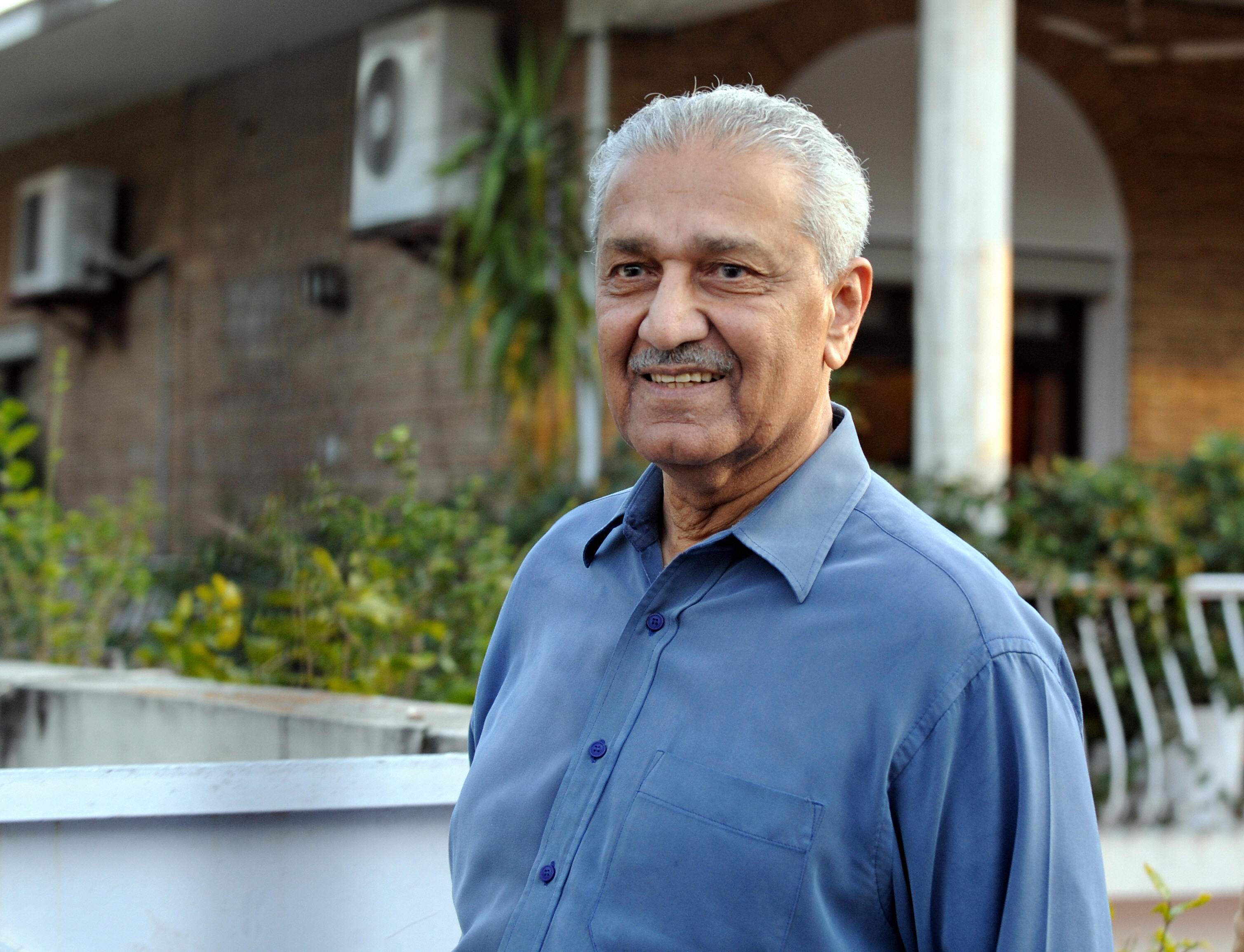
Abdul Qadeer Khan was a Pakistani nuclear physicist and metallurgical engineer, widely celebrated as the architect of Pakistan's atomic weapons program. Born in British India, he became a national hero in Pakistan for giving the country a nuclear deterrence capability, while Western governments knew him as the central figure in a global nuclear proliferation network. His work at the Khan Research Laboratories transformed Pakistan into the world's first Islamic nuclear power, a status that reshaped regional geopolitics.
Khan's scientific career began in Europe, where he earned advanced degrees and gained expertise in uranium enrichment. In 1976, he founded the Khan Research Laboratories in Kahuta, which became the heart of Pakistan's uranium enrichment program. Under his leadership, Pakistan conducted six nuclear tests in 1998, making it the seventh nuclear-armed nation. He was honored with Pakistan's highest civil awards, including the Nishan-i-Imtiaz twice.
His later years were marked by controversy. In 2004, he admitted on national television to selling nuclear technology to Iran, North Korea, and Libya, leading to his house arrest. He was pardoned by President Pervez Musharraf but remained under guard until 2009. Khan died on October 10, 2021, at age 85, receiving a state funeral. He remains a revered figure in Pakistan, known as "Mohsin-e-Pakistan" (Savior of Pakistan).
Early Life & Background
Abdul Qadeer Khan was born on April 1, 1936, in Bhopal, a city in the British Indian princely state of Bhopal. He was of Urdu-speaking Muhajir origin, though he often gave conflicting accounts of his ancestry. At a 2019 convocation, he claimed descent from an Orakzai family long settled in Bhopal; in a newspaper column, he wrote that his maternal lineage came from the Tirah Valley, while his paternal ancestor was an Uzbek soldier who arrived in India with Muhammad of Ghor, the 12th-century conqueror. This claimed link later inspired him to name a ballistic missile the Ghauri.
His father, Abdul Ghafoor, was a schoolteacher who worked for the Ministry of Education, and his mother, Zulekha, was a housewife with a deeply religious outlook. After the partition of India in 1947, many of his older siblings and extended family emigrated to Pakistan. Khan himself migrated in 1952, joining the mass movement of peoples.
He completed a science degree at Karachi University in 1960, then won a scholarship to study in West Germany. He learned several languages and wrote his doctoral dissertation in German. He earned a master's from Delft University of Technology in the Netherlands and a Ph.D. in metallurgical engineering from the Catholic University of Leuven in Belgium. His research focused on phase transitions in metallic alloys, uranium metallurgy, and gas-centrifuge isotope separation.
After his doctorate, Khan joined the Dutch heavy machinery firm Verenigde Machinefabrieken Stork-Werkspoor (VMF), which posted him as a consultant to Urenco, the uranium enrichment consortium. As a materials expert, he worked on gas-centrifuge design at the top-secret facility. In December 1975, he told colleagues he was going on vacation to Pakistan. He never returned, taking with him copies of secret centrifuge blueprints.
Career Growth
Khan's pivotal moment came after India's "Smiling Buddha" nuclear test in 1974. He joined Pakistan's atomic weapons effort, initially with the Pakistan Atomic Energy Commission, but clashed with its head, Munir Ahmad Khan. In December 1974, he met Prime Minister Zulfikar Ali Bhutto and argued for a uranium enrichment route over the plutonium path.
In 1976, Khan founded the Khan Research Laboratories (KRL) in Kahuta, serving as chief scientist and director. By 1978, his team had enriched uranium, and by 1984 they were ready to detonate a nuclear device, he later claimed. In the early 1980s, Pakistan acquired from China blueprints for a uranium implosion bomb design.
On May 28, 1998, Pakistan conducted six successful nuclear tests at the Chagai site, under Prime Minister Nawaz Sharif. Khan declared that Pakistan had become "undefeatable." He became a national hero.
His standing suffered in March 2001 when President Pervez Musharraf, reportedly under U.S. pressure, removed him from KRL's chairmanship. In 2003, U.S. agents intercepted a German ship carrying centrifuge parts to Libya, exposing Khan's network. He was arrested on January 31, 2004, read a televised confession on February 4, and was pardoned the next day. He spent years under house arrest until 2009, when a court ruled his debriefing unconstitutional. He died in 2021.
Career Timeline
Public Image & Style
In Pakistan, Abdul Qadeer Khan is revered as a national hero, affectionately called "Mohsin-e-Pakistan" (Savior of Pakistan). His public image is that of a patriotic scientist who made the nation "undefeatable," and he remains a symbol of national pride. Pakistani media consistently celebrate his role in creating nuclear deterrence.
In the West, however, he is primarily portrayed as a nuclear proliferator, the mastermind of a black-market network that sold sensitive technology to rogue states. Al Jazeera's obituary headline captured the split: "Nuclear hero in Pakistan, villain to the West."
His image in Pakistan is so iconic that in 2006, a young boy was photographed with a kite bearing Khan's face. The AQKhan Foundation, which manages his legacy, describes him as "a mentor, a leader, and a catalyst for development." There is no official fandom name, but his status as a national icon is undisputed.
Fame & Fandom
Abdul Qadeer Khan commanded a unique position in global history, straddling the divide between national veneration and international controversy. In Pakistan, he was revered as a savior and the architect of the nation's nuclear deterrent, a status that elevated him to the rank of a living legend within his homeland. His public image there is defined by patriotic devotion, with media outlets consistently celebrating his role in establishing an Islamic nuclear power. Conversely, Western governments and media framed him as the central figure in a proliferation network that distributed sensitive technology to rogue states, creating a dual legacy of heroism and criminality. Despite this polarized perception, no organized fanbase with a formal name or specific rituals emerged around him. Unlike pop culture icons who inspire birthday billboards or charity drives, Khan's audience consisted primarily of citizens and political observers rather than enthusiasts engaging in interactive worship or social media campaigns. His relationship with the public was mediated through state narratives and geopolitical events rather than celebrity engagement. The iFANN Global Fame Engine has evaluated Abdul Qadeer Khan, but he does not currently hold a placement in the published rankings. Consequently, no specific ordinal number or score can be assigned to his current standing in the Global Top 1,000 or any scope list. This absence of a ranking reflects the complex nature of his legacy, which remains rooted in historical significance rather than contemporary popularity metrics. While his name carries immense weight in discussions of nuclear physics and regional geopolitics, it does not translate into a quantifiable position on the current fame charts managed by iFANN.
Interesting Facts and Legends
Khan authored more than 150 scientific papers, distinguishing himself as the first Pakistani scientist to achieve international recognition in metallurgical engineering and nuclear physics. He named the Ghauri missile after Muhammad of Ghor, the 12th-century conqueror he claimed as an ancestor, and constructed a mausoleum over Ghori's grave in Dhamiak village during 1994–95. Although his family maintained a devout religious background, Khan himself was not particularly religious. He wrote his doctoral dissertation in German, a language acquired during his European studies. Western media frequently dubbed Pakistan's nuclear bomb the "Islamic bomb," a label Khan reportedly accepted willingly. A defining moment in his later life occurred when he was arrested following revelations of his key role in a black market network selling nuclear technology to Iran, North Korea, and Libya. He later confessed to these activities, creating a complex narrative of a national hero who admitted to proliferation crimes. Khan died at the age of 85 after testing positive for Covid-19. He is often cited as probably the world's best-known proliferator, a label that forms the basis of modern discussions regarding his legacy.
Notable Quotes
“I offer my deepest regrets and unqualified apologies.”
“Pakistan is now undefeatable.”
Family & Personal Life
Khan married Hendrina "Henny" Khan, a South African woman of Dutch descent, in the early 1960s. They had two daughters, Dina and Ayesha. Hendrina passed away in 2016, and Khan remained widowed until his death.
His daughters kept a low public profile. Dina has lived primarily in the United States, while Ayesha has made occasional appearances related to her father's legacy. Khan's father was a schoolteacher, and his mother was a housewife; many of his siblings emigrated to Pakistan before he did.
Khan's family life was notably private, with no other public relationships documented.
Notable Connections
Khan's career was shaped by key figures in Pakistan's leadership. Prime Minister Zulfikar Ali Bhutto brought him into the nuclear program in 1974. Munir Ahmad Khan, head of the Pakistan Atomic Energy Commission, had differences with him over the technical approach. President Pervez Musharraf removed him from KRL in 2001 and later pardoned him. Prime Minister Nawaz Sharif authorized the 1998 nuclear tests.
Relationships & Dating History
Abdul Qadeer Khan's personal life was remarkably private, with only one documented relationship. He met Hendrina "Henny" Khan, a South African woman of Dutch descent, while studying in Europe. They married in the early 1960s and remained together until her death in 2016. The couple had two daughters, Dina and Ayesha.
There are no records of any other romantic relationships, engagements, or marriages in Khan's life. His marriage to Hendrina was his only known partnership, and he remained widowed after her passing. At the time of his death in 2021, he was widowed, having outlived his wife by five years.
- MarriedHendrina Khan1960 - 2016Met while studying in Europe; married in the early 1960s; together until her death.
Death & Aftermath
Died
October 10, 2021 (aged 85)
Death Place
Unknown
Cause of Death
Complications from COVID-19
Public reaction to the passing of Abdul Qadeer Khan in Pakistan was characterized by widespread tributes that hailed him as a national hero and the architect of the country's nuclear deterrent, while international institutions offered more nuanced commentaries on his role in global proliferation networks. Khan died on October 10, 2021, at the age of 85 following a battle with COVID-19 after testing positive for the virus in the days leading up to his final moments. The cause of death was established through family statements and media reports citing complications from the coronavirus infection. His funeral and memorial arrangements were conducted privately shortly after his death, though conflicting reports exist regarding whether he was buried in his birthplace of Bhopal, India, or a site within Pakistan. Posthumously, academic publications such as those by Nature and the Atomic Heritage Foundation released profiles reflecting on his complex legacy, while the AQKhan Foundation continued its operations to promote his contributions to science.
Net Worth (Estate Value)
$10 Million
iFANN Editorial Team estimate
Abdul Qadeer Khan's financial legacy remained modest compared to his monumental scientific impact. As a government scientist and later special adviser, his income derived primarily from his government salary. He was not known to have accumulated significant personal wealth from his work. No credible public source has published a specific net worth figure for him during his lifetime or for his estate after his death. His estate, managed by the AQKhan Foundation, does not report significant ongoing revenue streams. There are no posthumous book deals, licensing arrangements, or commercial ventures tied to his name. The foundation, which promotes his scientific legacy and philanthropic work, operates on donations rather than generating income from his intellectual property. Per iFANN's editorial analysis, the estate's value is estimated at $10 million as of 2026, based on his government pensions, property holdings, and the foundation's assets. This figure is a rough estimate, as no official financial disclosures have been made.
Awards Won (3)
Abdul Qadeer Khan received Pakistan's highest civil honors for his contributions to national security. He was awarded the Nishan-i-Imtiaz twice, in 1989 and 1996, and the Hilal-i-Imtiaz in 1989. Karachi University conferred an honorary Doctor of Science degree on him in 1993. The Grand Mufti of Saudi Arabia declared him a hero of the Islamic world.
1996 · Civil Award
For contributions to national security
1989 · Civil Award
For contributions to science
Known For
Pakistan's nuclear weapons program
1976–2001 · Founder and director of Khan Research Laboratories
Keywords
Sources
Quick Facts
- Profession
- physicist, engineer, academic
- Born
- April 1, 1936
- Birthplace
- Bhopal, British India
- Died
- October 10, 2021
- Death Place
- Islamabad, Pakistan
- Gender
- Male
- Birth Sign
- Aries
- Spouse
- Hendrina Khan
- Children
- Dina Khan, Ayesha Khan
Personal Details
- Full Name
- Abdul Qadeer Khan
- Spouse
- Hendrina Khan
- Children
- Dina Khan, Ayesha Khan
- Education
- Ph.D. in Metallurgical Engineering, Catholic University of Leuven; M.S. from Delft University of Technology
Frequently Asked Questions
How did Abdul Qadeer Khan die?
Was Abdul Qadeer Khan married?
What was Abdul Qadeer Khan's net worth?
What did Abdul Qadeer Khan do?
How many children did Abdul Qadeer Khan have?
Similar People
Join the community
fans discussing