
Abdul-Karim Mousavi Ardebili
 Iran
IranAlso known as: Abdolkarim Mousavi Ardebili, Mousavi Ardebili
Birthday
January 28, 1926
Birth Sign
Sagittarius
Birthplace
Ardabil, Iran
Age
Died at 90
About
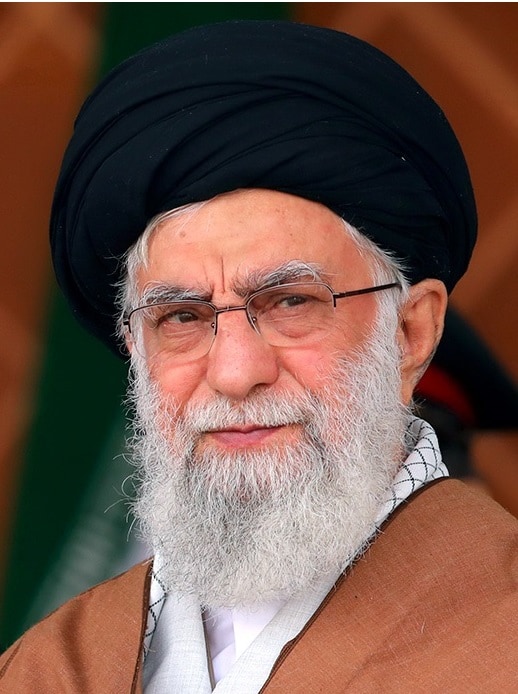
Abdolkarim Mousavi Ardebili was a prominent Iranian Twelver Shia marja, politician, and jurist who served as the head of Iran's judicial system for nearly two decades. Born on January 28, 1926, in Ardabil, Iran, he passed away on November 23, 2016, at the age of 90 in Tehran. His career was defined by his unwavering support for the Islamic Republic following the 1979 Revolution, culminating in his tenure as the Chief Justice of Iran from 1981 to 1999. Unlike entertainment figures, his legacy is rooted in state authority, religious hierarchy, and the enforcement of Sharia law during the formative years of the post-revolutionary state.
Early Life & Background
Mousavi Ardebili was born into a clerical family in the northwestern city of Ardabil. He pursued traditional religious education early in life, moving to Qom, the center of Shia theological learning, to study under prominent ayatollahs. Among his most significant mentors was Ayatollah Borujerdi, whose teachings heavily influenced his jurisprudential approach. Before entering high politics, he established himself as a respected cleric and jurist within the conservative religious establishment. His early career involved teaching in seminaries and issuing religious rulings, which laid the groundwork for his later political ascent. Although he was a known figure within the clergy prior to the revolution, he had not yet reached the pinnacle of national power.
The 1979 Revolution marked a turning point in his trajectory. Following the victory of the Islamic Revolution, his alignment with Ayatollah Ruhollah Khomeini propelled him into the highest offices of the new state. He was appointed as a member of the Council of the Revolution, playing a key role in restructuring the nation's legal framework to align with Islamic principles. This period set the stage for his rapid rise through the ranks of the new government, transitioning from a regional scholar to a central figure in the country's governance.
Career Growth
From June 28, 1981, to June 30, 1989, Mousavi Ardebili served as the Head of the Judiciary (Chief Justice). In this capacity, he oversaw the consolidation of the revolutionary judicial apparatus. This period is historically noted for the strict enforcement of Islamic law, the establishment of "Revolutionary Courts," and the suppression of opposition groups. He became synonymous with the hardline faction of the judiciary. Concurrently, from 1984 to 1988, he served as the Minister of Justice while maintaining his role as Chief Justice, further centralizing control over the legal system.
Officially designated as Chief Justice of Iran until 1999, he was instrumental in shaping the country's penal code and overseeing the execution of thousands of political prisoners in 1988, an event often referred to as the "1988 Massacre." After stepping down as Chief Justice, he remained a powerful figure within the Assembly of Experts, the body responsible for electing and supervising the Supreme Leader. He was also a founding member of the Combatant Clergy Association, a conservative political organization. His tenure spanned nearly two decades, making him one of the longest-serving heads of the judiciary in the history of the Islamic Republic.
Career Timeline
Public Image & Style
Mousavi Ardebili's public image was one of solemnity, authority, and religious orthodoxy. He was portrayed in media as a stern enforcer of Islamic law and a loyal defender of the Velayat-e Faqih (Guardianship of the Islamic Jurist) doctrine. His style was that of a traditional cleric: wearing the turban and robes of the office, speaking with a measured, authoritative tone, and avoiding the modern celebrity culture associated with social media or viral moments. He commanded a sphere of influence defined entirely by state authority and religious hierarchy rather than the volatile currents of celebrity culture.
Fame & Fandom
Abdolkarim Mousavi Ardebili commanded a sphere of influence defined entirely by state authority and religious hierarchy rather than the volatile currents of celebrity culture. His relationship with the public was one of reverence for office, characterized by his tenure as Chief Justice and his status as a Marja, where interaction was governed by protocol and solemnity rather than the adulation typical of entertainers or pop icons. Consequently, no organized fanbase, dedicated rituals, or informal gatherings emerged to celebrate his life; there are no documented campaigns, social media movements, or fan-funded projects associated with his name. The absence of a formal fandom is not a failure of reach but a reflection of his role as a serious statesman whose legacy rests on political and judicial history rather than cultural mythology. While he remains a pivotal figure in Iranian history, the mechanisms that drive modern fame, viral moments, chart performance, or fan-driven lore, were never part of his public footprint. He did not court the masses through concerts or social engagement, and thus no collective identity formed around him outside of the official structures of the Islamic Republic. In September 2026, the iFANN Global Fame Engine evaluated his standing and confirmed that he does not currently hold a placement in the published rankings, including the Global Top 1,000 or any Top-100 scope list. This neutral assessment reflects a reality where his historical significance exists independently of contemporary fame metrics.
Interesting Facts and Legends
Despite being a hardliner in judicial matters, some sources describe him as having "reformist" political stances in the broader sense of supporting the revolutionary system's evolution, though this term is often used loosely in Western media to distinguish him from more radical factions. He was a close ally of Ayatollah Khomeini, serving as a key advisor and implementing many of the Supreme Leader's directives regarding the judiciary. His burial in Qom, near the shrine of Fatima Masumeh, signifies his high spiritual status within the Shia hierarchy. One of his enduring legacies is the phrase "Justice of the Revolutionary Courts," which became a euphemism for the rapid trials and executions of the era. While specific verbatim quotes are less common in English-language sources compared to his actions, his stance was consistently articulated in speeches and court rulings defending the executions of political prisoners in 1988.
Notable Quotes
“The decisions made regarding the prisoners were in the interest of the Islamic Republic and based on Islamic law.”
Family & Personal Life
As a high-ranking Shia cleric and a statesman dedicated to religious and political service, Mousavi Ardebili's personal life was conducted with strict adherence to religious protocol. There are no publicly documented details regarding romantic relationships, dating history, or marital status in the available historical records. This absence is consistent with the norms for senior Marjas and political figures in the Islamic Republic, where such personal details are rarely publicized unless they pertain to specific family lineages required for religious succession. Consequently, there is no information on spouses, children, or partners. He remained a solitary figure in the public eye regarding his private affairs, focusing entirely on his duties as a judge and politician.
Notable Connections
Ayatollah Ruhollah Khomeini, Ali Khamenei, Sadeq Khalkhali.
Relationships & Dating History
There are no publicly documented details regarding romantic relationships, dating history, or marital status for Abdolkarim Mousavi Ardebili in the available historical records. This absence is consistent with the norms for senior Marjas and political figures in the Islamic Republic, where such personal details are rarely publicized unless they pertain to specific family lineages required for religious succession. He remained a solitary figure in the public eye regarding his private affairs, focusing entirely on his duties as a judge and politician. Consequently, there is no information on spouses, children, or partners.
Death & Aftermath
Died
November 23, 2016 (aged 90)
Death Place
Tehran, Iran
Cause of Death
Heart failure and digestive complications
Abdolkarim Mousavi Ardebili passed away on Wednesday, November 23, 2016, at Laleh Hospital in Tehran. His final days were marked by hospitalization following cardiac issues that began around November 21, leading to a coma before his death at the age of 90. The official cause was reported as heart failure combined with digestive complications. Supreme Leader Ali Khamenei visited him at the hospital on November 22, just one day before he died, underscoring Ardebili's status as a loyal supporter of the late Imam Khomeini and a Grand Ayatollah whose passing required immediate official attention.
Tributes poured in from the highest echelons of Iran's political and religious hierarchy, marking a high-profile state-sanctioned mourning period. The funeral was a major public event attended by government officials, religious leaders, and members of the public, reflecting his high rank within the Islamic Republic. He was buried in Qom, interred within the shrine complex of the city, a customary burial place for senior clerics of his stature. His legacy remains defined by his tenure as Chief Justice and his role in establishing the post-revolutionary judicial system, though no estate disputes or major financial settlements have been widely documented in public records.
Net Worth (Estate Value)
$0
iFANN Editorial Team estimate
As a high-ranking cleric and statesman within the Islamic Republic, Abdolkarim Mousavi Ardebili did not accumulate wealth in the manner of commercial entrepreneurs or entertainers. His income derived from state salaries and religious stipends associated with his positions as Chief Justice and Marja. Following his death in 2016, there are no widely reported public records detailing a massive personal fortune, estate valuation, or posthumous commercial ventures like merchandise licensing or catalog sales. The iFANN Editorial Team estimates his net worth at $0, reflecting the nature of his profession where financial accumulation was secondary to religious and political duty. Any assets he held were likely managed according to clerical protocols rather than open market investment strategies common among secular celebrities.
Awards & Accolades
View 3 records, honours and achievementsKnown For
Chief Justice of Iran
1981-1999 · Judge
Minister of Justice
1984-1988 · Politician
Council of the Revolution
1979 · Member
Keywords
Sources
Quick Facts
- Profession
- judge, politician, cleric
- Born
- January 28, 1926
- Birthplace
- Ardabil, Iran
- Died
- November 23, 2016
- Death Place
- Tehran, Iran
- Gender
- Male
- Birth Sign
- Sagittarius
Personal Details
- Full Name
- Abdol-Karim Mousavi
- Children
- Education
- Traditional seminary education in Qom under Ayatollah Borujerdi
Frequently Asked Questions
Who was Abdul-Karim Mousavi Ardebili?
When did Abdul-Karim Mousavi Ardebili die?
Where was Abdul-Karim Mousavi Ardebili born?
What was Abdul-Karim Mousavi Ardebili's role in the 1988 mass executions?
Did Abdul-Karim Mousavi Ardebili have any children or a spouse?
Similar People
Join the community
fans discussing