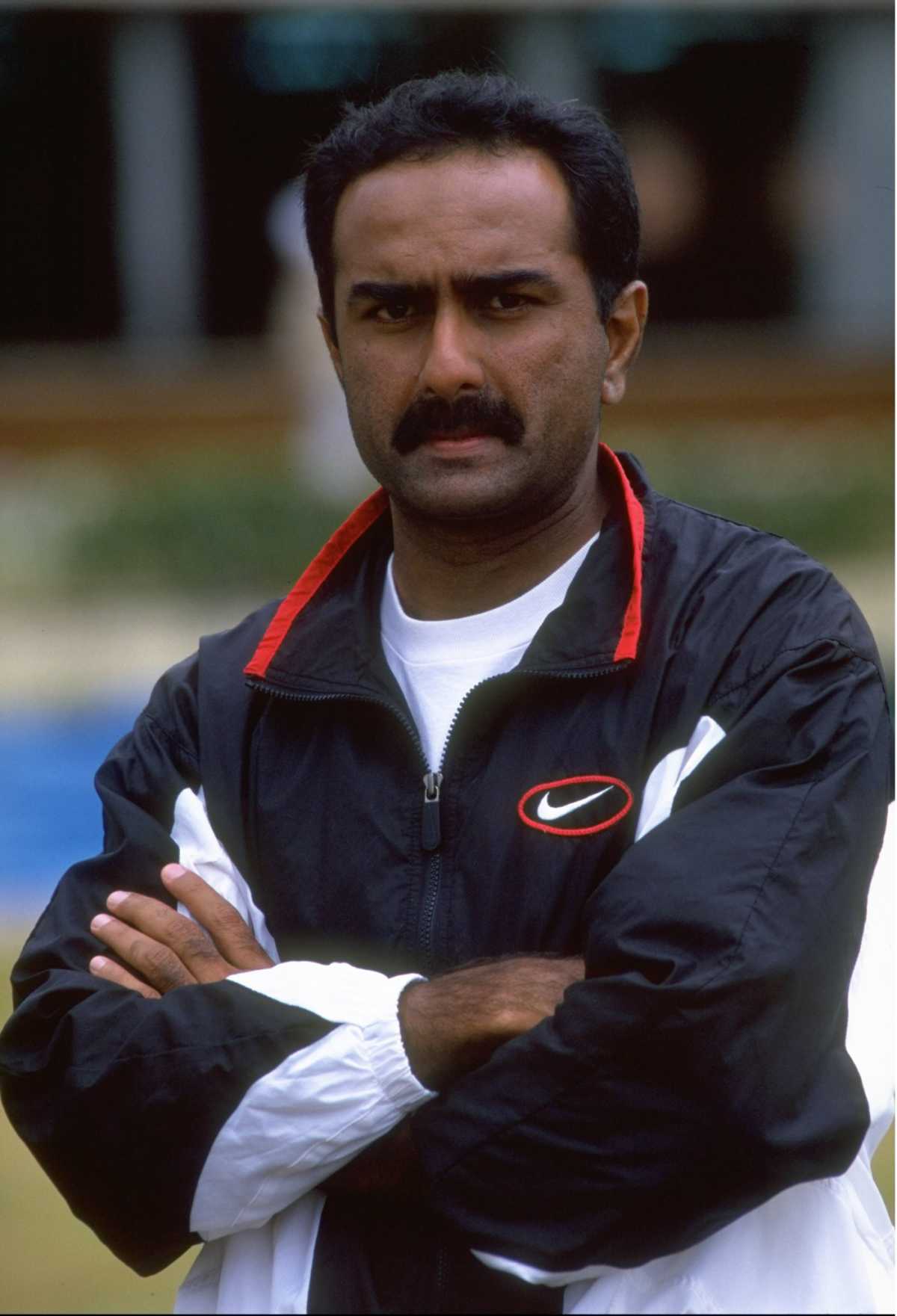
Aasif Karim
 Kenya
Kenyaformer cricketer•tennis player•businessman•arbitrator•mediator
Also known as: Aasif Yusuf Karim
Birthday
December 15, 1963
Birth Sign
Sagittarius
Birthplace
Mombasa, Kenya
Age
62 years old
About
Aasif Yusuf Karim is a former Kenyan international cricketer and tennis player who captained the national cricket team in One Day Internationals. A left-arm spinner with a knack for breaking partnerships, he was also a dependable lower-order batsman. Karim's leadership was central to Kenya's rise in world cricket, most famously steering the team to a stunning upset over the West Indies in the 1996 World Cup.
Over a career that spanned three World Cups, he played 34 ODIs and took 45 wickets. Since retiring, Karim has built a second career as a businessman, accredited mediator, and fellow arbitrator, while also chairing the Safinaz Foundation, a philanthropic organization. He remains a respected voice in Kenyan sports, often speaking on the state of cricket in the region.
Early Life & Background
Born on December 15, 1963, in the coastal city of Mombasa, Aasif Karim grew up surrounded by sport. His father, Yusuf Karim, was a local sports legend, and that influence shaped Aasif's early years. He showed talent in both cricket and tennis, and by his teens he was representing Kenya in both sports.
Karim made his cricket debut for Kenya in 1980, at just 16. He also played tennis at a high level, representing Kenya in the Davis Cup. These dual commitments honed his competitive edge and discipline. In the years before Kenya gained ODI status, Karim was a key figure in the national side's development, gaining experience in ICC Trophy tournaments and other international fixtures.
His breakthrough as a leader came in the early 1990s when he was named captain of the national team. The appointment set the stage for Kenya's historic 1996 World Cup campaign, which would change the course of his career and Kenyan cricket forever.
Career Growth
Aasif Karim's defining moment came on February 29, 1996, when he captained Kenya to a 73-run victory over the West Indies in the World Cup. His own contribution was modest with the ball, but his calm leadership and strategic field placements were widely credited for the upset. The win remains one of the greatest in associate cricket history.
Karim continued to lead Kenya through the 1999 and 2003 World Cups, retiring from international cricket in 2003. In 34 ODIs, he took 45 wickets at an average of 29.75, with best figures of 5 for 33. His lower-order batting added valuable runs, and his experience was vital for a developing team.
After retirement, Karim turned to business, with interests in insurance and real estate. He also became a fellow arbitrator and accredited mediator, and took on the chairmanship of the Safinaz Foundation, a charitable trust. He has remained active in cricket as a coach and administrator, working to develop young talent in Kenya, and has been outspoken about the challenges facing the sport in his country.
Career Timeline
Public Image & Style
Aasif Karim is remembered in Kenya and beyond as a pioneering figure in the country's cricketing history. His public image is that of a calm, cerebral leader who punched above his weight on the international stage. The 1996 World Cup victory over the West Indies is often cited as his crowning achievement, and he is frequently interviewed about that match and the state of Kenyan cricket.
In his post-playing career, Karim has cultivated a reputation as a businessman and philanthropist. His social media profiles highlight his roles as an arbitrator, mediator, and chairman of the Safinaz Foundation, projecting an image of a well-rounded professional. He is respected not just for his on-field exploits but for his continued contributions to sport and society.
Fame & Fandom
Aasif Karim commands a following defined by professional reverence rather than organized fervor. While he remains a revered figure in Kenyan sporting history, his audience lacks a formal collective name or documented rituals, distinguishing his legacy from the mobilized fanbases of modern pop culture icons. His reputation rests on specific athletic achievements and a steady presence in post-sports administration, with no evidence of viral campaigns or fan-funded projects surrounding his name. This measured admiration places him firmly within the global consciousness of cricket enthusiasts and Kenyan national figures alike. According to the iFANN Global Fame Rankings, Aasif Karim is currently the 59th most famous person from Kenya, a standing that has held steady through recent measurement cycles. This placement reflects a consistent level of attention across international media coverage and historical record searches without fluctuation into broader global tiers. The ranking data indicates that while his fame is concentrated within specific regional and sporting niches, it maintains a stable footprint relative to other public figures from his nation. His status as a dual international athlete and successful businessman further anchors his visibility in databases tracking global influence. The stability of this rank suggests a career that has transitioned smoothly from active competition to enduring institutional roles, keeping his name relevant without relying on transient viral moments.
Interesting Facts and Legends
Aasif Karim was a dual international, representing Kenya in both cricket and tennis, and played in the Davis Cup. His son, Irfan Karim, followed him into cricket and captained Kenya, making them one of the few father-son captain pairs in the sport. Karim's best ODI bowling figures of 5 for 33 came against Bangladesh in 1997. He was known for his calm demeanor on the field, which earned him the nickname 'The Master of Mombasa' in some cricket circles. After retiring, he served as a match referee in domestic Kenyan cricket before moving into administration. Beyond these established records, specific performances have cemented his place in sporting lore. A widely retold story from the 2003 era highlights a match where Karim took three wickets for seven runs against Australia, a feat often cited in match reports as a defining moment of Kenya's underdog rise. Another iconic image captures Karim celebrating with wicketkeeper Tariq Iqbal after dismissing Brian Lara, marking his involvement in high-profile dismissals against legendary players. While no formal fandom exists to organize rituals or campaigns around his legacy, the narrative of the Karims as Kenya's first family of cricket adds a dynastic element to his personal history that persists in local sports memory.
Notable Quotes
“The 1996 World Cup win was not just for the team, it was for the whole of Kenya.”
“Cricket in Kenya has the talent, but it needs the support and structure to compete.”
“I was fortunate to represent my country in two sports, and I gave my all in both.”
Family & Personal Life
Aasif Karim comes from a sporting family. His father, Yusuf Karim, was a prominent figure in Mombasa sports, and his influence was a major reason Aasif took up both cricket and tennis.
Karim's son, Irfan Karim, became a wicketkeeper-batsman for Kenya and captained the national team, making the Karims one of the rare father-son captain duos in international cricket. Aasif has spoken proudly of Irfan's achievements, noting how the family's sporting tradition continues.
Karim is also the chairman of the Safinaz Foundation, a charitable organization named after a family member, reflecting the family's commitment to giving back to the community.
Notable Connections
Relationships & Dating History
Salary, Net Worth In 2026
$2 Million
iFANN Editorial Team estimate
iFANN currently estimates Aasif Karim's net worth at $2 million as of 2026. This valuation stems from a diversified portfolio built after his retirement from professional cricket in 2003. His financial standing relies heavily on ventures in the insurance and real estate sectors, where he leveraged his public profile to establish a robust business presence. Additionally, his professional work as an accredited mediator and fellow arbitrator provides a steady stream of income, complementing his earnings from speaking engagements. As the chairman of the Safinaz Foundation, a philanthropic trust, he also derives support from the organization's activities. While precise breakdowns of his assets remain private, these multiple revenue streams have enabled him to sustain a comfortable lifestyle in Kenya.
Awards & Accolades
View 2 records, honours and achievementsKnown For
Captaining Kenya in 1996 Cricket World Cup
1996 · Captain
Playing in three Cricket World Cups
1996-2003 · Player
Representing Kenya in Davis Cup tennis
1980s-1990s · Player
Keywords
Sources
Quick Facts
- Profession
- former cricketer, tennis player, businessman, arbitrator, mediator
- Born
- December 15, 1963
- Birthplace
- Mombasa, Kenya
- Gender
- Male
- Birth Sign
- Sagittarius
- ODIs
- 34
- Wickets
- 45
- Best Bowling
- 5/33
Personal Details
- Full Name
- Aasif Yusuf Karim
- Children
- Irfan Karim
Frequently Asked Questions
Who is Aasif Karim?
What is Aasif Karim's net worth in 2026?
Is Aasif Karim still involved in cricket?
What is Aasif Karim best known for?
Is Aasif Karim related to Irfan Karim?
Similar People
Join the community
fans discussing