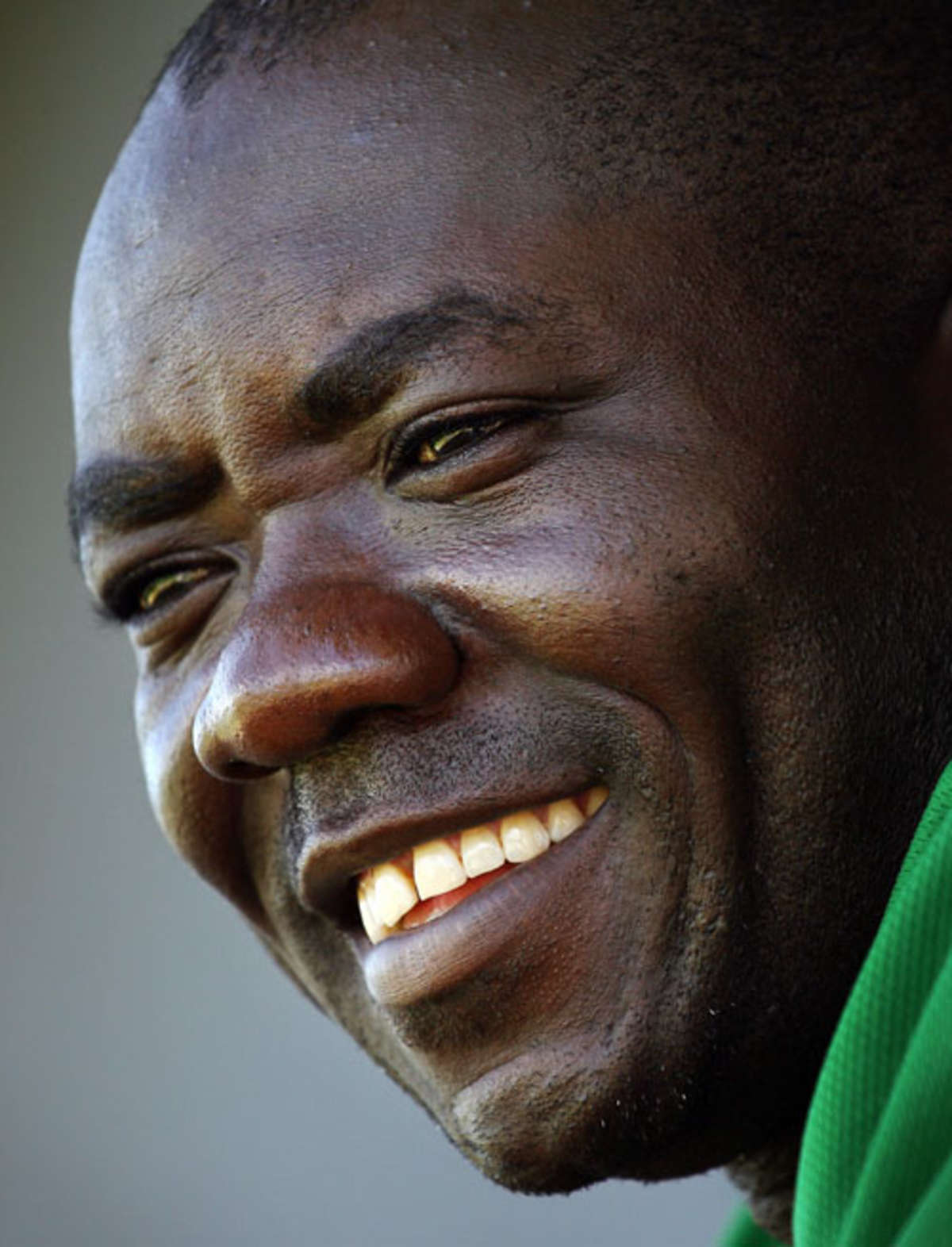
Steve Tikolo
 Kenya
KenyaAlso known as: Stephen Ogonji Tikolo, Gunnzie, Guns
Birthday
June 25, 1971
Birth Sign
Cancer
Birthplace
Nairobi, Kenya
Age
55 years old
About
Stephen Ogonji Tikolo is a Kenyan cricketer and coach, widely regarded as the greatest cricketer Kenya has ever produced. Over a career spanning nearly two decades, he scored the most runs and took the second-most wickets for Kenya in One Day Internationals. A right-handed middle-order batsman with a graceful, free-flowing technique, he also bowled effective off-spin in limited-overs cricket.
Tikolo's defining achievement came in 2003, when he captained Kenya to a historic semi-final appearance at the Cricket World Cup, a feat that remains the pinnacle of Kenyan cricket. After retiring in 2014, he moved into coaching, guiding national teams across Africa, including Kenya, Uganda, Nigeria, and Tanzania. He continues to be a respected figure in the sport, passing on his deep knowledge to a new generation of cricketers.
Early Life & Background
Steve Tikolo was born on 25 June 1971 in Nairobi, Kenya, into a cricket-loving family. His oldest brother, Tom Tikolo, captained Kenya, and another brother, David, played in the 1996 World Cup. Cricket was a constant presence at home, and both brothers served as early influences and mentors.
He came through the ranks of Kenyan domestic cricket, making his first appearances for the national side in the ICC Trophy in the early 1990s. In 1995/96, he spent a season with Border in South African domestic cricket, gaining valuable experience against stronger opposition. That experience paid off when he made his ODI debut on 18 February 1996 against India at the Cricket World Cup, scoring a fluent 65.
Career Growth
Tikolo's international career took off after that debut. He followed it with 29 against the West Indies and 96 against Sri Lanka in the same tournament, announcing himself on the world stage. Over the next two decades, he became the backbone of Kenya's batting, amassing 3,428 runs in 135 ODIs at an average of 29.05, with three centuries and 24 fifties. His highest score of 111 came against Bermuda. He also took 94 wickets with his off-spin, including best figures of 4/41 against Scotland.
The pinnacle arrived in 2003, when he captained Kenya to a stunning semi-final run at the World Cup, defeating Bangladesh, Sri Lanka, and Zimbabwe along the way. That achievement made him the only captain from Africa to lead a team to a World Cup semi-final. He played in five World Cups overall (1996, 1999, 2003, 2007, 2011), scoring 768 runs in 28 matches and taking 15 wickets.
Beyond Kenya, Tikolo played for the Africa XI in ODIs from 2005 to 2007 and had stints with Southern Rocks in Zimbabwe. He retired from international cricket in 2014, with his last ODI against the Netherlands in January 2014.
Career Timeline
Public Image & Style
Steve Tikolo is remembered as the face of Kenyan cricket, a player who brought class to the batting line-up and often saved his best for the biggest stages. His style was a delight to watch in full flow, with all the shots in the book and a free-flowing technique. He is celebrated as the standard-bearer for cricket in Africa outside the traditional powerhouses, and his 2003 World Cup run captured the world's attention. Fans and commentators consistently hail him as Kenya's greatest cricketer.
Fame & Fandom
Steve Tikolo stands as the definitive figure of Kenyan cricket, a player whose graceful middle-order batting and effective off-spin defined an era for the nation. While his career spanned nearly two decades, his legacy is anchored in the 2003 World Cup semi-final run that placed Kenya on the global sporting map. He is widely celebrated as the face of African cricket outside the traditional powerhouses, with a playing style described as having a distinct Caribbean flair that delighted crowds worldwide. The narrative of his career includes a pivotal victory over the West Indies in 1996, a moment that cemented his status as a cultural icon within Kenya. His leadership as captain and subsequent coaching roles across Africa further extended his influence beyond mere statistics. Despite this profound impact on the sport's history in his region, the structure of his support base remains organic rather than institutionalized. Research indicates no formal or unofficial fandom name exists for Steve Tikolo, nor are there records of organized fan campaigns, chart pushes, or fan-funded projects typical of modern influencers. His social media presence reflects a personal following rather than a mobilized community, with minimal engagement metrics suggesting an audience drawn by genuine appreciation rather than ritualized participation. Consequently, specific details regarding fan rituals or interactive campaigns cannot be confirmed from available data. Regarding his standing in broader fame metrics, iFANN has evaluated his profile but determined he does not currently hold a placement in the published Global Top 1,000 rankings. This absence of a numerical rank reflects the scope of the current evaluation rather than a lack of historical significance. While he remains a legend in his home country, he does not appear in the top-100 scope lists for global celebrity at this time.
Interesting Facts and Legends
Steve Tikolo wore shirt number 5 for Kenya in both One Day Internationals and T20Is, serving as cap number 11 for the ODI team. His nickname was "Gunnzie" or "Guns," a moniker reflecting his aggressive yet stylish approach to the game. In Twenty20 Internationals, he achieved his best bowling figures of 4/2 against Scotland. Throughout his career, he received nine Man of the Match awards in ODIs, two in T20Is, and one in World Cup matches. He also represented the University of West Indies Vice Chancellors XI during his early development. A widely retold story in Kenyan sporting lore involves his crucial role in the famous 1996 World Cup victory over the West Indies, a performance that showcased his ability to deliver under pressure and cemented his reputation as a prolific run-scorer. Fans often recall his century against Ireland in Windhoek, where he powered his way to his second hundred in three innings, displaying the free-flowing technique that made him a delight to watch. Beyond these statistical milestones, his legacy extends to his leadership, having captained the national team to its highest achievements before transitioning into coaching roles for various African nations.
Family & Personal Life
Steve Tikolo comes from a cricketing family. His oldest brother, Tom Tikolo, captained Kenya, and another brother, David, played in the 1996 Cricket World Cup. The family's passion for the sport shaped his early years and provided constant support throughout his career. Details about his personal life, including his spouse and children, remain private.
Notable Connections
Relationships & Dating History
Information about Steve Tikolo's personal life and romantic relationships is extremely limited. Unlike celebrities in entertainment or politics, cricketers from associate nations like Kenya do not typically receive the same level of media coverage regarding their private lives. No public information is available regarding a spouse, partner, or children. As of 2026, his marital or relationship status remains private and unreported in public sources.
Salary, Net Worth In 2026
Steve Tikolo's net worth is not publicly documented. As a cricketer from an associate nation, his earnings came primarily from playing contracts, coaching roles, and modest endorsement opportunities. Since retiring, he has worked as a coach for several national teams, including Kenya, Uganda, Nigeria, and Tanzania, which likely provides a stable income.
Awards & Accolades
View 2 records, honours and achievementsKnown For
Kenya national cricket team
1996 · Batsman and captain
2003 Cricket World Cup
2003 · Captain
Keywords
Sources
Quick Facts
- Profession
- Cricketer
- Born
- June 25, 1971
- Birthplace
- Nairobi, Kenya
- Gender
- Male
- Birth Sign
- Cancer
Personal Details
- Full Name
- Stephen Ogonji Tikolo
Frequently Asked Questions
Is Steve Tikolo the greatest Kenyan cricketer of all time?
What did Steve Tikolo achieve at the 2003 Cricket World Cup?
How many runs did Steve Tikolo score in his ODI career?
What teams has Steve Tikolo coached?
When did Steve Tikolo make his international debut?
Similar People
Join the community
fans discussing