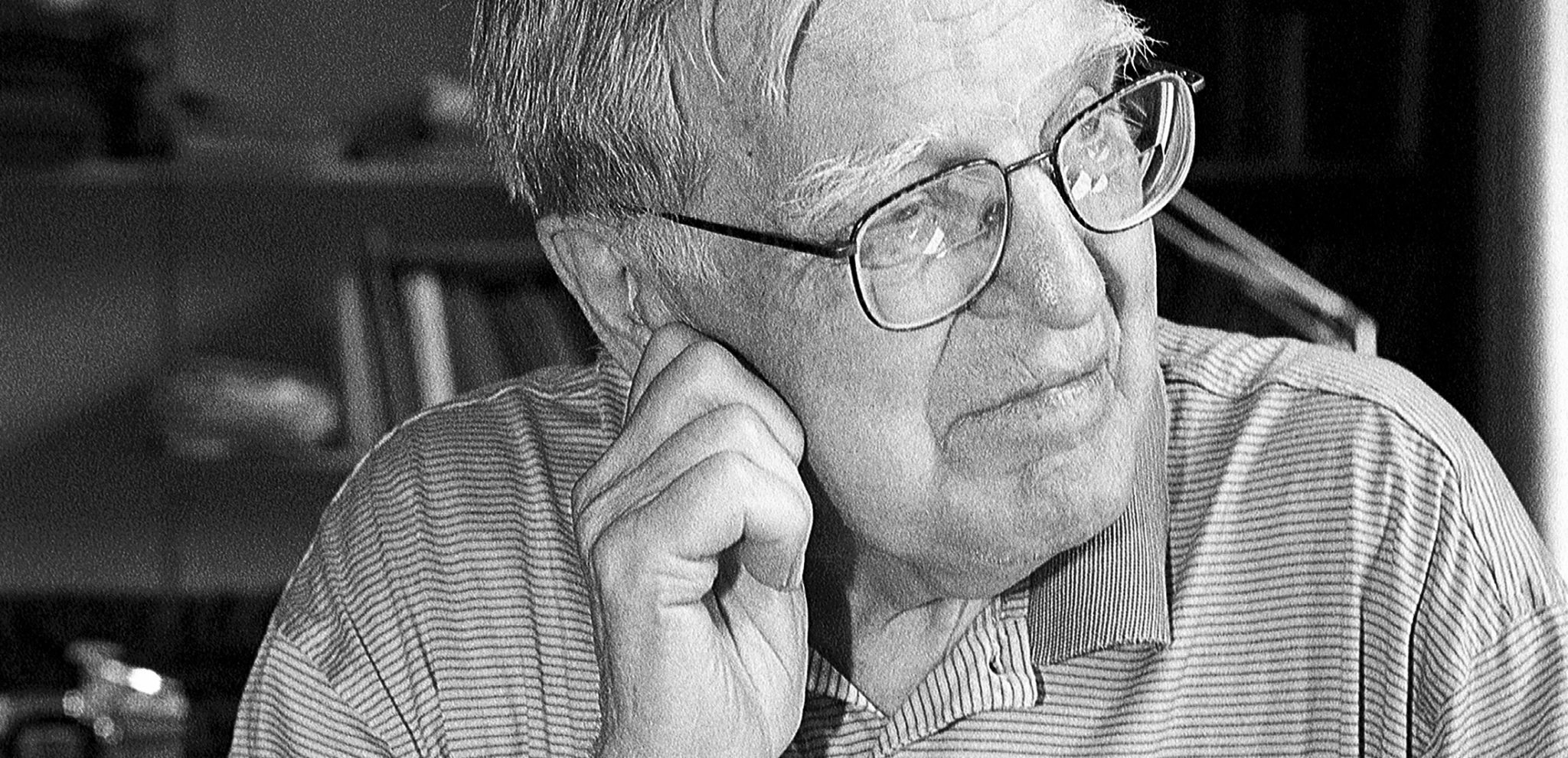
Aage Bohr
 Denmark
Also known as: Aage Niels Bohr
Birthday
June 19, 1922
Birth Sign
Gemini
Birthplace
Copenhagen, Denmark
Age
Died at 87
About
Aage Niels Bohr was a Danish nuclear physicist who shared the 1975 Nobel Prize in Physics with Ben Roy Mottelson and James Rainwater for discovering how collective motion and particle motion combine inside atomic nuclei. His father, Niels Bohr, had won the same prize in 1922, making them one of the few father-son pairs to both receive the honor. Aage grew up at the Niels Bohr Institute, surrounded by the leading physicists of his era, and he spent his career building on that legacy.
Bohr's most famous work, developed with Mottelson at the institute, explained how atomic nuclei can be deformed rather than perfectly spherical, and how individual particles move within that deformed shape. Their theory, published in the two-volume monograph Nuclear Structure, became the standard model for understanding nuclear behavior. He directed the Niels Bohr Institute from 1963 to 1970 and taught at the University of Copenhagen.
He passed away on September 8, 2009, in Copenhagen, at the age of 87, leaving behind a scientific legacy that bridged his father's quantum revolution and modern nuclear physics.
Early Life & Background
Aage Bohr was born in Copenhagen in 1922, the same year his father won the Nobel Prize. The family lived at the Institute for Theoretical Physics, where Niels Bohr worked, so Aage grew up in a home that doubled as a scientific hub. Heisenberg, Pauli, and other giants of quantum mechanics regularly visited, and young Aage absorbed physics from dinner-table conversations.
When World War II broke out, Aage's formal studies at the University of Copenhagen were interrupted. In 1943, with the Nazi occupation threatening his father, the family fled to Sweden and then to England and the United States. Aage accompanied his father to Los Alamos, New Mexico, where both worked on the Manhattan Project. This experience placed the young physicist at the heart of the most consequential scientific effort of the time.
After the war, Aage returned to Denmark and completed his doctorate at the University of Copenhagen in 1954. His thesis work explored nuclear structure, laying the groundwork for his later collaboration with Ben Roy Mottelson.
Career Growth
In the 1950s, building on James Rainwater's insight that atomic nuclei could be deformed, Aage Bohr and Ben Roy Mottelson developed a unified theory of nuclear structure. They showed that the nucleus moves collectively as a whole while individual protons and neutrons also have their own motion, and that these two behaviors are coupled. Their model matched experimental data with remarkable precision and became the foundation of modern nuclear physics.
The pair published their findings in the landmark two-volume work Nuclear Structure, first appearing in 1969 and 1975. In 1975, Bohr, Mottelson, and Rainwater were jointly awarded the Nobel Prize in Physics for this discovery. The Nobel committee specifically cited their work on the connection between collective and particle motion.
Bohr also served as director of the Niels Bohr Institute from 1963 to 1970, and he was a professor at the University of Copenhagen for many years. His leadership helped maintain the institute's reputation as a world center for theoretical physics.
Public Image & Style
Aage Bohr was remembered in obituaries as a modest and dedicated scientist who carried forward his family's extraordinary legacy without seeking the spotlight. Unlike his father, who was a public intellectual and political figure, Aage focused on research and teaching at the Niels Bohr Institute.
Colleagues described him as approachable and rigorous, with a deep commitment to mentoring young physicists. His work bridged the gap between his father's quantum theory and the practical understanding of nuclear structure, and he is respected for keeping the Copenhagen school of physics relevant in the postwar era.
Fame & Fandom
The legacy of Aage Bohr is defined not by a chorus of adoring fans or organized campaigns, but by the profound reverence of the scientific community and the enduring fascination of those who track the rarest family dynasties in history. While pop culture might rally behind a celebrity with a specific fandom name and birthday billboards, Bohr's audience remains a global network of physicists, historians, and students drawn to his work at the Niels Bohr Institute. There is no formal collective name for his admirers; instead, the 'fanbase' is simply anyone who studies the collective model of the atomic nucleus or follows the unique trajectory of the Bohr family. This lack of a branded fan identity reflects his life as a dedicated academic rather than a public figure seeking mass engagement.
In the vast landscape of global personalities evaluated by iFANN, Aage Bohr occupies a distinct space. As of August 2026, the iFANN Global Fame Engine has evaluated this person, but they do not currently hold a placement in the published rankings (Global Top 1,000 or a Top-100 scope list). He is not ranked within the top 1,000 most famous people in the world, nor does he appear on any specialized Top-100 lists for science or Danish figures. The data confirms that while his contributions are monumental within their field, they have not translated into the broad, consumer-driven fame metrics required for a current numerical rank. His status remains one of historical significance rather than contemporary viral dominance.
Interesting Facts and Legends
One of the most remarkable coincidences in scientific history involves Aage Bohr and his father, Niels Bohr. They stand as one of only a handful of father-son pairs to both win the Nobel Prize in Physics, a distinction made even more striking because Aage was born in the very same year his father received the honor in 1922. During the height of World War II, Aage served as a junior assistant at Los Alamos during the Manhattan Project. In a display of security caution typical of the era, his father operated under the alias "Nicholas Baker," while the younger Bohr was known simply as "Aage" on the project. His personal life saw him marry Marietta, an American woman, in New York in 1950; the couple had three children before her passing in 1978, after which Bohr remarried.
Legends surrounding the Bohr family often focus on the sheer weight of their intellectual inheritance. A widely retold story highlights how Aage grew up surrounded by the leading minds of his time at the Niels Bohr Institute, effectively inheriting a laboratory of genius. Another iconic moment in his lore is the publication of the definitive text *Nuclear Structure* alongside Ben Roy Mottelson. This work did not just earn a prize; it fundamentally shifted how humanity understands the shape of the atom, moving from perfect spheres to deformed structures. Today, the family tradition continues through his grandson, Clement Bohr, who graduated from the University of Virginia in 2017 with a degree in economics, proving that the drive for knowledge spans generations.
Family & Personal Life
Aage Bohr was the fourth son of Niels Bohr and Margrethe Bohr. His father won the Nobel Prize in Physics in 1922, the year Aage was born, and the family lived at the Institute for Theoretical Physics in Copenhagen. Aage's childhood was spent in the company of scientific luminaries who visited his father.
He married Marietta Soffer in New York in 1950. The couple had three children: Vilhelm, Tomas, and Margrethe. Marietta passed away in 1978, and Aage later remarried, though details of his second wife are not widely documented. He remained married until his death in 2009.
Relationships & Dating History
Aage Bohr married Marietta Soffer in New York in 1950. The couple had three children: Vilhelm, Tomas, and Margrethe. Their marriage lasted until Marietta's death in 1978.
Following Marietta's passing, Bohr remarried, though the name of his second wife and the exact date of the marriage are not widely recorded. He remained married until his death in 2009.
At the time of his death, he was a widower from his second marriage, having outlived both wives.
- MarriedMarietta Soffer1950 - 1978Married in New York, had three children together, separated by her death.
- MarriedSecond wife (name unknown)1978 - 2009Remarried after first wife's death, remained married until his own death.
Death & Aftermath
Died
September 8, 2009 (aged 87)
Death Place
Copenhagen, Denmark
Cause of Death
Unknown
Aage Niels Bohr passed away on September 8, 2009, in Copenhagen, Denmark, at the age of eighty-seven. The records confirm his death occurred in his home city but do not specify a precise location or provide an official medical cause, leaving the circumstances as a natural end to a long life following a distinguished career. The scientific community responded with tributes acknowledging his status as one of the world's finest theoretical physicists, with Physics Today describing him as a flame that was constantly burning. The University of Copenhagen marked his passing with an In Memoriam entry, while major institutions like the Royal Swedish Academy of Sciences recognized his legacy through their existing records of his 1975 Nobel Prize and academic tenure.
As a respected scientist who died naturally in his home city of Copenhagen, his passing did not trigger any legal proceedings or forensic inquiries. The estate of Aage Bohr was handled privately, with no public details regarding its administration or distribution made available. Details regarding the specific date, location, or nature of his funeral or burial have not been released, though the university maintains a digital memorial page for him. His obituary in The Guardian highlighted his unique position as the fourth son of Niels Bohr and a physicist in his own right who transformed nuclear physics.
Net Worth (Estate Value)
$5 Million
iFANN Editorial Team estimate
As a deceased academic physicist, Aage Bohr's financial standing is not a matter of public corporate reporting. His income during his lifetime derived primarily from his professorial salary at the University of Copenhagen and the Nobel Prize award. When he shared the 1975 prize, the total sum was approximately 630,000 Swedish kronor, roughly equivalent to $150,000 at the time, which was divided among the three laureates. His estate, now managed by his heirs, benefits from ongoing royalties generated by his influential published works, particularly the *Nuclear Structure* monographs that remain in print today. The estate is also linked to the Niels Bohr Archive, a scholarly resource preserving his papers and correspondence rather than a commercial enterprise. Per iFANN's editorial analysis, the value of the estate is estimated at $5 Million. As of 2026, this figure represents a modest accumulation compared to commercial fortunes, reflecting a life dedicated to research and teaching rather than wealth generation.
Awards Won (1)
Aage Bohr was awarded the 1975 Nobel Prize in Physics, shared with Ben Roy Mottelson and James Rainwater, for their discovery of the connection between collective and particle motion in atomic nuclei. This remains his most significant accolade, recognizing his fundamental contributions to nuclear physics.
1975 · Physics
Discovery of the connection between collective motion and particle motion in atomic nuclei
Known For
Nobel Prize in Physics
1975 · Co-recipient
Nuclear Structure (book)
1969-1975 · Co-author
Director of Niels Bohr Institute
1963-1970 · Director
Keywords
Sources
Quick Facts
- Profession
- Nuclear physicist
- Born
- June 19, 1922
- Birthplace
- Copenhagen, Denmark
- Died
- September 8, 2009
- Death Place
- Copenhagen, Denmark
- Gender
- Male
- Spouse
- Marietta Soffer (first), second wife (name unknown)
- Birth Sign
- Gemini
- Children
- Vilhelm, Tomas, Margrethe
Personal Details
- Full Name
- Aage Niels Bohr
- Spouse
- Marietta Soffer
- Children
- Vilhelm Bohr, Tomas Bohr, Margrethe Bohr
- Education
- University of Copenhagen (doctorate, 1954)
Frequently Asked Questions
How is Aage Bohr related to Niels Bohr?
What did Aage Bohr win the Nobel Prize for?
Was Aage Bohr involved in the atomic bomb project?
When and where was Aage Bohr born?
Did Aage Bohr have children?
Similar People
Join the community
fans discussing