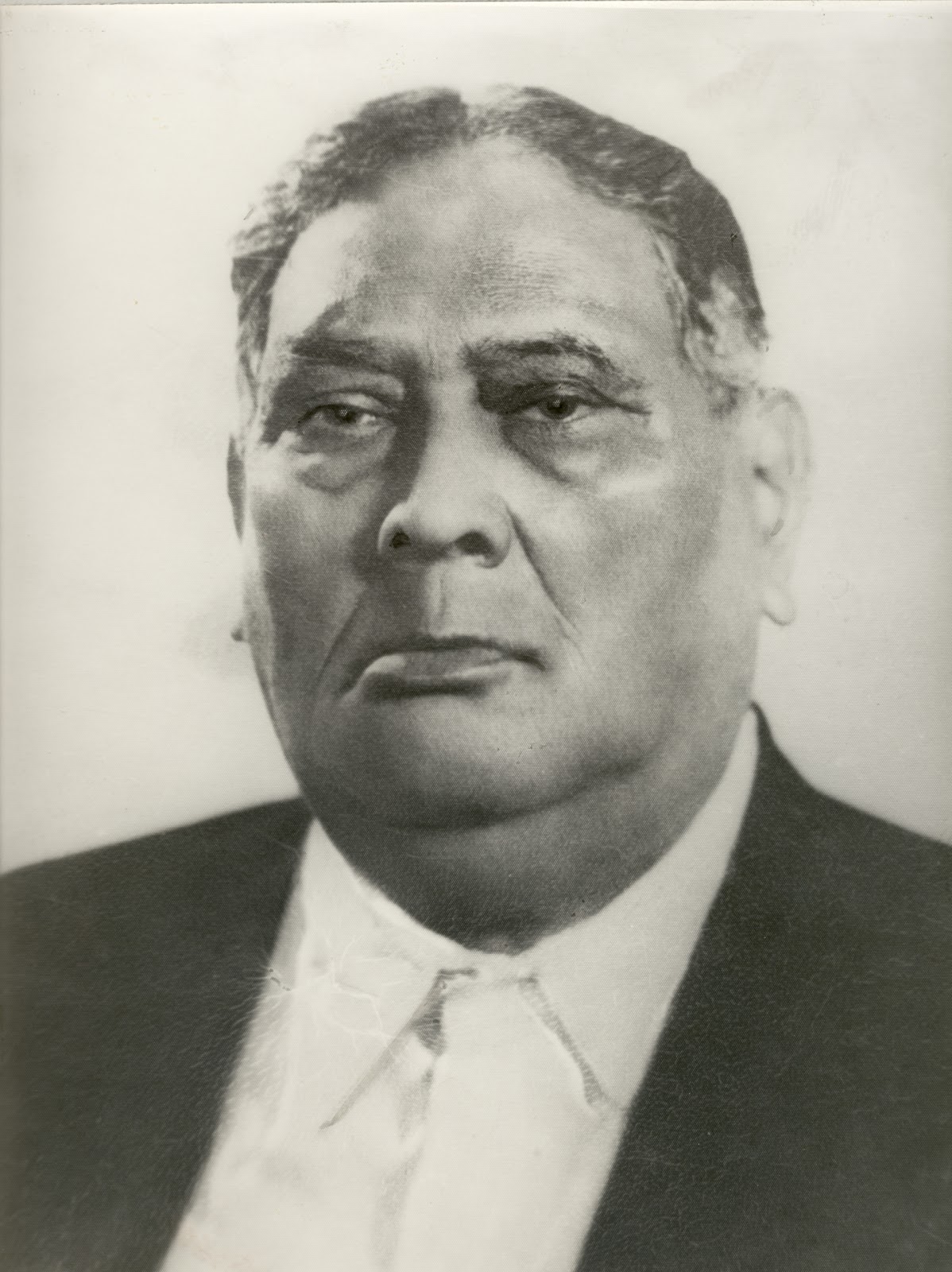
A. K. Fazlul Huq
 Pakistan
Also known as: Sher-e-Bangla, Abul Kasem Fazlul Huq, Fazul Haq
Birthday
October 26, 1873
Birth Sign
Sagittarius
Birthplace
Barishal, British Bengal
Age
Died at 88
About
Abul Kasem Fazlul Huq, known to millions as Sher-e-Bangla (the Tiger of Bengal), was a towering figure in South Asian politics. Born on October 26, 1873, in Barishal, then part of British Bengal, he rose from a middle-class Bengali Muslim family to become a lawyer, statesman, and the first and longest-serving prime minister of Bengal under the British Raj. His political career spanned nearly five decades, during which he held an extraordinary array of offices: president of the All India Muslim League (1916–1921), general secretary of the Indian National Congress (1916–1918), education minister of Bengal (1924), mayor of Calcutta (1935), prime minister of Bengal (1937–1943), advocate general of East Bengal (1947–1952), chief minister of East Bengal (1954), home minister of Pakistan (1955–1956), and governor of East Pakistan (1956–1958). He was first elected to the Bengal Legislative Council from Dhaka in 1913 and served on it for 21 years until 1934.
Huq's political journey was marked by a rare ability to straddle opposing camps. In 1919, he uniquely served simultaneously as president of the All India Muslim League and general secretary of the Indian National Congress. He also sat on the Congress committee that investigated the Amritsar massacre. As a legislator, he moved from the Central Legislative Assembly (1934–1936) to the Bengal Legislative Assembly, where he was prime minister and leader of the house for six years. After partition, he was elected to the East Bengal Legislative Assembly and served as chief minister for two months.
His most enduring achievement came in 1940 when he presented the Lahore Resolution, which called for a sovereign state in the Muslim-majority regions of British India. That document became the foundation of the Pakistan Movement, earning him a place among the founding fathers of Pakistan. As prime minister, he pushed for land reform and curbed the influence of zamindars, using legal and administrative measures to reduce the debt burden of millions of tenant farmers. He was considered a leftist and social democrat, and his ministries were often marked by intense factional infighting.
During World War II, Huq joined the Viceroy's Defence Council and supported the Allied war effort, but resigned in March 1943 under pressure from the governor and after the Hindu Mahasabha withdrew from his cabinet. In Pakistan, he served as East Bengal's attorney general for five years and participated in the Bengali language movement. He died in Dacca (now Dhaka) on April 27, 1962, at age 88, and is buried in the Mausoleum of Three Leaders alongside Khwaja Nazimuddin and Huseyn Shaheed Suhrawardy. Sher-e-Bangla Nagar, where the National Parliament stands, is named in his honor. His son, A. K. Faezul Huq, also became a politician in Bangladesh.
Early Life & Background
Abul Kasem Fazlul Huq was born on October 26, 1873, in the town of Barishal, then part of British Bengal and now in Bangladesh. His father, Kazi Muhammad Wazid, was a respected figure in the local community, and the family was middle-class. Huq's early education took place in Barishal, where he showed an early aptitude for learning. He then moved to Calcutta for higher studies, graduating from Presidency College. He went on to earn a law degree and was called to the bar, a credential that would prove central to his later political career.
Before entering politics, Huq worked in the colonial bureaucracy. From 1908 to 1912, he served as Assistant Registrar of Co-operatives, a position that gave him insight into rural economic issues. He resigned in 1912 to enroll as a lawyer at the Calcutta High Court. The following year, in 1913, he was elected to the Bengal Legislative Council from Dhaka, a seat he would hold for an unprecedented 21 years. This electoral success marked the beginning of his long public life.
Huq's rise was swift. By 1916, he was simultaneously serving as president of the All India Muslim League and general secretary of the Indian National Congress, a dual role that reflected his ability to bridge communal divides. In 1919, he sat on the Congress committee that investigated the Amritsar massacre, a formative experience in a period of intense political ferment. These early years established him as a skilled orator and a champion of tenant farmers, setting the stage for his later achievements.
Career Growth
Fazlul Huq's breakthrough came in 1924 when he became Education Minister of Bengal, where he championed educational reform for Bengali Muslims. In 1935, he achieved another landmark: he became the first Muslim Mayor of Calcutta, a city where Hindu political elites had long dominated. The year 1937 brought his most consequential role: he became the first and longest-serving Prime Minister of Bengal under the British Raj, a position he held until 1943.
His government, initially a coalition between his Krishak Praja Party (KPP) and the Bengal Provincial Muslim League, pursued land reform and curbed the influence of zamindars, reducing the debt burden of millions of tenant farmers. The KPP, which he founded, gained significant popularity by appealing to youth and advocating radical change. As prime minister, he was considered a leftist and social democrat, though his ministries were often marked by intense factional infighting.
The defining moment of his career came on March 23, 1940, when he presented the Lahore Resolution at the All India Muslim League session. That document called for a sovereign state in the Muslim-majority regions of British India and became the foundational charter of the Pakistan Movement. It cemented his place among the founding fathers of Pakistan.
During World War II, Huq joined the Viceroy's Defence Council and supported the Allied war effort, but he resigned in March 1943 under pressure from the governor and after the Hindu Mahasabha withdrew from his cabinet. After partition, he served as Advocate General of East Bengal from 1947 to 1952, participated in the Bengali language movement, and was elected Chief Minister of East Bengal in 1954, a position he held for only two months amid political instability. He subsequently served as Home Minister of Pakistan (1955–1956) and Governor of East Pakistan (1956–1958).
Career Timeline
Public Image & Style
Fazlul Huq's public image is that of a towering, courageous defender of Bengali Muslim interests, hence his epithet "Sher-e-Bangla." He is remembered as a leftist and social democrat who fought for land reform. His political style was marked by coalition-building across communal lines, though his ministries were often plagued by factional infighting. In contemporary Bangladesh, he is revered as a founding figure, with his ideals invoked by sitting presidents and prime ministers. His legacy is particularly celebrated in Barishal, his birthplace, and in Dhaka's Sher-e-Bangla Nagar. There is no documented formal fandom name or fan culture in the modern sense; rather, he is honored through state commemorations, academic retrospectives, and political tributes.
Fame & Fandom
Abul Kasem Fazlul Huq commands a legacy defined by statecraft rather than the ephemeral adoration typical of modern entertainers. As a historical figure who passed in 1962, he possesses no organized fanbase with a formal name, nor are there rituals, campaigns, or viral social movements dedicated to his person in the manner of contemporary pop culture icons. His reverence is strictly commemorative and academic, manifested through annual observances of his death anniversary and the enduring study of his political contributions to Bengal. While his family lineage maintains a presence in current politics, this represents a continuation of dynastic influence rather than a grassroots fandom structure. The iFANN Global Fame Engine evaluated his standing in August 2026 and determined that he does not currently hold a placement in the published rankings (Global Top 1,000 or a Top-100 scope list). This absence of a numerical rank reflects his status as a deceased statesman whose fame operates outside the metrics of real-time media consumption and search volume that drive modern celebrity charts. His influence persists through the naming of national institutions like Sher-e-Bangla Nagar and the continued citation of his legal acumen, yet these factors do not translate into a quantifiable position on the global fame scale at this time.
Interesting Facts and Legends
The epithet Sher-e-Bangla, meaning Tiger of Bengal, was earned for his fearless defense of tenant farmers against exploitative landlords. Before his rise to prominence, he served as Assistant Registrar of Co-operatives from 1908 to 1912. His 21-year tenure on the Bengal Legislative Council from 1913 to 1934 stands as a reflection of his longevity in public service. He uniquely held the simultaneous positions of president of the All India Muslim League and general secretary of the Indian National Congress in 1919, an achievement unmatched in Indian political history. Historical records confirm he was the first Muslim Mayor of Calcutta in 1935. A widely retold narrative suggests he envisioned a united, secular Bengal that remained part of a unified India, a dream often cited as a lost alternative in Bengali folklore. In 2026, a letter written by him to Maulana Bhashani resurfaced in digital discourse, becoming a viral item used to illustrate their shared political vision. His 152nd birth anniversary was observed on October 26, 2025, while his death anniversary remains a day of official remembrance.
Family & Personal Life
Fazlul Huq was born to Kazi Muhammad Wazid, a respected figure in the local community, in a middle-class Bengali Muslim family. He was married and had children, though historical records focus primarily on his public life. His son, A. K. Faezul Huq, followed him into politics in Bangladesh. His granddaughter, Fersamin Haque Iqbal Flora, remains active in contemporary Bangladeshi politics, joining the NCP party in April 2026. The family's political legacy continues to be felt in the region.
Notable Connections
Fazlul Huq's political life was intertwined with several key figures. He corresponded with Maulana Abdul Hamid Khan Bhashani, a political ally, and a historic letter from Huq to Bhashani resurfaced in April 2026. He helped Chaudhary Muhammad Ali become Prime Minister of Pakistan, securing the post of interior minister in the process. He is buried alongside Khwaja Nazimuddin and Huseyn Shaheed Suhrawardy in the Mausoleum of Three Leaders. He also had significant political debates with Muhammad Ali Jinnah over Pakistan's future.
Relationships & Dating History
Historical records provide little detail about Fazlul Huq's romantic life, reflecting the privacy norms of his era. He was married and had children, but the names and dates of his marriages are not extensively documented. His son, A. K. Faezul Huq, later became a politician in Bangladesh. At the time of his death in 1962, he was widowed, as no records indicate a surviving spouse.
Death & Aftermath
Died
April 27, 1962 (aged 88)
Death Place
Dhaka, East Pakistan
Cause of Death
reported natural causes
Abul Kasem Fazlul Huq died on April 27, 1962, in Dhaka, East Pakistan. The historical record confirms the date and location of his passing but offers no specific medical details regarding the cause. Tributes to the Tiger of Bengal emerged immediately from political peers and institutions, establishing a pattern of annual remembrance that persists into the modern era. On the 64th anniversary of his death in April 2026, President Mohammed Shahabuddin formally recognized the occasion. His funeral arrangements are not detailed in available records, yet his status as a national figure remains evident through the continued maintenance of his mausoleum and the presence of landmarks dedicated to his memory.
Posthumously, he is frequently cited as a pioneer of education and social emancipation for Bengali Muslims, with his legacy sustained by scholarly discussions and the resurgence of his historic correspondence. While specific details of immediate vigils held in 1962 remain unrecorded, the enduring nature of his influence is marked by floral tributes to his portrait and ongoing debates regarding the preservation of his history among younger generations. The family connection to his legacy continues through his granddaughter, Fersamin Haque Iqbal Flora, who joined the National Citizen Party in 2026.
Net Worth (Estate Value)
$1 Million
iFANN Editorial Team estimate
As a historical figure who died in 1962, Fazlul Huq did not accumulate personal wealth comparable to modern celebrities or politicians. He was a lawyer and politician who served in public office; his income derived from his legal practice and government salaries. His legacy wealth is primarily symbolic and cultural, through the naming of public spaces, the maintenance of his mausoleum, and ongoing scholarly and commemorative activities. The estate is not known to generate commercial revenue. Per iFANN's editorial analysis, estimates for his net worth in 2026 stand at $1 Million, reflecting his public service rather than personal fortune.
Awards & Accolades
View 5 records, honours and achievementsKnown For
Lahore Resolution
1940 · Presenter
Prime Minister of Bengal
1937 · Prime Minister
First Muslim Mayor of Calcutta
1935 · Mayor
Krishak Praja Party
1929 · Founder
Keywords
Sources
Quick Facts
- Profession
- politician
- Born
- +1873-10-26
- Birthplace
- Barishal
- Died
- +1962-04-27
- Death Place
- Dhaka
- Gender
- Male
- Birth Sign
- Sagittarius
Personal Details
- Full Name
- Abul Kasem Fazlul Huq
- Children
- A. K. Faezul Huq
- Education
- Presidency College, Calcutta; law degree
Frequently Asked Questions
Why is A. K. Fazlul Huq called Sher-e-Bangla?
What was A. K. Fazlul Huq's role in the Pakistan Movement?
How long was A. K. Fazlul Huq Prime Minister of Bengal?
What was the Krishak Praja Party?
Where is A. K. Fazlul Huq buried?
Similar People
Join the community
fans discussing