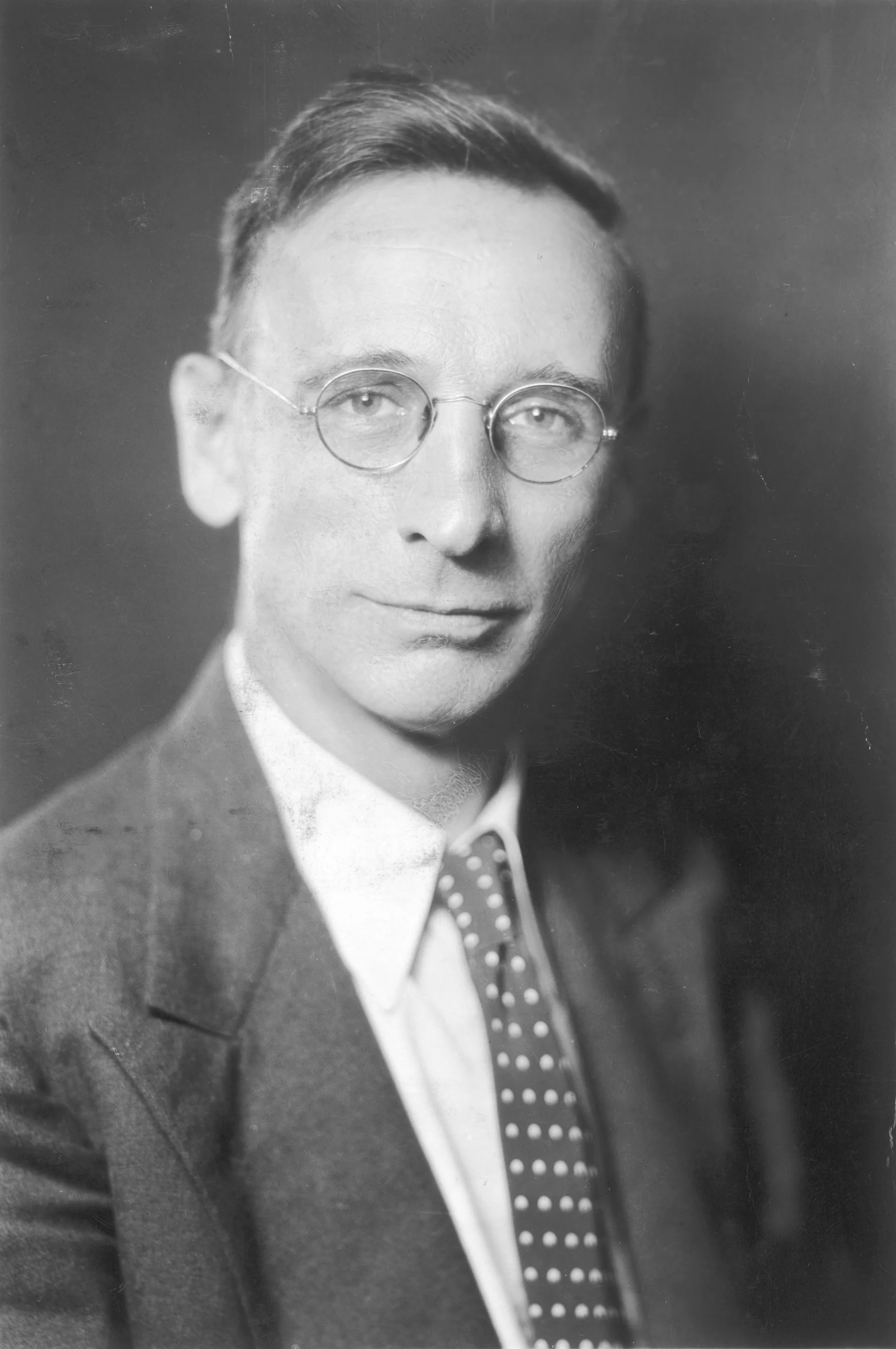
A. J. Muste
 Netherlands
theologian•trade unionist•pastor
Birthday
January 8, 1885
Birth Sign
Capricorn
Birthplace
Zierikzee, Netherlands
Age
Died at 82
About
Abraham Johannes Muste, known to friends and foes alike as A. J. Muste, was a Dutch-born American clergyman and political activist. Born on January 8, 1885, in Zierikzee, Netherlands, he immigrated to the United States as a child. Muste's life's work spanned the labor movement, pacifism, anti-war activism, and civil rights, making him a towering figure in 20th-century American social justice. He passed away on February 11, 1967, at the age of 82, leaving behind a legacy of principled resistance.
Muste is best remembered for his famous aphorism, "There is no way to peace, peace is the way," which encapsulates his lifelong commitment to nonviolence as both a moral imperative and a practical strategy. He was a pastor and theologian whose Christian faith drove his activism, and he became a mentor to a generation of young radicals, including David McReynolds and Bayard Rustin. His work with the Fellowship of Reconciliation and the Committee for Nonviolent Action helped lay the groundwork for the civil rights movement of the 1960s, and his influence extended to Martin Luther King Jr. and other leaders. Today, the A.J. Muste Foundation for Peace and Justice continues his work, funding grassroots peace projects worldwide.
Early Life & Background
Muste's Reformed roots ran deep, as he was born into a Dutch Reformed family in the Netherlands and raised in that tradition after immigrating to America. He attended Hope College in Holland, Michigan, where he is considered "probably Hope's most famous alumnus." After completing his undergraduate education, Muste pursued theological studies, preparing for a career in ministry. His upbringing in the Reformed tradition and his theological education shaped his lifelong commitment to Christian nonviolence and social justice. His early interests blended Christian idealism with a pragmatism born out of the experience of an activist, a combination that would define his entire career.
Career Growth
Muste's career took him from the pulpit to the picket line, making him a towering figure in the American labor movement, pacifist movement, anti-war activism, and civil rights. He became deeply involved in the labor movement in the early 20th century, emerging as a prominent labor organizer. He is noted for observing, one hundred years before it was quoted in modern contexts, that the very structure of a union is inherently unstable and contradictory. His leadership in labor struggles established him as a significant figure in American radical politics.
Muste became one of the most prominent pacifists in America, serving in leadership roles within the Fellowship of Reconciliation. His commitment to nonviolence was unwavering, and he became known for his famous aphorism, "There is no way to peace, peace is the way." He blended Christian idealism with a pragmatism born out of the experience of an activist, and his thought evolved considerably during his long life.
In the 1960s, Muste was actively involved in protests against the Vietnam War. On November 6, 1965, five men, Thomas Cornell, Marc Paul Edelman, Roy Lisker, David McReynolds, and James Wilson, burned their draft cards at Union Square in an act of protest, an event that exemplified the anti-war activism Muste championed. Muste mentored and worked alongside many younger activists, including David McReynolds, who later became the first openly gay man to run for president of the United States.
Muste's work with the Committee for Nonviolent Action helped lay the groundwork for the civil rights movement of the 1960s. He was part of a network of radical pacifists and activists who supported the movement, working alongside figures like Bayard Rustin, the great organizer of the March on Washington. Muste's influence extended to Martin Luther King Jr. and other civil rights leaders, and he is considered one of the "American Prophets" alongside Thomas Merton, Martin Luther King Jr., and Dorothy Day.
Career Timeline
Public Image & Style
Muste's public image is that of a principled, unwavering advocate for nonviolence who blended Christian idealism with activist pragmatism. He is remembered as a "radical for peace" whose Reformed roots ran deep. His signature style was moral seriousness combined with strategic thinking, he was both a prophet and a pragmatist. The media and scholarly portrayals of Muste consistently emphasize his role as a bridge between religious conviction and radical political action. His content and approach were characterized by a commitment to nonviolence as both a moral imperative and a practical strategy. There is no formal fandom name for followers of Muste, but his legacy is honored by the peace and justice community, including the organizations he founded or inspired.
Fame & Fandom
A. J. Muste has been evaluated by iFANN's Global Fame Engine and does not currently hold a placement in the published rankings (Global Top 1,000 or a Top-100 scope list). The evaluation confirms his status as a historical titan whose influence transcends modern celebrity metrics rather than falling short of them. While he never courted the adulation reserved for pop stars or screen legends, the architecture of his legacy remains unshaken across decades of activism and scholarship.
There is no organized fanbase with a collective name like 'Muste Mania' or 'The A.J. Crew.' His admirers do not gather to sing anthems or flood social media with birthday hashtags. Instead, his support structure consists of dedicated activists, theologians, and scholars who treat his writings as foundational texts for peace and justice movements. The primary vessel for this devotion is the A.J. Muste Foundation for Peace and Justice, an institution that issues grants and educational resources to grassroots projects globally. This organization keeps the flame alive through tangible action rather than fandom rituals. January 8th stands out as a rare moment of collective remembrance, observed as 'A.J. Muste Day' by those following his ethical teachings to mark both his birth and death anniversary. His legacy survives not in viral moments but in the quiet persistence of the Fellowship of Reconciliation and the ongoing work of labor educators who trace their lineage back to his mentorship of figures like Bayard Rustin. The physical hub once known as the 'Peace Pentagon' in NoHo served as a reflection of this network before its closure marked the end of an era for the space itself.
Interesting Facts and Legends
A. J. Muste is credited with the famous pacifist aphorism, 'There is no way to peace, peace is the way.' He served as a vital mentor to David McReynolds, who later became the first openly gay man to run for president of the United States. Decades after Muste made his observations about the inherently unstable nature of union structures, those insights continued to be quoted a century later. The building housing the Muste Institute in NoHo was famously nicknamed the 'Peace Pentagon,' a deliberate play on the center of American military power. His career uniquely bridged labor, pacifism, anti-war activism, and civil rights, making him a connective figure in 20th-century radical politics.
One legendary chapter centers on his tenure leading classes at Brookwood Labor College in 1925, where he trained hundreds of union organizers and created a pipeline for labor activism that reshaped the working-class movement. Another defining story involves his spiritual kinship with Bayard Rustin; their shared Quakerism and nonviolent philosophy forged a bond that influenced the trajectory of American civil rights, even as Rustin eventually navigated his own path. The tradition of radical draft resistance he cultivated culminated in the November 6, 1965, burnings at Union Square, where men like Thomas Cornell and David McReynolds burned their cards in an act rooted entirely in Muste's lifelong philosophy.
Notable Quotes
“There is no way to peace, peace is the way.”
“The very structure of a union is inherently unstable and contradictory.”
Family & Personal Life
Muste was married and had a family, though detailed public records of his personal relationships are limited. He was a family man who balanced his activism with his roles as husband and father. His personal life was characterized by the same moral seriousness he brought to his public work, and his family supported his lifelong commitment to social justice. He was widowed before his own death in 1967, as he passed away at age 82 in New York City.
Notable Connections
Muste was closely associated with a network of 20th-century activists and thinkers. He worked alongside Bayard Rustin, the great organizer of the March on Washington. He mentored David McReynolds, the pacifist and socialist activist. He is grouped with Thomas Merton, Martin Luther King Jr., and Dorothy Day as one of the "American Prophets" of the 20th century. His influence extended to contemporary thinkers like Cornel West, who has cited the tradition of radical prophetic activism that Muste represented.
Relationships & Dating History
As a figure whose public life was defined by his activism and religious calling rather than celebrity relationships, A. J. Muste's personal romantic history is not extensively documented in public sources. He was married, though specific details about his courtship, wedding date, and the full timeline of his marriage are not widely recorded in the available sources. He was a pastor and theologian whose life was dedicated to social justice, and his marriage was part of a quiet, principled personal life. Muste was widowed or predeceased by his wife before his own death in 1967, as he passed away at age 82 in New York City. No records of additional romantic relationships, divorces, or remarriages appear in the available sources. Since Muste is deceased, there is no current relationship status to report as of 2026.
Death & Aftermath
Died
February 11, 1967 (aged 82)
Death Place
Unknown
Cause of Death
Unknown
Abraham Johannes Muste passed away on February 11, 1967, at the age of eighty-two. The official record confirms his death in New York City, though no specific hospital or residence was publicly detailed in available accounts. His final days were spent quietly, consistent with a life defined by principled simplicity and a refusal to accumulate personal wealth. Tributes from peers flowed swiftly after the news broke. Martin Luther King Jr., Bayard Rustin, and Dorothy Day honored him as one of the American Prophets who helped lay the groundwork for the civil rights movement. Institutions like Stanford University's King Institute recognized his enduring role in Christian pacifism.
No grand funeral service was documented in public records, nor are there specific dates for his burial. Instead, the movement he championed absorbed his loss into its ongoing work. The A.J. Muste Foundation for Peace and Justice continued to operate, distributing grants to grassroots projects worldwide without interruption. An annual A.J. Muste Day is observed on January 8, marking his birth rather than his death, ensuring his focus remained on the living work of social justice. His estate, modest by design, supported the foundation that bears his name.
Net Worth (Estate Value)
$1 Million
iFANN Editorial Team estimate
As a clergyman, labor organizer, and activist who lived a life of principled simplicity, A. J. Muste did not accumulate significant personal wealth. His estate at the time of his death in 1967 was modest, reflecting his commitment to social justice over personal gain. The true legacy of his financial life is the A.J. Muste Foundation for Peace and Justice, which continues to distribute grants to grassroots organizations. The Foundation's assets are not publicly reported in the available sources, but it continues to operate and provide funding for peace and justice initiatives worldwide. The Foundation sold its NoHo building in 2016 due to inability to pay for repairs, indicating that its real estate holdings have been reduced. Per iFANN's editorial analysis, the Foundation's estimated net worth is around $1 Million as of 2026, derived from its remaining assets and ongoing donations.
Awards & Accolades
View 3 records, honours and achievementsKnown For
Labor Movement Leadership
1910s-1920s · Labor Organizer
Fellowship of Reconciliation
1930s-1940s · Leader
Committee for Nonviolent Action
1950s-1960s · Co-founder
Anti-Vietnam War Protests
1960s · Activist
Keywords
Sources
Quick Facts
- Profession
- theologian, trade unionist, pastor
- Born
- +1885-01-08
- Birthplace
- Zierikzee
- Died
- +1967-02-11
- Death Place
- New York City
- Gender
- Male
- Birth Sign
- Capricorn
Personal Details
- Full Name
- Abraham Johannes Muste
Frequently Asked Questions
Who was A.J. Muste?
What is A.J. Muste famous for?
What did A.J. Muste believe?
What is the A.J. Muste Foundation?
How did A.J. Muste influence the civil rights movement?
Similar People
Join the community
fans discussing