
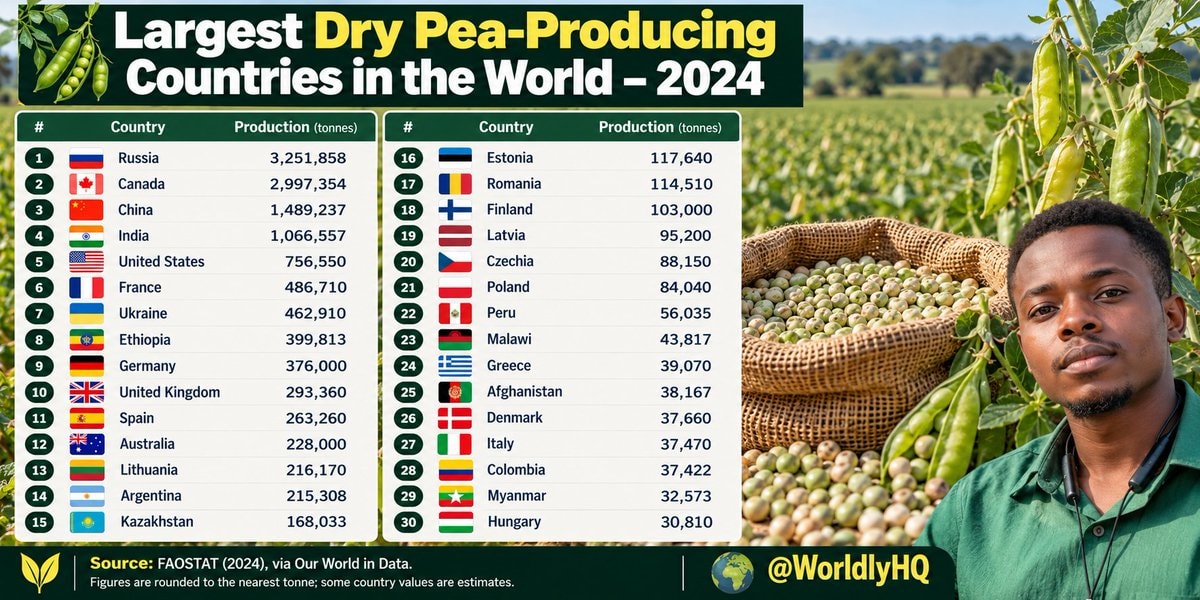
@timofeyLargest dry pea-producing countries in the world — 2024 🇷🇺 Russia: 3,251,858 tonnes 🇨🇦 Canada: 2,997,354 tonnes 🇨🇳 China: 1,489,237 tonnes 🇮🇳 India: 1,066,557 tonnes 🇺🇸 United States: 756,550 tonnes 🇫🇷 France: 486,710 tonnes 🇺🇦 Ukraine: 462,910 tonnes 🇪🇹 Ethiopia: 399,813 tonnes 🇩🇪 Germany: 376,000 tonnes 🇬🇧 United Kingdom: 293,360 tonnes 🇪🇸 Spain: 263,260 tonnes 🇦🇺 Australia: 228,000 tonnes 🇱🇹 Lithuania: 216,170 tonnes 🇦🇷 Argentina: 215,308 tonnes 🇰🇿 Kazakhstan: 168,033 tonnes 🇪🇪 Estonia: 117,640 tonnes 🇷🇴 Romania: 114,510 tonnes 🇫🇮 Finland: 103,000 tonnes 🇱🇻 Latvia: 95,200 tonnes 🇨🇿 Czechia: 88,150 tonnes 🇵🇱 Poland: 84,040 tonnes 🇵🇪 Peru: 56,035 tonnes 🇲🇼 Malawi: 43,817 tonnes 🇬🇷 Greece: 39,070 tonnes 🇦🇫 Afghanistan: 38,167 tonnes 🇩🇰 Denmark: 37,660 tonnes 🇮🇹 Italy: 37,470 tonnes 🇨🇴 Colombia: 37,422 tonnes 🇲🇲 Myanmar: 32,573 tonnes 🇭🇺 Hungary: 30,810 tonnes 🇳🇿 New Zealand: 24,484 tonnes 🇵🇰 Pakistan: 22,223 tonnes 🇲🇬 Madagascar: 20,399 tonnes 🇹🇿 Tanzania: 18,229 tonnes 🇲🇦 Morocco: 15,350 tonnes 🇧🇮 Burundi: 12,709 tonnes 🇷🇼 Rwanda: 12,218 tonnes 🇺🇬 Uganda: 12,190 tonnes Source: FAOSTAT (2024), via Our World in Data. Some figures are estimates; quantities are rounded to the nearest tonne. Dry peas are an important source of plant protein and are used in food products, animal feed and agricultural rotations. Production levels reflect differences in climate, growing conditions, cultivated area and farming systems. Follow for more verified global agricultural production data.
View original post













No comments yet. Be the first!