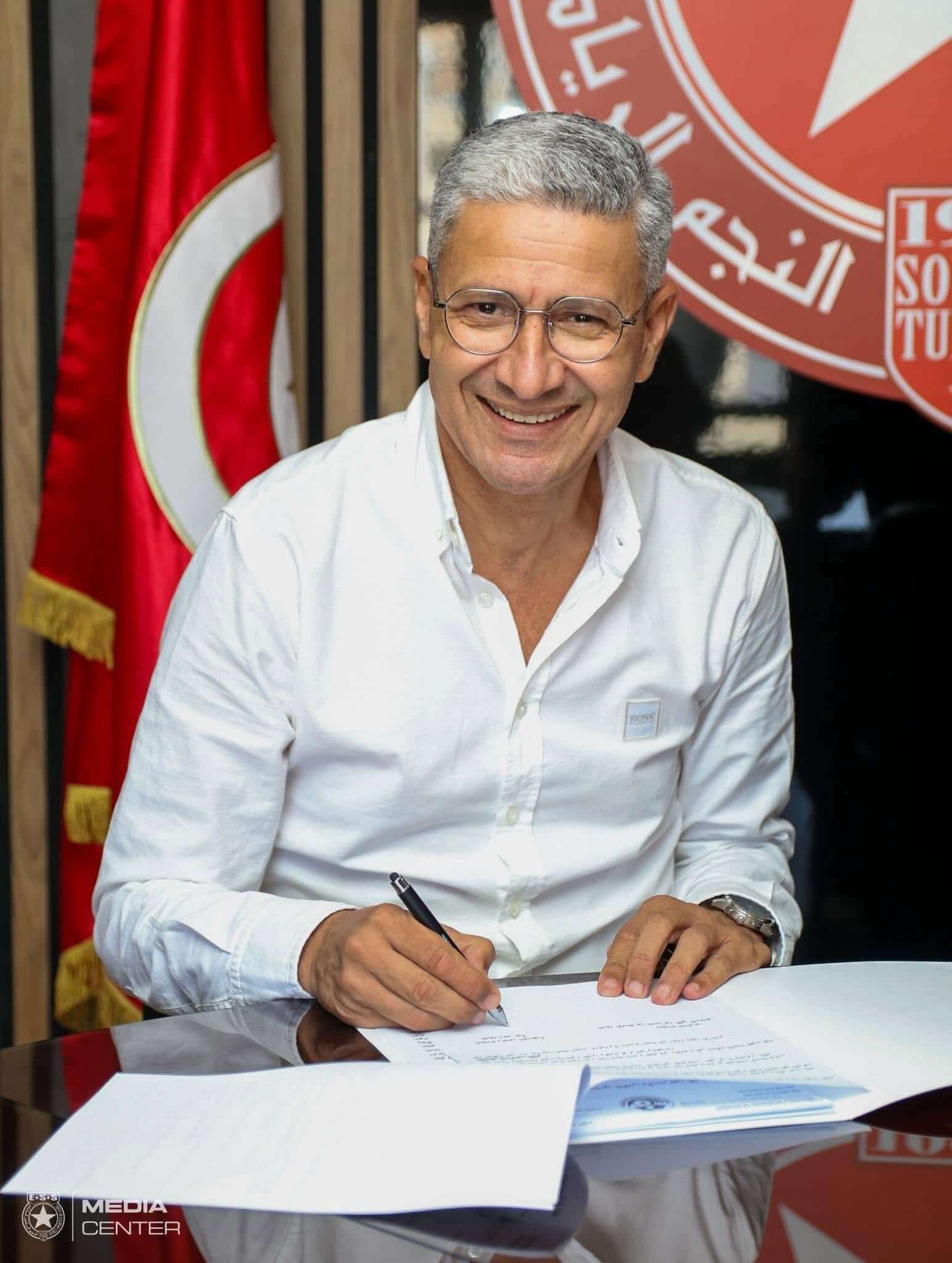
Zoubeir Baya
 Tunisia
Also known as: Zoubaier Baya, Zübeyir Beye
Birthday
May 15, 1971
Birth Sign
Taurus
Birthplace
M'saken, Tunisia
Age
55 years old
Height
5 ft 9 in (176 cm)
About
Zoubeir Baya is a retired Tunisian footballer celebrated as one of the most influential attacking midfielders of his generation. Born in M'saken, he earned the Tunisian Footballer of the Year award twice and represented his country at the 1996 Atlanta Olympics, the 1998 and 2002 FIFA World Cups, and three African Cup of Nations tournaments. His vision, passing range, and composure on the ball made him the creative engine of the Eagles of Carthage during the late 1990s and early 2000s.
At club level, Baya starred for Étoile Sportive du Sahel and Club Africain, winning domestic titles and building a reputation as a clutch performer in big matches. After retiring from international football following the 2002 World Cup, he transitioned into coaching and administrative roles within the Tunisian federation, helping to nurture the next generation of talent. Today, he remains a respected figure in Tunisian football, occasionally offering commentary on the national team's progress and staying connected with fans through social media.
Early Life & Background
Zoubeir Baya was born on May 15, 1971, in M'saken, a coastal town in the Sousse Governorate of Tunisia. The region has a rich tradition of producing talented athletes, and Baya grew up immersed in grassroots football, playing on local pitches before joining formal academies. His early promise as a playmaker was evident from a young age, with coaches noting his exceptional ball control and ability to read the game.
He began his professional career with Étoile Sportive du Sahel, one of Tunisia's most successful clubs, where he quickly became a regular in the midfield. Through consistent performances in domestic competitions, he caught the attention of national selectors, earning his first call-up to the Tunisian national team in 1994. His education details remain private, but his footballing development was forged through rigorous training at Étoile Sahel, where he learned to dictate the tempo of matches and deliver decisive passes in tight spaces.
Career Growth
Zoubeir Baya's breakthrough came in the mid-1990s when he established himself as a key figure for both Étoile Sportive du Sahel and the Tunisian national team. He made his international debut in 1994 and was soon a regular in the squad, helping Tunisia qualify for the 1996 Atlanta Olympics, where he competed on the global stage for the first time.
His defining moment arrived at the 1998 FIFA World Cup in France, where he played a crucial role in Tunisia's group-stage campaign, showcasing his playmaking skills against top international opposition. That same year, he won the first of his two Tunisian Footballer of the Year awards, cementing his status as the country's premier talent. After a brief spell in the United Arab Emirates, Baya returned to Tunisia and continued to excel, representing his nation at the 2000 and 2002 African Cup of Nations, where he demonstrated leadership and creativity.
His second World Cup appearance came in 2002 in South Korea and Japan, after which he retired from international football. At club level, he won multiple Tunisian Ligue 1 titles and Tunisian Cup victories with Étoile Sahel and Club Africain. Following his playing career, Baya moved into coaching and administrative roles, sharing his expertise with younger players and contributing to the development of Tunisian football.
Career Timeline
Public Image & Style
Zoubeir Baya is remembered as a composed and intelligent midfielder whose style was defined by precise passing and an ability to control the pace of a game. Fans and media alike respected his professionalism and dedication to the national team, and he was often seen as a leader on the pitch. His public persona is one of quiet authority, and he remains a beloved figure in Tunisian football circles, occasionally sharing insights on the sport through interviews and social media.
Fame & Fandom (iFAMOUS Rankings)
Zoubeir Baya remains a towering figure in North African sports history, recognized for his pivotal role with the Tunisian national team during their golden era. While his legacy is secure among football purists and generations of Tunisian fans, iFANN's Global Fame Engine has evaluated his current standing and determined that he does not hold a placement in the published rankings, including the Global Top 1,000 or any Top-100 scope list. This unranked status reflects a profile where deep historical respect coexists with a lack of current global commercial dominance or viral pop-culture momentum. Unlike modern superstars who drive daily search trends, Baya's fame operates on a foundation of enduring athletic achievement rather than real-time celebrity metrics. The audience surrounding him lacks a formalized fandom structure or a specific moniker; there is no documented group calling themselves by a unique name, nor are there organized fan campaigns, charity drives, or ritualistic gatherings dedicated solely to his memory. His digital presence, anchored by an Instagram account with roughly 52,000 followers, functions as a standard channel for a respected veteran athlete rather than a hub for an active, self-identifying fan movement. He is remembered through the lens of his career statistics and his contributions to the sport, without the layer of cultural mythology or viral folklore that often accompanies figures who do achieve ranked fame. Consequently, while he commands immense respect within Tunisia and among those who followed the Eagles of Carthage, his public footprint today is defined by quiet reverence rather than the energetic engagement seen in contemporary fandom.
Interesting Facts and Legends
Baya was renowned for his clutch performances, frequently delivering goals or assists during critical moments for Étoile Sahel. He is widely considered a pioneer who paved the way for the next generation of Tunisian midfielders, including stars from the 2018 World Cup squad. In interviews, he has consistently emphasized the vital importance of discipline and teamwork in developing Tunisian football, often describing his appearances at the World Cups as a dream realized. His Instagram account, @zoubaierbayaofficiel, currently holds around 52,000 followers, serving as a reflection of his lasting connection with supporters. A notable recent development involves a video clip featuring Baya publicly criticizing coach Hervé Renard and federation officials, sparking significant discussion among football fans. This moment stands out as a rare instance of a retired legend engaging directly in high-profile public controversy. Beyond these events, no specific viral legends or crowd-shutting anecdotes have entered the broader cultural folklore surrounding his life, keeping his story grounded in verified professional achievements.
Notable Quotes
“Playing in the World Cup was a dream come true for me and my countrymen.”
“Discipline and teamwork are the foundations of Tunisian football.”
“I always gave my best for the Eagles of Carthage.”
Family & Personal Life
Details about Zoubeir Baya's family remain largely private. He was born in M'saken, Tunisia, and grew up in a region known for producing athletes, but information about his parents or siblings is not publicly documented. As of 2026, there are no credible reports about his marital status or children. He resides in Tunisia, where he remains involved in the football community.
Notable Connections
Zoubeir Baya played under coaches Eckhard Krautzen, Francesco Scoglio, and Henri Michel during his international career. He shared the pitch with notable teammates including Khaled Badra, Ali Zitouni, Hassen Bejaoui, Raouf Bouzaiene, and Ammar Souayah. At club level, he was associated with Étoile Sportive du Sahel and Club Africain.
Relationships & Dating History
Public records regarding Zoubeir Baya's romantic life are scarce. Unlike many high-profile athletes, he has maintained a private personal life, and no credible reports confirm any long-term relationships, marriages, or children. As of 2026, his relationship status is unknown, and he appears to have kept his personal affairs out of the public eye.
Salary, Net Worth In 2026
$2 Million
iFANN Editorial Team estimate
Per iFANN's editorial analysis, Zoubeir Baya's net worth is estimated at $2 Million as of 2026. This financial standing primarily originates from his playing career, which featured lucrative salaries from prominent Tunisian clubs alongside a brief period competing in the United Arab Emirates. Following his retirement from professional play, he has generated income through various coaching positions and administrative roles within the Tunisian football federation. Additionally, potential real estate investments located in Tunisia likely contribute to his portfolio. Although he is not a major commercial brand on a global scale, his wealth accurately reflects a highly successful tenure in African football.
Awards Won (4)
Zoubeir Baya won the Tunisian Footballer of the Year award twice, a recognition of his outstanding contributions to the sport. He also secured multiple domestic titles with Étoile Sportive du Sahel and Club Africain, including Tunisian Ligue 1 championships and cup victories.
1999 · Player of the Year
Tunisia national team
1998 · Player of the Year
Tunisia national team
1997 · League Champion
Étoile Sportive du Sahel
Known For
Tunisia national team
1994-2002 · Midfielder
Étoile Sportive du Sahel
1989-2002 · Midfielder
1998 FIFA World Cup
1998 · Player
2002 FIFA World Cup
2002 · Player
Keywords
Sources
Quick Facts
- Profession
- association football player
- Born
- May 15, 1971
- Birthplace
- M'saken, Tunisia
- Gender
- Male
- Birth Sign
- Taurus
- Height
- 5 ft 9 in (176 cm)
- Position
- Attacking Midfielder
Personal Details
- Height
- 5 ft 9 in (176 cm)
Frequently Asked Questions
How old is Zoubeir Baya?
Where was Zoubeir Baya born?
Did Zoubeir Baya play in the World Cup?
What position did Zoubeir Baya play?
Is Zoubeir Baya still active in football?
Social Media
Similar People
Join the community
fans discussing