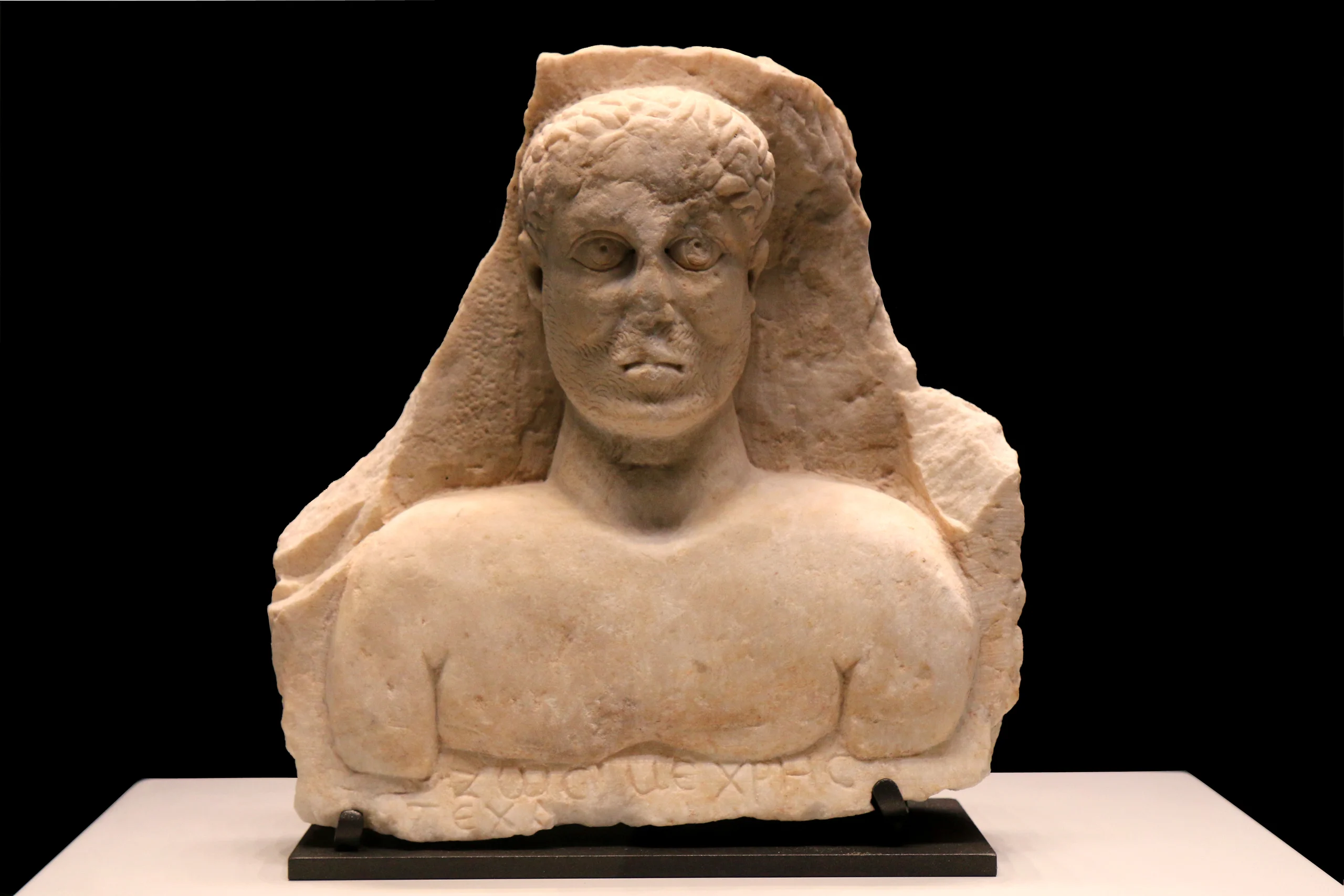
Zosimos of Panopolis
 Egypt
EgyptAlchemist•Gnostic mystic•philosopher•writer
Also known as: Zosimus, Zosimus Alchemista
Birthday
250
Birth Sign
Capricorn
Birthplace
Panopolis (modern Akhmim), Roman Egypt
Age
Died at 100
About
Zosimos of Panopolis, also known as Zosimus Alchemista, was a Greco-Egyptian alchemist and Gnostic mystic who lived during the late 3rd and early 4th centuries AD. He is widely recognized as the author of the oldest surviving books on alchemy, which he called Cheirokmeta, Greek for “things made by hand.” Fragments of his work survive in the original Greek as well as in Syriac and Arabic translations, attesting to his influence across cultures.
Zosimos is a pivotal figure in the history of chemistry and esotericism, bridging the ancient world and later alchemical traditions. He lived to approximately 99 years of age, passing away around 350 AD. His legacy endures through ongoing scholarly study, including a 2019 book by Professor Shannon Grimes titled Becoming Gold: Zosimos of Panopolis and the Art of Alchemy, and a 2021 academic paper in the journal Religions examining spiritual and material conversion in his work. His ideas continue to inspire both academic research and popular interest, making him a lasting icon of the alchemical tradition.
Early Life & Background
Zosimos was born in Panopolis, the present-day city of Akhmim in southern Roman Egypt, around 250 AD. Panopolis was a center of Egyptian religious and cultural life, known for its textile production and its devotion to the god Min. Growing up in this environment, Zosimos would have been immersed in a rich blend of Greek philosophy, Egyptian priestly traditions, and the mystery religions of the era.
His education likely included the study of Greek philosophy, particularly the works of Plato and the Stoics, as well as the technical crafts of metallurgy, dyeing, and glassmaking that were practiced in the region. As both an alchemist and a Gnostic mystic, Zosimos's intellectual formation combined practical chemical knowledge with esoteric religious speculation. This unique synthesis would later define his approach to alchemy, where spiritual transformation and material transmutation were seen as intertwined processes.
By the time he flourished around 300 AD, Zosimos had already developed a sophisticated understanding of the chemical arts and their philosophical underpinnings. His writings would go on to shape the course of alchemical thought for centuries to come.
Career Growth
Zosimos's primary achievement was authoring the Cheirokmeta, the oldest known alchemical texts. His writings covered the transmutation of metals, the nature of substances, and the philosophical foundations of the alchemical art. He pioneered much of the foundational knowledge and terminology that later alchemists would build upon, making him a pivotal figure in the history of chemistry and esotericism.
His work was influential enough to be preserved in a major alchemical compendium assembled in Constantinople in the 7th or 8th century, ensuring his ideas survived through the Byzantine period and into the medieval European and Islamic worlds. Copies of this compendium were preserved in Venice and Paris, where they remain today. His fellow Egyptian alchemist Stephen of Alexandria also appears in that collection.
Modern scholarship continues to examine his contributions. In 2021, a paper in the journal Religions analyzed “spiritual and material conversion” in his alchemical work, highlighting his unique synthesis of technical and Gnostic elements. His legacy has also been the subject of contemporary academic attention, including a 2022 faculty lecture at Meredith College on alchemy and religion in Roman Egypt, and a 2019 book by Professor Shannon Grimes titled Becoming Gold: Zosimos of Panopolis and the Art of Alchemy. In 2025, Grimes presented a keynote at the international Hermopolis Symposium in Egypt on related themes, and in 2026 she presented the Preston Lecture at Meredith College.
Career Timeline
Public Image & Style
Zosimos's public image today is that of a pioneering, somewhat mysterious figure at the origins of alchemy. In online communities such as Reddit's r/alchemy, he is regarded with reverence as one of the earliest and most important alchemists. YouTube content about him frames him as a “priest-alchemist” who “pioneered much of” the alchemical tradition. Fan wikis describe him simply as a Greek alchemist and Gnostic mystic from the end of the 3rd and beginning of the 4th century AD.
His content, the surviving fragments of his writings, is characterized by its technical detail combined with mystical and philosophical speculation. There is no official fandom name or organized fan culture, but he is a subject of ongoing interest among historians of science, esotericism enthusiasts, and alchemy practitioners. His Wikipedia article sees approximately 3,061 views over a 30-day period across English Wikipedia, with a total of roughly 4,377 views across all 19 language versions, and about 8,095 views over 60 days, indicating a steady level of public curiosity.
Fame & Fandom
Zosimos of Panopolis commands a quiet reverence within the specific niche of historical alchemy and Gnostic studies, though he lacks the organized infrastructure of a modern celebrity cult. There is no formal fandom name for his adherents; instead, his audience consists of academic scholars, historians of science, and enthusiasts of esoteric traditions who engage with his texts rather than participate in fan campaigns or digital rituals. The only entities associated with him are researchers such as Professor Shannon Grimes, whose work on *Becoming Gold* represents scholarly dissemination rather than fan activism. No verified instances of fan-funded projects, chart pushes, or crowd disruptions exist for this figure, as his legacy is preserved entirely in manuscript collections and academic discourse. Zosimos of Panopolis is currently evaluated by iFANN but holds no placement in the published Global Top 1,000 rankings or any scope-specific list. This status reflects an evaluation where the subject does not currently occupy a numbered position in the global hierarchy of fame. While his influence permeates the history of chemistry and mysticism, the scale of his recognition remains confined to specialized fields without generating the broad consumption signals required for a ranked listing. His presence is felt through the enduring study of his writings on transmutation and spiritual vision, yet he remains outside the active metrics of contemporary fame that drive the iFANN ranking systems.
Interesting Facts and Legends
Zosimos is sometimes referred to by the Latin name "Zosimus Alchemista," meaning "Zosimus the Alchemist." He is one of approximately 40 authors featured in a Byzantine alchemical compendium compiled in Constantinople during the 7th or 8th century. His work survives not only in Greek but also in Syriac and Arabic translations, attesting to his influence across multiple cultural and linguistic traditions. He was both an alchemist and a Gnostic mystic, a combination that shaped his unique approach to the art. His writings predate the famous alchemical traditions of the Islamic Golden Age and medieval Europe, making him a foundational figure in the history of chemistry and esotericism. Modern scholarship characterizes his alchemy as combining "technical and Gnostic elements," suggesting he viewed chemical processes as having spiritual significance. Additionally, no records survive describing his physical appearance, including his height, as such information was not recorded for historical figures of this period. Some legends surrounding him involve detailed accounts of descending into subterranean temples to witness priests and spirits performing the transmutation of metals. He is also credited with being the first to systematically describe the creation of the Philosopher's Stone and the elixir of life in his treatises, a story that serves as the core lore of early alchemical tradition.
Family & Personal Life
No records survive documenting Zosimos's family life, including the names of his parents, siblings, or any children. Given the historical distance of the 3rd century AD, such personal details were not recorded and cannot be reconstructed from available evidence. His personal life remains entirely unknown to historians.
Notable Connections
Zosimos is associated with fellow Egyptian alchemist Stephen of Alexandria, who also appears in the Byzantine alchemical compendium. Modern scholar Shannon Grimes, Professor of Religious and Ethical Studies at Meredith College, has dedicated significant research to Zosimos, including her 2019 book Becoming Gold and multiple lectures on his work.
Relationships & Dating History
No records survive documenting Zosimos's personal relationships, marriages, or family life. Given the historical period and the nature of surviving sources, which focus exclusively on his alchemical writings, there is no verifiable information about romantic partners, spouses, or children. As a historical figure from the 3rd century AD, such personal details were not recorded and cannot be reconstructed from available evidence. His personal life remains entirely unknown to historians.
Death & Aftermath
Died
350 (aged 100)
Death Place
Unknown
Cause of Death
Unknown
Zosimos of Panopolis lived out his final years in Roman Egypt, a figure whose existence was defined by manuscripts rather than public spectacle. While historical tradition places his passing around 350 AD, no specific location or circumstance regarding his last days has been preserved in the surviving texts. The absence of medical records from Late Antiquity means that no official cause of death was ever determined, nor did any formal investigation follow his end. His final appearance remains unknown, lost to the same silence that obscures the details of his birth and early life.
The legacy of Zosimos survived not through immediate posthumous honors or foundations established in his name, but through the slow transmission of his writings across centuries. Fragments of his works circulated in Greek, Syriac, and Arabic, eventually finding their way into manuscript collections. Scholarly attention to his work has continued well into the modern era, with recent academic contributions treating his alchemical and Gnostic theories as vital sources for the history of science and philosophy. The intellectual estate he left behind consists solely of these enduring texts, which remain the subject of ongoing research.
Net Worth (Estate Value)
$0
iFANN Editorial Team estimate
Per iFANN's editorial analysis, Zosimos of Panopolis holds a net worth of $0. As a historical figure who died in approximately 350 AD, he has no modern estate or financial holdings in the contemporary sense. His intellectual legacy, consisting of surviving fragments of his writings, resides in public manuscript collections in Venice and Paris rather than private ownership. No revenue is generated from his works, as they are ancient texts firmly in the public domain. Academic scholarship about him continues to be published by various institutions, but these activities generate no royalties for any estate or heirs.
Awards & Accolades
View 1 records, honours and achievementsKnown For
Cheirokmeta
c. 300 AD · Author
Keywords
Sources
Quick Facts
- Profession
- Alchemist, Gnostic mystic, philosopher, writer
- Born
- c. 250 AD
- Birthplace
- Panopolis (modern Akhmim), Roman Egypt
- Died
- c. 350 AD
- Gender
- Male
Frequently Asked Questions
Who was Zosimos of Panopolis?
What did Zosimos of Panopolis write?
When did Zosimos of Panopolis live?
Why is Zosimos of Panopolis important?
Where was Zosimos of Panopolis from?
Join the community
fans discussing