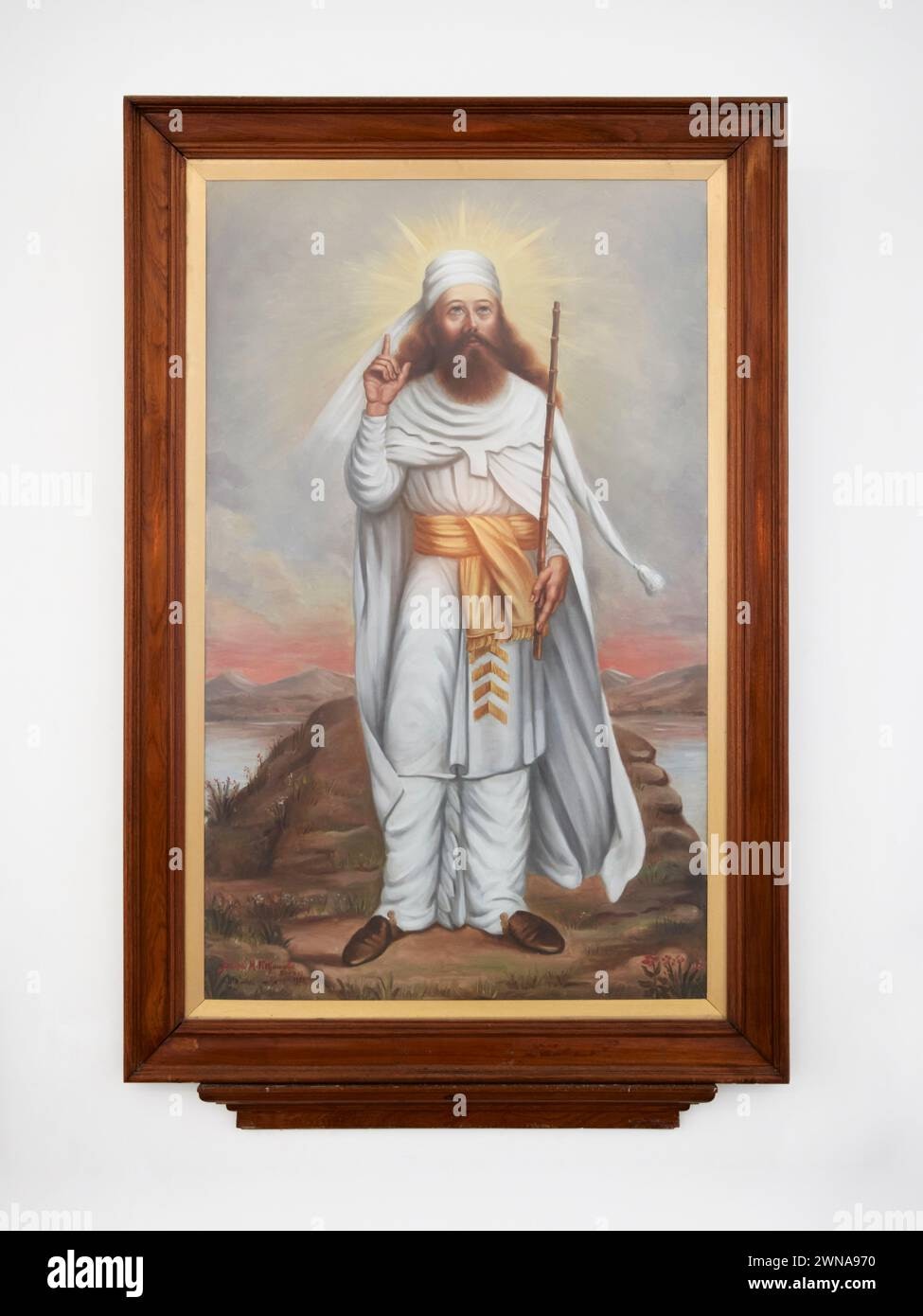
Zoroaster
 Iran
Iranprophet•founder of religion•poet
Also known as: Zarathushtra, Zarathustra
Birthday
628 BCE
Birth Sign
Birthplace
Ray (near modern Tehran, Iran) or eastern Greater Iran (Bactria/Chorasmia)
Age
Died at 77
About
Zoroaster, known in his native Avestan as Zarathushtra, was a prophet and poet from ancient Iran who founded Zoroastrianism, one of the world's oldest monotheistic religions. His teachings, centered on the wise deity Ahura Mazda and the cosmic struggle between truth (asha) and falsehood (druj), shaped the spiritual landscape of three Persian empires and influenced Judaism, Christianity, and Islam through concepts of resurrection, judgment, and angelology.
Today, Zoroastrianism survives with communities in Iran and India (the Parsis), and Zoroaster's Gathas are studied as some of the oldest religious poetry in any Indo-European language. His legacy extends beyond faith into philosophy, making him a symbol of moral revolution, though his historical persona is distinct from later literary portrayals. He is recognized by UNESCO and featured in TIME's 100 Most Influential People of All Time, reflecting his enduring impact on world religions and thought.
Early Life & Background
Zoroaster was born into the Spitama clan, a family of priests and cattle-herders within the Airya (Aryan) tribal confederation. According to Zoroastrian tradition preserved in the Denkard and Bundahishn, his father was Pourushaspa and his mother Dughdhova. Legend says he laughed at birth, a sign of his future greatness, and as a child withstood attempts on his life by local sorcerers, thrown into a fire that turned to roses, placed before stampeding cattle that stood still, and left with a wolf that nursed him.
Raised in a priestly household, he learned the ancient Indo-Iranian religious traditions. By age seven he was sent to a religious teacher, and by fifteen he had mastered the priestly knowledge of his time. His education was entirely oral, as the Avestan language had no written script until centuries later. He became a zaotar (priest) proficient in ritual recitation of mantras. The Avestan texts describe his early life as marked by a deep sense of moral outrage at the injustices of tribal society—particularly the raids on settled cattle-herding communities by nomadic tribes and the corruption of the traditional priests (karapans) who performed elaborate animal sacrifices for payment.
At age 20, Zoroaster left home on a decade-long spiritual quest, wandering, meditating, and debating with priests and philosophers. The turning point came around age 30: while participating in a spring festival on the banks of the river Dāitya, a radiant being named Vohu Manah (Good Purpose) appeared to him and led him into the presence of Ahura Mazda. This vision revealed the cosmic struggle between Asha and Druj and his mission to preach this truth.
Career Growth
After his revelation, Zoroaster began preaching in his homeland but faced immediate rejection from the local priestly establishment, the karapans, who opposed his monotheistic devotion to Ahura Mazda and his condemnation of animal sacrifice and ritual haoma intoxication. For ten years, he converted only one person: his cousin Maidhyoimahga.
The breakthrough came when he traveled east to Bactria. There, he converted King Vishtaspa after healing the king's favorite black horse. Queen Hutaosa and several courtiers also converted, transforming Zoroastrianism from a marginal sect into the state religion of a major kingdom. This royal patronage allowed Zoroaster to compose the Gathas (17 hymns in verse) and establish the first fire temples. His dualistic theology, the cosmic battle between Asha and Druj, individual judgment, resurrection, and the final renovation of the world (Frashokereti), was codified during this period.
Zoroaster died around 551 BCE at Balkh, reportedly assassinated at the altar of a fire temple by a Turanian warrior during an invasion. His religion became the official faith of the Achaemenid, Parthian, and Sasanian empires, spreading across the Iranian plateau and beyond. His concepts profoundly influenced Judaism during the Babylonian exile, and through Judaism, Christianity and Islam.
Career Timeline
Public Image & Style
In Zoroastrian tradition, Zoroaster is depicted as a bearded man in a white robe and cap, often holding a barsom (a bundle of twigs used in rituals) before a fire altar. The Faravahar symbol, a winged disc with a human figure, is commonly associated with him, though it predates his religion and was later adopted as a national symbol of Zoroastrianism. In Western art and literature, he has been portrayed as an ancient sage, astrologer, and magician, appearing in Mozart's The Magic Flute as Sarastro, a wise priest-king. Nietzsche's fictional Zarathustra further distorted his image, leading to popular confusion between the historical prophet and the philosopher's literary creation.
Zoroastrians call themselves Mazdayasna (Worshippers of Mazda) or Behdins (Followers of the Good Religion). The modern community is divided into Parsis in India and Iranis in Iran. The most important ritual is the Yasna ceremony, involving recitation of the Gathas and preparation of haoma. Fire temples maintain an eternal flame, symbolizing the light of Ahura Mazda. Zoroaster is officially recognized as a prophet in the Islamic Republic of Iran, and his birthday is celebrated as "Zoroaster's Day" on the 6th day of the month Farvardin.
Fame & Fandom
Zoroaster commands a following unlike any modern celebrity, defined not by social media trends or ticket sales but by a living religious tradition that has persisted for over two millennia. His adherents, known as Zoroastrians or Parsis depending on their region, organize through ancient fire temples and councils rather than fan clubs, maintaining a devotion that transcends the boundaries of time and geography. While there is no informal fandom name like those found in pop culture, the community's rituals, such as daily prayers and the maintenance of sacred fires, serve as acts of enduring reverence for the prophet who first articulated the cosmic struggle between truth and falsehood. This unique legacy ensures his influence remains tangible across Iran, India, and the diaspora, where his teachings continue to shape ethical frameworks and spiritual practices. The depth of this connection is reflected in global metrics of historical prominence. According to the iFANN Global Fame Rankings, he is the 14th most famous person in Iran (holding steady from the previous cycle) and the 49th most famous person in Middle East (holding steady from the previous cycle), securing his place among the most recognized figures in the region. These placements affirm that while he lacks a modern fanbase, his stature as a foundational historical figure remains undiminished.
Interesting Facts and Legends
The name Zarathushtra likely translates to "one who drives camels" or "one who possesses old camels," reflecting his pastoral origins. Tradition holds that the Magi who visited the infant Jesus were Zoroastrian priests from Persia, linking him directly to Christian narratives. Friedrich Nietzsche later adopted Zoroaster as the voice for Thus Spoke Zarathustra, believing the prophet established the moral duality of good and evil that he sought to challenge. The Gathas, his sacred poetry, were passed down orally for centuries before being recorded in the Sasanian period using a newly invented alphabet. Cyrus the Great, the Achaemenid emperor who liberated the Jews, was almost certainly a follower, with his cylinder echoing Zoroastrian justice. A cenotaph in Naqsh-e Rostam stands as a UNESCO site since 1979, and classical historians like Herodotus and Pliny the Elder documented his life. Beyond history, legend tells of his divine revelation at age thirty near the river Atrek, marking the start of his mission. A central story recounts his conversion of King Vishtaspa, which transformed his personal faith into a state religion despite initial persecution. Folklore also describes his fiery debates against the Magi, ending in martyrdom by a Turanian invader while praying in a temple. Ancient Greeks once called him the "first philosopher," attributing vast wisdom to him, though many works were later fabrications.
Notable Quotes
“I will speak of the two primal spirits of existence, the holier of which shall thus address the evil one: Neither our thoughts, nor our teachings, nor our wills, nor our choices, nor our words, nor our deeds, nor our consciences, nor our souls are in accord.”
“Hear with your ears the best truths, and ponder them with a clear mind, so that each person may choose their own path.”
“The wise person is one who does not cause harm to anyone, neither by thought, word, nor deed.”
“Truth is the best good. It shall be well with the person who is truthful.”
Family & Personal Life
Zoroaster married three times. His first wife, whose name is not preserved, bore him three sons (Isat-vastra, Uruvat-nara, Hvare-chithra) and three daughters (Freni, Thriti, Pouruchista). His second wife, also unnamed in surviving texts, bore two more sons. His third wife was Hvōvita, the youngest daughter of Frashaoshtra, a minister of King Vishtaspa. The marriage was both political and religious: Zoroaster's daughter Pouruchista married Hvōvita's nephew, Jamaspa, Vishtaspa's prime minister, cementing the prophet's alliance with the royal court. Hvōvita is mentioned in the Gathas as a devoted follower, and no children are recorded from this marriage in most sources. His parents were Pourushaspa and Dughdhova, and he was born into the Spitama clan.
Notable Connections
Zoroaster is associated with the ancient Iranian kings Vishtaspa and Cyrus the Great, as well as the Magi of the New Testament. His theology influenced Greek philosophers like Heraclitus and Plato, and later Abrahamic religions through concepts of resurrection and judgment. In modern culture, he is linked to Nietzsche's philosophical novel Thus Spoke Zarathustra.
Relationships & Dating History
Zoroaster married three times. His first wife, whose name is not recorded, married him around age 18 (c. 610 BCE) and bore three sons and three daughters. She likely died or separated before his prophetic career began. His second wife, also unnamed, married during his wandering period and bore two more sons. His third and most famous marriage was to Hvōvita, daughter of the noble Frashaoshtra, after the conversion of King Vishtaspa (c. 585 BCE). This marriage sealed the prophet's alliance with the Bactrian court. Hvōvita is mentioned in the Gathas as a devoted follower. No children are recorded from this marriage in most sources. Zoroaster died in 551 BCE, leaving no surviving spouse.
- MarriedFirst Wife (name unknown)-610 - presentMarried around age 18; bore three sons and three daughters; likely died or separated before his prophetic career.
- MarriedSecond Wife (name unknown)Married during his wandering period; bore two sons; little else is known.
- MarriedHvōvita-585 - -551Daughter of Frashaoshtra; marriage sealed alliance with Bactrian court; mentioned in Gathas as a devoted follower.
Death & Aftermath
Died
551 BCE (aged 77)
Death Place
Unknown
Cause of Death
Reported as assassination by Turanian warrior or natural causes in legendary accounts
The exact date, place, cause of death, and circumstances surrounding the death of Zoroaster remain unconfirmed. While traditional accounts suggest he died around 551 BCE, modern scholarship indicates precise dates are unknown and disputed with some sources placing him in earlier centuries. Accounts of his death vary in legend; some claim he was killed by Turanian invaders during a religious war, while others suggest he died peacefully of natural causes, but none are historically verified. No contemporary records detail a medical ruling or legal investigation, as such institutions did not exist in antiquity.
Following his death, the early Zoroastrian community relied on oral traditions to preserve his teachings, ensuring the Gathas were transmitted. His legacy endured through the establishment of Zoroastrianism as a major faith, influencing Judaism, Christianity, and Islam with concepts of resurrection and judgment. Today, his name lives on through the enduring institution of the religion he founded and the study of his ancient hymns.
Net Worth (Estate Value)
$0
iFANN Editorial Team estimate
Per iFANN's editorial analysis, Zoroaster held a net worth of $0. As a 6th-century BCE prophet operating within a pre-monetary tribal society, he possessed no personal financial assets or estate. He died as a martyr rather than a wealthy individual, leaving behind no quantifiable fortune. The religion he founded, Zoroastrianism, carries immeasurable cultural and historical significance, yet it holds no specific monetary value tied to his personal legacy. Modern communities in Iran and India maintain fire temples and charitable institutions, but these are communal religious assets unrelated to any personal wealth. His true estate exists in the form of the Zoroastrian faith itself, which remains beyond financial measurement.
Awards & Accolades
View 8 records, honours and achievementsKnown For
Founding Zoroastrianism
c. 600 BCE · Prophet and founder
Composing the Gathas
c. 588–551 BCE · Author
Keywords
Quick Facts
- Profession
- prophet, founder of religion, poet
- Born
- c. 628 BCE
- Birthplace
- Ray (Iran) or eastern Greater Iran
- Died
- c. 551 BCE
- Death Place
- Balkh (Bactria)
- Gender
- Male
- Spouse
- Hvōvita
Personal Details
- Full Name
- Zarathushtra Spitama
- Spouse
- Hvōvita
- Children
- Isat-vastra, Uruvat-nara, Hvare-chithra (sons); Freni, Thriti, Pouruchista (daughters); additional children from earlier marriages
- Education
- Oral priestly training in Indo-Iranian religious traditions
Frequently Asked Questions
Who was Zoroaster?
What is Zoroaster's net worth?
Is Zoroaster still influential today?
What is Zoroaster best known for?
How did Zoroaster die?
Similar People
Join the community
fans discussing