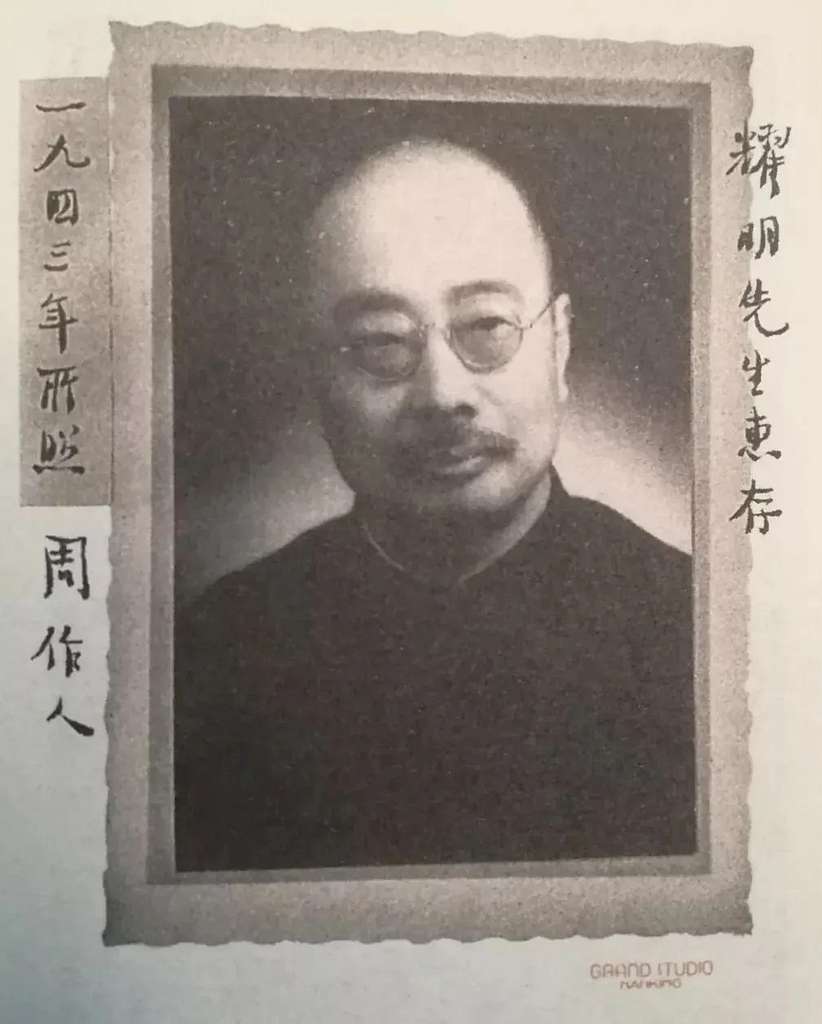
Zhou Zuoren
 China
ChinaAlso known as: Zhou Mingkui, Zhou Kuishou, Qimeng, Chou Tso-jen
Birthday
January 16, 1885
Birth Sign
Capricorn
Birthplace
Shaoxing, China
Age
Died at 82
About
Zhou Zuoren was a Chinese essayist, translator, literary theorist, and critic, widely regarded as a major figure in modern Chinese literature. Born in 1885, he developed a distinctive prose style that combined concise phrasing with deep cultural references, influencing generations of writers. As the younger brother of Lu Xun, Zhou carved out his own intellectual path, emphasizing humanism and the aesthetics of everyday life.
His career spanned decades, marked by significant contributions to the essay genre and translations of foreign literature. However, his decision to collaborate with the Japanese occupation government during the Second Sino-Japanese War led to his arrest and house arrest after 1949. Despite this, he continued to write and study, leaving a complex legacy that has seen renewed scholarly interest in recent years.
Early Life & Background
Zhou Zuoren was born on January 16, 1885, in Shaoxing, a city known for its literary traditions. Growing up in a scholarly family, he was exposed to classical Chinese literature from an early age. His elder brother, Zhou Shuren, later known as Lu Xun, would become a towering figure in modern Chinese literature, and the two shared a deep intellectual bond.
Zhou's early education was rooted in traditional Confucian learning, but he soon gravitated toward modern ideas. He studied at the Jiangnan Naval Academy and later went to Japan, where he immersed himself in Western and Japanese literature. This period was formative, shaping his views on humanism and cultural exchange. His first essays appeared in the 1910s, and he quickly gained recognition for his erudite and nuanced style.
By the time he joined Peking University as a professor in the 1920s, Zhou had established himself as a leading voice in the New Culture Movement. His literary aesthetics, particularly his concepts of quwei (taste) and bense (authenticity), were rooted in late Ming Neo-Confucianism, and he championed a personal, reflective style of essay writing.
Career Growth
Zhou Zuoren's breakthrough came in the 1920s when he became a professor at Peking University and a central figure in the May Fourth Movement's literary scene. His essays, collected in works like Selected Essays of Zhou Zuoren, were celebrated for their clarity and cultural depth. He also translated fiction and myths from Greek, Japanese, and other languages into vernacular Chinese, broadening the horizons of Chinese readers.
During the Second Sino-Japanese War, Zhou made a controversial decision to accept a position in the collaborationist government, a choice that would haunt his legacy. After the war, he was arrested and later placed under house arrest by the People's Republic of China. Despite these restrictions, he continued to write, producing memoirs and scholarly works on his brother Lu Xun. A brief period of renewed publication occurred during the Hundred Flowers Campaign in the late 1950s.
In recent decades, there has been a resurgence of interest in Zhou's literary contributions, with new editions of his essays and critical studies published. His influence on the prose essay form remains significant, and his works are studied in universities worldwide.
Career Timeline
Public Image & Style
Zhou Zuoren is remembered as a literary figure of profound influence, known for his refined prose and intellectual depth. His public image is complicated by his wartime collaboration, which led to a period of disrepute. However, in recent years, scholars have reassessed his contributions, emphasizing his role in shaping the modern Chinese essay.
His writing style, characterized by allusiveness and a focus on daily life, has earned him a dedicated following among readers who appreciate his quiet humanism. He is often compared to his brother Lu Xun, but his distinct voice and concerns set him apart.
Fame & Fandom (iFAMOUS Rankings)
Zhou Zuoren commands a legacy defined by deep scholarly reverence rather than the modern machinery of fandom. For nearly a century, his audience has consisted of literary historians, students of the May Fourth Movement, and enthusiasts of Chinese prose who approach his work with academic devotion. There is no organized fanbase, no collective moniker for his admirers, and no digital campaigns or social media movements dedicated to keeping his memory alive in the way contemporary stars enjoy. The "legend" surrounding him is not one of viral moments or stage performances, but a complex historical narrative involving his profound contributions to folklore and translation, contrasted sharply with the controversy of his wartime collaboration. This story of a brilliant mind compromised by political expediency remains a serious subject of study, often retold alongside the heroic resistance of his brother, Lu Xun. While collectors prize his manuscripts and scholars continue to publish new editions of his essays, the engagement with Zhou Zuoren is rooted in cultural preservation rather than consumerist worship. His influence persists through the quiet appreciation of his refined style and humanist philosophy, maintained by institutions and individual readers rather than clubs or online communities. Despite this enduring intellectual footprint, iFANN's Global Fame Engine has evaluated Zhou Zuoren, but he does not currently hold a placement in the published rankings (Global Top 1,000 or a Top-100 scope list).
Interesting Facts and Legends
Zhou Zuoren was a pioneer in Chinese folklore studies, collecting and analyzing folk tales and customs that shaped early modern scholarship. An ardent Esperantist, he advocated for the constructed language as a vital tool for international communication, reflecting his cosmopolitan worldview. His expertise in Japanese culture was so extensive that he is recognized as a leading Japanologist of his era. A defining chapter in his life story involves the accusation of treason; arrested at his Beijing home on December 6, 1945, for collaborating with the Japanese occupation government, he spent his final years under house arrest before passing away in 1967. This event created a permanent shadow over his reputation, contrasting his fall from grace with the martyrdom of his brother. In 2015, a manuscript bearing his handwriting was estimated to be worth 800,000 yuan at auction, highlighting the enduring market value of his physical artifacts. Following his death, his family engaged in legal disputes over the sale of these manuscripts, asserting ownership of items they claimed were looted during the Cultural Revolution.
Family & Personal Life
Zhou Zuoren was married to Nobuko Habuto, a Japanese woman he met during his studies in Japan. The couple had a son, Zhou Fengyi, and a daughter, Zhou Jingzi. His elder brother was the renowned writer Lu Xun, and the two had a complex relationship that evolved over the years. Despite their differing political paths, they shared a deep intellectual respect.
Zhou's family life was affected by his political troubles, but his wife remained a steadfast companion. After his death, his descendants worked to preserve his literary legacy, though they faced legal challenges over manuscript ownership.
Notable Connections
Relationships & Dating History
Zhou Zuoren married Nobuko Habuto, a Japanese woman, in 1909 while he was studying in Japan. The marriage was a significant part of his life, and they remained together until his death in 1967. Their relationship bridged two cultures, reflecting Zhou's deep appreciation for Japanese culture.
There are no other documented romantic relationships. Zhou was devoted to his family, and his wife supported him through his political difficulties. As of his death, they were still married.
- MarriedNobuko Habuto1909 - 1967Met in Japan, married in 1909, remained together until Zhou's death.
Death & Aftermath
Died
May 6, 1967 (aged 82)
Death Place
Beijing, China
Cause of Death
Disease
Zhou Zuoren died on May 6, 1967, in Beijing, China. He was eighty-two years old when the illness that had been worsening under the pressure of the Cultural Revolution finally claimed him. The official record lists the cause simply as disease. During the preceding year, he endured relentless struggle sessions and physical abuse as a target for his past collaboration with the Japanese occupation government, conditions that left him too weak to appear publicly in his final months. His burial followed the pattern of many intellectuals who died during this period, occurring as a private affair.
Public rehabilitation of his reputation did not begin until after the end of the Cultural Revolution in 1976. This shift allowed scholars to gradually re-evaluate his contributions to modern Chinese literature. Following this period of normalization, his essays and translations were republished extensively and studied as foundational works in prose and folklore studies.
Net Worth (Estate Value)
$1 Million
iFANN Editorial Team estimate
Zhou Zuoren's personal net worth is not well-documented, as he lived during an era when writers in China earned modest incomes. However, his literary estate holds significant value today. In 2015, a manuscript by Zhou was estimated to be worth 800,000 yuan (approximately $125,000) at auction. His estate continues to generate royalties from the publication of his essays and translations. Per iFANN's editorial analysis, the estate's estimated value stands at $1 Million as of 2026, reflecting the enduring interest in his work. The estate is managed by his descendants, who have been involved in legal disputes over manuscript ownership. Posthumous publications and scholarly studies contribute to the estate's income.
Awards & Accolades
View 1 records, honours and achievementsKnown For
Selected Essays of Zhou Zuoren
1932 · Author
Translations of Greek and Japanese literature
1920 · Translator
Keywords
Sources
Quick Facts
- Profession
- writer, translator, Esperantist
- Born
- January 16, 1885
- Birthplace
- Shaoxing, China
- Died
- May 6, 1967
- Death Place
- Beijing, China
- Gender
- Male
- Spouse
- Nobuko Habuto
- Birth Sign
- Capricorn
Personal Details
- Full Name
- Zhou Zuoren
- Spouse
- Nobuko Habuto
- Education
- Peking University (professor)
Frequently Asked Questions
Who was Zhou Zuoren?
What is Zhou Zuoren's net worth?
Why is Zhou Zuoren controversial?
When did Zhou Zuoren die?
Was Zhou Zuoren related to Lu Xun?
Similar People
Join the community
fans discussing