 China
About
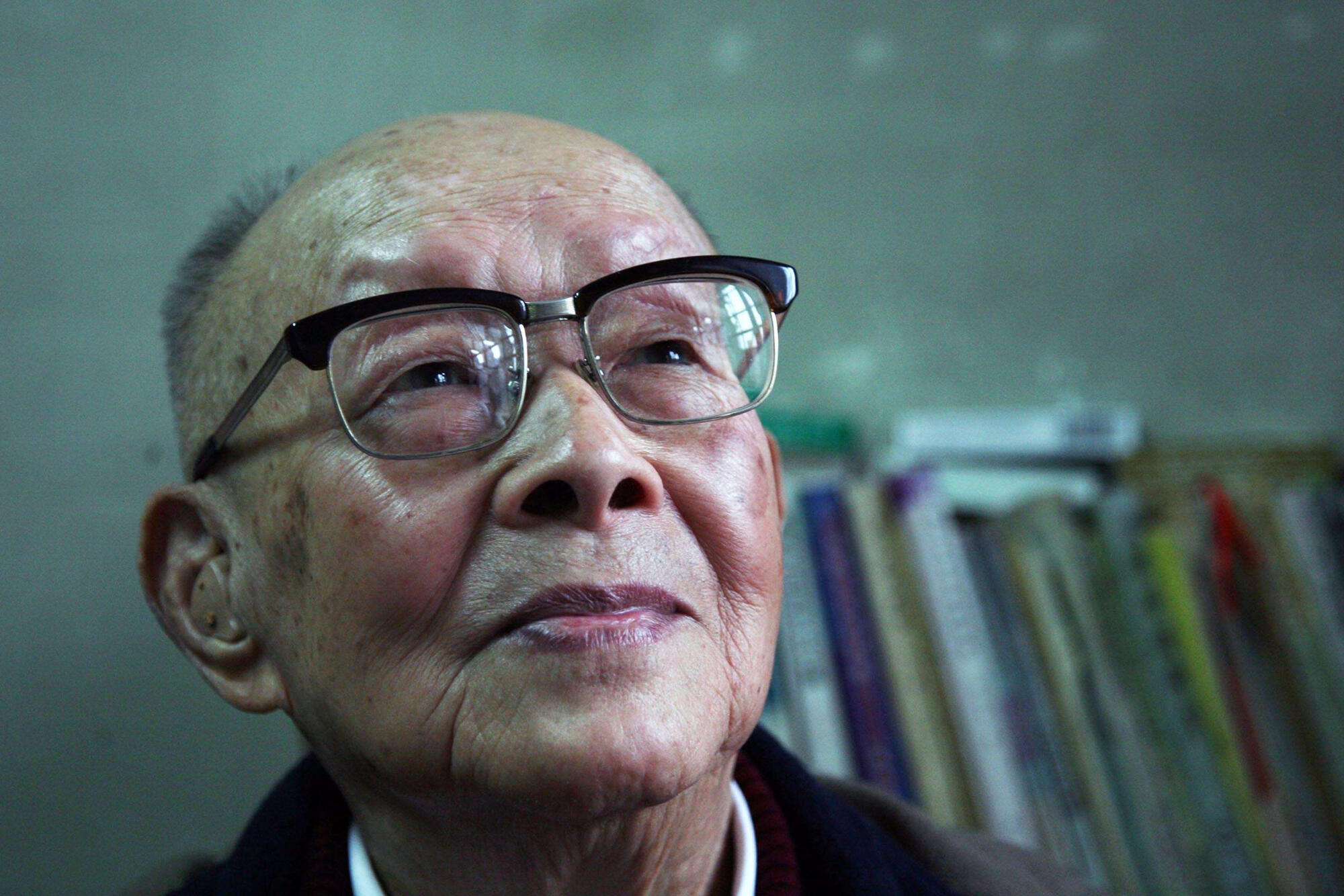
Zhou Youguang was a Chinese economist, linguist, and sinologist who lived to be 111 years old. He is best known as the principal architect of Hanyu Pinyin, the romanization system for Mandarin Chinese that became the official standard in 1958. Today, pinyin is used by over a billion people for teaching Mandarin, typing Chinese characters on computers, and rendering Chinese names in the Latin alphabet. Zhou's work transformed how the world writes and reads Chinese, yet he remained a modest scholar who attributed his longevity to simple living and modern medicine.
Zhou's legacy is carried forward through the daily use of pinyin and through honors like the Google Doodle commemorating his 112nd birthday in 2018. He is remembered not only for his linguistic achievements but also for his critical stance toward the Chinese government, which he maintained throughout his life. His death was widely reported by international media, and his life story continues to inspire scholars and language enthusiasts worldwide. As a supercentenarian, he witnessed over a century of Chinese history, and his intellectual contributions remain a cornerstone of modern Chinese linguistics.
Early Life & Background
Zhou Youguang was born Zhou Yaoping on January 13, 1906, in Changzhou, Jiangsu Province, during the Qing Dynasty. His early education took him to St. John's University in Shanghai, one of China's most prestigious institutions at the time, before he transferred to Guanghua University, where he studied economics. He later continued his studies in Japan, deepening his knowledge of economics and finance.
For most of his early career, Zhou worked as a banker in Shanghai and New York during the 1920s and 1930s. In New York, he engaged with the Chinese diaspora community, gaining international experience that would later inform his pragmatic approach to language reform. His life took a dramatic turn in 1949 when he returned to China following the establishment of the People's Republic. It was only in his late 40s that he began his linguistic work, when he was appointed to lead the committee tasked with creating a new romanization system for Mandarin. His background in economics gave him a unique perspective on literacy as a tool for national modernization.
Career Growth
In the mid-1950s, Zhou Youguang was appointed to lead the committee that would create Hanyu Pinyin. The system was officially adopted by the Chinese government in 1958, and its impact was immediate. Chinese primary schools began using it to teach Mandarin pronunciation, and it soon became essential for computer input of Chinese characters, transforming how Chinese is typed and processed digitally. The system also explains why "Peking" became "Beijing" and "Mao Tse-tung" became "Mao Zedong" in Western usage.
The international community soon recognized pinyin's importance. The International Organization for Standardization adopted it in 1982, and the United Nations followed in 1986, making it the global standard for transliterating Chinese. Zhou continued to write and advocate for language reform well into his later years, publishing works into his 100s. His longevity and intellectual vitality made him a celebrated figure in linguistic and sinology circles. In 2018, Google honored him with a Doodle on what would have been his 112th birthday, with the O's flipping from Pinyin (Gǔgē) to Chinese characters (谷歌), symbolizing the bridge between the two writing systems.
Career Timeline
Public Image & Style
Zhou Youguang is universally portrayed as the "father of Pinyin" in international media. He is remembered as a pragmatic intellectual who applied economic thinking to language reform, viewing literacy as a tool for national modernization. Media portrayals emphasize his longevity, his late-career pivot to linguistics, and his critical stance toward the Chinese government. He has no formal fandom, but he is revered in linguistic and sinology circles, and his birthday is commemorated by Google and academic institutions. His legacy is that of a scholar who made Chinese accessible to the world through a simple, elegant system. The Asia Society held events and tributes, including the Hong Kong event titled "The Man Who Made China a Literate Nation."
Fame & Fandom (iFAMOUS Rankings)
Zhou Youguang never cultivated a fandom. He was not a pop star, an actor, or a musician who inspired midnight vigils, fan clubs, or chart-topping campaigns. No group of devotees gathered to celebrate his birthday with billboards, nor did fans fund projects in his name. The title 'Father of Pinyin' is a mark of academic reverence, not a moniker for a cult following. His audience consists of linguists, historians, and the billions who use his romanization system daily, yet this collective does not operate as a unified fanbase with rituals or inside jokes. In August 2026, iFANN's Global Fame Engine evaluated Zhou Youguang and found he holds no placement in the published rankings, including the Global Top 1,000 or any Top-100 scope list. While he remains a towering figure in history, his fame rests on intellectual contribution rather than celebrity metrics. The evaluation confirms that while his work transformed global communication, he does not currently register a specific numeric rank within the engine's hierarchy. This absence of a ranking reflects a reality where his legacy is embedded in the fabric of language itself rather than in transient popularity contests.
Interesting Facts and Legends
Zhou Youguang was a supercentenarian who lived to be 111 years old. Born in the Qing Dynasty, he witnessed over a century of Chinese history, surviving the Republic of China era, the Japanese invasion, the Cultural Revolution, and the reform era. Despite his linguistic fame, he began as a banker and economist, only pivoting to linguistics in his late 40s. He attributed his longevity to simple living and modern medicine, eating only when hungry. His obituary in The Guardian noted that most supercentenarians are known primarily for their survival, but Zhou was remembered for his intellectual contributions. He continued writing into his 100s and held critical views of the government despite helping create a system that modernized Chinese communication. The most enduring story about him centers on his role as the primary architect of Hanyu Pinyin. This system converted Chinese characters into Roman alphabet letters, effectively making writing accessible globally and simplifying literacy across China. Another central part of his legend is his extreme longevity; born on January 13, 1906, he died on January 14, 2017, just one day after his 111th birthday. This made him a subject of global interest and gerontological study, often cited as a symbol of resilience. Unlike modern celebrities, his iconic moments were academic and political, defined by scholarly contributions rather than viral incidents.
Family & Personal Life
Zhou Youguang was married to Zhang Yunhe, and their marriage spanned many decades. While details of their courtship and family life are not extensively documented, Zhou credited his wife with providing a stable home that supported his work. He lived modestly in Beijing in his later years, maintaining an active mind and continuing to write. His family life was largely private, with few public details emerging. He often spoke of his wife's support in his endeavors, and her presence was a constant throughout his long life.
Notable Connections
Relationships & Dating History
Zhou Youguang was married to Zhang Yunhe, and their marriage spanned many decades. Details of their courtship and the exact duration of their marriage are not extensively documented in available sources. Zhang Yunhe predeceased Zhou, though the date of her death is not specified. At the time of Zhou's death on January 14, 2017, he was widowed. No other romantic relationships are documented.
- MarriedZhang YunheMarried for many decades; she predeceased him.
Death & Aftermath
Died
January 14, 2017 (aged 111)
Death Place
Beijing, China
Cause of Death
Natural causes associated with extreme old age
Zhou Youguang spent his final days in Beijing, passing away on January 14, 2017, just one day after celebrating his 111th birthday. Major international outlets including The New York Times, BBC, and NPR confirmed the date and location of his death within the context of natural causes associated with extreme old age. Tributes poured in from global institutions and peers who hailed him as the father of Pinyin, recognizing how his work transformed literacy for over a billion people worldwide. Major publications like The New York Times and the BBC published extensive obituaries detailing his unique journey from Wall Street banker to the architect of modern Chinese romanization.
While no public funeral service was documented in available records, the immediate media coverage served as a collective act of mourning for a man who maintained intellectual curiosity well into his later years. Exactly one year after his death on January 13, 2018, Google honored Zhou with a special Doodle featuring the word Google written in both Pinyin and Chinese characters, acknowledging his legacy as the architect of modern Chinese phonetic language.
Net Worth (Estate Value)
$1 Million
iFANN Editorial Team estimate
Zhou Youguang lived a modest life as an academic and civil servant in China. His personal net worth was never a subject of public financial reporting, and he did not accumulate significant wealth from his linguistic work. After his death in 2017, his estate remained minimal, with no notable revenue streams. His true legacy is intellectual rather than financial, as pinyin remains in daily use by over a billion people. Per iFANN's editorial analysis, any estate valuation would be nominal, likely under $1 million, reflecting his simple lifestyle. He received no formal awards that came with monetary prizes, but his recognition came through honors like the Google Doodle and international adoption of his work.
Awards & Accolades
View 2 records, honours and achievementsKnown For
Hanyu Pinyin
1958 · Principal architect
Keywords
Sources
Quick Facts
- Profession
- linguist, banker, economist
- Born
- January 13, 1906
- Birthplace
- Changzhou, Jiangsu Province, China
- Died
- January 14, 2017
- Death Place
- Peking Union Medical College Hospital, Beijing
- Gender
- Male
- Spouse
- Zhang Yunhe
- Birth Sign
- Capricorn
Personal Details
- Full Name
- Zhou Yaoping
- Spouse
- Zhang Yunhe
- Education
- St. John's University, Guanghua University, studies in Japan
Frequently Asked Questions
How old was Zhou Youguang when he died?
What did Zhou Youguang invent?
Why is Zhou Youguang called the father of Pinyin?
Was Zhou Youguang married?
What was Zhou Youguang's profession before linguistics?
Join the community
fans discussing