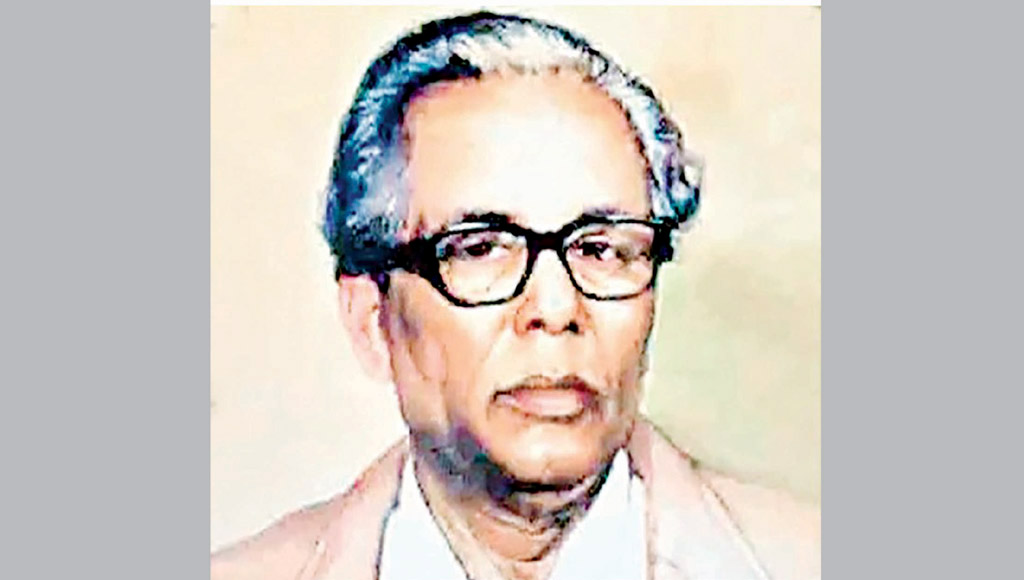
Zainul Abedin
 Bangladesh
Also known as: Shilpacharya, Jayanula Ābedina
Birthday
December 29, 1914
Birth Sign
Sagittarius
Birthplace
Kendua, Kishoreganj, Mymensingh District, East Bengal, British India (now Bangladesh)
Age
Died at 61
About
Zainul Abedin was a Bangladeshi painter, sculptor, and artist, widely regarded as the founder of modern art in Bangladesh. He is honored with the title Shilpacharya, meaning "Great Teacher of the Arts," for his profound influence on the nation's artistic identity. His most celebrated works, the Famine Sketches of 1943, captured the horrors of the Bengal famine with stark realism and remain his most iconic contribution to art.
Abedin's legacy endures through his role in establishing the Institute of Arts and Crafts at the University of Dhaka in 1948, which became the cornerstone of art education in Bangladesh. His works have achieved international recognition, with his 1970 painting Untitled selling for a record US$692,048 at Sotheby's in 2024, the highest price ever for a Bangladeshi artwork. He passed away in 1976, but his impact on art and culture continues to be celebrated worldwide.
Early Life & Background
Born on December 29, 1914, in the village of Kendua in the Kishoreganj mahakuma of Mymensingh district, Zainul Abedin grew up in a modest household. His parents, though of limited means, provided a nurturing environment that valued education and moral integrity. The scenic banks of the Brahmaputra River, near which he spent much of his childhood, left an indelible impression on him and became a recurring subject in his art.
In 1933, Abedin enrolled at the Government School of Art in Kolkata (now the Government College of Art & Craft), where he spent five years mastering British and European academic styles. After graduating, he briefly taught there before pursuing further studies at the Slade School of Fine Art in London. His early career took a decisive turn in 1938 when his watercolor series, a tribute to the Brahmaputra, earned him the Governor's Gold Medal at an all-India exhibition. This recognition gave him the confidence to develop his own visual language.
The Bengal famine of 1943, which killed at least 3 million people due to British food policies, profoundly affected Abedin. Using simple packing paper and Chinese ink, he created the Famine Sketches, a series that depicted the suffering with unflinching realism. These works brought him national fame by 1944 and established him as a socially conscious artist.
Career Growth
Following the Partition of India in 1947, Abedin moved to East Pakistan (now Bangladesh) and in 1948 played a key role in founding the Institute of Arts and Crafts at the University of Dhaka, where he served as principal. This institution became the foundation of art education in the country. His notable works from this period include The Struggle, Rebel Cow, Nobanno, and Two Faces.
During the Bangladesh Liberation War of 1971, Abedin contributed art that supported the nationalist cause, including a sculpture based on his painting The Struggle. His efforts were pivotal in shaping the nation's artistic identity. After his death in 1976, his works gained international acclaim. In March 2024, his 1963 oil painting Santal Couples sold for US$381,000 at Sotheby's New York. Later that year, his 1970 painting Untitled achieved a record-breaking US$692,048 at Sotheby's London, the highest price ever paid for a Bangladeshi artwork.
Career Timeline
Public Image & Style
Zainul Abedin is revered in Bangladesh as the founding father of modern art, a figure whose work transcended the political to achieve universal humanism. His style, rooted in realism and social protest, resonated deeply with the public. The title Shilpacharya reflects the national esteem in which he is held. His legacy is maintained through the Zainul Abedin Museum, annual tributes, and the naming of a Mercury crater after him. On December 29, 2019, Google honored his 105th birthday with a Doodle, introducing his art to a global audience.
Fame & Fandom
Zainul Abedin does not currently hold a placement in the iFANN Global Top 1,000 or any Top-100 scope list, as the iFANN evaluation engine has determined he is evaluated but unranked for the August 2026 cycle. This absence of a numerical position reflects his status as a historical figure whose legacy operates outside the metrics of contemporary celebrity circulation. While the modern concept of fandom involving organized fan clubs, social media campaigns, or idol worship is absent from his biography, his reputation commands a form of cultural veneration distinct to art history and national identity. The audience that reveres him consists primarily of art historians, students, collectors, and the general public who view his work through the lens of the title Shilpacharya, meaning Great Teacher of the Arts. There is no formal name for this collective; devotion manifests instead through institutional tributes, annual commemorations on May 28th, and academic study rather than digital rituals or fan-funded projects. His enduring presence in the global consciousness is anchored by the visceral impact of his 1943 Famine Sketches, which transformed him from a regional artist into a universal symbol of human resilience. Though he passed away decades before the internet age, his works remain active subjects of high-value auctions and critical analysis, ensuring his influence persists without the need for a managed fanbase.
Interesting Facts and Legends
Zainul Abedin was named after Zainul Shah Ali Abedin, a great-grandson of the Prophet Muhammad, linking his personal history to religious lineage. He executed his renowned Famine Sketches on simple packing paper using Chinese ink, a pragmatic choice that underscored the urgency of documenting the crisis. Beyond painting, he founded the Folk Art Museum at Sonargaon to preserve rural traditions, and a sculpture based on his work The Struggle now stands in that same town. In 2009, a crater on Mercury was named in his honor, a rare distinction for an artist, and his birth centenary in 2014 was marked by exhibitions across Bangladesh. A story often retold in art circles concerns the exhibition of his famine sketches in Calcutta, where the stark realism of his charcoal drawings shocked the Bengali intelligentsia and brought the horrors of the famine to the forefront of national consciousness. This event cemented his reputation as a realist who refused to shy away from grim truths, creating a defining narrative around his depiction of suffering. His death anniversary serves as a cultural touchstone, with educational organizations releasing tributes that reflect on how his body of work has hardened into history over the decades since his passing.
Family & Personal Life
Zainul Abedin was married to Jahanara Abedin, and together they had three children. His family life was largely private, but his wife supported his artistic endeavors. The couple lived in Dhaka, where Abedin continued to work until his death. His family has been instrumental in preserving his legacy, including the establishment of the Zainul Abedin Museum in Mymensingh, which houses many of his works.
Notable Connections
Zainul Abedin's life intersected with several notable figures. His wife, Jahanara Abedin, was his lifelong partner. Critic Syed Manzoorul Islam called him the founding father of Bangladeshi modern art. The artist Syed Ahmed Hossain, known for his rickshaw art, was influenced by the movement Abedin helped develop. His legacy also inspired the establishment of the Folk Art Museum at Sonargaon.
Relationships & Dating History
Zainul Abedin's personal life was marked by a single, enduring marriage to Jahanara Abedin. The couple married in the 1940s and had three children together. Jahanara was a constant source of support throughout his career. At the time of his death in 1976, Abedin was still married to her. Their partnership remained strong until the end, and Jahanara played a key role in preserving his artistic legacy after his passing.
- MarriedJahanara Abedin1940 - 1976Abedin's wife and lifelong partner; they had three children together.
Death & Aftermath
Died
May 28, 1976 (aged 61)
Death Place
Dhaka, Bangladesh
Cause of Death
Unknown
The renowned Bangladeshi painter and sculptor Zainul Abedin passed away on May 28, 1976. While the exact medical cause remains unrecorded in available documentation, his death marked the end of a career that defined modern art in the region. Tributes to his life have since evolved into enduring annual observances rather than immediate mass gatherings typical of 1976. On May 28, 2026, marking the fiftieth anniversary of his passing, President Mohammed Shahabuddin paid deep tribute to Abedin's creativity and humanism, noting how his work continues to inspire new generations. Media outlets such as The Daily Star have published retrospective essays reflecting on his legacy fifty years later, while academic recognition persists through awards like the 2025 North Texas Glasstire Art Writing Prize won by Anika Sultana for her essay on the famine sketches.
Specific details regarding the date, location, or attendees of the original funeral rites remain absent from the historical record, though annual memorials continue to honor his contributions. The Bengal Foundation now manages his estate, ensuring his artistic legacy is promoted through ongoing exhibitions and scholarly work.
Net Worth (Estate Value)
$5 Million
iFANN Editorial Team estimate
The estate of Zainul Abedin has seen significant growth in recent years, driven by the soaring value of his artworks at international auctions. In March 2024, his 1963 oil painting Santal Couples fetched US$381,000 at Sotheby's New York. That September, his 1970 painting Untitled achieved a record-breaking US$692,048 at Sotheby's London, marking the highest price ever paid for a Bangladeshi artwork. These sales highlight the enduring demand for his work among serious collectors. Per iFANN's editorial analysis, the estate's value is estimated at $5 million as of 2026, a figure reflecting the cumulative worth of his major pieces and ongoing interest from the market. The estate is managed by his family, who continue to preserve and promote his legacy through the Zainul Abedin Museum in Mymensingh. Royalties from reproductions and licensing also contribute to the estate's income, ensuring financial sustainability for the preservation of his archives.
Awards Won (3)
Zainul Abedin received several prestigious awards during his lifetime and posthumously. In 1938, he won the Governor's Gold Medal for his Brahmaputra watercolors. In 1958, he was honored with the Pride of Performance award. After his death, he was awarded the Independence Award in 1977, one of Bangladesh's highest civilian honors.
1977 · Arts
Lifetime achievement
1958 · Arts
Artistic contributions
Known For
Famine Sketches
1943 · Artist
The Struggle
1971 · Artist
Institute of Arts and Crafts, University of Dhaka
1948 · Founder and Principal
Keywords
Sources
Quick Facts
- Profession
- painter, sculptor, artist
- Born
- December 29, 1914
- Birthplace
- Kendua, Kishoreganj, British India
- Died
- May 28, 1976
- Death Place
- Dhaka, Bangladesh
- Gender
- Male
- Birth Sign
- Sagittarius
- Spouse
- Jahanara Abedin
- Children
- 3
- Education
- Government School of Art, Kolkata; Slade School of Fine Art, London
Personal Details
- Full Name
- Zainul Shah Ali Abedin
- Spouse
- Jahanara Abedin
- Children
- 3
- Education
- Government School of Art, Kolkata; Slade School of Fine Art, London
Frequently Asked Questions
What is Zainul Abedin famous for?
Why is Zainul Abedin called Shilpacharya?
Where was Zainul Abedin born?
What is Zainul Abedin's most expensive painting?
How did Zainul Abedin die?
Join the community
fans discussing