 Pakistan
About
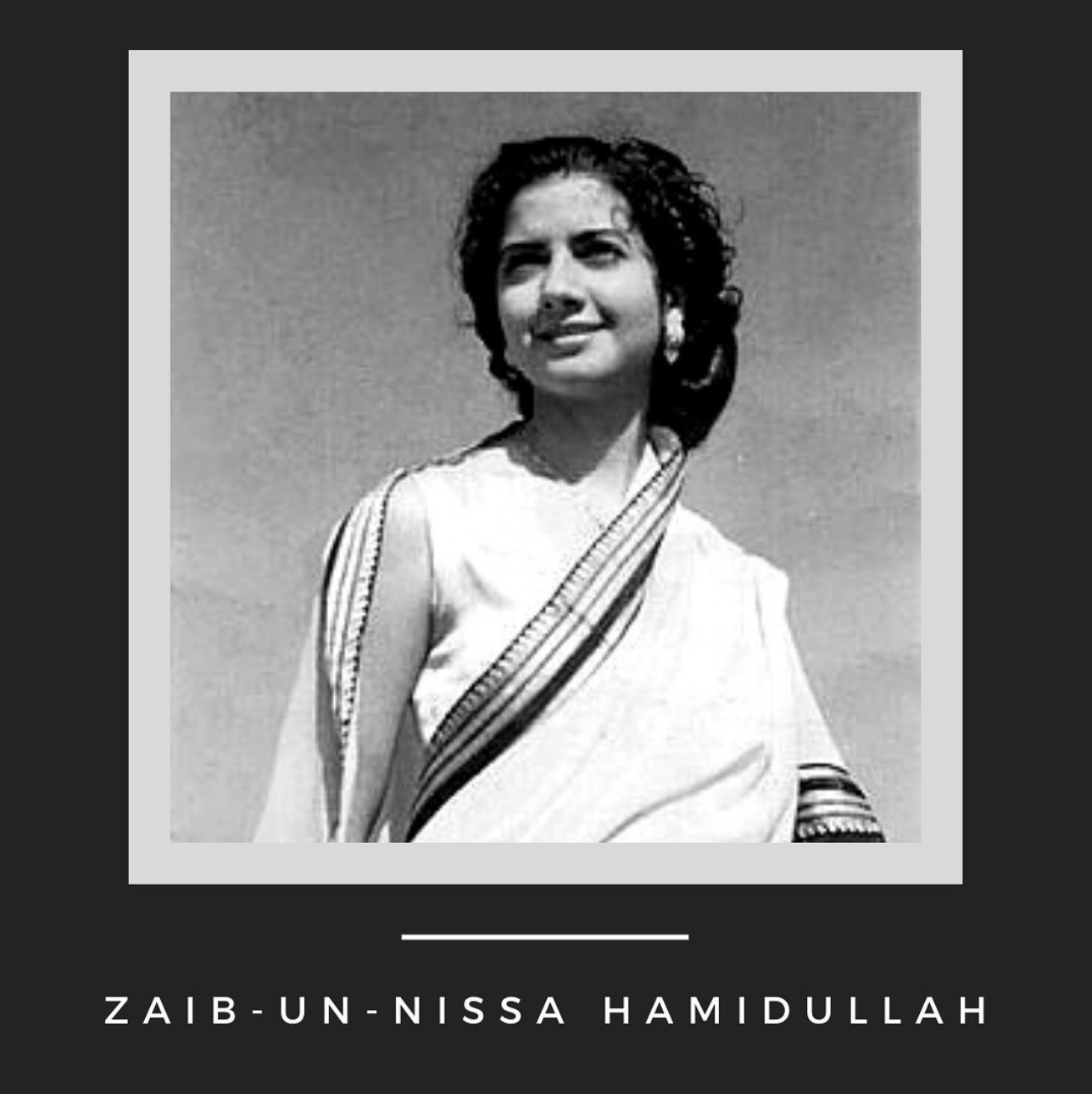
Zaib-un-Nissa Hamidullah was a pioneering Pakistani journalist, writer, and poet whose influential work significantly shaped the nation's early media landscape and literary contributions. She is widely celebrated as Pakistan's first female political commentator, editor, and publisher, establishing groundbreaking precedents for women in journalism and public life. Her writings consistently championed progressive ideas and offered a distinctive perspective on the social and political developments of her time, fostering critical discourse during Pakistan's formative years. Hamidullah authored several notable books, including the popular short story collection The Young Wife and Other Stories, and represented Pakistan on international platforms, including a significant address at al-Azhar University and her service at the United Nations. She passed away on September 10, 2000, in Karachi, leaving behind a profound legacy of journalistic innovation, literary excellence, and advocacy for women's empowerment and their roles in public spheres. Her contributions also extended to being a proponent of feminism in Pakistan.
Early Life & Background
Zaib-un-Nissa Hamidullah was born on December 25, 1918, in Kolkata, India. She hailed from a family deeply rooted in literary and intellectual pursuits, a background that significantly shaped her early environment and fostered an atmosphere of intellectual curiosity and artistic expression. Her father was a notable figure in Bengali literature, undoubtedly influencing her own trajectory. While specific details of her formal education are not extensively documented, her early writings clearly demonstrated a robust command of language and a keen understanding of societal dynamics. Her professional journey commenced well before the 1947 partition of India. She began contributing articles and columns to various Indian newspapers, an uncommon path for women during that era. This early work culminated in her becoming the first Muslim woman known to regularly pen a column for an Indian publication, a significant milestone that showcased her pioneering spirit and journalistic talent. Her columns often touched upon social issues and political observations, establishing her voice among readers. In 1940, she married and subsequently relocated to Punjab, a move that placed her within the geographical and political currents that would soon shape the formation of Pakistan. These formative experiences in British India, from her early literary environment to her initial forays into journalism and her personal relocation, were crucial in shaping her perspective and preparing her for the influential role she would later assume in the media landscape of an independent Pakistan. She later moved to Karachi.
Career Growth
After the creation of Pakistan in 1947, Zaib-un-Nissa Hamidullah rapidly established herself as a foundational figure in the nation's nascent media. She became Pakistan's first female political commentator, writing a regular column for the prominent newspaper Dawn. Her incisive commentary offered a unique female perspective on the political and social issues facing the new country, quickly gaining her a wide readership. Following her impactful tenure at Dawn, Hamidullah ventured into publishing, founding and editing The Mirror. Launched in the 1950s, this publication became Pakistan's first social glossy magazine, an innovative concept for the time. This endeavor solidified her status as the country's first female editor and publisher, demonstrating her entrepreneurial spirit and vision for a diverse media landscape. Her pioneering work extended to international representation. In 1955, she achieved another historic first by becoming the initial woman to deliver an address at the esteemed al-Azhar University in Cairo, speaking on topics relevant to women in Islamic society. She also served as a representative for Pakistan at the United Nations on multiple occasions, notably as deputy chief of the Pakistani delegation for a special session in 1970. Throughout her career, she authored several literary works, including her popular collection of short stories, The Young Wife and Other Stories, published in 1971. Another notable book was Sixty Days in America. Her consistent output and public engagement cemented her role as a significant intellectual voice and a trailblazer for women in South Asian media.
Career Timeline
Public Image & Style
Zaib-un-Nissa Hamidullah cultivated a public image defined by intellect and a pioneering spirit. She was recognized for her intelligence and pioneering spirit, often described as "Beauty with Brains," a phrase that captured her blend of grace and sharp intelligence. She was perceived as a sophisticated and articulate voice for progressive thought in Pakistan, particularly concerning women's rights and capabilities within society. Her journalistic style and editorial vision for The Mirror reflected a modern outlook, appealing to an audience interested in social commentary and cultural discourse. Through her columns and public appearances, she projected an authoritative yet accessible persona, enabling her to connect with a broad readership and advocate for her viewpoints effectively. She was seen as a standard-bearer for women entering professional fields, embodying the potential for women to lead and shape national conversations. This perception solidified her role as an influential figure whose opinions were highly regarded and who inspired many aspiring female journalists and writers.
Fame & Fandom
Zaib-un-Nissa Hamidullah commanded a legacy built on intellectual authority rather than the frenetic rituals of modern celebrity culture. Her audience consisted not of organized fan clubs or viral social media mobs, but of students, historians, and literary scholars who studied her work as a foundational pillar of South Asian feminism and journalism. There is no formal name for her admirers; they are simply those who engage with her pioneering columns and stories like The Young Wife and Other Stories. She did not cultivate a following through personal branding campaigns or charity drives, yet her influence permeated the nation's discourse from the 1940s until her death in 2000. While she lacks the contemporary markers of a pop star, her enduring relevance has been tracked by global metrics that measure cultural impact across decades. Zaib-un-Nissa Hamidullah is currently the 51st most famous person in Pakistani Dramas according to the iFANN Global Fame Rankings, holding steady from the previous cycle. This placement reflects how her life story and early journalistic battles continue to inspire adaptations and retrospectives in the region's entertainment landscape.
Interesting Facts and Legends
Zaib-un-Nissa Hamidullah was one of South Asia's earliest prominent female journalists, setting a precedent for many who followed. Her column in an Indian publication made her the first Muslim woman to write regularly for such a platform. She holds the distinction of being the first woman ever to deliver an address at the historic al-Azhar University in Cairo, an institution founded in 970 AD. A street in Karachi, Zaibunnisa Street, is named in her honor, recognizing her significant contributions to Pakistani society. Her intellectual contributions were often celebrated, with her being referred to as "Beauty with Brains." Beyond these documented facts, her legend includes the groundbreaking launch of The Mirror, where she carved out space for women's voices in a male-dominated post-partition media landscape. Another iconic moment remains her publication of The Young Wife and Other Stories, a collection that became a cornerstone of Pakistani fiction in English. Historians also frequently recount her resilience in navigating life between Bengal and Punjab after moving to Pakistan in 1940, a journey that shaped her identity as a feminist pioneer. Recent retrospectives from outlets like The Friday Times and The News International have further cemented her status, ensuring new generations understand her impact without relying on unverified rumors.
Family & Personal Life
Zaib-un-Nissa Hamidullah was born into a family with a strong literary background, which significantly shaped her early environment. Her father was a notable figure in Bengali literature, fostering an atmosphere of intellectual curiosity and artistic expression. She had a sister named Nafisa Ali, who was the daughter of photographer Ahmed Ali. The exact details of her immediate household during her childhood are not widely documented, but the emphasis on literature certainly provided a fertile ground for her own talents to develop. After her marriage in 1940, she established her own household in Punjab. She remained married until her passing, though the name of her spouse is not publicly available. Her family life provided a personal anchor amidst her public professional life.
Notable Connections
Zaib-un-Nissa Hamidullah was closely associated with the nascent literary and journalistic movements in both pre-partition India and early independent Pakistan. Her professional path intersected with many prominent figures in media and politics of the era. She was connected to her sister, Nafisa Ali, whose father was the photographer Ahmed Ali, linking her to artistic circles. Her work at Dawn and her founding of The Mirror placed her at the center of Pakistan's evolving media landscape, influencing and collaborating with numerous writers and journalists.
Relationships & Dating History
Details regarding Zaib-un-Nissa Hamidullah's personal relationships are not extensively documented in public records beyond her marriage. She entered into matrimony in 1940, a significant life event that also occasioned her move from Kolkata to Punjab. The identity of her husband is not widely publicized in available biographical accounts, reflecting a common practice among public figures of her era to maintain a degree of privacy regarding their personal lives. This marriage appears to have been a stable and enduring commitment, as there is no mention or indication of divorce or separation throughout her extensive public career. Her family life, as far as public information suggests, was centered around this marital union, providing a foundation for her professional endeavors. Zaib-un-Nissa Hamidullah generally maintained a private stance concerning the intimate specifics of her relationship, choosing instead to focus her public narrative on her groundbreaking professional achievements and her advocacy for social causes. At the time of her passing on September 10, 2000, Zaib-un-Nissa Hamidullah was married, a status she maintained consistently throughout her prominent career as a pioneering journalist, editor, and writer in Pakistan.
- MarriedUnknown1940 - 2000Zaib-un-Nissa Hamidullah married in 1940 and remained married until her death in 2000; her husband's name is not widely publicized.
Death & Aftermath
Died
September 10, 2000 (aged 81)
Death Place
Karachi, Sindh, Pakistan
Cause of Death
Natural causes
Tributes poured in from literary circles and institutions recognizing a legacy that had shaped South Asian journalism, rather than mass vigils or commercial surges. Zaib-un-Nissa Hamidullah passed away naturally on September 10, 2000, in her home city of Karachi at the age of eighty-one. Media outlets later published retrospective articles commemorating her contributions, such as "A future beyond the past" in Dawn and "Remembering Zeb-un-Nissa Hamidullah" in The Friday Times, highlighting her role as a pioneer of feminism and journalism. While specific funeral details remain unconfirmed in available records, her interment followed Islamic rites customary for a woman of her standing in Pakistan. Her estate has been preserved through the continued publication and translation of works like The Young Wife and Other Stories and Sixty Days in America. A central thoroughfare in Karachi, Zaibunnisa Street, now bears her name, serving as a permanent memorial acknowledged in news coverage decades after her passing.
Net Worth (Estate Value)
$1.2 Million
iFANN Editorial Team estimate
As a pioneering journalist, editor, and writer, Zaib-un-Nissa Hamidullah earned her living through influential columns, editorial leadership, and book publications. Given the historical context of journalism in Pakistan during her active years, her direct financial earnings were substantial for the era yet rarely itemized publicly. Her career involved founding and editing The Mirror, a significant entrepreneurial venture that provided revenue streams from advertising and circulation. Additionally, her literary works, such as The Young Wife and Other Stories and Sixty Days in America, generated royalties. Her public roles, including representing Pakistan at the United Nations, likely included stipends or honoraria. Specific figures for her accumulated wealth were not widely reported at the time of her passing in 2000. Per iFANN's editorial analysis, her estate is estimated at $1.2 Million, reflecting a comfortable professional life derived from her extensive career in journalism, publishing, and authorship alongside personal assets.
Awards & Accolades
View 5 records, honours and achievementsKeywords
Sources
Quick Facts
- Profession
- journalist, poet, writer, editor, publisher
- Born
- December 25, 1918
- Birthplace
- Kolkata, India
- Died
- September 10, 2000
- Death Place
- Karachi, Pakistan
- Gender
- Female
- Birth Sign
- Capricorn
Personal Details
- Children
- Education
Frequently Asked Questions
Who was Zaib-un-Nissa Hamidullah?
Zaib-un-Nissa Hamidullah was a pioneering Pakistani journalist, writer, editor, and publisher. She was known for being Pakistan's first female political commentator and later founded The Mirror, the nation's first social glossy magazine. Her work championed women's rights and offered insightful commentary on her country's development.
When and where was Zaib-un-Nissa Hamidullah born?
She was born on December 25, 1918, in Kolkata, India. Her early life in a literary family in British India shaped her intellectual pursuits and prepared her for a career that would significantly impact the media landscape of independent Pakistan.
What were Zaib-un-Nissa Hamidullah's major achievements?
Her major achievements included being the first Muslim woman to regularly write a column for an Indian publication, Pakistan's first female political commentator, and the first female editor and publisher in Pakistan. She also made history as the first woman to address al-Azhar University in Cairo.
What were some of Zaib-un-Nissa Hamidullah's notable literary works?
Zaib-un-Nissa Hamidullah authored several books, with her collection of short stories, The Young Wife and Other Stories, published in 1971, being particularly popular. Another notable work was her travelogue, Sixty Days in America, which offered observations from her travels.
When did Zaib-un-Nissa Hamidullah die?
Zaib-un-Nissa Hamidullah passed away on September 10, 2000, in Karachi, Pakistan. Her death marked the end of a remarkable life dedicated to journalism, literature, and advocating for women's voices in a rapidly changing society.
Join the community
fans discussing